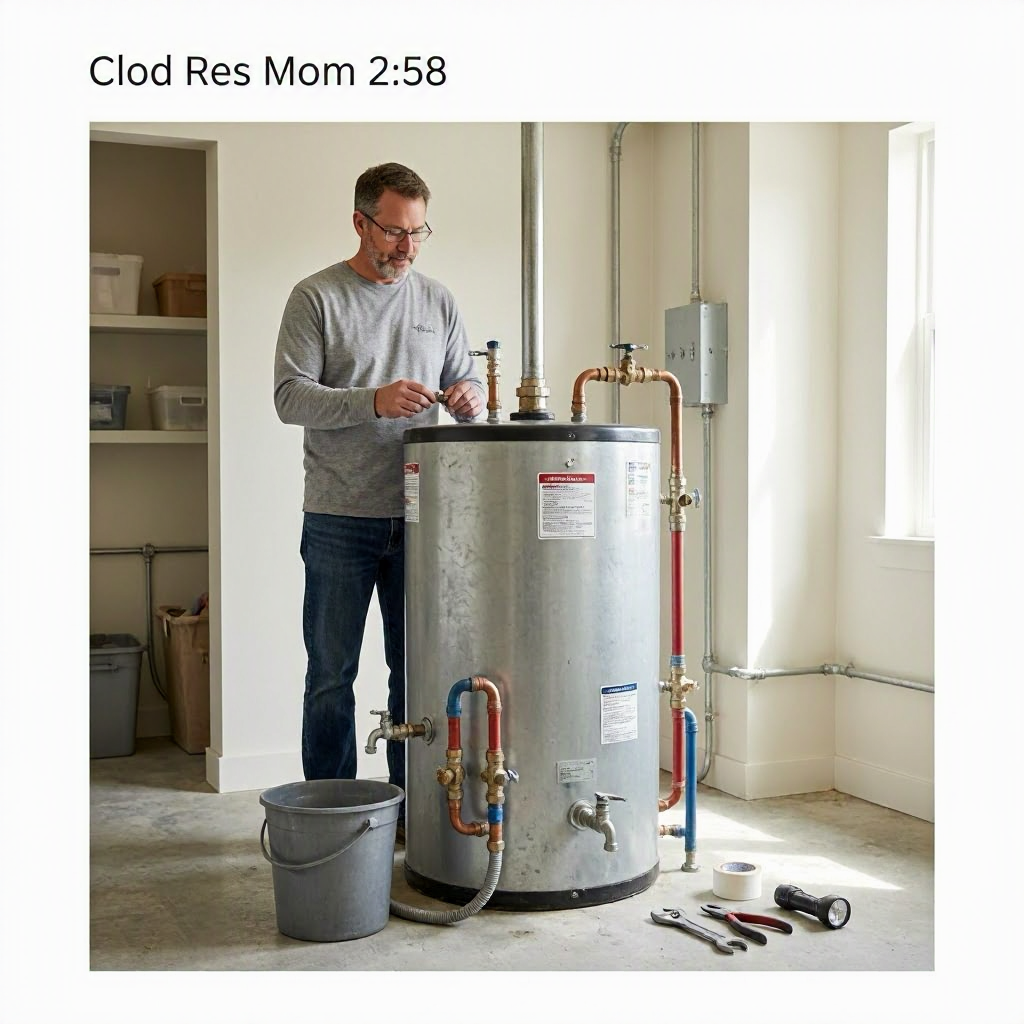
Why Your Water Heater Makes Noise and What It Costs to Fix
A strange sound from your water heater can be unsettling. Is it a simple fix or a sign of major trouble? For most homeowners, the immediate questions are about cost, who to call, and how to avoid unnecessary expenses or voiding a warranty.
This guide helps you decode common water heater noises and understand the likely repair or replacement costs. We'll walk you through practical steps, from finding a qualified professional to navigating warranty claims, all based on publicly available cost guides and official sources. The goal is to give you clear information to make a confident decision.
Water heater noise is usually a warning sign, not just an annoyance. Popping or rumbling often points to sediment buildup. Hissing or sizzling may signal a leak onto hot surfaces. Humming can come from vibration. Banging may be water hammer or rapid pressure changes. Cost depends on whether the fix is a flush, valve adjustment, part replacement, pressure control, or full replacement.
This article covers: - A summary of typical costs and contac
This article covers:
- A summary of typical costs and contacts.
- Detailed breakdowns of repair, flush, and replacement costs.
- When to attempt a DIY fix versus when to call a professional.
- Who to contact first for different problems.
- Official brand, retailer, and agency contact information.
- Step-by-step warranty claim guidance.
- State-specific licensing and permit checks to perform.
- Questions to ask contractors and red flags to avoid.
- Practical step-by-step guidance before you hire or pay.
- Frequently asked questions with clear answers.
Additional reference details:
- Item: Typical Repair Cost , Detail: $228 - $1,016 for valve, element, or thermostat issues.
- Item: Professional Flush Cost , Detail: $110 - $200 for tank; $150 - $250 for tankless.
- Item: Replacement Cost Range , Detail: $882 - $1,816 for a typical tank replacement.
- Item: Best First Contact , Detail: A licensed local plumber.
- Item: Main Safety Warning , Detail: Stop use and call a pro immediately for a gas smell, active flooding, electrical burning smell, or hot TPR valve discharge.
- Item: Warranty Proof Needed , Detail: Receipt, serial/model number, install date, installer invoice, photos, and permit/inspection record if applicable.
- Item: When to Call a Pro , Detail: For leaks, gas, electrical issues, pressure problems, or if noise persists after a flush.
Who should I call first
- Who should I call first? A licensed local plumber for most noises, leaks, or pressure issues.
- What will it cost? A professional flush costs $75-$250; general repairs cost $228-$1,016; a new tank installation averages $882-$1,816.
- What proof is needed for warranty? Keep your purchase receipt, installation invoice, serial number, photos, and any permit records.
- Which office should I check? Always verify your plumber's license with your state board and check permit rules with your local city/county building department.
- What are the warning signs? Avoid contractors who won't provide a license number, pressure you to pay upfront, or say permits are never needed.
- When should I avoid DIY? Avoid DIY for any gas, electrical, pressure, or leak-related issues, or if your unit is under warranty.
Call a Pro If: You smell gas, see active flooding, smell electrical burning, or the temperature and pressure relief (TPR) valve is discharging hot water. These are emergencies.
| Item | Details |
|---|---|
| Main Customer Question | What will this cost, who should I call, and how do I avoid overpaying or losing warranty? |
| Best First Contact | Licensed local plumber; brand support if under warranty; retailer for purchase/delivery issues. |
| Estimated Cost Range | Flush: $75-$250. Repair: $228-$1,016. Replacement: $882-$1,816. Emergency: $100-$500+. |
| Fitting/Installation Contact | Home Depot: 1-800-466-3337. Lowe's Installation: 1-877-465-6937. |
| Official Brand Contacts | Rheem: 1-800-432-8373. A. O. Smith: 877-552-0010. Bradford White: 800-531-2111 (warranty). |
| Retailer Contacts | Home Depot Customer Service: 1-800-466-3337. Lowe's Customer Care: 1-800-445-6937. |
| Warranty Documents Needed | Receipt, serial/model number, install date, installer invoice, photos, permit/inspection record. |
| State/Local Agency to Check | Your state's licensing board and your local city/county building department. |
| Safety Warning | Stop using the unit for gas smell, active flooding, electrical burning smell, or hot TPR discharge. |
Understanding the potential costs helps you budget and evaluate quotes. These are national planning ranges; your local price will vary based on labor rates, access, code requirements, and fuel type.
- Professional Flush: Commonly costs between $75 and $250 for noise related to sediment. A tank flush typically ranges from $110 to $200, while descaling a tankless unit runs $150 to $250. The price is affected by your tank type and local water hardness.
- General Repair: If the noise is due to a faulty valve, heating element, thermostat, or pressure issue, expect a typical range of $228 to $1,016. The final cost depends on the specific part and the complexity of the repair.
- Pressure-Related Fixes: Noise from water hammer or a closed system may require a pressure regulator ($200-$700) or an expansion tank ($150-$450). These fixes address the root cause of banging or rapid pressure changes.
- Full Replacement: If the tank is old, corroded, leaking, or the noise continues after a flush, replacement is likely. The typical range for tank replacement is $882 to $1,816.
- Emergency Service Call: If the noise is accompanied by a leak, gas smell, or electrical issue, emergency rates apply, often adding $100 to $500 or more to the total bill.
Average Cost: A standard water heater flush to address sediment noise typically costs between $110 and $200.
Some maintenance is within a handy homeowner's reach, but knowing the limits is crucial for safety and protecting your warranty.
When DIY May Be Safe:
- Performing a simple visual inspection for minor leaks or corrosion.
- Checking the circuit breaker for an electric unit that has stopped working.
- Reading error codes on a digital display to provide information to a technician.
Tools and Skills Needed: For anything beyond inspection, you typically need channel locks, a garden hose, screwdrivers, a multimeter for electrical checks, and knowledge of your home's water shut-off valves and gas lines.
When to Call a Licensed Professional:
- For any gas-related work, including suspected gas leaks.
- For any electrical work beyond resetting a breaker.
- To diagnose and fix pressure issues, install expansion tanks, or replace pressure relief valves.
- To perform a thorough flush or descaling, especially on tankless units.
- If the unit is still under manufacturer warranty.
Warranty and Safety Risks: A DIY repair on a newer unit can void the manufacturer's warranty if not performed by a licensed professional. Incorrect handling of gas, electrical, or high-pressure water lines poses serious risks of fire, explosion, carbon monoxide poisoning, or water damage.
Choosing the right professional from the start saves time and money.
- Licensed Plumber: This is your first call for popping, rumbling, banging, recurring TPR valve discharge, leaks, pressure issues, tankless descaling, or evaluating an older heater.
- Electrician: Only call an electrician if the buzzing or humming is clearly tied to the breaker, circuit, or wiring, such as with a heat pump water heater electrical issue.
- Water Treatment Professional: If you have persistent hard water causing repeated sediment and scale noise, a water treatment pro can address the source.
- Manufacturer Support: Contact the brand directly if you have error codes on a newer tankless or hybrid unit, but have your model number, serial number, and a diagnosis from a plumber ready.
- Retailer (Home Depot, Lowe's): Contact the store for product return, order issues, delivery problems, or questions about their installation coordination services.
Having the right contact information streamlines support and warranty processes.
| Brand / Route | Phone / Contact | Official Website | Use This For |
|---|---|---|---|
| Home Depot | 1-800-466-3337 | homedepot.com/customer-service | Product returns, order issues, store installation questions. |
| Lowe's | Installation: 1-877-465-6937 Customer Care: 1-800-445-6937 | lowes.com/l/help | Installation scheduling, delivery, store issues. |
| Rheem | 1-800-432-8373 | rheem.com/warranties | Warranty registration, verification, and parts support. |
| A. O. Smith | 877-552-0010 | hotwater.com/support | Warranty status, manuals, and finding repair service. |
| Bradford White | Warranty: 800-531-2111 | bradfordwhite.com/contact | Warranty questions. (Consumers should start with a plumber.) |
| Rinnai | 800-621-9419 | rinnai.us/support/warranty | Tankless product warranty and service. |
| Navien | 800-519-8794 (option 2) | navieninc.com/support | Tankless/boiler technical support. |
| State Water Heaters | 877-552-0010 | statewaterheaters.com/support | Product support and warranty verification. |
Warranty Documents Needed: Always have your receipt, serial number, installation date, and a written professional diagnosis ready before contacting a manufacturer.
A well-prepared claim is more likely to succeed. Note that warranty claims for noise are often denied if the cause is maintenance-related sediment buildup.
- Stop and Diagnose: For safety issues (leak, gas smell), stop using the heater and call a licensed pro immediately. For noise, have a licensed plumber provide a written diagnosis stating the cause (e.g., part failure, installation defect).
- Gather Your Documents: Collect the purchase receipt, installation invoice, serial number, model number, installation date, photos of the rating plate, and photos/videos of the problem. Include the permit or inspection record if you have it.
- Know Your Point of Contact: Start with the seller (retailer, builder) for return or delivery problems. Start with the manufacturer for product warranty issues.
- Initiate the Claim: Contact the manufacturer's warranty department with your documents and the plumber's diagnosis. Many require a professional's diagnosis before approving parts or replacement.
- If Denied: Request the denial reason in writing. Check if it was due to age, improper installation, lack of maintenance, sediment, water pressure, freeze damage, or unauthorized parts.
State-Specific or Local Checks
Never skip license and permit verification. A quote legal in one city may be non-compliant in yours.
Additional reference details:
- State / Area: California , What to Do Before Hiring: Verify contractor has a C-36 license. , Agency or Office to Check: CSLB and local building department.
- State / Area: Texas , What to Do Before Hiring: Verify plumber license. , Agency or Office to Check: Texas State Board of Plumbing Examiners (TSBPE).
- State / Area: Florida , What to Do Before Hiring: Check DBPR/CILB licensing. , Agency or Office to Check: Florida DBPR and local building department.
- State / Area: New York City , What to Do Before Hiring: Work requires a Licensed Master Plumber (LMP). , Agency or Office to Check: NYC Department of Buildings.
- State / Area: Illinois , What to Do Before Hiring: Confirm plumber license and local permit. , Agency or Office to Check: IL Dept. of Public Health and local office.
- State / Area: All Other States , What to Do Before Hiring: Verify plumber's state license and call your local permit office. , Agency or Office to Check: Your state licensing board + local building department.
Get clear answers to these questions from any contractor before you approve a quote or pay a deposit.
- What exact model and capacity are you installing or repairing?
- Is this a repair, replacement, warranty job, or code upgrade?
- What labor rate, service fee, emergency fee, permit fee, and disposal fee are included?
- Will the work be performed by a licensed plumber or authorized installer?
- What happens if the city inspector requires additional work?
- What parts and labor warranty do you provide in writing?
- Who do I contact if the new heater fails within 30 days?
These warning signs should stop the job and make you seek another contractor.
- No license number, no business address, or refusal to say who will pull the permit.
- Pressure to pay the full amount before work starts.
- The quote does not include the model, size, labor, permit, old-unit haul-away, expansion tank, or code upgrades.
- The installer says permits are "never needed" without checking your city/county rules.
- Advice to remove the unit before you take photos or record the model/serial number for a warranty claim.
- For gas units, the installer ignores questions about venting, combustion air, or carbon monoxide safety.
Do Not Ignore: A contractor who says permits are "never needed." Always verify this with your local building department yourself.
Practical Step-by-Step Guidance
Follow these steps when you hear a noise to make a smart, cost-effective decision.
- Identify and Listen: Note the type of noise (pop, rumble, bang, hiss) and when it happens (during heating, when taps are turned on/off).
- Safety Check: Immediately shut off power/gas and water supply if you see active leaking, smell gas, or smell electrical burning. Call for emergency service.
- Gather Information: Locate your water heater's make, model, and serial number on the rating plate. Find your purchase and installation receipts.
- Get a Diagnosis: For non-emergency noises, call a licensed plumber for an inspection and written diagnosis.
- Verify and Quote: Get 2-3 quotes for non-emergency repairs or replacement. Verify each contractor's state license and ask who will obtain the required local permit.
- Check Warranty: If your unit is under warranty, contact the manufacturer with your diagnosis and documents before authorizing any paid repair.
- Make Your Decision: Weigh the repair cost against the age and condition of the heater. If a repair is near half the cost of a new, efficient unit, replacement is often smarter.
Frequently Asked Questions
Should I call a plumber, electrician, or the brand first? Call a licensed plumber first for water leaks, tank issues, gas connections, pressure problems, or tankless service. Call an electrician only if the issue is clearly electrical (breaker, circuit, wiring). Call the brand only after you have your model number, serial number, and a plumber's diagnosis.
Can I claim warranty if I installed the heater myself? Maybe, but warranty claims can be denied or limited if the installation did not follow the manufacturer's manual, local code, or permit rules. Keep all invoices, serial number photos, installation photos, and any permit records.
Can a big-box store handle the installation? Home Depot and Lowe's may coordinate installation through independent installers. You should still confirm the installer's licensing, who pulls the permit, what is included (haul-away, expansion tank), and the warranty paperwork before approving the job.
Should I get three quotes? For non-emergency work, yes. Compare the scope of work, license status, permit responsibility, equipment model, labor warranty, and exclusions, not just the lowest price.
Can a simple flush fix the noise? Often, yes. Popping and rumbling are frequently caused by sediment buildup at the bottom of the tank. A professional flush can clear this and restore quiet operation, costing between $110 and $200.
This article uses publicly available cost guides, retailer support pages, manufacturer warranty pages, and official state/local licensing resources. Key sources include:
- HomeAdvisor and Angi cost guides for water heater installation, repair, flushing, and emergency service.
- Energy.gov guides on water heater selection and maintenance.
- Official customer service and warranty pages for Home Depot, Lowe's, Rheem, A. O. Smith, Bradford White, Rinnai, Navien, Noritz, Takagi, and State Water Heaters.
- State licensing boards such as the California CSLB, Texas TSBPE, Florida DBPR, NYC DOB, Illinois IDPH, Washington L&I, Massachusetts Board of Plumbers, and Georgia Secretary of State.
Always re-check brand phone numbers, current warranty terms, local permit rules, and labor charges before making final decisions or publishing an updated guide.
The cost ranges and contacts provided are national estimates and starting points for your planning. Always verify details with licensed professionals, official brand support, your retailer, your state licensing board, and your local building department. For safety and warranty protection, complex repairs and all installations should be handled by qualified, licensed contractors who follow local codes.

About the TDL Expert Panel
TDL Expert Panel · TheDigitalLife Editorial Team
TDL Expert Panel is the editorial team behind TheDigitalLife. The team researches, reviews, and creates practical guides to help everyday readers make better decisions about home repair costs, refunds, AI tools, digital safety, productivity, and useful online resources. Each guide is written to be clear, useful, and easy to understand.