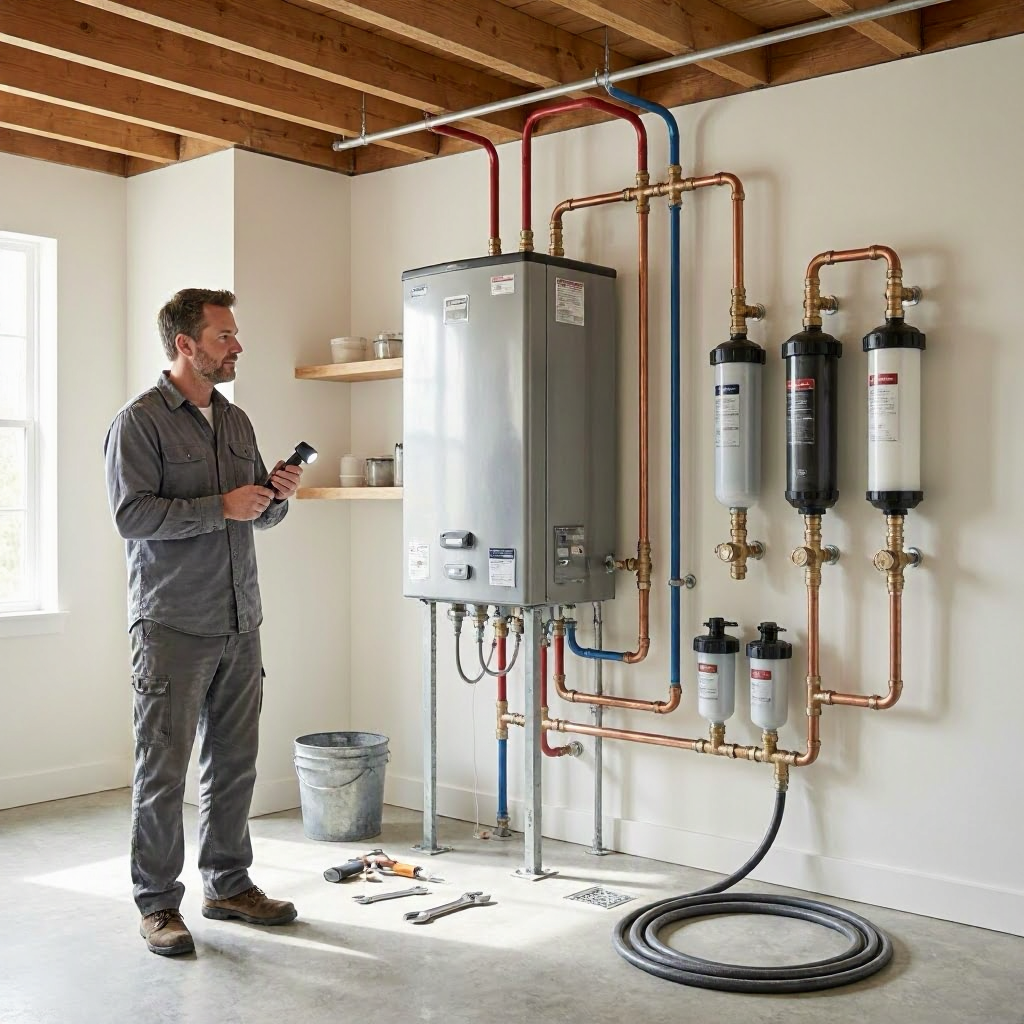
Whole-house water filter installation cost: carbon, sediment, and reverse osmosis
Understanding Whole-House Water Filters
Whole-house water filters treat all the water entering your home, from faucets to showers and appliances. Unlike under-sink or point-of-use systems, they protect every outlet against contaminants like sediment, chlorine, chemicals, and heavy metals. Homeowners install them to improve water quality, extend appliance life, and reduce skin irritation from hard water or odors.
In the United States, water quality varies by region. Municipal supplies might carry chlorine tastes or pipe corrosion, while well water often has sediment, bacteria, or minerals. Testing your water first through a certified lab or kit helps confirm if a filter matches your needs.
Carbon, sediment, and reverse osmosis (RO) are common types for whole-house use. Each targets specific issues, with installation costs influenced by system size, home layout, and local labor rates. Expect variations based on your location, such as higher prices in coastal cities versus rural Midwest areas.
Types of Whole-House Water Filters
Choosing the right type depends on your water test results. Sediment filters catch particles like dirt and rust. Carbon filters remove tastes, odors, and organic compounds. RO systems provide the deepest purification but suit fewer homes due to their demands.
Sediment Filters
These trap visible particles over 25 microns or finer, preventing clogs in pipes and appliances. They're often the first stage in multi-filter setups. Homes with well water or construction debris benefit most.
Simple single-stage sediment systems cost less to install than combined units. They require minimal plumbing changes, making them straightforward for many homes.
Carbon Filters
Activated carbon adsorbs chlorine, volatile organic compounds (VOCs), and pesticides. Catalytic carbon handles chloramines in some municipal water. These filters improve taste and smell without stripping beneficial minerals.
Whole-house carbon units come as tanks or backwashing systems. Larger homes need bigger tanks for adequate flow rates, measured in gallons per minute (GPM).
Reverse Osmosis Systems
Whole-house RO pushes water through a semi-permeable membrane, removing up to 99% of contaminants including lead, arsenic, and dissolved solids. They're powerful for poor water quality but produce wastewater (3-5 gallons per gallon filtered) and reduce pressure.
True whole-house RO systems are rare and expensive due to high flow needs (10-20 GPM). Most "RO whole-house" setups combine RO pre-treatment with smaller point-of-use RO for drinking. Tankless or oversized units handle full-home demands better.
Key Factors Affecting Installation Costs
Installation costs depend on several variables. Your home's size, water source (city vs. well), existing plumbing, and system complexity drive the total. Labor in urban areas like California runs higher than in the South.
Home size matters: a 2,000-square-foot house needs a 10-12 GPM system, while larger homes require 15-20 GPM or multiple units. Point of entry (POE) location, often near the main shutoff, affects accessibility.
Water pressure and flow rate influence choices. Low pressure (under 40 PSI) may need a booster pump, adding expense. Well owners face extra costs for pre-treatment tanks.
Local factors play a role. In seismic zones, flexible connectors prevent leaks. Cold climates require freeze protection.
Material Costs
Filter housings, tanks, media, and valves form the bulk. Basic sediment pre-filters start low, but multi-stage carbon or RO setups climb with quality.
- Sediment: Single-stage fiberglass housings for spin-down or cartridge filters.
- Carbon: Backwashing tanks (10x54 inches common) with bulk media.
- RO: Membranes, pre-filters, storage tanks, and UV add-ons for bacteria.
Brine tanks for softener combos or UV sterilizers increase material needs. Expect upfront costs to scale with filtration stages: single-stage lowest, multi-stage with RO highest.
Shop at US suppliers like Home Depot, Lowe's, or online for brands such as Pentek, Rusco, or Culligan. Compare NSF/ANSI certifications for performance claims.
Labor Costs
Plumbers charge by the hour or job. Simple installs take 4-8 hours; complex RO with repiping span days. Rates vary: $75-$150/hour in most states, higher in high-cost areas.
Access challenges raise labor. Crawlspaces, slabs, or multi-story routing add time. Cutting concrete for well tie-ins or rerouting lines bumps quotes.
Licensed plumbers handle permits if required. Some states mandate them for POE alterations affecting pressure or backflow.
Breaking Down Typical Cost Ranges
Costs fluctuate widely, so get local quotes. National averages provide a starting point, but adjust for your zip code using tools from sites like HomeAdvisor.
- Sediment-only: Materials $200-$800, labor $300-$1,000, total $500-$1,800.
- Carbon systems: Materials $500-$2,000, labor $500-$1,500, total $1,000-$3,500.
- RO whole-house: Materials $2,000-$10,000+, labor $1,000-$3,000, total $3,000-$13,000+.
These ranges account for standard single-family homes. Add 20-50% for condos or older builds needing upgrades.
| Filter Type | Main Cost Drivers | Typical Total Range (Materials + Labor) |
|---|---|---|
| Sediment | Housing size, micron rating | $500 - $1,800 |
| Carbon | Tank capacity, backwash valve | $1,000 - $3,500 |
| RO | Membranes, pump, waste line | $3,000 - $13,000+ |
Use this table to gauge quotes. Higher ends reflect premium features like automatic backwashing or smart monitors.
DIY Installation vs. Hiring a Professional
DIY suits handy homeowners with basic plumbing skills. Sediment or simple carbon spin-down filters install like hose bibs: shut off water, add housing, flush.
Tools needed: pipe cutter, Teflon tape, PEX crimper, buckets. Follow manufacturer manuals. YouTube tutorials from US brands help.
Risks include leaks, pressure drops, or code violations. RO systems demand precise membrane setup and waste drainage, often beyond DIY.
Hire a pro for:
- Well integration.
- Pressure tanks or pumps.
- Multi-stage with electrical (UV lights).
- Homes over 3,000 sq ft.
Plumbers carry insurance covering water damage. DIY saves 30-50% but voids some warranties without certification.
Renters: Check your lease. Major installs like POE filters belong to landlords. Document water issues with photos and tests before notifying them.
Permits, Inspections, and Codes
Most whole-house filter installs don't need permits if no pipe resizing or electrical. Backflow preventers trigger requirements in many cities to protect municipal supplies.
Contact your local building department. States like California or New York enforce stricter plumbing codes. HOAs may restrict exterior tanks.
Inspections ensure proper installation. Fees run low, but delays add labor costs.
Homeowners insurance rarely covers elective filters unless tied to sudden damage like burst pipes. Home warranties might reimburse if water quality causes appliance failure—verify your policy.
Getting Accurate Quotes and Avoiding Overcharges
Call 3-5 licensed plumbers via Angi, Thumbtack, or state boards. Provide water test results, home size, and POE photos.
Request detailed written estimates breaking out:
- Materials list with brands/models.
- Labor hours and rate.
- Permits, disposal, testing post-install.
- Warranty: 1-5 years labor, lifetime tanks.
Compare apples-to-apples. Reject vague "around $X" bids.
Questions to Ask Before Approving Work
- Is my water pressure sufficient? Need a booster?
- What GPM rating for my fixtures?
- NSF certified? For what contaminants?
- Backwash drain options?
- Payment terms? No full upfront.
- Subcontractors? Their licenses?
- Timeline and cleanup?
Watch for upsells: unnecessary softeners or annual service contracts. Verify if "free install" hides marked-up materials.
Signs of bigger issues: Low pressure pre-install signals pipe scale, raising costs.
Step-by-Step Process for Quotes
- Test water (EPA-certified labs, $100-$300).
- Measure POE access and flow (bucket timer test).
- Research systems matching contaminants.
- Get 3 quotes, in-home inspections preferred.
- Review for inclusions, negotiate bundles.
- Sign contract with scope, changes clause.
Document everything: before photos, test results, emails.
Maintenance and Replacement Costs
Filters aren't set-it-and-forget-it. Sediment cartridges swap yearly ($20-$50 each). Carbon media lasts 3-5 years ($100-$300 refill).
RO membranes need annual checks ($100-$400). Backwashing automates some, but pros service yearly ($150-$300).
Track via apps or calendars. Poor maintenance clogs systems, spiking utility bills.
Long-term, filters pay off by preventing $1,000+ appliance repairs.
| Maintenance Task | Frequency | Estimated Cost |
|---|---|---|
| Sediment cartridge | 6-12 months | $20 - $50 |
| Carbon media refill | 3-5 years | $100 - $300 |
| RO membrane | 2-5 years | $100 - $400 |
| Pro service call | Annual | $150 - $300 |
Budget 10-20% of install cost yearly.
Financing Options for Installation
For budgets over $2,000, explore home improvement loans. HUD Title I loans up to $25,000 suit property upgrades like water systems (HUD home improvements).
FHA 203(k) blends rehab with mortgages for buyers (HUD 203(k)). Credit unions offer low-rate personal loans.
PIP financing from suppliers spreads payments but check interest.
Special Considerations for Different Homes
Older homes (pre-1980): Galvanized pipes corrode, favoring sediment first. Lead risks push RO.
New builds: PEX plumbing eases installs, lower labor.
Condos/townhomes: Shared lines need HOA approval. Riser access complicates.
Mobile homes: Space limits tanks; compact cartridge systems fit.
Well vs. city: Wells demand pre-sediment and UV ($500+ extra).
Multi-family rentals: Landlords cover if habitability issue.
When to Install: Urgency and Timing
Install during low-use seasons like fall. Urgent if discolored water damages fixtures or health concerns arise.
Test annually via state health departments or private labs.
Preventing Future Water Problems
Routine maintenance cuts replacement needs. Flush sediment annually. Softeners pair well with carbon for scale.
Upgrade aerators and low-flow fixtures post-install to maintain pressure.
Whole-house filters enhance home value, appealing to health-conscious buyers.
In summary, weigh your water needs against costs. Local pros provide tailored advice. With smart planning, you'll enjoy cleaner water without surprises.
(Word count: 2,856)

About the TDL Expert Panel
TDL Expert Panel · TheDigitalLife Editorial Team
TDL Expert Panel is the editorial team behind TheDigitalLife. The team researches, reviews, and creates practical guides to help everyday readers make better decisions about home repair costs, refunds, AI tools, digital safety, productivity, and useful online resources. Each guide is written to be clear, useful, and easy to understand.