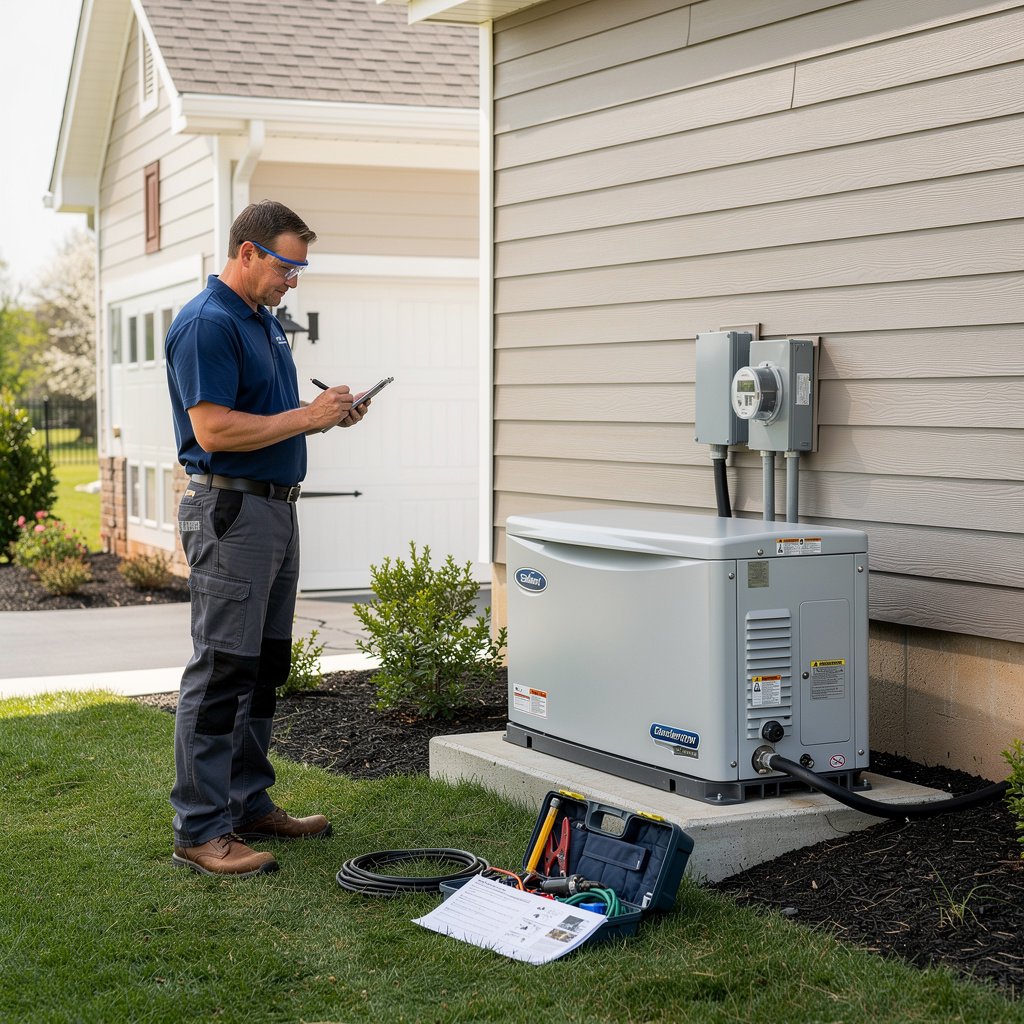
Whole-House Generator Installation Cost
Power outages can disrupt your home’s comfort and safety, making a whole-house generator an appealing solution. Installing one is a significant project that involves more than just buying a unit. It requires coordination between an electrician, local inspectors, and often a plumber or gas utility.
This guide focuses on helping you understand the full installation cost and process. You'll learn what affects the price, who to contact, and how to navigate permits, warranties, and safety checks. This information will help you prepare for and compare quotes from professionals.
The total cost for a whole-house standby generator installation typically ranges from $5,000 to $15,000+. The final price depends on the generator’s size and brand, the need for a concrete pad and gas line work, the type of transfer switch, and local permit and labor costs. Always hire a licensed electrician to install a transfer switch or interlock to prevent dangerous backfeeding and ensure code compliance.
Additional reference details:
- Item: Typical cost , Detail: $5,000 - $15,000+
- Item: Pro service cost , Detail: Typically included in the total installation quote, which covers labor, materials, and permitting.
- Item: Best first contact , Detail: A licensed electrician for diagnosis, quote, and safe installation.
- Item: Main safety warning , Detail: Do not backfeed your home through an outlet. A properly installed transfer switch is required to isolate generator power and protect utility workers.
- Item: Warranty proof needed , Detail: Invoice, product model/serial numbers, installation photos, permit number, and inspection record.
- Item: When to call a pro , Detail: For all installation, electrical panel, transfer switch, and gas line work.
Who to call first: A licensed electrician for the init
- Who to call first: A licensed electrician for the initial diagnosis and quote.
- What will it cost: The average project costs $5,000-$15,000+, influenced by generator size, fuel type, and your home's existing wiring.
- What proof is needed for warranty: Save the invoice, permit, inspection record, product model/serial numbers, and photos.
- Which state or local office should I check: Start with your city/county building department and your state's electrical licensing board.
- What are the warning signs: A contractor refusing to provide a license number, asking for full payment upfront, or suggesting unsafe shortcuts.
- When should I avoid DIY: For all generator installation, transfer switch work, and electrical panel modifications.
| Item | Detail |
|---|---|
| Main customer question | Whole-house generator installation cost and process. |
| Best first contact | Licensed electrician. |
| Estimated cost range | $5,000 - $15,000+. |
| Labor charges | Many electricians use a service-call minimum plus hourly labor. Larger projects may be a fixed price. |
| Installation contact | Licensed electrician and an authorized generator dealer. |
| Official brand contacts | Generac (888-436-3722), Kohler (1-833-393-6650), Eaton (1-877-386-2273), Square D (888-778-2733). |
| Warranty claim documents | Invoice, permit number, inspection record, product model/serial number, photos. |
| State/local agency to check | Your city/county building department and state electrical licensing board. |
| Safety warning | If you smell burning, see sparks, or feel heat at a panel/outlet, stop and call a licensed electrician immediately. |
Understanding the breakdown of costs helps you evaluate quotes and plan your budget. Prices vary widely by location, labor market, permit fees, and the condition of your existing electrical system.
Here is a summary of the primary cost components.
Additional reference details:
- Cost Item: Whole-house standby generator installation , Estimated Range: $5,000 - $15,000+ , What Affects the Price: Total cost driven by size, fuel source, pad, transfer switch, and permits.
- Cost Item: Generator equipment , Estimated Range: $2,500 - $8,000+ , What Affects the Price: Varies significantly by kW capacity and brand (e.g., Generac, Kohler).
- Cost Item: Gas line/plumbing work , Estimated Range: $500 - $3,000+ , What Affects the Price: Required if using natural gas; cost depends on meter capacity and line run length.
- Cost Item: Annual maintenance , Estimated Range: $150 - $500+ , What Affects the Price: Covers oil changes, filter replacements, battery tests, and professional service plans.
Labor charges can be structured in different ways. Many electricians have a minimum service-call fee plus an hourly rate for smaller jobs. For a major project like a generator install, you will likely receive a fixed-price quote.
Always ask what is included. A detailed quote should specify if permit fees, utility coordination, final inspection, and drywall repair are covered or considered extras.
Installing a whole-house generator is not a do-it-yourself project. The work involves high-voltage electrical connections, gas plumbing, and strict adherence to local and national electrical codes (NEC).
Call a Pro If: The work involves your main electrical panel, installing a transfer switch, running a new gas line, or obtaining permits. A licensed professional ensures the system is safe and legal.
A professional installation protects you and your home. It ensures proper utility isolation to prevent backfeeding, which can electrocute utility workers and cause a fire. It also preserves the manufacturer's warranty and provides you with a labor warranty for the workmanship.
Some states allow homeowners to do limited electrical work on their own property. However, permits and inspections are usually still required. For a generator, the complexity and safety risks make hiring a licensed electrician the only sensible choice.
Knowing who to call saves time and gets your project started correctly. The first point of contact is almost always a licensed electrician.
- First Contact: Licensed Electrician. They provide the diagnosis, quote, handle permit pulling, ensure code compliance, and manage the installation. Always ask for their license number and proof of insurance.
- Permits/AHJ (Authority Having Jurisdiction): Your city or county building department. Always verify if a permit and inspection are required before work begins.
- Licensing Verification: Your state's electrical licensing board. Use this resource to verify any contractor's license before paying a deposit.
- Generator Brand/Dealer: Contact manufacturers like Generac or Kohler, or a local authorized dealer for product-specific sizing, warranty information, and service plans.
- Gas Utility/Plumber: Your natural gas company or a licensed plumber is needed to review gas load, meter capacity, and perform any necessary gas line work.
- Your Local Electric Utility: Use the contact on your bill or official website. Coordinate for any required service disconnect/reconnect, meter work, or to understand generator interconnection rules.
Use only official contacts for warranty claims, product support, and installation questions. Do not rely on random sponsored phone numbers found online.
Additional reference details:
- Brand / Source: Generac , Official Website: generac.com/about/contact-us/ , Official Contact: 888-GENERAC (888-436-3722) , Use For: Generator support, dealer location, product/warranty questions.
- Brand / Source: Kohler Home Energy , Official Website: kohlerhomeenergy.rehlko.com/faq , Official Contact: 1-833-393-6650 , Use For: Kohler home generator support and dealer questions.
- Brand / Source: Eaton , Official Website: eaton.com/us/en-us/locate/electrical/residential.html , Official Contact: 1-877-386-2273 , Use For: Transfer switches, panels, and backup power product support.
- Brand / Source: Square D / Schneider Electric , Official Website: se.com/us/en/brands/squared/ , Official Contact: 888-778-2733 , Use For: Panels, breakers, and transfer equipment compatibility.
- Brand / Source: Local Utility , Official Website: Your electric/gas utility website or bill , Official Contact: Number on your bill , Use For: Service disconnect/reconnect, meter work, generator rules, gas load questions.
If something goes wrong, a clear process helps resolve the issue. Keep organized records from the start of your project.
- Gather Your Documents. Save the installer's invoice, permit number, final inspection approval, product manuals, model and serial numbers, and before/after photos of the installation.
- Contact the Installer First. If the product fails or there's an issue, contact the installation company. This helps separate potential labor or workmanship problems from a manufacturer defect.
- For Manufacturer Claims. Contact the brand using their official number. Provide the model number, serial number, purchase date, installer invoice, and photos of the installation label.
- For Retailer-Purchased Products. If you bought the generator through a retailer, use your order number and receipt to start a return or warranty claim through them.
- For Workmanship Disputes. If the issue is with the installation quality, escalate to the contractor's licensing board or your state's consumer protection agency.
- If Insurance is Involved. Contact your insurer to ask what specific documentation they require before any repairs begin.
State-Specific or Local Checks
Rules for permits, licenses, and inspections vary by state, county, and city. Always confirm local requirements.
| State / Area | What to Do | Official Link or Lookup |
|---|---|---|
| California | Check CSLB license status; confirm C-10 Electrical Contractor classification. | cslb.ca.gov/onlineservices/checklicenseII |
| Texas | Verify electricians through TDLR; check local AHJ (Authority Having Jurisdiction) requirements. | tdlr.texas.gov/verify.htm |
| Florida | Verify electrical contractors through DBPR / MyFloridaLicense. | myfloridalicense.com/wl11.asp |
| New York City | Most work requires an electrical permit and a DOB-licensed contractor via DOB NOW. | nyc.gov/site/buildings/property-or-business-owner/electrical-permit.page |
| Washington | Use WA L&I "Verify a Contractor/Tradesperson/Business" tool before hiring. | lni.wa.gov/licensing-permits/contractors/hiring-a-contractor/verify-contractor-tradesperson-business |
| Minnesota | Homeowners and contractors should use MN DLI electrical permit guidance. | dli.mn.gov/workers/homeowners/electrical-permits-homeowners |
| All Other States | Start with your city/county building department for permits and your state electrical licensing board for license verification. |
State and Local Checks: Coastal states and storm-prone regions may have extra inspection steps or specific rules for generator installation. Always check for local noise ordinances and fuel storage rules.
A reputable professional will answer these questions clearly. Get the answers in writing as part of your detailed estimate.
- Is a permit required, and will you pull it under your license?
- What exact brand and model will be installed? Is it listed/approved for this use?
- What is included in the quote? What is excluded (e.g., drywall repair, painting, trenching, utility fees)?
- How long will the power be off, and who coordinates any required utility shutoff/reconnect?
- Will I receive a final inspection approval certificate after the job?
- How many household circuits will the transfer switch support?
- Is my natural gas meter capacity adequate for the generator size you propose?
Watch for these warning signs when getting quotes or during the project. They often indicate an unqualified or dishonest contractor.
- The contractor refuses to provide a license number, permit plan, or written scope of work.
- The quote is much lower than others but excludes the permit, inspection, or required safety devices like a transfer switch.
- The installer asks for full payment before materials are delivered or work starts.
- The contractor says "permits are never needed" without checking your local rules.
- The contractor cannot explain the difference between labor warranty and manufacturer warranty.
- The contractor suggests backfeeding the generator through a dryer outlet or other unsafe shortcut.
- No plan for a transfer switch or approved interlock is included in the proposal.
Practical Step-by-Step Guidance
Follow these steps to manage your generator installation project from start to finish.
- Get Multiple Quotes. Contact 3-4 licensed electricians for written estimates. Do not compare only the final price.
- Create a Comparison Grid. Make a side-by-side list for each quote with fields for license number, permit inclusion, brand/model, warranty terms, labor hours, and payment schedule.
- Ask About Old Wiring. For older homes, ask each electrician to note any signs of knob-and-tube wiring, aluminum branch wiring, overloaded circuits, or other defects that could affect safety and cost.
- Verify Licenses. Use your state's online verification tool to check the license status of your top-choice electrician.
- Confirm the Scope. Before work begins, ensure the written contract includes the exact scope, brand/model numbers, and who handles permits and inspections.
- Document Everything. Take photos before, during, and after installation. File all invoices, permits, inspection certificates, and product manuals in one place.
- Schedule Maintenance. Plan for annual maintenance ($150-$500+) to keep your generator in reliable working order.
Compare Quotes Fairly: A cheaper quote may become more expensive if it excludes required permits or leaves you responsible for drywall repair and painting.
Frequently Asked Questions
Can I install a whole-house generator myself? For safety and code reasons, this work should be handled by a licensed electrician. While some states allow limited homeowner electrical work, the complexity of connecting a generator to your home's electrical and gas systems makes professional installation essential.
Why do quotes vary so much? Costs vary by local labor rates, permit fees, your home's age and access, the condition of your electrical panel, the length of wire runs, the brand of equipment, and specific inspection requirements in your area.
Should I use a big-box store installation service or a local electrician? Both can be viable options. Big-box programs may simplify the purchase and installation routing. Local electricians may offer faster service for custom troubleshooting, permits, and complex work in older homes. Compare the written scope of work carefully from either source.
What should I save after the job is done? Keep the installer's invoice, the permit and inspection approval, all product manuals, your warranty registration, the model and serial numbers, and before/after photos of the installation.
Can I connect a portable generator without a transfer switch? No. Do not backfeed your home through an outlet. This is extremely dangerous and illegal. A properly installed transfer switch or approved panel interlock is required to safely isolate generator power and protect utility workers and your home's electrical system.
What if my electrician finds old or unsafe wiring? In older homes, an electrician may discover knob-and-tube wiring, aluminum branch wiring, or overloaded circuits. These are safety issues. The project may then expand from a simple generator install to include necessary electrical repairs, which will affect the final cost.
This article was compiled using data from contractor cost guides and official agency websites. Prices and regulations change, so use the links below to verify current information.
- HomeAdvisor Electrical Cost Guide: homeadvisor.com/cost/electrical/
- Angi Whole-House Generator Installation: angi.com/articles/how-much-does-it-cost-install-generator.htm
- Generac Official Contact: generac.com/about/contact-us/
- Kohler Home Energy Support: kohlerhomeenergy.rehlko.com/faq
- California CSLB License Check: cslb.ca.gov/onlineservices/checklicenseII
- Texas TDLR License Verification: tdlr.texas.gov/verify.htm
- Florida DBPR License Search: myfloridalicense.com/wl11.asp
Always re-check local rules, current prices, warranty terms, and official contacts before starting your project.
This guide provides cost ranges and steps for planning. Always verify details with licensed professionals, official brand support, and your local building department. Electrical and gas work must be performed safely and to code. If you ever smell burning, see sparks, or feel heat from an electrical panel or outlet, stop using that circuit and call a licensed electrician or emergency service immediately.

About the TDL Expert Panel
TDL Expert Panel · TheDigitalLife Editorial Team
TDL Expert Panel is the editorial team behind TheDigitalLife. The team researches, reviews, and creates practical guides to help everyday readers make better decisions about home repair costs, refunds, AI tools, digital safety, productivity, and useful online resources. Each guide is written to be clear, useful, and easy to understand.