Wheel bearing replacement cost and safety risks
What Are Wheel Bearings and Why Do They Matter?
Wheel bearings are critical components in your vehicle's wheels. They allow the wheels to spin smoothly with minimal friction while supporting the vehicle's weight. Located inside the hub assembly, these sealed ball or roller bearings connect the wheel to the axle or spindle.
In most modern cars and trucks, wheel bearings are pressed into the hub and protected by seals to keep out dirt, water, and debris. Front wheel bearings often handle steering loads, making them more prone to wear, while rear ones primarily deal with driving forces. Over time, they can fail due to mileage, potholes, rust from salted roads in northern states, or manufacturing defects.
For United States drivers, ignoring wheel bearings can lead to expensive repairs or safety issues. A family commuter in Michigan might notice problems after winter potholes, while a California gig worker hauling loads could stress rear bearings faster.
Recognizing Symptoms of Failing Wheel Bearings
Early detection saves money and prevents breakdowns. Common signs include a low humming or growling noise that gets louder with speed, often changing with turns. This happens because worn bearings create uneven friction.
You might feel vibration or looseness in the steering wheel, especially at highway speeds. In severe cases, the wheel may wobble, or you could hear a rumbling from one side. Other clues: ABS or traction control lights illuminating, uneven tire wear, or grease leaking around the hub.
Pay attention during routine drives. A student heading to class in Texas might dismiss a hum as road noise, but it could signal a front bearing failing under daily stop-and-go traffic.
Safety Warning Signs Table
| Symptom | Possible Issue | Action Needed |
|---|---|---|
| Humming increases with speed | Bearing wear starting | Schedule inspection soon |
| Growling louder when turning | Side-specific bearing failure | Stop driving if severe |
| Steering wheel vibration | Loose or damaged bearing | Professional check immediately |
| Wheel wobble or play | Advanced failure | Do not drive; tow vehicle |
| ABS light on | Bearing affecting wheel speed sensor | Urgent mechanic visit |
This table highlights progression. Early symptoms allow time for quotes; later ones demand quick action.
The Safety Risks of Bad Wheel Bearings
Wheel bearings tie directly into steering and suspension safety. A failing bearing can cause wheel separation, where the wheel detaches from the hub while driving. This leads to loss of control, potentially causing crashes.
The National Highway Traffic Safety Administration (NHTSA) tracks related incidents. Check your vehicle's recalls at NHTSA.gov/recalls using your VIN. Faulty bearings have been recalled in models from Ford, Toyota, and GM due to premature wear.
For seniors in Florida or commuters in New York, risks amplify on highways or in rain. If you feel play in the wheel, do not drive. Call roadside assistance like AAA or your insurer's tow service. Continuing risks rollover accidents or hitting pedestrians.
United States data shows wheel-related failures contribute to single-vehicle crashes. Always prioritize safety over cost when symptoms appear severe.
How to Diagnose Wheel Bearing Problems Yourself
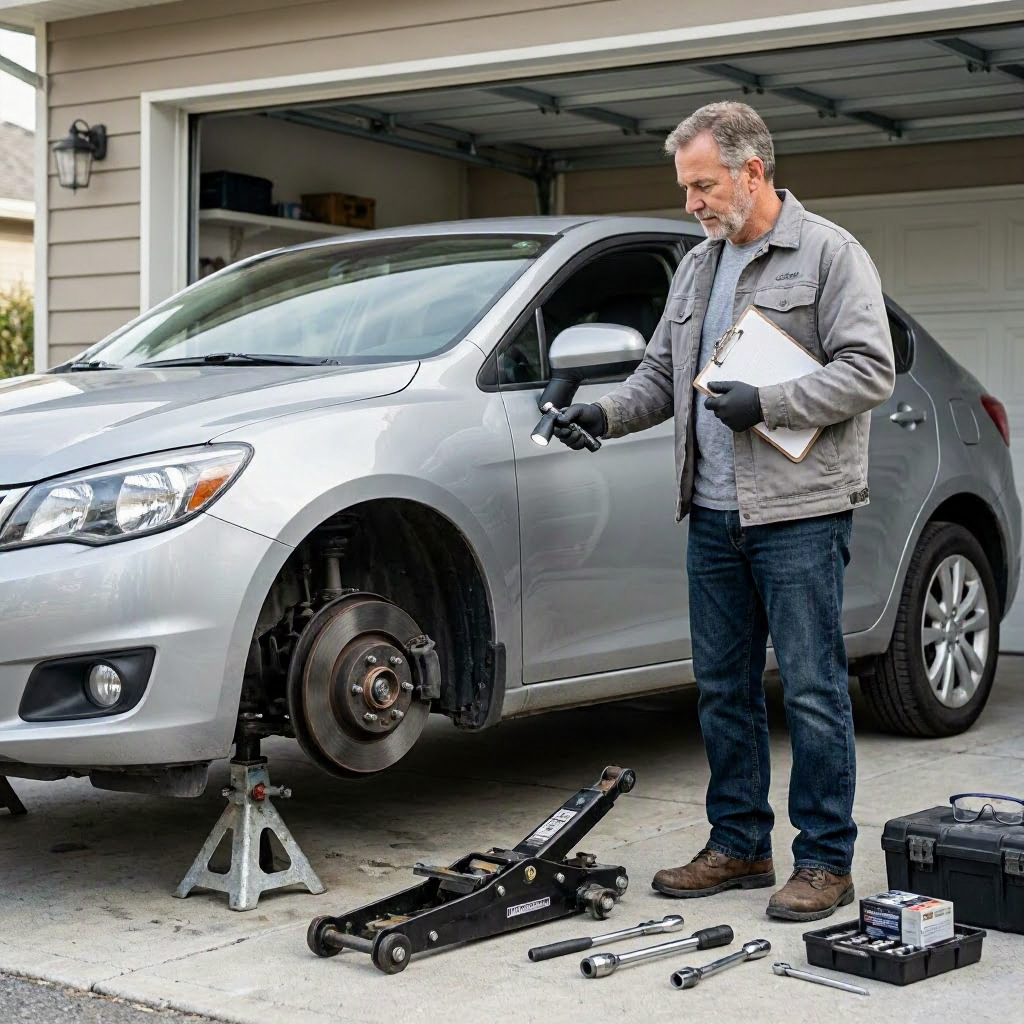
Start with a visual check. Jack up the vehicle safely on level ground, using jack stands. Grab the wheel at 12 and 6 o'clock positions and rock it. Excessive play indicates bearing wear.
Spin the wheel by hand. Grinding or roughness confirms issues. Check for grease leaks or hub damage. Listen during a test drive: note if noise changes with left/right turns, pinpointing the side.
These checks help before visiting a mechanic. However, leave full diagnosis to professionals for safety. A trusted independent shop or dealership uses lift inspections and tools to measure play precisely.
Document findings with photos. This aids in getting second opinions or insurance claims if a pothole caused it.
When to Get Professional Help Immediately
If noise is loud, vibration strong, or wheel unstable, tow the car. Delaying risks catastrophic failure, especially in front bearings that affect steering.
For non-urgent hums, compare shops within days. United States drivers should note state inspection rules; some like Virginia require annual safety checks that catch bearing issues.
Contact your mechanic or chain like Pep Boys, Midas, or a local ASE-certified shop. Ask for a free or low-cost diagnostic upfront.
Understanding Wheel Bearing Replacement Costs
Wheel bearing replacement costs vary widely across the United States. Expect $300 to $1,500 per wheel for most sedans and SUVs, but trucks or luxury vehicles push higher. These figures include parts and labor; shop around locally as rates differ.
In rural areas like the Midwest, costs lean lower due to competitive labor. Urban spots like Los Angeles or Chicago see premiums from higher overhead. Always get written estimates from three shops.
Costs break into parts (20-40% of total) and labor (60-80%). Diagnostics add $50-$150 initially. Taxes, shop fees, and alignment (often needed after) bump the bill.
Factors like vehicle type dominate pricing. A 2015 Honda Civic front bearing runs cheaper than a 2020 Ford F-150 rear due to part complexity.
Key Factors Affecting Replacement Costs
Several elements drive the final price. Understanding them helps negotiate or choose wisely.
Cost Factors Table
| Factor | How It Affects Price | Tips to Manage |
|---|---|---|
| Vehicle make/model/year | Luxury/older trucks cost more | Compare OEM vs aftermarket parts |
| Front vs rear wheel | Fronts 20-50% higher (steering) | Confirm which needs replacement |
| Parts type | OEM > aftermarket > remanufactured | Ask for warranties on each |
| Labor hours | 1-3 hours per wheel; $100-$200/hr | Independent shops cheaper than dealers |
| Location/shop type | Cities/dealers 30-50% more | Get quotes from chains/locals |
| Additional work | Alignment, brakes: +$200-500 | Ask if bundled or required |
| Urgency/towing | After-hours adds fees | Schedule non-emergency daytime |
Use this to question estimates. For example, a gig worker in Atlanta might save by picking aftermarket parts with a lifetime warranty.
Breaking Down a Typical Repair Estimate
A solid estimate lists line items clearly. Parts: hub assembly (common replacement unit) $100-$500. Labor: 1.5-4 hours, varying by access.
Shop supplies (fluids, grease): $20-$50. Taxes: state sales tax on parts/labor. Disposal fees: $10-$30 for old hubs.
Alignment post-repair: $80-$150, as bearing work stresses suspension. Ask if diagnostics roll into labor.
Review for markups. OEM parts from dealers cost more but match factory specs; aftermarket from brands like Timken or SKF offer value.
Sample scenario: A family SUV in Ohio gets a front hub assembly for $450 total at an independent shop, versus $850 at the dealer.
Front vs. Rear Wheel Bearing Replacement
Front bearings cost more due to integration with ABS sensors, CV joints, and steering knuckles. Replacement often includes the hub assembly for $200-$600 parts.
Rear bearings in FWD cars are simpler, $150-$400. RWD trucks or AWD SUVs complicate rears with differentials, adding hours.
All-wheel-drive systems may require paired replacements for balance, doubling costs. Confirm with your mechanic using service manuals.
Shopping for the Best Price on Wheel Bearing Replacement
Get three written estimates before approving work. Call shops with your vehicle details: year, make, model, mileage, symptoms.
Visit independents first; they average 20-30% less than dealerships. Chains like Firestone offer coupons via apps.
Ask: "Is this OEM or aftermarket? What's the parts/labor warranty? Included in price: taxes, fees, alignment?" Request itemized breakdowns.
Use apps like RepairPal or YourMechanic for instant quotes by ZIP code. For used-car buyers, factor this into total ownership costs.
Avoid lowball quotes hiding extras. A second opinion on $1,000+ bills prevents overcharges.
Checking Warranties, Recalls, and Insurance Coverage
Before paying, verify coverage. Manufacturer warranties (often 3 years/36,000 miles) may cover bearings if defect-related. Extended warranties vary; review your contract.
Enter your VIN at NHTSA.gov/recalls. Some models have bearing recalls affecting thousands of vehicles.
Insurance: Comprehensive policies cover pothole damage minus deductible. Collision handles at-fault issues. Document with photos; submit estimates to your adjuster.
Contact your insurer via app or policy number. Keep service records for resale value.
Should You DIY Wheel Bearing Replacement?
DIY appeals for cost savings, but wheel bearings are not beginner-friendly. They require pressing tools, torque wrenches, and hub pullers, plus safe jacking.
Risks include improper torque causing failure, damaging brakes/CV joints, or injury from falls. For safety-sensitive work, professionals ensure proper seating and grease packing.
If experienced with hubs, aftermarket kits cost $50-$200 plus tools. Still, post-DIY alignment at a shop adds $100. Most United States drivers wisely pay pros.
When Replacement Might Not Be Worth It
Compare repair cost to vehicle value. For a 15-year-old sedan worth $2,000, $1,200 per wheel signals "fix or scrap" time.
High-mileage vehicles (over 150,000) may need paired sides soon. Sell privately or to CarMax after disclosure.
Trade-ins factor repairs; get appraisals from Carvana or local dealers. Calculate total costs: insurance, registration continue post-repair.
Consult Kelley Blue Book for values. If unsafe, prioritize towing over driving to sell.
Questions to Ask Your Mechanic
Prepare this list for calls or visits:
- How did you diagnose? Can I see the report?
- OEM, aftermarket, or reman? Warranty length?
- Exact labor hours and rate?
- Any bundled services like brakes?
- Total with taxes/fees?
- Can I supply parts?
These clarify and spot upsells. Record answers for disputes.
Repair Checklist Before Approving Work
Follow these steps:
- Verify diagnosis: Request before/after photos or video of the bad bearing.
- Get written estimate: Itemized, valid 30 days.
- Confirm parts source: Reputable brands; decline used unless trusted.
- Ask about warranty: Parts 1-2 years, labor 12 months typical.
- Schedule second opinion: Free at most shops for non-emergency.
- Review post-repair: Test drive with mechanic; check noise gone.
- Pay and get invoice: Detailed for records.
For a renter in Seattle, this checklist avoids surprise $800 bills.
Documents to Keep After Wheel Bearing Replacement
Save everything for warranty claims, insurance, or resale:
- Written estimate and approval.
- Itemized invoice with parts serials.
- Warranty info.
- Photos of old/new parts.
- Odometer reading at repair.
- Alignment report if done.
Digital scans work; paper for glovebox. Boosts used value by $200-500.
Preventing Premature Wheel Bearing Failure
Regular maintenance extends life (100,000+ miles typical):
- Rotate tires every 5,000-8,000 miles.
- Avoid potholes; report via city apps in states like Pennsylvania.
- Check suspension during oil changes.
- Rust-proof undercarriage in salt-belt states (NY, IL).
- Follow manufacturer schedules.
Wheel bearings last longer with alignments and quality tires. Track via apps like Fuelly.
Real-World Examples from US Drivers
Consider Maria, a Chicago nurse: Humming led to $650 front bearing fix after three quotes. She saved by choosing aftermarket with 2-year warranty.
Tom, a Texas trucker, ignored rear growl; wheel locked at 70 mph, totaling $3,000 in damages. Early checks prevent this.
These show vigilance pays. For families, budget $500/year for potential repairs in older vehicles.
Final Thoughts on Balancing Cost and Safety
Wheel bearing issues demand prompt attention due to high safety risks. Costs range widely, but smart shopping and verification keep them reasonable.
Always prioritize professional service for this repair. Verify details locally, check NHTSA for recalls, and maintain records. Safe driving starts with informed ownership.

About the TDL Expert Panel
TDL Expert Panel · TheDigitalLife Editorial Team
TDL Expert Panel is the editorial team behind TheDigitalLife. The team researches, reviews, and creates practical guides to help everyday readers make better decisions about home repair costs, refunds, AI tools, digital safety, productivity, and useful online resources. Each guide is written to be clear, useful, and easy to understand.