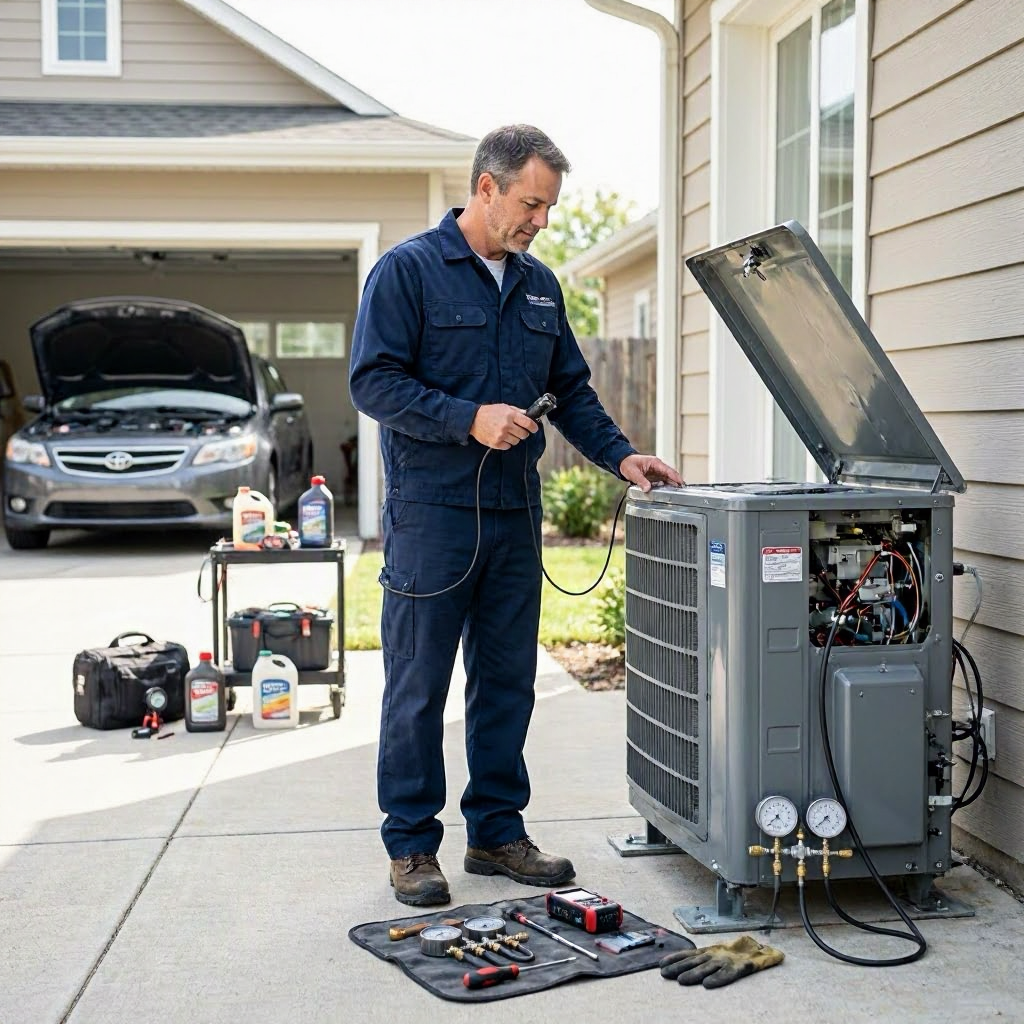
Summer road trip car prep cost: tires, fluids, AC, and emergency kit
Why Prep Your Car for a Summer Road Trip?
Summer road trips promise adventure, from coastal drives along California Highway 1 to cross-country hauls through the Midwest. But hot weather stresses your vehicle, raising risks of tire blowouts, overheating, fluid failures, and breakdowns far from home. Prepping tires, fluids, air conditioning (AC), and an emergency kit helps avoid stranding your family on a scorching interstate.
Costs vary widely by vehicle make, model, year, mileage, location, and shop rates. A basic prep might run $200 to $800 at an independent shop, while dealerships or premium services could hit $1,000 or more. Factors like needed replacements, labor (typically $100 to $150 per hour), taxes, and shop fees drive the bill. Always get a written estimate before work starts.
Start by checking your owner's manual for summer-specific advice. Inspect your car yourself for obvious issues, then visit a trusted mechanic. Use this guide to understand likely costs, what to check first, and ways to lower expenses without skimping on safety.
Tires: The Top Summer Road Trip Priority
Tires bear the brunt of summer heat, which expands air pressure and accelerates wear. Underinflated or worn tires risk blowouts, especially at highway speeds. The National Highway Traffic Safety Administration (NHTSA) reports that tire failures cause thousands of crashes yearly.
What to Check First
Park on a level surface and inspect all four tires plus the spare. Look for cracks, bulges, or uneven wear. Measure tread depth with a penny: if Lincoln's head is visible, replace them. Check pressure when cold using the placard on the driver's door jamb, not the gas station max PSI.
Underinflation by 10 PSI reduces fuel economy by 3-5% and shortens tire life. Rotate tires every 5,000 to 8,000 miles if not done recently.
Cost Factors and Estimates
Tire costs depend on size, brand, and type. Budget all-season tires for sedans might cost $100 to $200 each, while truck or SUV tires run $150 to $300. A full set of four, plus mounting, balancing, and disposal fees, often totals $500 to $1,200.
Labor adds $20 to $40 per tire. Alignment, if needed due to pulling or vibration, costs $75 to $150 extra. Shop around at chains like Discount Tire or independent mechanics for deals.
What affects the price?
- Vehicle type: Performance cars need pricier rubber.
- Location: Urban areas charge more for labor.
- Urgency: Same-day service hikes fees.
- Warranty: Some tires include 50,000-mile coverage.
Ask if parts are OEM (original equipment manufacturer) or aftermarket. Request a road hazard warranty for road debris protection.
Steps to Save Money
Buy tires online from Tire Rack or Discount Tire and have them shipped to a local installer to cut costs 10-20%. Time purchases for spring sales. If tires have even wear and 4/32-inch tread, a rotation and balance ($50-100) might suffice instead of full replacement.
Get a second opinion for quotes over $500. Check NHTSA recalls at nhtsa.gov/recalls using your VIN, as faulty tires might be free.
Fluids: Preventing Overheating and Breakdowns
Summer heat boils engine fluids, leading to seizures or seized components. Low or degraded fluids cause 40% of roadside failures, per AAA data. Check levels before a trip to avoid towing bills averaging $100-200 per 50 miles.
Essential Fluids to Inspect
Focus on these for road trips:
- Engine oil: Dark or low oil signals change time. Capacity varies (4-8 quarts).
- Coolant/antifreeze: Top off if low; flush if rusty or low (every 30,000-60,000 miles).
- Transmission fluid: Pink and clean; burnt smell means service.
- Brake fluid: Clear yellow; dark fluid risks failure.
- Power steering and windshield washer: Easy top-offs.
Use your dipstick or reservoir sight glass. Never overfill.
Cost Breakdown
A basic fluid top-off and inspection runs $50-150. Full changes cost more:
| Fluid Type | Typical Service | Cost Range (parts + labor) |
|---|---|---|
| Engine oil + filter | Change | $40-100 |
| Coolant flush | Flush/refill | $100-250 |
| Transmission | Drain/refill | $150-400 |
| Brake | Flush | $100-200 |
Ranges account for synthetic vs. conventional fluids and shop rates. DIY top-offs save $20-50 if you're comfortable, but pros handle flushes safely.
Factors influencing costs:
- Synthetic fluids: 20-50% more but last longer.
- Leaks: Repairs add $200-1,000.
- Multi-point inspection: Often bundled for $20-50.
Insist on a written estimate listing parts, labor, taxes, and warranty (typically 12 months/12,000 miles on labor).
Pro Tips for Road Trippers
Schedule a pre-trip service including fluids. If your odometer shows overdue maintenance, bundle it to negotiate discounts. Keep receipts for warranty claims. For older cars (over 100,000 miles), ask if fluid condition warrants full replacement versus top-off.
Air Conditioning: Stay Cool on Long Drives
A failing AC turns a fun trip into misery, especially with kids or pets. Hot air or weak airflow signals trouble. AC issues spike in summer, with repairs linked to refrigerant leaks from heat expansion.
Diagnosing AC Problems
Run the system on max cool with recirculation. Normal vent temp: 40-50°F. Listen for compressor clutch engagement under the hood. Weak cooling or odd noises point to low refrigerant, dirty filters, or compressor failure.
Check cabin air filter; replace if clogged ($20-50 DIY).
Repair Costs and Variables
Recharge costs $100-250, including leak detection. Major fixes escalate:
- Compressor replacement: $800-1,500.
- Evaporator or condenser: $500-1,200.
- Full system flush: $200-400.
Labor dominates: 3-6 hours at $100-150/hour. Parts availability affects wait times and prices for imports versus domestics.
Location matters: Southern states like Texas or Florida see higher demand, inflating costs. Warranty coverage from recent repairs can offset bills.
How to Minimize Expenses
Seek shops with AC recovery machines to comply with EPA refrigerant rules. Ask: "Is this OEM refrigerant? What's the leak test method?" Get estimates from two shops. Preventive maintenance like annual filter changes ($50) extends life.
If AC fails mid-trip, prioritize safety: overheating engines risk seizure. Pull over, call AAA, and verify coverage first.
Building an Emergency Kit: Low-Cost Peace of Mind
No prep is complete without a kit for flats, overheating, or storms. AAA assists 30 million members yearly, but self-reliance saves fees.
Kit Essentials and Costs
Assemble in a waterproof bin ($10-20). Total build: $50-150.
| Item | Purpose | Approx. Cost |
|---|---|---|
| Jumper cables | Dead battery | $20-40 |
| Tire inflator/sealant | Slow leaks | $30-60 |
| Flares/reflective triangles | Visibility | $15-30 |
| First-aid kit | Injuries | $20-40 |
| Water, snacks, blanket | Comfort | $20 |
| Multi-tool, flashlight | Basics | $15-30 |
| Phone charger, cash | Emergencies | $10-20 |
Add vehicle-specifics: fuses, belts, wiper blades.
Update yearly; check expiration dates.
Usage and Savings
Practice using tools. Kits prevent $100+ tow charges. For families, include medications and entertainment. Store spare fluids (quart each) to top off roadside.
Total Prep Budget and Planning
Combine costs: tires ($500+), fluids ($200+), AC service ($150+), kit ($100) = $950-2,000 for thorough prep. Many shops offer $100-200 summer packages bundling inspections.
Checklist for Your Road Trip Prep
- Schedule inspection: Call three shops for quotes; mention road trip.
- Review records: Check last services; bring to mechanic.
- Verify safety: Test drive post-service; note vibrations or smells.
- Check recalls: Enter VIN at nhtsa.gov/recalls.
- NHTSA ratings: Review at nhtsa.gov/campaign/safercargov for model insights.
- Budget buffer: Add 20% for surprises.
- Documents: Keep estimates, receipts, manual.
Ways to Lower the Overall Bill
- Bundle services: Discounts for multi-item work.
- Loyalty programs: Chains like Jiffy Lube offer points.
- Off-peak timing: Avoid June weekends.
- DIY where safe: Tire pressure, fluid top-offs.
- Negotiate: "Can you match this quote?"
For financed cars, check lease terms for maintenance requirements. Insure against gaps with comprehensive coverage.
Common Pitfalls and Safety Reminders
Skipping prep risks $500+ tows or $2,000+ repairs roadside. Watch for dashboard warnings like low tire pressure or temperature gauges, which demand immediate stops.
Don't drive with bald tires or overheating. Contact AAA, insurance roadside (if covered), or a tow service. High-pressure shops may upsell; walk away if no written estimate.
Real example: A Texas family saved $800 by rotating tires themselves and getting a $120 fluid check before a 2,000-mile trip to Yellowstone. Proactive steps ensure safe, affordable adventures.
Keep all records for insurance, resale, or disputes. Your summer road trip deserves a reliable ride.

About the TDL Expert Panel
TDL Expert Panel · TheDigitalLife Editorial Team
TDL Expert Panel is the editorial team behind TheDigitalLife. The team researches, reviews, and creates practical guides to help everyday readers make better decisions about home repair costs, refunds, AI tools, digital safety, productivity, and useful online resources. Each guide is written to be clear, useful, and easy to understand.