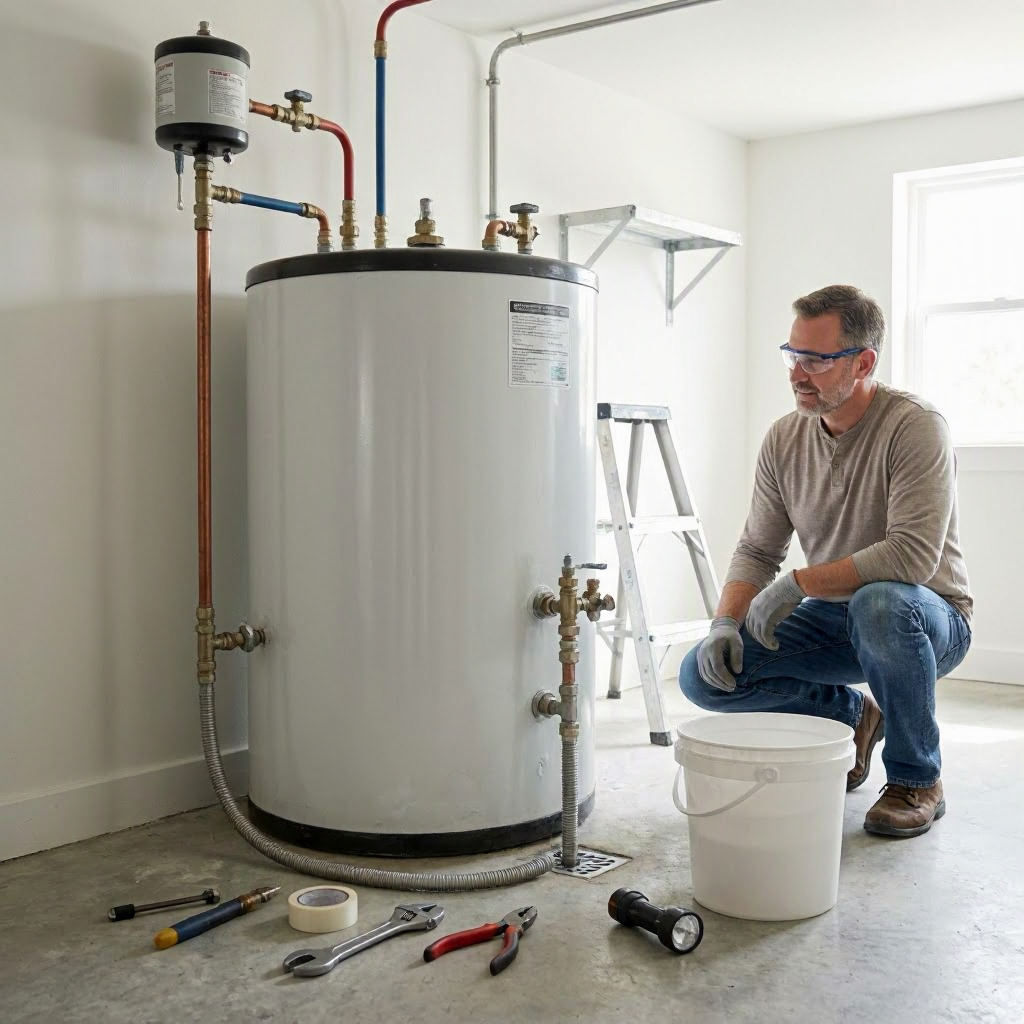
Water Heater Pressure Relief Valve Replacement Cost
A leaking water heater can turn a normal day into a worrisome one. If you've noticed a drip from a pipe connected to the side or top of your water heater, it's likely from the temperature and pressure relief (TPR) valve. This is not a minor annoyance-it’s a safety device trying to tell you something. This guide will help you understand the costs, who to call, and how to navigate the repair or replacement process safely and smartly.
Replacing a TPR valve isn't just about stopping a leak. It’s about ensuring your home's water heater operates safely. We'll break down the estimated costs for parts and professional labor, explain how to handle potential warranty claims, and give you the right questions to ask any contractor. Your safety and your wallet are the top priorities.
If your water heater's temperature and pressure relief (TPR or T&P) valve is leaking, dripping, or discharging hot water, you should not ignore it. The typical cost to have a licensed plumber replace it ranges from $50 to $300, with a common cost around $200 to $220. Your best first contact is a licensed local plumber, though you may contact the manufacturer if the unit is under warranty.
Typical cost ranges and what changes the price - DIY versu
- Typical cost ranges and what changes the price
- DIY versus professional service
- Who to contact first based on your situation
- Official brand and retailer contacts
- Steps for a warranty or refund claim
- State and local verification checks
- Questions to ask and red flags to avoid
- Practical step-by-step guidance
- Frequently asked questions
Additional reference details:
- Item: Typical pro cost , Detail: $50 - $300
- Item: DIY cost (parts) , Detail: $20 - $30
- Item: Best first contact , Detail: Licensed local plumber
- Item: Main safety warning , Detail: For gas smell, flooding, electrical smell, or active hot water discharge, stop use and call a pro/emergency service.
- Item: Warranty proof needed , Detail: Receipt, serial/model number, install date, installer invoice, photos, permit/inspection record.
- Item: When to call a licensed pro , Detail: Immediately for active TPR discharge, hot water leaks, frequent discharge, or incorrect connections.
Who should I call first
- Who should I call first? A licensed plumber, or manufacturer support if under warranty.
- What will it cost? Professional replacement typically ranges from $50 to $300.
- What proof is needed for warranty? Collect your receipt, serial/model numbers, installation invoice, and photos.
- Which office should I check? Verify a plumber's license with your state board and check permit rules with your local building department.
- What are the warning signs? No license number, pressure to pay in full upfront, or a quote missing key details like permits or haul-away.
- When should I avoid DIY? If you smell gas, see active flooding or hot water discharge, or if your warranty requires professional installation.
Additional reference details:
- Item: Main customer question , Detail: What will this cost, who should I call, and how do I avoid overpaying or losing warranty?
- Item: Best first contact , Detail: Licensed local plumber; brand support if under warranty.
- Item: Estimated cost range , Detail: $50 - $300 for valve replacement by a plumber.
- Item: Labor charges , Detail: Included in the total cost; varies by access, valve type, and local rates.
- Item: Fitting/installation contact , Detail: For store-coordinated installs: Home Depot (1-800-466-3337) or Lowe's (1-877-465-6937).
- Item: Official brand contacts , Detail: See detailed table for Rheem, A. O. Smith, Bradford White, and tankless brands.
- Item: Retailer contacts , Detail: Home Depot: 1-800-466-3337. Lowe's Customer Care: 1-800-445-6937.
- Item: Warranty claim documents , Detail: Receipt, serial/model number, install date, installer invoice, photos, permit/inspection record.
- Item: State/local agency to check , Detail: Your state's plumbing licensing board and local city/county building department.
- Item: Safety warning , Detail: If there is gas smell, active flooding, electrical burning smell, or hot TPR discharge, stop using the unit and call a licensed pro/emergency service.
The cost to replace a TPR valve depends heavily on whether you hire a professional or attempt the job yourself. These are national planning ranges; your final quote will be determined by local labor rates, your specific water heater, and any related issues found.
Here’s a breakdown of the typical costs involved:
Additional reference details:
- Cost Item: TPR valve replacement by plumber , Typical Range / Note: $50 - $300 range; around $200 - $220 is common in some repair guides.
- Cost Item: Part cost only (DIY) , Typical Range / Note: $20 - $30 common retail range for basic valves.
- Cost Item: General water heater repair , Typical Range / Note: $228 - $1,016 typical range (if the cause is not only the valve).
- Cost Item: Pressure regulator issue , Typical Range / Note: $200 - $700 if a regulator replacement is needed.
- Cost Item: Expansion tank installation , Typical Range / Note: $150 - $450 if a closed system needs one.
- Cost Item: Emergency discharge/leak , Typical Range / Note: $100 - $500+ for emergency plumber service.
The final price for a standard TPR valve replacement changes based on several factors:
- Access: Is the valve in a tight spot, like a closet or attic?
- Valve Type: The valve must match the pressure/rating and thread size of your heater.
- Discharge Pipe: The pipe may need to be replaced or extended to meet code.
- Local Labor: Hourly rates and service call fees vary by city and contractor.
- Related Problems: The leak might be a symptom of high water pressure (requiring a regulator) or a closed plumbing system (requiring an expansion tank).
Average Cost: The most common cost for a plumber to replace a TPR valve is in the $200 to $220 range, though your local quote may differ.
Replacing a TPR valve involves draining some water from the tank, unscrewing the old valve, and screwing in a new one with proper sealant. For a confident DIYer with basic plumbing tools, the part itself is inexpensive.
When DIY May Be Safe:
- You have confirmed the valve itself is faulty (not a system pressure problem).
- You are comfortable turning off power/gas and water to the heater.
- You can safely drain several gallons of hot water.
- You can find the exact replacement valve matching your heater's specifications.
When to Call a Licensed Professional:
- You smell gas or notice any electrical burning smell.
- The TPR valve is actively discharging hot water or there is flooding.
- The discharge is frequent, which points to a system pressure or temperature problem.
- You are unsure about the correct valve type, thread size, or installation steps.
- Your local code or the manufacturer's warranty requires professional installation.
DIY Is Usually Safe Only If: You have the right tools, have identified the correct replacement part, and are dealing with a simple valve failure-not a symptom of a larger system problem.
Attempting a DIY repair on a complex issue can void your warranty and create a safety hazard. Many manufacturers require a professional diagnosis for warranty claims.
Your first contact depends entirely on the situation and the symptoms.
Contact a licensed plumber immediately if:
- The TPR discharge is active, hot, or frequent.
- The discharge pipe is connected incorrectly or is missing.
- You have any concerns about gas connections, venting, or electrical issues.
Contact the manufacturer's support line if:
- The water heater or valve is still under warranty.
- You have your model number, serial number, purchase date, and a plumber's diagnosis ready.
Contact the retailer (like Home Depot or Lowe's) if:
- You have a problem with the purchase, delivery, or receipt for a recently bought unit.
- You used their installation service and have a related issue.
Contact your local building department for: - Questions about discharge pipe requirements and whether a permit is needed for the work.
Call a Pro If: You see active hot-water discharge, smell gas, or notice flooding. Do not cap or plug the discharge pipe.
Having the right contact information can save time. Use this table to reach the correct support team for your situation.
| Brand / Route | Phone / Contact | Official Website | Use This For |
|---|---|---|---|
| Home Depot | 1-800-466-3337 | homedepot.com/customer-service | Product return, order issues, store installation inquiries, receipt problems. |
| Lowe's | Installation: 1-877-465-6937 Customer Care: 1-800-445-6937 | lowes.com/l/help | Installation scheduling, product orders, delivery, store issues, warranty paperwork. |
| Rheem | 1-800-432-8373 | rheem.com/warranties | Warranty registration, verification, parts, model/serial support. |
| A. O. Smith | Common support: 877-552-0010 | hotwater.com/support | Warranty status, product manuals, repair service locator. |
| Bradford White | Warranty: 800-531-2111 Tech Support (for pros): 800-334-3393 | bradfordwhite.com/contact-bradford-white | Warranty questions. Consumers should start with a licensed plumber. |
| Rinnai | Warranty: 800-621-9419 | rinnai.us/support/warranty | Tankless product warranty and service. |
| Navien | 800-519-8794, option 2 | navieninc.com/support | Tankless/boiler technical support and warranty. |
| Noritz | 1-866-766-7489 | noritz.com/contact-us | Tankless technical support and warranty registration. |
| Takagi | 888-882-5244 | takagi.com/support | Tankless support, parts, and warranty help. |
| State Water Heaters | 877-552-0010 | statewaterheaters.com/support | Product support, documents, warranty verification. |
A leaking TPR valve might be covered under your water heater's warranty, but it's crucial to document everything properly. A recurring leak is often not a defective valve but a symptom of another issue, like high water pressure.
Follow these steps to prepare for a warranty claim:
- Stop use if unsafe. If there's a gas smell, active flooding, or electrical issues, call a licensed plumber or emergency service first.
- Gather all documentation. Collect your purchase receipt, installation invoice, and the model and serial numbers from the rating plate on the heater.
- Take photos and videos. Photograph the rating plate, the leaking valve, the overall installation, and the condition of the discharge pipe and any expansion tank.
- Get a professional diagnosis. Many manufacturers require a written diagnosis from a licensed plumber before approving warranty parts.
- Contact the correct party. Start with the seller (retailer, installer) for return or delivery issues. Contact the manufacturer directly for product warranty issues.
- Submit your claim. Provide all your documentation and the plumber's diagnosis to the manufacturer's warranty department.
- If denied, ask for the reason in writing. Denials can be due to age, improper installation, lack of maintenance, sediment, water pressure issues, or unauthorized parts.
Warranty Documents Needed: Receipt, serial/model number, installation date, installer invoice, photos, and permit/inspection record if applicable.
State-Specific or Local Checks
Water heater work is regulated by state and local rules. A quote that is standard in one city may be non-compliant in another. Always verify licensing and permit requirements locally before hiring anyone or paying a deposit.
Use this table as a starting point, then make the call to your local offices.
| State / Area | What to Do Before Hiring | Agency or Office to Check |
|---|---|---|
| California | Verify contractor license; ask for a C-36 plumbing classification. | CSLB license lookup and local building department. |
| Texas | Verify plumber license. | Texas State Board of Plumbing Examiners (TSBPE) and local building department. |
| Florida | Check DBPR/CILB licensing; confirm local permit needs. | Florida DBPR and local building department. |
| New York City | Work usually needs a Licensed Master Plumber (LMP). | NYC Department of Buildings and LMP license lookup. |
| Illinois | Confirm plumbing license and local permits. | Illinois Department of Public Health and local building department. |
| Washington | Verify plumbing contractor/tradesperson. | Washington L&I Verify tool and local building department. |
| Massachusetts | Check plumber/gas fitter license. | Mass.gov license check and local plumbing/gas inspector. |
| New Jersey | Verify master plumber license. | NJ State Board of Examiners of Master Plumbers and municipal building office. |
| Georgia | Verify plumbing license. | Georgia SOS Professional Licensing and city/county permitting. |
| All Other States | Verify the plumber's state license and call your local permit office. | State licensing board + local building department. |
Getting clear answers before work begins protects you. Ask every contractor these questions:
- What exact model and capacity are you installing or repairing?
- Is this a repair, replacement, warranty job, or code upgrade?
- What labor rate, service fee, emergency fee, permit fee, and disposal fee are included?
- Will the work be performed by a licensed plumber or authorized installer?
- What happens if the city inspector requires additional work?
- What parts and labor warranty do you provide in writing?
- Who do I contact if there is a problem with the work within 30 days?
Certain warning signs should make you stop and reconsider hiring a contractor. Be cautious if you encounter:
- No license number provided, no business address, or a refusal to say who will pull the permit.
- Pressure to pay the full amount before any work starts.
- A quote that does not include details like the model, size, fuel type, labor, permit, old-unit haul-away, expansion tank, or code upgrades.
- An installer who says permits are "never needed" without checking your city/county rules.
- Warranty advice that tells you to remove the unit before taking photos or recording the model/serial number.
- For gas units, an installer who ignores questions about proper venting, combustion air, gas line sizing, or carbon monoxide safety.
Practical Step-by-Step Guidance
Follow this sequence to address a leaking TPR valve logically and safely:
- Assess Safety First: If you smell gas, see active hot water discharge, or notice flooding, turn off the gas/electricity and water supply to the heater if safe to do so. Call a licensed plumber or emergency service immediately.
- Document the Problem: Take clear photos and videos of the leak, the water heater's rating plate (for model/serial numbers), and the overall installation setup.
- Gather Your Paperwork: Find your original purchase receipt and any installation invoice. This is critical for warranty claims.
- Research Local Pros: Verify plumber licenses with your state board and check for required permits with your local building department.
- Get Multiple Quotes: For non-emergency work, get at least three quotes. Compare the scope of work, equipment models, and warranties, not just the price.
- Ask the Right Questions: Use the question list above when speaking with contractors.
- Proceed with Repair or Claim: Based on your diagnosis, either hire a licensed professional or contact the manufacturer's warranty department with all your documentation in hand.
Frequently Asked Questions
Should I call a plumber, electrician, or the brand first? Call a licensed plumber first for water leaks, tank issues, gas connections, TPR valves, or pressure problems. Call an electrician only for clear electrical issues like breaker problems or wiring for a heat pump water heater. Call the brand after you have your model number, serial number, purchase date, and a plumber's diagnosis.
Can I claim warranty if I installed the heater myself? Maybe, but warranty claims can be denied or limited if the installation did not follow the manufacturer's manual, local codes, or permit rules. Keep your invoice, serial number photo, installation photos, permit record, and any service reports.
Can a big-box store handle the installation? Home Depot and Lowe's may coordinate installation through independent installers. You should still confirm the installer's licensing, who is responsible for permits, if old unit haul-away is included, and what warranty paperwork you will receive.
Should I get three quotes? For non-emergency work, yes. It allows you to compare the full scope of work, the contractor's license and reputation, the equipment model being used, and the warranty terms-not just the lowest price.
What if my TPR valve is leaking from the discharge pipe? A leak from the pipe attached to the valve can still mean the valve itself is faulty or that system pressure is too high. The same diagnostic steps apply: check for system issues and consult a plumber.
This article uses publicly available cost guides, retailer support pages, manufacturer warranty pages, and official state/local licensing resources. Key sources include:
- HomeAdvisor and Angi cost guides for water heater installation, repair, and emergency service.
- Energy.gov guides on water heater selection and maintenance.
- Official customer service and warranty pages for Home Depot, Lowe's, Rheem, A. O. Smith, Bradford White, Rinnai, Navien, Noritz, Takagi, and State Water Heaters.
- State licensing boards such as the California CSLB, Texas TSBPE, Florida DBPR, and others listed in the source.
Do Not Ignore: Always re-check brand phone numbers, current warranty terms, local permit rules, and labor charges before proceeding, as this information can change.
The information provided here is a guide to help you make informed decisions. Water heater repairs involve safety-critical components. Always verify contractor licensing with your state board, confirm permit requirements with your local building department, and consult directly with manufacturer support for the most current warranty terms. For any situation involving gas, active leaks, or electrical concerns, prioritize safety and contact a licensed professional immediately.

About the TDL Expert Panel
TDL Expert Panel · TheDigitalLife Editorial Team
TDL Expert Panel is the editorial team behind TheDigitalLife. The team researches, reviews, and creates practical guides to help everyday readers make better decisions about home repair costs, refunds, AI tools, digital safety, productivity, and useful online resources. Each guide is written to be clear, useful, and easy to understand.