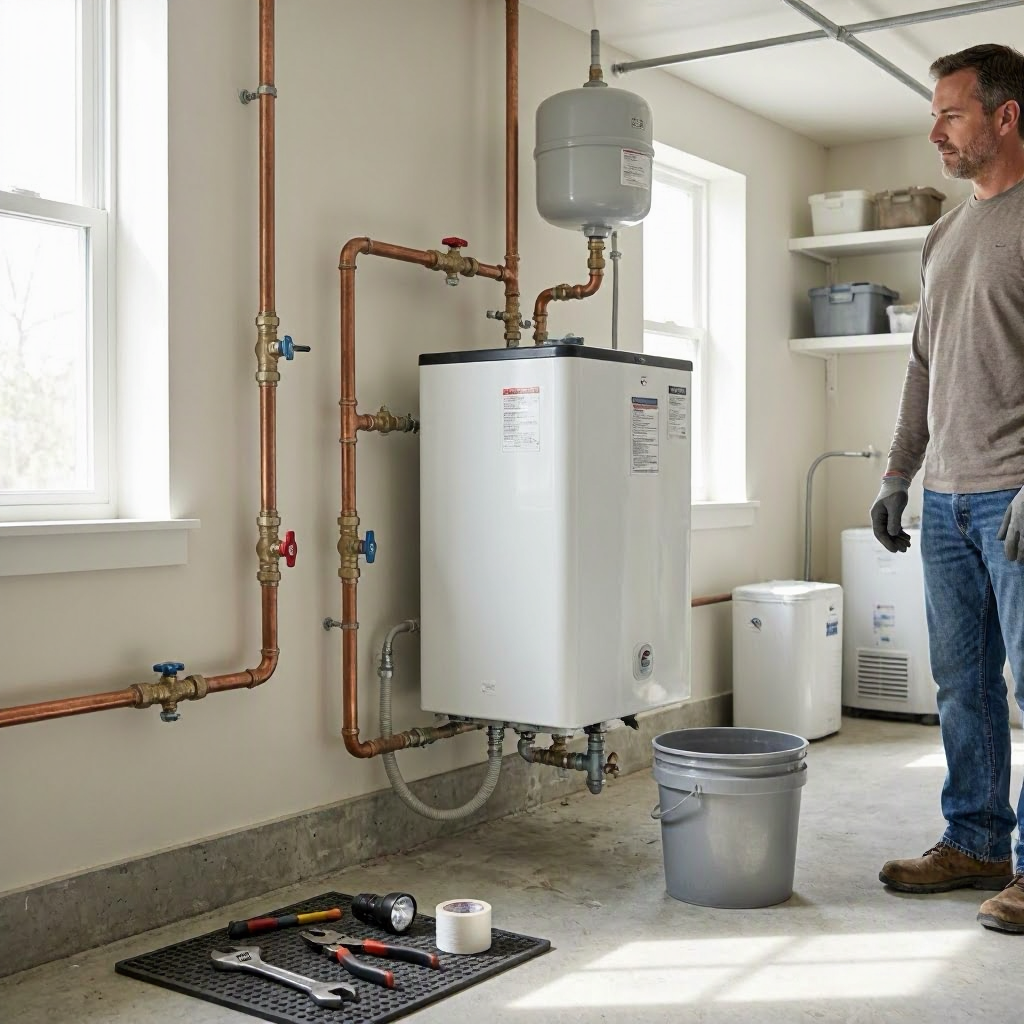
Water Heater Expansion Tank Installation Cost
Installing a water heater expansion tank is a common, but sometimes confusing, home repair. If your plumber has mentioned you need one, or if you're facing pressure-related issues with your plumbing, understanding the cost and process is key. This guide walks you through the estimated price, who to hire, and how to protect your warranty, so you can make an informed decision without overpaying.
A water heater expansion tank is a safety device that protects a closed plumbing system from excess pressure caused by heating water. It is often required when a check valve, backflow preventer, or pressure-reducing valve prevents water from expanding back into the main supply. Skipping it can lead to stress on your pipes, valves, and the water heater itself.
Estimated costs and what affects the price - A comparison
- Estimated costs and what affects the price
- A comparison of DIY versus professional installation
- Who to contact for installation, repair, and warranty support
- Step-by-step warranty claim instructions
- State-specific licensing and permit checks
- Key questions to ask a contractor
- Warning signs of a bad installer
- Frequently asked questions
Additional reference details:
- Item: Typical cost , Detail: $150 to $450, with an average around $325
- Item: Best first contact , Detail: A licensed local plumber
- Item: Main safety warning , Detail: If you smell gas, see active flooding, smell burning, or see hot water discharging from the TPR valve, stop using the unit and call a licensed pro or emergency service.
- Item: Warranty proof needed , Detail: Receipt, model/serial numbers, install date, installer invoice, photos, and permit/inspection record if applicable.
- Item: When to call a pro , Detail: For all installation, gas work, pressure testing, and when a warranty claim requires a professional diagnosis.
Who to call first: A licensed local plumber for instal
- Who to call first: A licensed local plumber for installation or diagnosis.
- What will it cost: The typical range for installation is $150 to $450, plus the cost of the tank itself ($40 to $200).
- Warranty proof needed: Keep your receipt, the installer's invoice, and photos of the serial number and installation.
- Office to check: Always verify a plumber's license with your state board and call your local city/county building department about permits.
- Warning signs: An installer who won't provide a license number, pressures for full payment upfront, or says permits are never needed.
- Avoid DIY for: Any work involving gas lines, complex piping, or if you want to preserve the manufacturer's full warranty.
| Item | Details |
|---|---|
| Main customer question | What will this cost, who should I call, and how do I avoid overpaying or losing warranty? |
| Best first contact | Licensed local plumber; brand support if under warranty; retailer for purchase/delivery issues. |
| Estimated cost range | $150–$450 typical installation; $40–$200 for the tank part. |
| Labor charges | Often 1–2 hours if access is easy; more if piping modifications are needed. |
| Fitting/installation contact | A licensed plumber for sizing, installation, and pressure testing. |
| Official brand contacts | See the detailed contact table below for Rheem, A.O. Smith, Bradford White, and others. |
| Retailer contacts | Home Depot: 1-800-466-3337. Lowe's Installation: 1-877-465-6937. |
| Warranty claim documents | Receipt, serial/model number, install date, installer invoice, photos, permit/inspection record. |
| State/local agency to check | Your state's plumbing licensing board and your local city/county building department. |
| Safety warning | Stop use and call a pro for gas smell, active flooding, electrical burning smell, or hot TPR discharge. |
| Important URLs | See the "Sources and Verification Notes" section at the end for all official links. |
The total cost to install a water heater expansion tank typically ranges from $150 to $450, with a national average around $325. This price usually includes both parts and labor. The expansion tank part alone has a broad retail range of $40 to $200, depending on its size and quality.
Several key factors can change the final price on your quote:
- Tank Size and Pressure Rating: The tank must be correctly sized for your water heater's capacity and your home's water pressure.
- Access and Pipe Materials: Easy access to the water heater area keeps labor low. Complicated piping or the need to solder copper pipes will increase time and cost.
- Permit and Inspection Rules: Some local jurisdictions require a permit and inspection for water heater work, which adds a fee.
- Additional Work Needed: If your home's water pressure is too high, you may also need a pressure regulator replaced, which can cost $200 to $700.
Average Cost: The typical price to install a water heater expansion tank is between $150 and $450.
Labor for a straightforward installation is often 1 to 2 hours. Remember that skipping a required expansion tank can lead to much higher costs later, contributing to leaks and premature valve failure in your plumbing system.
For a handy homeowner, installing an expansion tank can seem simple. It involves shutting off the water, draining pressure, and screwing the tank onto a tee fitting near the water heater. The required tools are common: pipe wrenches, Teflon tape, and perhaps soldering equipment if modifying copper pipes.
However, professional installation is strongly recommended in most cases.
Call a licensed plumber if: the installation requires cutting and soldering copper pipes, if you have a gas water heater (due to combustion safety), or if you need a pressure test to confirm the system is closed. Most importantly, a professional installation helps preserve your water heater's manufacturer warranty. Many warranties can be denied if installation did not follow code or was performed by an unlicensed person.
DIY Is Usually Safe Only If: You are confident working with plumbing, have the right tools, and your system allows for a simple screw-in connection without complex modifications.
Your first call should almost always be to a licensed local plumber for sizing, installation, and any diagnosis of pressure-related issues. They understand local codes and can ensure the job is done correctly.
For specific situations, start with these contacts:
- Brand Warranty Support: If your water heater has failed and you suspect pressure-related damage, contact the manufacturer after you have your model number and a plumber's diagnosis.
- Retailer: For issues with a recently purchased tank or installation scheduled through a big-box store, contact the retailer directly.
- Local Building Department: Call to ask if a permit and inspection are required for the work in your area.
- Water Utility: If you suspect consistently high or fluctuating incoming water pressure, your utility company can provide information or test pressure at the meter.
| Brand / Route | Phone / Contact | Official Website | Use This For |
|---|---|---|---|
| Home Depot | 1-800-466-3337 | homedepot.com/customer-service | Product returns, order issues, store installation, receipts. |
| Lowe's | Installation: 1-877-465-6937 Customer Care: 1-800-445-6937 | lowes.com/l/help | Installation scheduling, product orders, delivery, warranty paperwork. |
| Rheem | 1-800-432-8373 | rheem.com/warranties | Warranty registration, verification, parts, model/serial support. |
| A. O. Smith | 877-552-0010 (common support) | hotwater.com/support | Warranty status, product manuals, repair service locator. |
| Bradford White | Warranty: 800-531-2111 | bradfordwhite.com/contact-bradford-white | Warranty questions. Consumers should start with a licensed plumber. |
| Rinnai | 800-621-9419 | rinnai.us/support/warranty | Tankless product warranty and service. |
| Navien | 800-519-8794, option 2 | navieninc.com/support | Tankless/boiler technical support and warranty. |
| State Water Heaters | 877-552-0010 | statewaterheaters.com/support | Product support, documents, warranty verification. |
If you need to file a warranty claim for your water heater, proper documentation is critical. Manufacturers may question claims if code-required pressure control devices like an expansion tank were missing.
Follow these steps: 1. Stop Use for Safety: If there are leaks, gas smells, electrical burning smells, or active flooding, stop using the heater and call a licensed plumber or emergency service immediately. 2. Gather Documentation: Collect your purchase receipt, the installer's invoice, the water heater's serial and model numbers, and the installation date. 3. Take Photos and Video: Photograph the rating plate on the heater, the overall installation, the expansion tank, pressure regulator, and clearly document the problem. 4. Get a Professional Diagnosis: Have a licensed plumber provide a written diagnosis. Many manufacturers require this before approving warranty parts. 5. Contact the Right Party: Start with the seller (retailer/installer) for return or delivery problems. Contact the manufacturer directly for product warranty issues. 6. Submit Your Claim: Provide all your documentation. If the claim is denied, request the reason in writing.
Warranty Documents Needed: Receipt, installer invoice, serial number, installation date, photos, and permit/inspection record if applicable.
State-Specific or Local Checks
Water heater work is regulated by state and local rules. Always verify a plumber's license and check permit requirements before paying a deposit. Use this table as a starting point, then confirm with your local offices.
Additional reference details:
- State / Area: California , What to Do Before Hiring: Verify contractor through CSLB; ask for a C-36 plumbing license. , Agency or Office to Check: CSLB license lookup and local building department.
- State / Area: Texas , What to Do Before Hiring: Verify plumber through Texas State Board of Plumbing Examiners (TSBPE). , Agency or Office to Check: TSBPE and local building department.
- State / Area: Florida , What to Do Before Hiring: Check DBPR/CILB licensing; confirm local water heater permit rules. , Agency or Office to Check: Florida DBPR and local building department.
- State / Area: New York City , What to Do Before Hiring: Work usually needs a Licensed Master Plumber to file for DOB inspections. , Agency or Office to Check: NYC Department of Buildings.
- State / Area: Illinois , What to Do Before Hiring: Use IDPH plumbing licensing resources; confirm local permit needs. , Agency or Office to Check: Illinois Department of Public Health and local building department.
- State / Area: All Other States , What to Do Before Hiring: Verify the plumber's state license and call your city/county permit office. , Agency or Office to Check: State licensing board + local building department.
Before you approve any quote or pay a deposit, ask the contractor these key questions:
- What exact model and capacity are you installing or repairing?
- Is this a repair, replacement, warranty job, or code upgrade?
- What labor rate, service fee, permit fee, and disposal fee are included?
- Will the work be performed by a licensed plumber or authorized installer?
- What happens if the city inspector requires additional work?
- What parts and labor warranty do you provide in writing?
- Who do I contact if the new unit fails within 30 days?
Stop the job and find another contractor if you encounter any of these warning signs:
- The installer has no license number, no business address, or refuses to say who will pull the permit.
- You are pressured to pay the full amount before work starts.
- The quote does not include the model, size, labor, permit, old-unit haul-away, or required items like an expansion tank.
- The installer says permits are "never needed" without checking your city/county rules.
- For gas units, the installer ignores questions about proper venting, combustion air, or gas line sizing.
Do Not Ignore: An installer who says permits are never needed. Always check with your local building department.
Practical Step-by-Step Guidance
For a smooth expansion tank installation or related repair, follow this action plan: 1. Diagnose the Need: Confirm you have a closed system (often indicated by a check valve or pressure-reducing valve). A plumber can perform a simple pressure test. 2. Get Multiple Quotes: For non-emergency work, get at least three quotes from licensed plumbers. Compare the scope, equipment model, and warranty, not just the lowest price. 3. Verify and Validate: Check each plumber's state license and call your local building department to ask about permit requirements for the job. 4. Review the Quote: Ensure the written quote includes all items from the "What to Ask" list above. Never proceed without a detailed, written quote. 5. Document Everything: From the quote to the final invoice, keep all paperwork. Take photos of the completed installation, especially the expansion tank and its connections.
Frequently Asked Questions
Should I call a plumber, electrician, or the brand first? Call a licensed plumber first for water leaks, tank replacement, gas connections, TPR valves, expansion tanks, or pressure issues. Call an electrician only for clearly electrical issues like circuit problems. Call the brand after you have your model number and a plumber's diagnosis.
Can I claim warranty if I installed the heater myself? Maybe, but warranty claims can be denied or limited if installation did not follow the manufacturer's manual, local code, or permit rules. If you DIY, keep meticulous records: invoice, serial number photo, installation photos, and any permit record.
Can a big-box store handle the installation? Home Depot and Lowe's may coordinate installation through independent installers. You should still confirm the installer's licensing, who pulls the permit, what is included (like haul-away), and the warranty paperwork before approving the job.
Should I get three quotes? For non-emergency work, yes. This allows you to compare the full scope of work, the contractor's credentials, and the warranty offered.
What if my warranty claim is denied? Request the denial reason in writing. Check if it was due to age, improper installation, lack of maintenance, high water pressure, or unauthorized parts. This information can guide your next steps or a discussion with a different professional.
This article uses publicly available cost guides, retailer support pages, manufacturer warranty pages, and official state licensing resources. Key sources include:
- HomeAdvisor & Angi cost guides for water heater installation, repair, and expansion tanks.
- Energy.gov guides on selecting and maintaining water heaters.
- Official customer service pages for Home Depot, Lowe's, Rheem, A.O. Smith, Bradford White, Rinnai, Navien, Noritz, Takagi, and State Water Heaters.
- State licensing websites for California (CSLB), Texas (TSBPE), Florida (DBPR), New York City (DOB), Illinois (IDPH), Washington (L&I), Massachusetts, New Jersey, and Georgia.
Always re-check brand phone numbers, current warranty terms, local permit rules, and labor charges before starting your project, as this information can change.
This guide provides national planning estimates and steps based on publicly available information. Costs, codes, and contacts vary by city, state, and manufacturer. Always verify details with licensed professionals, official brand support, your retailer, state licensing boards, and your local building department before making final decisions or payments.

About the TDL Expert Panel
TDL Expert Panel · TheDigitalLife Editorial Team
TDL Expert Panel is the editorial team behind TheDigitalLife. The team researches, reviews, and creates practical guides to help everyday readers make better decisions about home repair costs, refunds, AI tools, digital safety, productivity, and useful online resources. Each guide is written to be clear, useful, and easy to understand.