Voluntary repossession cost: fees, credit impact, and deficiency balance
Understanding Voluntary Repossession
If you're struggling with car payments in the United States, voluntary repossession might come up as an option. This happens when you contact your lender and agree to surrender your vehicle before they take it involuntarily. It's often seen as a way to avoid the stress of a surprise repo, but it still carries significant costs, fees, credit damage, and potential debt.
Voluntary repossession does not erase your loan obligation. The lender sells the car, usually at auction, and you may owe a deficiency balance, the difference between what they recover and what you owed. Costs can add up quickly, affecting your finances for years. This guide breaks down the fees, credit effects, deficiency balances, and steps to consider, all in a U.S. context.
Before deciding, review your loan agreement for terms on repossession, fees, and deficiency judgments. Contact your lender to discuss hardship options first, as many offer temporary relief under federal guidelines from the Consumer Financial Protection Bureau (CFPB).
Key Differences: Voluntary vs. Involuntary Repossession
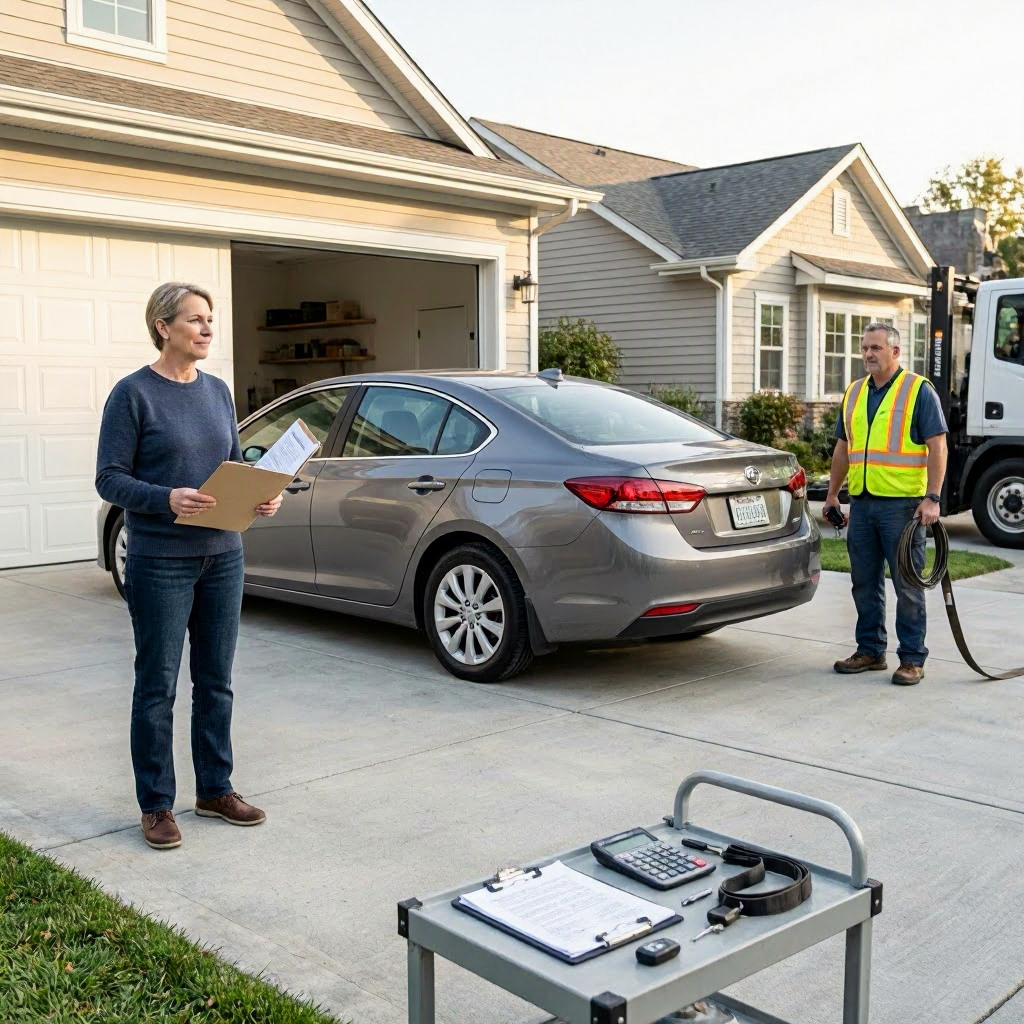
Voluntary repossession starts with you notifying the lender, often by phone or certified mail, that you cannot continue payments and agree to return the car. The lender arranges pickup, typically without breaking into your garage or towing from private property.
Involuntary repossession occurs after missed payments, usually 60-90 days late, when a repo agent takes the vehicle without notice. This can happen at night or from public spots like work parking lots.
Voluntary repossession may lead to slightly less severe credit reporting, as some lenders note it as "voluntary surrender" instead of "repossession." However, both damage your credit similarly. According to CFPB data on auto loans, repossessions surged during economic hardships, highlighting their long-term impact.
| Aspect | Voluntary Repossession | Involuntary Repossession |
|---|---|---|
| Initiation | You contact lender | Lender after defaults |
| Notice | You provide it | None required in most states |
| Breach of peace | Less likely | Repo agent must avoid force |
| Credit notation | Often "voluntary surrender" | "Repossession" |
| Fees | Similar, but negotiable | Full repo agent costs |
This table shows core differences, but check your state's laws, as they vary. For example, some states like Texas allow self-help repossession without court orders.
Common Fees in Voluntary Repossession
Fees pile up even in voluntary cases because lenders treat it like any repossession. Expect charges for towing, storage, preparation, and sale. These deduct from auction proceeds before applying to your balance.
Repossession fee: Covers agent services, often $300-$700, depending on location and vehicle size. Urban areas like Los Angeles or New York charge more due to traffic.
Storage fees: Daily rates of $20-$50 per day until sale, which can take 10-30 days. Parked vehicles accrue quickly if not sold fast.
Skip tracing or collateral protection: If your location was hard to find or insurance lapsed, add $50-$200.
Auction or sale fees: 10-20% of sale price goes to auction houses.
Preparation costs: Cleaning, minor repairs, or transport to auction, $100-$500.
Late fees and interest: Accrue until surrender date.
Total fees often range from $500 to $2,000 or more, varying by lender policy, state, vehicle value, and how long it sits in storage. The CFPB's repossession report notes these costs reduce recovery amounts, increasing deficiencies.
Negotiate fees upfront. Ask your lender: "Can you waive storage by selling quickly?" or "Will you cover towing since it's voluntary?" Get everything in writing. Document the vehicle's condition with photos before handover to dispute inflated prep fees.
Factors Affecting Your Total Voluntary Repossession Costs
Costs aren't fixed; they depend on several variables:
- Vehicle value vs. loan balance: Upside-down loans (owing more than worth) lead to larger deficiencies.
- Lender policies: Credit unions may charge less than subprime lenders.
- State regulations: California caps some storage fees; others don't.
- Timing: Surrender early in the month avoids extra interest.
- Location: Rural repos cost less than city ones.
- Vehicle condition: Damaged cars fetch lower auction bids.
Review your payoff quote from the lender, which includes principal, interest, and fees to date. Use it to estimate post-sale debt. Tools from the CFPB consumer portal can help understand auto loan terms.
To lower costs: 1. Shop the car yourself before surrendering; some lenders allow private sales for higher recovery. 2. Request a payoff quote and surrender date to minimize accruing interest. 3. Ask about fee waivers for voluntary compliance.
Credit Impact of Voluntary Repossession
A voluntary repossession hurts your credit score significantly. FICO scores drop 100-150 points or more, depending on your prior credit. It stays on your report for 7 years from the first delinquency date.
Credit bureaus (Equifax, Experian, TransUnion) list it under "repossession" or "voluntary surrender." Lenders report it after sale. Late payments leading up compound the damage.
Impacts include:
- Higher loan rates: New auto loans at 10-20% APR vs. 4-7% pre-repo.
- Denied credit: Harder to finance homes, cards, or rentals.
- Employment checks: Some jobs review credit.
Per CFPB research, post-repo borrowers face elevated rates for years. Monitor your reports free weekly at AnnualCreditReport.com. Dispute errors like incorrect balances.
Recovery timeline: Scores rebound in 1-2 years with on-time payments elsewhere, but full effects linger.
| Time After Repo | Typical FICO Impact | Steps to Mitigate |
|---|---|---|
| 0-6 months | -100 to -150 points | Pay other bills on time |
| 6-12 months | -80 to -120 | Build secured credit |
| 1-2 years | -50 to -100 | Limit new credit apps |
| 2-7 years | Fading gradually | Continue positive history |
Use secured cards or credit-builder loans to rebuild. Avoid new debt during recovery.
What Is a Deficiency Balance?
After repossession, the lender sells the car and applies proceeds to your loan. Deficiency balance is remaining debt: unpaid principal, interest, fees minus sale price.
Example: Owe $15,000 payoff. Car sells for $10,000. Fees: $1,500. Deficiency: $6,500.
Auctions yield 40-60% of retail value, worsening deficiencies for older or high-mileage cars. Lenders can sue for deficiencies in most states, leading to judgments, wage garnishment, or liens.
Deficiency waivers are rare but possible via hardship programs. CFPB urges reviewing servicer options before surrender.
States like Colorado limit pursuits after 3 years; others allow indefinitely until statute of limitations (3-6 years typically).
Calculating and Handling Deficiency Balances
Request a post-sale statement detailing sale price, fees, and balance. Federal law (FCRA) requires accurate reporting.
If sued:
- Respond to summons; ignoring leads to default judgment.
- Negotiate settlements, often 40-60% of amount.
- Check statute of limitations via state attorney general.
Bankruptcy Chapter 7 or 13 can discharge deficiencies, but consult a lawyer. Nonprofits like the National Foundation for Credit Counseling offer free advice.
Avoid collections escalation: Pay or settle promptly to prevent score drops from charge-offs.
Steps to Take Before Voluntary Repossession
Don't rush into surrender. Explore alternatives:
- Contact lender immediately: Ask for deferment, forbearance, or modification. CFPB's auto loans page lists rights.
- Refinance: Shop credit unions or online lenders if credit allows.
- Sell privately: List on Craigslist, Facebook Marketplace, or Autotrader. Payoff proceeds to lender.
- Trade-in: Dealerships may roll negative equity (cautiously).
- Lease assumption or car contribution: Rare, but check.
- Public assistance: SNAP, unemployment for temp relief.
Gather documents: loan statements, payoff quote, income proof. Many lenders must consider workouts under servicing rules.
For gig workers or families, calculate if cheaper transport (bus, rideshares) beats ongoing payments.
How to Initiate Voluntary Repossession Safely
If no alternatives work:
- Get written payoff amount.
- Notify lender in writing (certified mail): state intent, proposed date/location.
- Clean and document vehicle: full tank, keys, titles if held.
- Hand over at safe public spot; get receipt.
- Request fee/sale details timeline.
Keep records for 7 years. Inform renters/homeowners if garaged there.
State Variations in Repossession Rules
Rules differ by state:
- Notice requirements: Some mandate pre-repo notices.
- Deficiency judgments: 40+ states allow; 10 ban (e.g., Kentucky).
- Repo agent licensing: Required in states like Florida.
Verify via your state DMV or attorney general site. Nolo.com offers state summaries, but confirm officially.
Rebuilding After Voluntary Repossession
Focus on stability:
- Budget without car payments.
- Use public transit, bikes, or carpools.
- Save for future down payments (20% ideal).
- Track credit weekly.
Success stories: Many rebound in 2 years with disciplined habits. CFPB resources aid recovery.
When to Seek Professional Help
Consult free credit counselors via NFCC.org or legal aid for low-income. Avoid debt settlement scams promising "erase repo."
For disputes, file with CFPB at consumerfinance.gov/complaint.
This process is tough but manageable with planning. Prioritize communication and documentation to minimize fallout.

About the TDL Expert Panel
TDL Expert Panel · TheDigitalLife Editorial Team
TDL Expert Panel is the editorial team behind TheDigitalLife. The team researches, reviews, and creates practical guides to help everyday readers make better decisions about home repair costs, refunds, AI tools, digital safety, productivity, and useful online resources. Each guide is written to be clear, useful, and easy to understand.