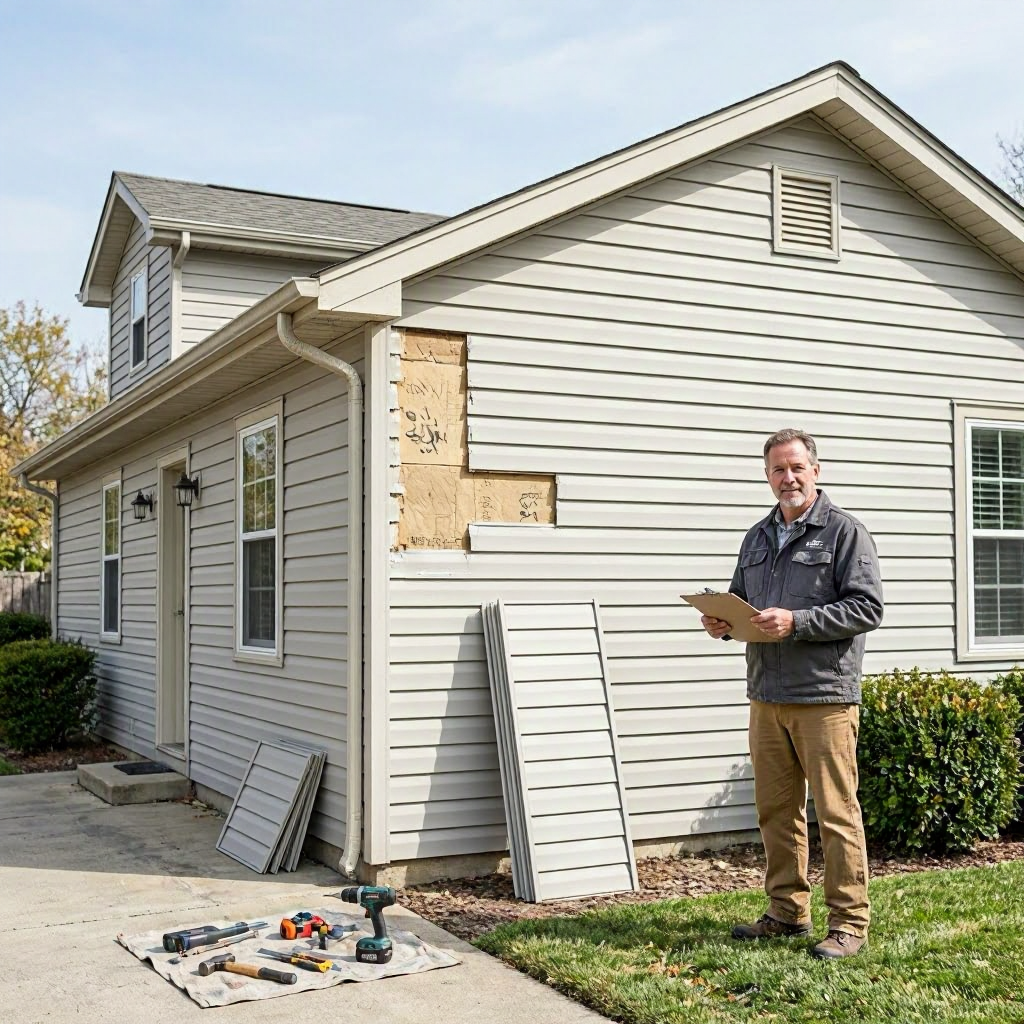
Vinyl siding replacement cost by home size
Understanding Vinyl Siding Replacement
Vinyl siding covers the exterior walls of many American homes, offering a low-maintenance shield against weather. Over time, it can crack, warp, fade, or suffer hail damage, leading homeowners to consider full replacement. Replacing it restores curb appeal, improves energy efficiency, and prevents water intrusion that could damage underlying wood or insulation.
Home size plays a major role in total costs because siding is priced by square foot. A small ranch-style home needs far less material and labor than a two-story colonial. Costs also shift based on your location, siding style, and whether old siding needs removal.
Before budgeting, measure your home's exterior walls. Subtract openings like windows and doors, then add 10% for waste. This gives your square footage, a key number for accurate estimates.
Signs Your Vinyl Siding Needs Replacement
Not every ding requires a full swap. Spot minor issues early to avoid bigger bills.
Look for buckling panels from heat expansion, especially in southern states. Cracks from impacts or freeze-thaw cycles signal vulnerability. Faded color or chalky residue means UV damage has set in.
Mold, mildew, or soft spots under panels point to moisture problems. If wind has loosened seams, water can seep behind, rotting sheathing. Inspect after storms, as hail dents are common in Midwest hail belts.
Replacement makes sense if repairs exceed 20-30% of new siding costs or if multiple walls show wear. Patching works for isolated damage, but mismatched panels look patchy.
Average Vinyl Siding Replacement Costs by Home Size
Costs vary widely by region, home condition, and choices like insulation upgrades. Expect $5 to $15 per square foot installed, including materials and labor. This covers basic vinyl; premium options push higher.
National averages provide a starting point, but get local quotes. Labor runs $2 to $6 per square foot, materials $3 to $8. Removal of old siding adds $1 to $2 per square foot.
Here's a breakdown by typical home sizes:
| Home Size | Approx. Sq. Ft. of Siding | Low-End Cost Range | Mid-Range Cost Range | High-End Cost Range |
|---|---|---|---|---|
| Small (ranch, 1-story) | 800-1,200 | $4,000-$7,200 | $6,000-$12,000 | $10,000-$18,000 |
| Medium (1.5-2 story) | 1,500-2,000 | $7,500-$12,000 | $10,000-$20,000 | $15,000-$30,000 |
| Large (2+ story, multi-level) | 2,500-3,500 | $12,500-$21,000 | $18,000-$35,000 | $25,000-$50,000+ |
These ranges assume standard installation without extras like under-siding insulation. Coastal areas or older homes with asbestos-wrapped old siding inflate prices. Always factor in your zip code's labor rates.
For a 1,800 sq. ft. medium home in the Midwest, a basic job might hit $15,000. In California, the same could top $25,000 due to higher wages and codes.
Key Factors Influencing Vinyl Siding Costs
No two jobs are identical. Understand these drivers to spot padded estimates.
Home Size and Layout
Larger homes mean more siding, but complexity multiplies costs. Two-story homes require scaffolding, adding 20-50% to labor. Steep roofs, dormers, or bay windows demand custom cuts, slowing crews.
Multi-level designs or homes on slopes complicate access. A single-story ranch is quickest; tally square footage accurately to compare bids.
Material Choices
Vinyl comes in thicknesses from .035 to .046 inches. Thicker "engineered" vinyl resists dents better but costs more.
Styles like Dutch lap or board-and-batten affect price. Colors matter, too: whites are cheapest; dark custom shades add fees. Insulated backing boosts R-value, raising costs $1-3 per square foot for energy savings.
Lowes or Home Depot stock basics; pros source bulk for discounts.
Labor and Installation Method
Crews charge by square foot or day. A three-person team covers 200-400 sq. ft. daily. Hilly terrain or tight neighborhoods hike fuel and setup time.
Full removal versus installing over old siding saves $1,000-$3,000 on small homes. Over-installing risks trapped moisture, so check local codes.
Union labor in cities like New York pushes rates higher than rural areas.
Location and Regional Differences
Costs soar in high-cost states like California or New York ($8-18/sq. ft.) versus the South ($4-10/sq. ft.). Urban permits and disposal fees add up.
Hurricane-prone Florida requires impact-resistant vinyl, bumping prices. Check your area's prevailing wages via local contractor associations.
Home Age and Condition
Pre-1980s homes may have asbestos or lead paint under old siding, requiring abatement ($2,000-$10,000 extra). Rotted sheathing needs repair first.
Newer homes with house wrap install faster.
Detailed Cost Breakdown
Separate materials from labor for smarter budgeting.
Materials account for 40-60% of total. A 2,000 sq. ft. job: $6,000-$12,000 in vinyl, trim, soffit, and accessories.
Labor: $4,000-$12,000, depending on access. Diagnostic or prep work, like power washing, adds $300-$800.
Disposal: $500-$1,500, as landfills charge by volume. Recycling vinyl cuts this.
Sample Estimate Line Items
A good quote details:
- Siding panels: X sq. ft. at $Y/sq. ft.
- Trim and corners: Z linear feet.
- Labor: Hours or sq. ft. rate.
- Old siding removal.
- Dumpster rental.
- Permits if needed.
Demand itemization before signing.
Additional Expenses Beyond Basic Replacement
Budget 10-20% extra for surprises.
Permits: Many areas require them for exterior work ($100-$500). Check your local building department.
Scaffolding/equipment: $500-$2,000 for tall homes.
Repairs: Fix rot or pests first ($1,000+).
Painting accents: Doors or trim ($500-$1,500).
Gutters/downspouts: Often replaced together ($5-$15/linear foot).
HOA approvals may delay work in subdivisions.
DIY vs. Professional Installation
DIY suits handy homeowners with small areas, like a 800 sq. ft. garage. Tools needed: siding starter strips, level, tin snips, compressor for nails.
Rentals: Nail gun ($50/day), ladders.
But full-home jobs demand pros. Heights risk falls; uneven installs leak. Codes often mandate licensed installers.
DIY feasibility table:
| Home Size/Project | DIY Recommended? | Pro Recommended? | Key Risks |
|---|---|---|---|
| Under 500 sq. ft. (shed/garage) | Yes, if experienced | If heights involved | Minor leaks |
| 800-1,500 sq. ft. (small home) | Possible with help | Preferred | Scaffolding safety, codes |
| Over 1,500 sq. ft. | Rarely | Always | Access, warranties voided |
Safety first: Never work alone on roofs. Pros carry insurance.
Steps to Get Accurate Quotes
Shop three to five licensed contractors. Use Angi or HomeAdvisor for locals, but verify licenses via state boards.
Before calling:
- Measure siding area.
- Note access issues.
- List must-haves (color, insulation).
Visit sites; check references. Video calls work for initial chats.
Questions to ask:
- Is removal included?
- What's your labor rate and timeline?
- Licensed, bonded, insured? (Workers' comp proof.)
- Warranty details?
- Payment terms? (Never full upfront.)
- Subcontractors?
Compare apples-to-apples: Reject vague "around $10k" bids.
Ways to Reduce Vinyl Siding Replacement Costs
Trim the bill without skimping.
- Install over existing if code allows (saves 20%).
- Choose mid-grade vinyl.
- Bundle with gutters or windows.
- Off-season work (fall/winter discounts).
- Energy rebates via HUD programs like Title I loans.
HUD's home improvement resources (hud.gov/helping-americans/home-improvements) outline financing. For rehabs, explore 203(k) loans (hud.gov/hud-partners/single-family-203k).
Shop sales at big-box stores. Crews working locally may undercut out-of-towners.
Permits, Inspections, and Codes
Most siding swaps need permits in cities over 50,000 population. Rural areas vary.
Contact your building department early. Structural changes or over 30% exterior work trigger inspections.
Fines for skipping: $500+. Pros handle paperwork.
HOA rules may dictate colors or styles.
Insurance, Warranties, and Financing
Homeowners insurance covers storm damage, not wear. File claims for hail; deductibles apply.
New siding carries lifetime limited warranties from makers like CertainTeed. Labor warranties: 5-10 years.
Home warranties rarely cover siding. Document pre-work photos.
Financing: Credit cards for small jobs; personal loans or HELOCs for large. HUD aids low-income owners.
Renters and Condo Owners
Renters: Notify landlord in writing. Leases assign exterior maintenance to owners.
Condos/HOAs: Exteriors often association responsibility. Review bylaws; vote on bids if needed.
Maintenance to Avoid Future Replacements
Extend life to 20-40 years.
- Wash annually with mild soap.
- Trim overhanging branches.
- Caulk gaps yearly.
- Clear gutters to prevent ice dams.
- Inspect post-storms.
Early fixes like re-nailing loose panels prevent escalation.
Vinyl beats wood for longevity with care. In humid areas, ventilate to fight mold.
Replacing vinyl siding by home size demands planning, but armed with factors and quote tips, you'll avoid surprises. Measure up, quote smart, and choose durable materials for lasting value.

About the TDL Expert Panel
TDL Expert Panel · TheDigitalLife Editorial Team
TDL Expert Panel is the editorial team behind TheDigitalLife. The team researches, reviews, and creates practical guides to help everyday readers make better decisions about home repair costs, refunds, AI tools, digital safety, productivity, and useful online resources. Each guide is written to be clear, useful, and easy to understand.