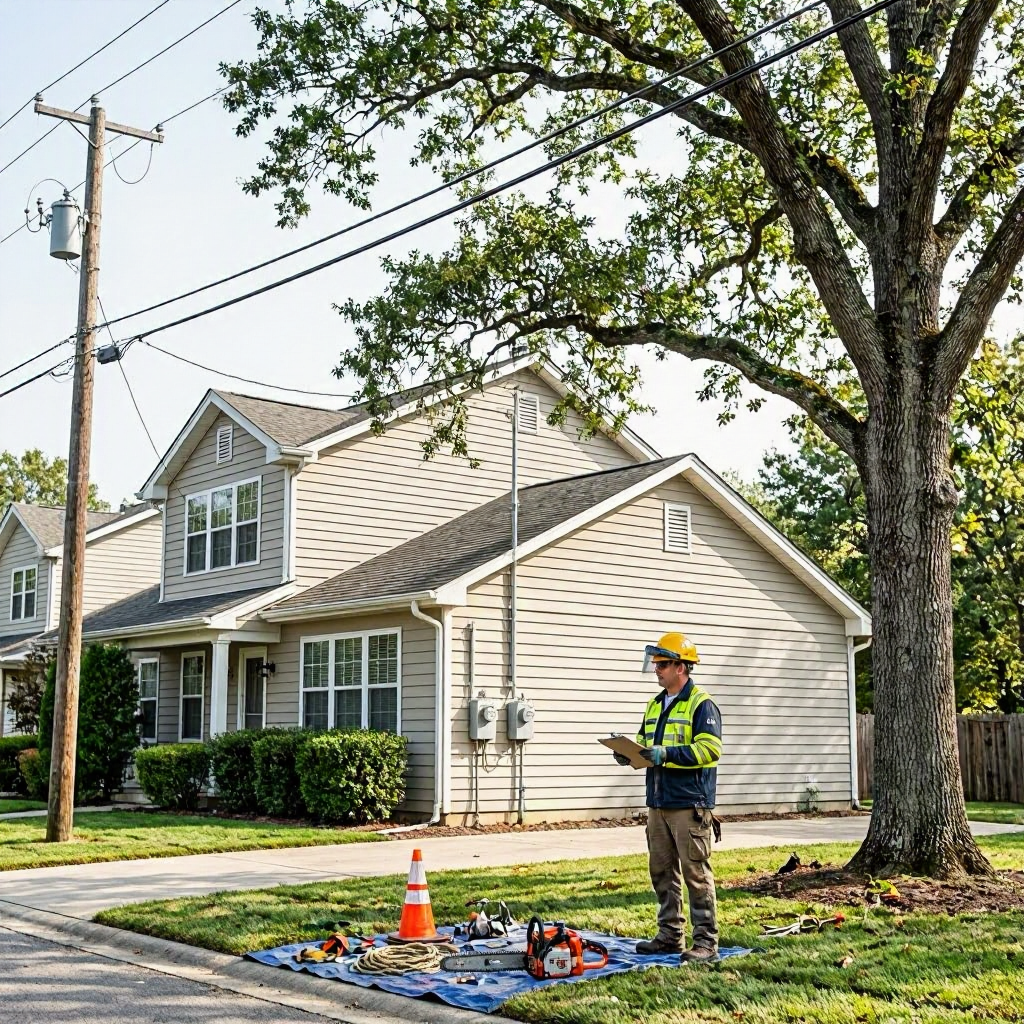
Tree removal cost near a house or power line
Why Tree Removal Near a House or Power Line Can Be Pricey and Risky
Homeowners often face tough decisions when a tree grows too close to their house or dangles over power lines. These situations raise safety concerns like branch falls during storms, root damage to foundations, or electrical hazards from leaning trunks. Removing such trees isn't a simple yard cleanup, it demands specialized skills to avoid property damage or injury.
Costs climb quickly due to the precision required. Factors like tree height, lean angle, access issues, and utility involvement drive up labor and equipment needs. Understanding these helps you prepare, compare bids, and spot fair pricing from local tree services in your area.
This guide breaks down what influences tree removal costs near structures or wires, steps to take before approving work, and ways to handle insurance or assistance programs. You'll learn how to assess urgency, decide on professionals over DIY, and ask the right questions for transparent estimates.
Common Signs a Tree Near Your House or Power Lines Needs Removal
Look for leaning trunks, cracked branches, or soil heaving around roots, signals of instability that could worsen in wind. Trees rubbing against siding or rooflines invite moisture damage and pest entry. Overhanging power lines pose immediate risks, like sparks from contact or fallen limbs causing outages.
Dead or dying sections, especially topside, indicate root rot or disease, common in older urban trees. Mushrooms at the base or peeling bark suggest internal decay, making collapse likely. If roots crack driveways or bulge near foundations, removal prevents costlier structural repairs.
Storms amplify urgency: inspect after high winds for fresh cracks or shifts. Document with photos from multiple angles, including measurements and proximity to your home or wires. This evidence supports insurance claims or contractor assessments.
For power line trees, err on caution. Even minor contact risks electrocution during trimming. Contact your local utility company first if branches touch lines, they handle initial clearances at no cost in many cases.
Safety Risks: Why These Removals Demand Professionals
Tree work near houses risks roof punctures, window breaks, or foundation hits from falling sections. Power lines add electrocution dangers, with voltages capable of arcing 10 feet or more. DIY attempts here often lead to severe injuries or thousands in added damage.
Qualified arborists use rigging, cranes, and bucket trucks to sectionalize trees, lowering pieces safely. They assess drop zones, secure rigging lines, and coordinate spotters. Homeowners lack this gear and training, turning a $1,000 job into emergencies requiring ambulances or structural engineers.
Urgency varies: imminent fall risks demand same-day service, inflating costs 20-50% for rush fees. Stable but hazardous trees allow shopping quotes over days. Always prioritize safety over savings, check for utility marks before any digging.
Key Factors Driving Tree Removal Costs Near Houses or Power Lines
Pricing hinges on site-specific challenges, not one-size-fits-all numbers. Expect variations by region, like higher urban rates in California versus rural Midwest, influenced by labor shortages, regulations, and equipment transport.
Tree Size and Condition
Larger diameters mean heavier sections, requiring cranes for trees over 50 feet tall. Healthy trees cut quicker than decayed ones, which splinter unpredictably and demand slower dismantling. Height alone can double costs from small saplings to mature oaks.
Proximity to Structures
Trees within 10-15 feet of homes need hand-felling or sectionalizing to protect roofs and gutters. Tight spaces limit equipment, forcing manual labor with ropes and saws. Stumps near foundations complicate grinding, often needing excavators.
Power Line Involvement
Wires mandate utility coordination, permits, and de-energizing lines, adding delays and fees. Arborists certified for utility work use insulated tools, slowing progress. Proximity under 20 feet typically triples base costs due to liability insurance and specialized crews.
Site Access and Cleanup
Narrow driveways, fences, or slopes hinder truck positioning, requiring portable sawmills or winches. Disposal of 10-20 tons of wood adds hauling charges, unless you keep firewood. Urban lots with neighbors demand tarps and chippers to minimize debris spread.
Permits and Inspections
Local codes often require permits for trees over a certain size or in protected zones, checked via your city building department. HOAs add approval layers. Inspections verify compliance, especially near utilities.
Here's a breakdown of major cost influencers:
| Factor | Impact on Cost | Why It Matters |
|---|---|---|
| Tree height/diameter | Low (<30 ft: base), High (>60 ft: 2-3x) | Determines equipment like cranes vs. climbing |
| Distance to house | <10 ft: premium, >20 ft: standard | Precision sectionalizing protects structures |
| Power line proximity | Touching: utility mandatory, 10-20 ft: high | Permits, de-energizing, insulated gear required |
| Site access | Easy yard: low, sloped/urban: high | Affects machinery use and labor hours |
| Stump removal | Optional add-on | Prevents regrowth, eases landscaping |
| Cleanup/disposal | Full service: included premium | Hauling chips/wood vs. on-site piling |
Realistic Cost Ranges and What to Expect Locally
National averages provide ballparks, but your quote depends on an on-site evaluation. Small trees (under 30 feet) near houses start around $500-1,200, escalating to $2,000-5,000 for 50-80 footers hugging rooftops. Power line jobs average $1,500-4,000 extra due to utilities.
Cranes for tall, risky trees add $500-2,000 daily. Stump grinding: $150-500. Full cleanup: $200-600. Rush service post-storm: 25-50% markup. Multi-tree discounts apply for yards with several hazards.
Regional differences matter: coastal areas face premium pricing from demand and regulations, while heartland spots stay lower. Get 3-5 written bids from local services, noting inclusions like permits or warranties. Compare apples-to-apples by asking about crew size and timelines.
Avoid lowball quotes signaling inexperience, they risk accidents or incomplete work. High bids might cover premium insurance for liability near homes.
DIY Tree Removal: Rarely Safe Near Houses or Wires
For isolated, small dead trees in open yards, DIY with chainsaws and ropes works if you're experienced. But near houses or power lines, skip DIY entirely. Risks include property damage claims, electrical fires, or personal harm from kickback saws.
Rental gear like chippers costs $200-500/day, but without training, it's wasteful. Power tools near wires demand 50-foot buffers. Local fire departments advise against it, citing annual injuries.
Opt for pros: certified arborists via the International Society of Arboriculture (ISA) directory ensure expertise. They carry $1M+ liability insurance, protecting you from fallout.
Steps to Get Accurate Quotes Before Committing
Start with documentation: measure tree height, note lean, photograph issues, and map utilities (call 811 for free marking). List concerns like roof overhangs or fence access.
Solicit bids mid-week for better availability. Provide photos upfront for preliminary pricing, but insist on site visits for accuracy. Aim for estimates valid 30 days, detailing crew arrival and duration.
Visit city sites for permit rules, contact utilities for line clearances. For storms, check insurer first.
What a Solid Written Estimate Should Include
Demand itemized details:
- Tree specs: species, size, hazards.
- Method: climbing, crane, bucket truck.
- Equipment and crew size.
- Inclusions: permits, stump grinding, cleanup, disposal.
- Timeline and payment terms (e.g., 50% deposit, balance on completion).
- Warranties: 1-year on workmanship typical.
- Insurance proof: general liability, workers' comp.
Reject verbal promises or lump sums hiding upsells like "future pruning."
Essential Questions to Ask Tree Removal Companies
Prepare this list for calls:
- Are you ISA-certified? Bonded and insured? (Request certificates.)
- What's your experience with trees near homes/power lines?
- Will the utility be notified? Who's handling permits?
- Breakdown of costs: labor, equipment, disposal?
- How do you protect my property (tarps, padding)?
- Cleanup standard: chipped onsite or hauled?
- Payment schedule? Any cancellation policy?
- References from similar jobs nearby?
- Warranty details?
Note responses, cross-check licenses via state contractor boards.
Special Handling for Power Lines
Never touch trees contacting lines yourself. Call your utility (e.g., PG&E in CA, Duke Energy in Southeast) for free trimming up to 10-15 feet typically. Full removal if unstable often shifts to you, but they coordinate.
Utilities require TCIA/Utility Arborist Association training, justifying premiums. Expect 1-2 week waits for scheduling.
Homeowners Insurance and Tree Removal Coverage
Policies cover removal if trees damage your home from sudden perils like storms, typically up to $1,000-5,000 per tree without structure hit. Debris removal post-fall often included.
Exclusions apply to neglect, like dead trees you ignored. File claims promptly with photos, police reports for wind damage. Deductibles apply, so weigh small jobs against premiums.
Contact your agent pre-work; some reimburse pro removals for imminent threats.
Storm Damage: FEMA and Local Assistance
After declared disasters, FEMA Individual Assistance helps with housing repairs, including tree removal threatening habitability. Apply online at fema.gov/assistance/individual or via disaster centers.
FEMA housing aid covers temporary relocation if trees block access. SBA loans offer low-interest options for uninsured losses. Check eligibility by ZIP code on their site.
Local programs vary: some counties reimburse seniors or low-income for yard cleanups.
Renters, Landlords, Condos, and HOAs
Renters: notify landlord immediately, as leases assign major exterior work to owners. Document for habitability claims if safety risks exist.
Condo/HOA members: shared trees fall under association rules, check covenants for approvals. Exterior removals often HOA-funded.
Homeowners: verify no neighbor encroachments before bids.
Strategies to Lower Your Tree Removal Bill
Bundle jobs: remove multiple trees or add pruning for 10-20% savings. Schedule off-season (late fall/winter). Keep usable wood for firewood, skipping disposal fees.
Sell timber if large hardwoods, though rare for urban hazards. Negotiate by providing utility locates yourself.
Opt for stump grinding only if replanting, else cut flush and cover.
Preventive Maintenance to Avoid Costly Removals
Annual inspections spot issues early: hire arborists for $100-300 checks. Prune branches overreaching roofs or wires yearly.
Plant species with non-invasive roots, space 20+ feet from homes. Water deeply, mulch properly to fight disease.
Regular care halves removal odds, extending tree life safely.
| Maintenance Task | Frequency | Benefit |
|---|---|---|
| Visual checks for cracks/lean | Monthly | Catches decay early |
| Professional inspection | Yearly | Expert risk assessment |
| Pruning overhanging limbs | As needed | Reduces weight, wind sail |
| Root flare mulching | Biannual | Prevents rot |
| Soil testing | Every 3-5 years | Addresses nutrient lacks |
Final Action Plan: Next Steps for Your Tree Issue
- Assess and document: photos, measurements, utility call.
- Check insurance/landlord/HOA.
- Get 3+ site-visit bids using question list.
- Verify licenses, insurance.
- Approve itemized written estimate.
- Supervise work, keep records.
This approach ensures fair pricing, safety, and peace of mind for your home. Local pros deliver the best value tailored to your yard's realities.

About the TDL Expert Panel
TDL Expert Panel · TheDigitalLife Editorial Team
TDL Expert Panel is the editorial team behind TheDigitalLife. The team researches, reviews, and creates practical guides to help everyday readers make better decisions about home repair costs, refunds, AI tools, digital safety, productivity, and useful online resources. Each guide is written to be clear, useful, and easy to understand.