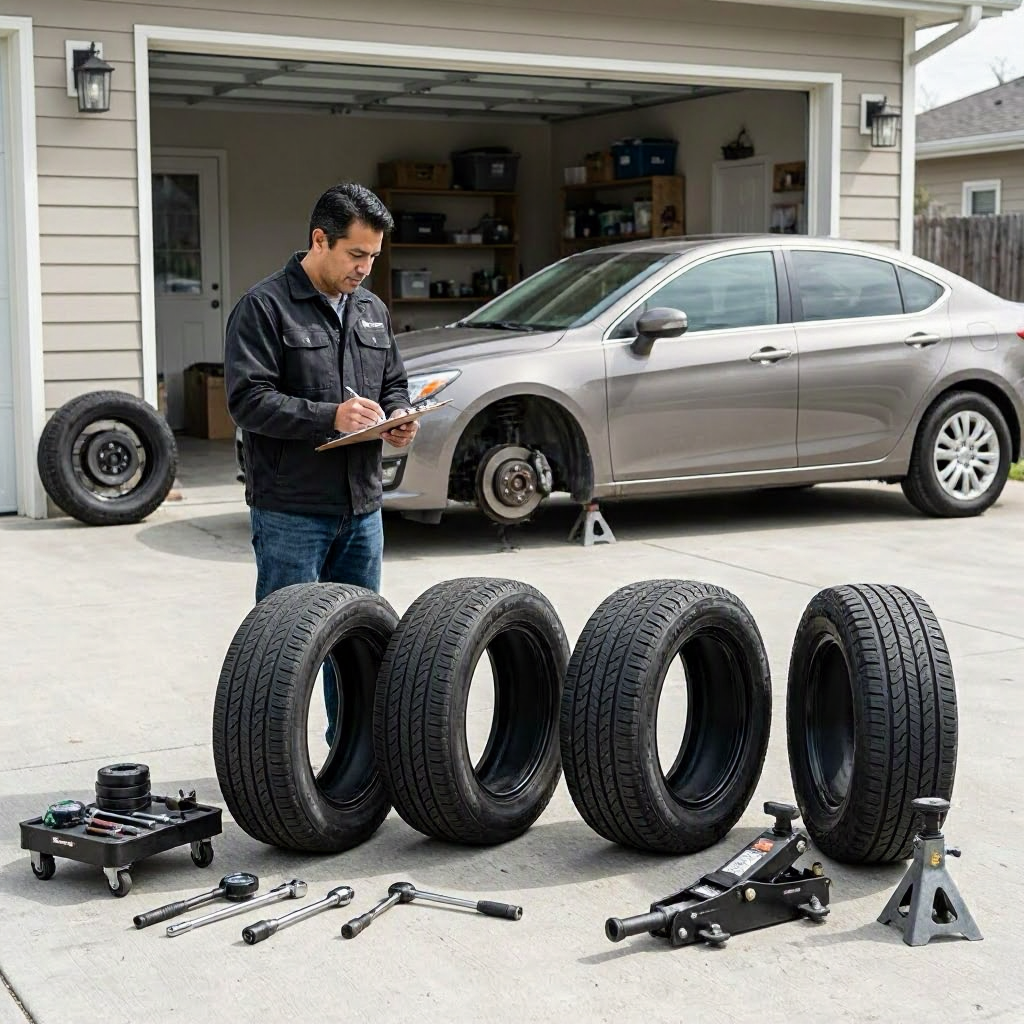
Tire replacement cost: all-season, performance, truck, and EV tires
Why Tire Replacement Matters for US Drivers
Tires are the only part of your vehicle that contacts the road, making them critical for safety, handling, and fuel efficiency. Worn or damaged tires increase risks of hydroplaning, blowouts, or poor braking, especially on wet highways or during winter commutes common in states like Michigan or New York. For US drivers, replacing tires typically becomes necessary every 4-6 years or 40,000-60,000 miles, depending on driving habits, road conditions, and maintenance.
Ignoring tire wear can lead to expensive accidents or fines during state safety inspections in places like Virginia or Pennsylvania. Costs vary widely, but understanding what drives prices helps you budget for sedans, trucks, sports cars, or electric vehicles (EVs). This guide breaks down replacement costs for all-season, performance, truck, and EV tires, plus factors to check before buying.
Signs Your Tires Need Replacement
Before spending on new tires, inspect your current set. Use the penny test: insert a penny into the tread groove with Lincoln's head upside down. If you see the top of his head, replace the tire. For deeper tread in snowy states like Colorado, aim for at least 4/32-inch depth.
Other red flags include:
- Sidewall cracks or bulges from potholes on urban roads like those in Chicago.
- Vibrations or pulling during highway drives, signaling imbalance or alignment issues.
- Uneven wear, often from underinflated tires checked via the placard on your driver's door jamb.
- Age: Tires over 6 years old, even with good tread, degrade from rubber hardening, per NHTSA guidelines.
Drive cautiously if tires show these issues. Bald tires double stopping distance on wet pavement, per NHTSA data. Get a professional inspection at a shop like Firestone or a local mechanic if unsure.
Key Factors Influencing Tire Replacement Costs
Tire prices depend on multiple variables, so national averages are misleading. A set of four all-season tires for a Honda Civic might cost less than for a Ford F-150 due to size and load needs.
Major cost drivers include:
| Factor | Why It Affects Price | What to Check |
|---|---|---|
| Vehicle Make/Model | Larger vehicles like trucks need bigger, heavier-duty tires. EVs add weight from batteries. | Confirm exact size (e.g., 225/55R17) from sidewall or door sticker. |
| Tire Type/Brand | Premium brands like Michelin charge more than budget options like Cooper. Performance tires use specialized rubber. | Match speed rating (e.g., H for sedans, T for trucks) and load index. |
| Location | Urban areas like California have higher labor; rural Midwest shops charge less. State disposal fees vary. | Get quotes from 3 local shops via phone or apps like Tire Rack. |
| Shop Type | Dealerships > chains like Discount Tire > independents. Online buys save but add shipping. | Ask if installation includes mounting, balancing, valve stems. |
| Quantity/Services | Singles cost more per tire; sets of 4 save. Add-ons like alignment ($75-150) prevent premature wear. | Bundle with rotation if needed. |
Labor typically runs $20-40 per tire for mounting and balancing, plus 6-8% sales tax and $2-5 disposal fees per tire in many states. Urgency, like same-day service, adds premiums.
All-Season Tire Replacement Costs
All-season tires suit most US commuters driving sedans or crossovers in mild climates, offering balanced traction for rain, dry roads, and light snow. They're marked with M+S (mud and snow) symbols and suit 80% of vehicles.
Typical cost range: $500-1,200 for a set of four, or $100-300 per tire before installation. Budget touring tires start lower; long-warranty models like Michelin Defender hit the high end. For a Toyota Camry, expect $600-900 total installed at a chain.
Prices climb with size: compact cars use narrower tires ($80-200 each); SUVs need wider ones ($150-350). Factors like UTQG treadwear rating (higher = longer life) justify premiums for high-mileage drivers, like gig workers in Texas logging 1,000 miles weekly.
Shop sales at Costco or Walmart for bundles including free rotations. Verify load rating matches your vehicle's gross weight, especially for family haulers.
Performance Tire Replacement Costs
Performance tires prioritize grip for sports cars or enthusiastic driving on twisty roads like those in the Appalachians. Summer variants excel in dry heat; all-season performance tires add wet/snow capability but wear faster.
Typical cost range: $800-2,000 for four, or $200-500 per tire. High-end options like Pirelli P Zero or Continental ExtremeContact cost $300-600 each due to sticky compounds and reinforced sidewalls. A Mustang owner might pay $1,200-1,800 installed.
These tires suit vehicles with speed ratings V, W, or Y (149+ mph), but they shorten tread life to 20,000-40,000 miles from aggressive patterns. Avoid if you drive highways mostly, as noise and fuel economy suffer.
Compare via Tire Rack reviews for real-user wet braking scores. Installation fees match standards, but request road force balancing for precision handling.
Truck Tire Replacement Costs
Truck tires handle heavy loads, towing, and off-road use for F-150s, Silverados, or Ram 1500s popular among contractors and families in rural states like Texas or Montana. All-terrain or highway-terrain models balance durability with ride comfort.
Typical cost range: $800-2,400 for four, or $200-600 per tire. Light truck (LT) sizes like 275/65R18 demand thick sidewalls; mud-terrain adds $100+ per tire. Expect $1,200-2,000 total for a mid-size pickup.
Load range (C to E) matters: higher for towing trailers. Fuel efficiency drops 1-2 mpg with aggressive treads. Check TPMS sensors ($50-100 each) if your truck has them.
Rural shops often specialize, cutting costs. Pair replacement with suspension checks, as overloaded trucks accelerate wear.
EV Tire Replacement Costs
Electric vehicles like Tesla Model 3 or Ford Mustang Mach-E require tires engineered for instant torque, heavy battery weight (often 4,000+ lbs), and low rolling resistance to maximize range. Many use EV-specific or run-flat designs.
Typical cost range: $1,000-3,000 for four, or $250-750 per tire, 20-50% above gas equivalents due to reinforced construction. Michelin Pilot Sport EV or Continental EcoContact hit $400-700 each. A Rivian R1T owner could face $2,000-2,800 installed.
Quiet, efficient compounds preserve 250-350 mile range. High torque shreds standard tires faster, so match OEM specs. Some EVs qualify for tire warranties tied to battery coverage.
Verify via manufacturer sites; Tesla service centers charge premiums but include calibration. Range loss from mismatched tires can hit 10-20 miles per charge.
Labor, Installation, and Hidden Fees Explained
Beyond tire price, installation adds up. Expect:
- Mounting/balancing: $20-40/tire.
- Alignment: $75-150, crucial post-replacement to avoid uneven wear.
- Valve stems/TPMS: $5-15/tire; reprogram sensors $20-50 each.
- Taxes/disposal: 6-10% tax; $2-6/tire eco-fee in states like Florida.
Request an itemized written estimate before approving work. Ask: "Does this include shop supplies, lifetime balancing, or road hazard warranty?" Chains like America's Tire often bundle these.
For EVs/trucks, confirm shop experience with torque specs to avoid damage.
Shopping Smart: Steps to Lower Your Tire Bill
- Measure needs: Note size, speed/load ratings from sidewall. Use apps like Discount Tire's for fits.
- Get 3+ quotes: Call independents, chains, dealerships. Online sites like Tire Rack ship to installers, saving 10-20%.
- Time purchases: Buy during Black Friday or spring sales; avoid peak winter in snowbelt states.
- Buy sets: Four tires ensure even wear; two may trigger ABS/traction issues.
- Promotions: Credit cards like Chase Sapphire offer tire rebates; AAA members get discounts.
Avoid pressure: "This deal ends today" often doesn't. Test drive if possible.
Pro tip: Pair with free inspections for brakes/suspension, catching issues early.
Tire Warranties, Recalls, and Insurance Coverage
New tires come with mileage warranties (40,000-80,000 miles), pro-rated if wear exceeds specs. Keep receipts and rotations logged; prorate claims via manufacturer sites.
Check recalls at NHTSA.gov/recalls using VIN—free tread separation fixes possible. NHTSA safety ratings at NHTSA.gov/safercar guide choices.
Insurance rarely covers routine replacement but may for road hazards under comprehensive (check deductible, $100-500). Document damage photos for claims.
Safety First: When to Act Urgently
Tires with less than 2/32-inch tread are illegal in most states and unsafe. Stop driving if you see bulges, exposed cords, or sudden leaks—call roadside assistance via AAA or insurer app.
Wet traction drops sharply below 4/32-inch. In rain-prone Florida, replace proactively.
Extending Tire Life to Delay Replacement
Proper care cuts costs 20-30%:
- Maintain PSI monthly (placard specs).
- Rotate every 5,000-8,000 miles.
- Align after hitting potholes.
- Avoid overloads; check via door sticker.
For EVs, monitor range drops signaling wear. Trucks: deflate slightly for towing.
Questions to Ask Your Tire Shop
Before signing:
- "Are these OEM-equivalent or aftermarket? What's the treadwear warranty?"
- "Included: mounting, balancing, nitrogen fill, lifetime rotations?"
- "Any alignment needed? TPMS reset?"
- "Road hazard coverage details?"
- "Total out-the-door price?"
Get everything in writing. Second opinion for $1,000+ jobs.
Real US Driver Scenarios
- Commuter in Atlanta: All-seasons for 205/55R16 on a Civic—$700 set saves vs. dealership $1,100.
- Gig worker in Seattle: Truck tires for F-150 towing—$1,500, but alignment adds $100 value.
- EV owner in California: Model Y 255/45R19—$2,200, prioritized low-rolling resistance.
- Enthusiast in Arizona: Performance summers—$1,400, swapped seasonally.
These show tailoring to lifestyle minimizes waste.
Tire replacement is a predictable ownership cost, but smart choices keep it manageable. Verify local prices and specs for your ride, prioritizing safety on US roads.

About the TDL Expert Panel
TDL Expert Panel · TheDigitalLife Editorial Team
TDL Expert Panel is the editorial team behind TheDigitalLife. The team researches, reviews, and creates practical guides to help everyday readers make better decisions about home repair costs, refunds, AI tools, digital safety, productivity, and useful online resources. Each guide is written to be clear, useful, and easy to understand.