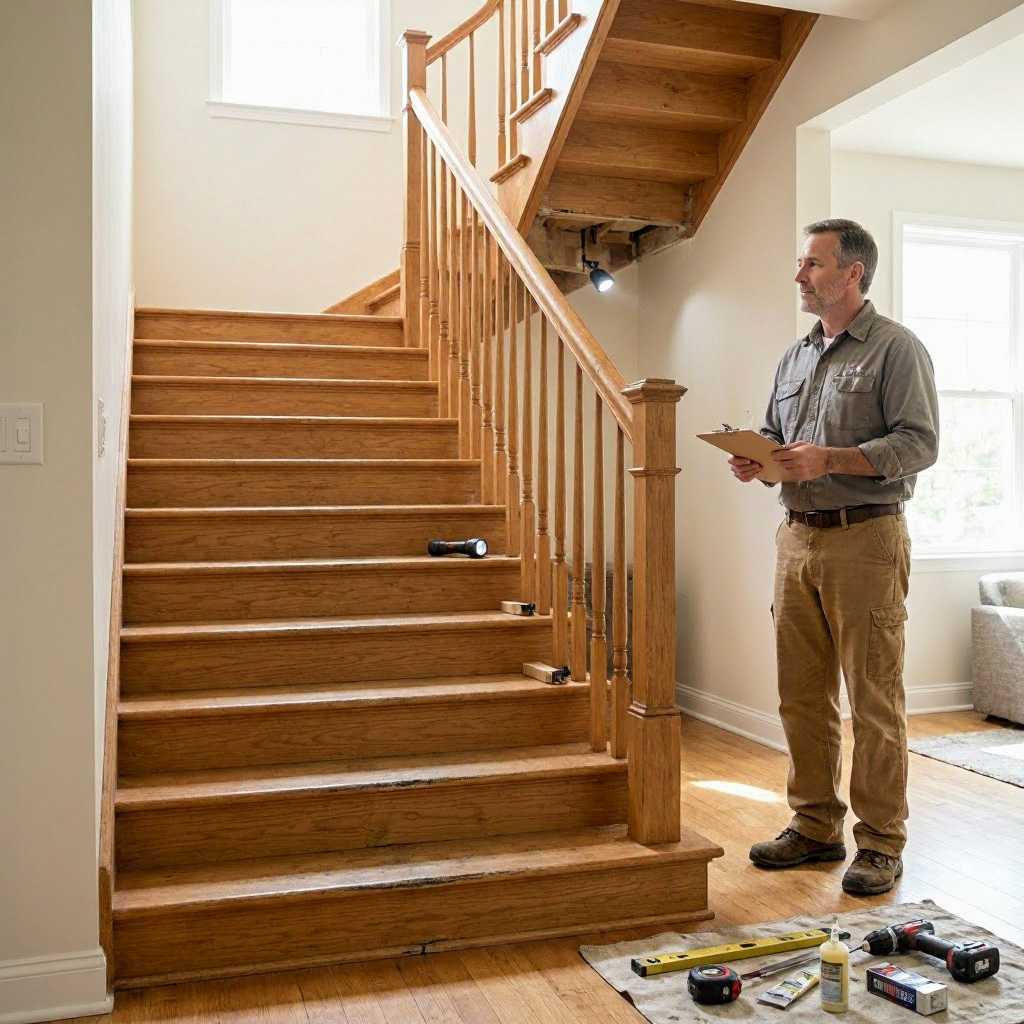
Stair repair cost: treads, railings, squeaks, and structural issues
Why Stair Repairs Matter and What Drives Costs
Staircases in US homes take a beating from daily foot traffic, kids, pets, and time. Whether it's worn treads, wobbly railings, annoying squeaks, or deeper structural problems, ignoring them risks safety and bigger bills later. Homeowners often face repair decisions when selling, after an inspection flags issues, or simply to prevent falls.
Costs vary widely based on your home's age, location, staircase type (straight, L-shaped, spiral), materials (wood, carpet, metal), and repair scope. A simple squeak fix might run under $200 in materials if you DIY, while structural reinforcement in an older home could exceed $5,000 with labor and permits. Labor typically makes up 50-70% of the total, depending on access and complexity.
Expect higher prices in urban areas like New York or San Francisco due to contractor rates and code strictness. Older homes (pre-1970s) often need pricier retrofits to meet modern International Residential Code (IRC) standards, which govern stair dimensions, railings, and load-bearing capacity. Always factor in diagnostics: a pro inspection might cost $100-300 upfront but saves money by spotting hidden issues.
Key Factors Influencing Stair Repair Prices
Several elements determine your bill. Understanding them helps you compare quotes and spot padded estimates.
- Location and accessibility: Basements or tight urban townhomes add labor time for tools and staging.
- Materials: Pine treads cost less than oak or engineered hardwood; wrought iron railings outprice powder-coated steel.
- Labor rates: $50-150 per hour nationally, higher in high-cost states like California.
- Home age and staircase design: Colonial homes with floating stairs demand custom work.
- Urgency and scope: Emergency fixes after a break double rates; full replacements cost more than spot repairs.
- Permits and inspections: Required for structural changes in most municipalities, adding $100-500.
- Disposal and cleanup: Old carpet or rotten wood removal bumps fees.
| Cost Factor | Why It Matters | Example Impact |
|---|---|---|
| Material choice | Quality and durability affect longevity | Wood treads: $20-100 each; premium composites: $50-200 |
| Labor hours | Access and skill level vary | Simple tread swap: 2-4 hours; railing rebuild: 8-16 hours |
| Location | Wages and regs differ by region | Rural Midwest: lower; coastal cities: 20-50% higher |
| Structural involvement | Safety codes kick in | Basic fix: no permit; load-bearing: inspection needed |
This table highlights common drivers, but get site-specific quotes since no national average fits every home.
Repairing Stair Treads and Risers
Treads (the flat stepping surfaces) and risers (vertical backs) wear out from traffic, moisture, or poor installation. Cracked wood, loose nails, or carpet bunching create trip hazards. In rentals, worn treads signal landlord responsibility under habitability laws.
Replacement costs depend on count and material. For a 12-step straight staircase, new wood treads might involve $300-1,200 in materials alone, plus labor. Carpet over treads adds padding and underlay, but pros handle glue-down installs to avoid bubbles.
Factors pushing prices up:
- Matching existing finish or stain.
- Retrofitting to meet IRC tread depth (minimum 10 inches).
- Multi-level stairs needing scaffolding.
DIY suits surface fixes like tightening screws or adding adhesive under loose treads. Buy precut oak treads from home centers for $30-60 each. Use construction adhesive and finish nails, then sand and seal. Test for stability before full weight. But if rot extends into stringers (side supports), call a carpenter, DIY risks collapse.
Pros shine for full replacements, especially in condos where HOAs require code-compliant finishes. Expect a detailed estimate breaking out demo, materials, install, and finish work.
Fixing or Replacing Stair Railings and Balusters
Railings provide essential handholds and barriers, especially for homes with young kids or elderly residents. Loose balusters (spindles), chipped paint, or missing sections violate IRC height rules (34-38 inches) and spacing (under 4 inches to prevent head entrapment).
Handrail repairs start low-cost: Tightening brackets or replacing a baluster might be $100-400. Full railing replacement on a 10-foot run could hit $800-3,000, factoring wrought iron at $50-100 per linear foot versus wood at $20-50.
Key cost influencers:
- Custom bends for curved stairs.
- Powder-coating or staining for durability.
- Anchoring to walls or posts without damaging plaster.
DIY works for minor tweaks: Swap plastic balusters for wood ones using a drill and anchors. Source kits from lumber yards. Measure twice, IRC gaps must stay child-safe. Avoid if welding or load-testing metal rails, as pros use torque wrenches for stability.
In multi-family homes or HOAs, railings on shared landings fall under association rules. Get written approval before changes. Inspectors check for smooth edges and secure newel posts (end anchors).
Silencing Squeaky Stairs
Squeaks come from wood friction: treads rubbing risers, nails loosening, or subfloor movement. Common in older wooden stairs, they're more annoyance than danger but signal potential wear.
DIY fixes often cost under $50 and take an afternoon. Common methods: 1. Locate squeak by stepping slowly. 2. Drive finish nails at angles into riser-tread joint, then countersink. 3. Apply construction adhesive via syringe under tread edges (jack up with a shim if needed). 4. Sprinkle talcum powder or insert shims coated in glue.
For carpeted stairs, lift carpet to access. Steel wool in gaps grabs better than powder for lasting quiet. These hold for years if humidity stays stable.
Pro service runs $150-500 per step, ideal for hidden issues like loose stringers. They use screw guns for pilot holes and epoxy for bonds. In humid climates like the Southeast, squeaks recur faster, pros add vapor barriers.
Renters: Document squeaks with photos and notify landlord; many leases cover this as maintenance.
Handling Structural Stair Issues
Structural problems, cracked stringers, sagging landings, or shifting foundations, demand immediate pro attention. These threaten collapse, especially under snow loads in Northern states or seismic activity in California.
Costs escalate quickly: Reinforcing stringers might be $1,000-4,000; full rebuild $5,000-15,000+. Add engineering reports ($500+) for permits.
Warning signs:
- Bouncing or creaking under light weight.
- Gaps at wall-stringer joints.
- Visible cracks wider than 1/8 inch.
- Uneven riser heights causing trips.
Never DIY structural work, it involves load calculations, sistering joists (adding parallel supports), and jacking. Licensed contractors follow IRC Chapter 3 for rise/run uniformity (max 3/8-inch variation).
Permits are standard: Check your local building department via city website. HUD's home improvement resources note financing options like 203(k) loans for major fixes (hud.gov/helping-americans/home-improvements). Inspections verify after repairs.
Insurance may cover if sudden (e.g., storm damage), but not gradual settling. Document with levels and photos for claims.
DIY vs Professional Service: When to Choose Each
| Repair Type | DIY Feasible? | Pro Recommended When |
|---|---|---|
| Squeaks | Yes, low-risk | Persistent or structural |
| Treads/risers | Surface fixes | Rot or code changes |
| Railings | Minor swaps | Full install, metal |
| Structural | No | Always, safety critical |
DIY saves 50-80% but requires tools (drill, level, saw) and skills. Safety first: Use guards on ladders, wear goggles. Free online videos from US home centers demonstrate basics, but stop if unsure.
Hire pros for:
- Anything load-bearing.
- Permit work.
- Warranties (1-5 years typical).
Verify licenses via state contractor boards (e.g., CSLB in California). Bonded/insured pros cover accidents.
Getting Reliable Estimates and Avoiding Overcharges
Shop 3-5 written quotes for non-emergencies. Visit sites for free inspections, but watch diagnostic fees ($75-150, often credited).
Essential estimate details:
- Itemized labor, materials, permits, disposal.
- Payment terms (e.g., 30% deposit, balance on completion).
- Warranty scope.
- Timeline and crew size.
Questions to ask:
- Are you licensed/insured? Show proof.
- IRC-compliant? References?
- Subcontractors involved?
- Change order process?
Compare apples-to-apples: Reject vague "stair repair $X" lines. Red flags: Full upfront payment, pressure tactics, no warranty.
Use apps or sites like Angi or HomeAdvisor for vetted locals, but verify reviews independently.
Permits, Codes, and Inspections for Stair Work
Local codes enforce IRC basics: 36-inch width minimum, 7 3/4-inch max riser. Structural or railing changes usually need permits ($50-300). Skip at risk of fines or resale issues.
Contact your county building department early. Post-repair inspections confirm handrail graspability and tread nosing (1 1/4-inch projection).
For financed rehabs, HUD 203(k) loans bundle repairs (hud.gov/hud-partners/single-family-203k).
Insurance, Warranties, and Home Warranties
Homeowners insurance covers sudden damage (fallen tree on stairs) minus deductible, excluding wear. File promptly with photos.
Home warranties (e.g., via American Home Shield) may cover stair parts if mechanical failure, but exclusions apply, check policy.
Contractor warranties: Labor 1 year, materials per manufacturer. Keep receipts.
Renters: Lease dictates; major structural is landlord's.
Maintenance to Prevent Costly Stair Repairs
Proactive steps extend life:
- Vacuum debris weekly.
- Tighten loose hardware quarterly.
- Seal wood annually against moisture.
- Inspect for cracks seasonally.
- Add non-slip strips ($10-20).
In high-traffic homes, carpet protects treads longer. For exteriors, clear ice/snow promptly.
Track repairs in a home log for insurance or sales disclosures.
Special Considerations for Renters, Condos, and HOAs
Renters: Minor squeaks or treads? Notify landlord in writing first, many handle under implied warranty of habitability. Pay only if lease allows, then seek reimbursement.
Condo/HOA owners: Interior stairs often personal, but exterior or common access needs board OK. Review CC&Rs.
Mobile homes: Check HUD standards for chassis stairs.
By understanding these elements, you budget smarter, choose wisely, and keep stairs safe. Consult local pros for your setup.

About the TDL Expert Panel
TDL Expert Panel · TheDigitalLife Editorial Team
TDL Expert Panel is the editorial team behind TheDigitalLife. The team researches, reviews, and creates practical guides to help everyday readers make better decisions about home repair costs, refunds, AI tools, digital safety, productivity, and useful online resources. Each guide is written to be clear, useful, and easy to understand.