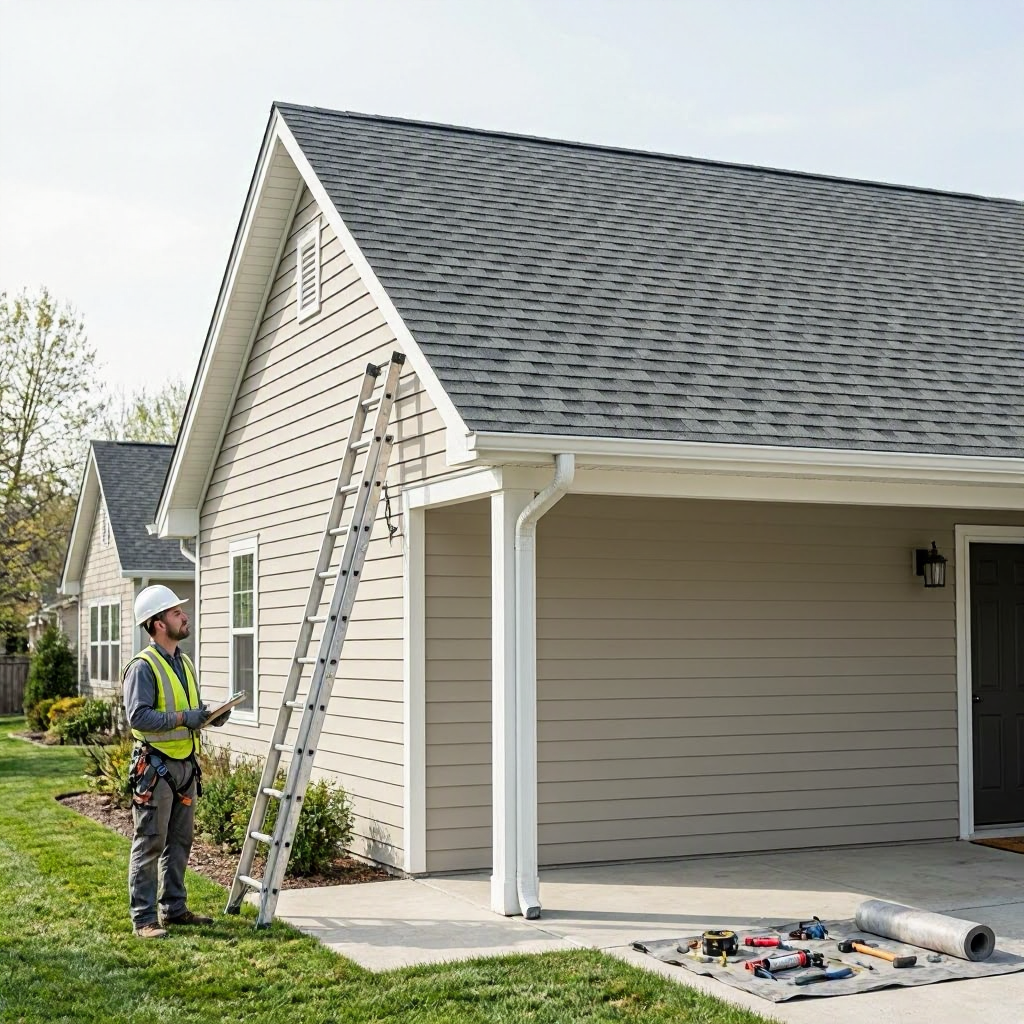
Should You Repair or Replace Your Roof? Cost Breakdown
A worn-out or damaged roof is a serious concern for any homeowner. Beyond the worry of a leak, you’re faced with a significant decision: can this be fixed with a repair, or is it time for the investment of a full replacement? This choice impacts your wallet, your home’s safety, and your long-term peace of mind.
This guide breaks down the real-world costs, labor considerations, and practical steps you need to decide wisely. We’ll cover how to get accurate quotes, navigate warranties or insurance claims, and ensure any contractor you hire is properly licensed and insured. Our goal is to give you a clear, fact-based framework for your roof repair or replacement project.
The decision to repair or replace depends on your roof's age, the extent of damage, and its overall condition. For isolated issues, repairs typically cost between $394 and $1,961. If damage is widespread or the roof is near the end of its lifespan, a full replacement often ranges from $5,892 to $13,273, averaging about $9,541. A licensed local roofing contractor is the best first contact to assess your specific situation.
| Item | Detail |
|---|---|
| Typical Cost | Repair: $394-$1,961. Replacement: $5,892-$13,273. |
| Labor Note | Repair uses a small crew; replacement includes tear-off, disposal, underlayment, and cleanup. |
| Best First Contact | Licensed local roofer or storm restoration contractor. |
| Main Safety Warning | Do not DIY active leaks, structural issues, or high-access work. |
| Warranty Proof Needed | Photos, receipts, contract, warranty documents, and permits. |
| Call a Licensed Pro | For any structural job, insurance claim, or emergency like an active leak. |
First Call: A licensed local roofing contractor for as
- First Call: A licensed local roofing contractor for assessment.
- Cost Factors: Repair vs. replacement, material, location, and damage severity.
- Warranty Proof: Collect date-stamped photos, invoices, product receipts, and warranty documents.
- State Check: Verify contractor licenses with your state board and local building department.
- Warning Signs: Pressure to sign, vague quotes, cash-only demands, no proof of insurance.
- Avoid DIY: For safety risks, structural issues, or when manufacturer warranties are at stake.
| Field | Recommended Detail |
|---|---|
| Main Customer Question | Should I repair or replace my roof? What is the cost? |
| Best First Contact | Licensed roofer / storm restoration contractor. |
| Estimated Cost Range | Repair: $394-$1,961. Replacement: $5,892-$13,273. |
| Labor Charges | Repair: small crew. Replacement: includes tear-off, disposal, flashing, ventilation, cleanup. |
| Official Brand Contacts | GAF: 1-800-458-1860. Owens Corning: 1-800-GET-PINK. CertainTeed: 800-345-1145. |
| Retailer Contacts | Home Depot: 1-800-466-3337. Lowe's: 1-800-445-6937. |
| Warranty Documents Needed | Photos, receipts, contract, warranty docs, permits, inspection records. |
| State Agency to Check | State contractor license board and city/county building department. |
| Safety Warning | Active leaks, sagging structures, and electrical hazards require immediate professional help. |
Understanding the cost breakdown is crucial for planning and comparing quotes. The final price depends heavily on your location, roof access, material choice, damage severity, and whether the work is an emergency.
Average Cost: A typical roof replacement costs between $5,892 and $13,273, with an average of about $9,541.
Use the following table as a reference when reviewing contractor estimates. Always ask for a written breakdown that separates labor, materials, permits, disposal, and warranty registration.
Additional reference details:
- Line Item: Small Repair , Typical Planning Range / Note: $150 - $800
- Line Item: Typical Repair , Typical Planning Range / Note: $394 - $1,961
- Line Item: Major Repair , Typical Planning Range / Note: $2,000 - $8,000
- Line Item: Typical Replacement , Typical Planning Range / Note: $5,892 - $13,273
- Line Item: Premium/Complex Roof , Typical Planning Range / Note: $15,000 - $40,000+
What Changes the Price? A low quote might be missing essential items like permits, disposal fees, or allowances for hidden damage. A high quote can be reasonable if your home has difficult access, requires premium materials, involves emergency timing, or includes comprehensive warranties and permit handling.
Labor Explained A repair job typically involves a small crew to fix a specific section. A full replacement is a major project that includes tearing off old materials, disposing of them, installing new underlayment and flashing, ensuring proper ventilation, and a thorough cleanup.
For skilled homeowners, small maintenance tasks like replacing a few shingles or cleaning gutters can be a DIY project. However, the risks often outweigh the savings.
When to Call a Licensed Professional:
- Any active water leak or suspected structural damage.
- Work involving ladders, high access, or steep slopes.
- When a manufacturer's product warranty or a contractor's workmanship warranty is important.
- For jobs requiring a building permit, which is common for replacements and major repairs.
- If the damage is related to a potential insurance claim.
Roofing work carries significant safety risks. Faulty repairs can lead to more extensive interior damage, mold, and voided warranties. For most homeowners, hiring a qualified pro is the safest and most cost-effective choice long-term.
Your first contact depends on the nature and cause of the problem. Start with assessment and documentation before making permanent decisions.
- For Leaks, Storm Damage, or General Assessment: Call a licensed local roofer or storm restoration contractor. They can trace leaks, provide temporary tarping, document damage with photos, and give a professional opinion on repair vs. replacement.
- For Sudden Storm or Hail Damage: Contact your homeowners insurance carrier before authorizing permanent repairs, if it is safe to wait. Ask if an adjuster must inspect and whether emergency mitigation receipts will be reimbursed.
- For Product Defects: Contact the manufacturer (e.g., GAF, Owens Corning, CertainTeed) using their warranty claim process.
- For Workmanship Issues: Notify the original installing contractor in writing to request a cure plan.
- For Material Purchases or Installation Orders: Contact the retailer (e.g., Home Depot, Lowe's).
First Call: For most situations, a licensed local roofing contractor is the best starting point for a professional assessment.
When dealing with warranties or material issues, use these official contacts from the source material.
Manufacturer Warranty & Support:
- GAF: Residential warranty claims: 1-800-458-1860 or warrantyclaims@gaf.com. Online: gaf.com/claims.
- Owens Corning: Roofing contact: 1-800-GET-PINK. Warranty claim help: 1-800-ROOFING.
- CertainTeed: Warranty claim support: 800-345-1145. Horizon claim line: 833-797-1001 (where applicable).
Major Retailer Customer Service:
- Home Depot: 1-800-466-3337
- Lowe's: 1-800-445-6937
A successful warranty claim depends on thorough documentation. Follow these steps to protect your rights.
- Document Everything Immediately. Take clear, date-stamped photos and video of the damage from multiple angles before any repairs are made or debris is disturbed.
- Gather Your Paperwork. Collect all relevant documents: original invoices, product receipts, warranty certificates, the installation contract, permits, and inspection records.
- Identify the Correct Path.
- - For Storm Damage: Call your homeowners insurance carrier first.
- - For Product Defects: Contact the product manufacturer.
- - For Workmanship Problems: Notify the installer in writing.
- Follow Official Procedures. Use the contact numbers and websites provided above. Ask for the required claim forms and follow instructions for submitting photos, samples, and proof of purchase.
- Report Problems. For unsafe work or suspected unlicensed contracting, contact your local building department and state contractor board.
State-Specific or Local Checks
Building codes and contractor licensing vary. Always verify with your local authorities before signing a contract. Structural work, roof replacement, and exterior changes often require permits.
Additional reference details:
- State / Area: California , What the Homeowner Should Check: Use the CSLB to verify a C-39 roofing contractor license. Be aware of strict deposit rules.
- State / Area: Florida , What the Homeowner Should Check: Use the DBPR to verify contractor licenses. After storms, be cautious with assignment-of-benefits paperwork.
- State / Area: Texas , What the Homeowner Should Check: Licensing varies by city. Confirm permits with your local city office and verify contractor insurance.
- State / Area: New York / NYC , What the Homeowner Should Check: Exterior work may require DOB permits. In NYC, use DOB NOW and confirm credentials for high-access work.
- State / Area: Illinois / Midwest , What the Homeowner Should Check: Ask contractors about local rules for ice dams, ventilation, and roofing registration.
State Check: Always verify a contractor's license with your state license lookup and confirm permit requirements with your city/county building department.
Getting clear answers to these questions will help you choose a reputable contractor and avoid surprises.
- Can you provide proof of license, insurance, and workers' compensation?
- Who is responsible for obtaining and paying for the required permits?
- What is the written scope of work? Does it list materials, linear feet, tear-off, disposal, and warranty details?
- How are change orders priced if hidden damage (like rotted decking) is found?
- What is the project timeline and payment schedule?
- Do you provide both manufacturer product warranties and a workmanship warranty?
- Can I see photos of any hidden damage before approving additional work?
Be alert for these warning signs when speaking with contractors.
- Storm Chaser Pressure: Being told you must sign a contract immediately or hand over an insurance check.
- Vague Scope: A quote that doesn’t list specific materials, quantities, or exclude key items like disposal or flashing.
- Cash-Only or Full Payment Upfront: A reputable contractor will not demand this.
- No Proof of Credentials: Refusing to provide license, insurance, or workers' comp documentation.
- Hidden Damage Secrecy: Refusing to photograph damaged decking or rot before charging for a change order.
Practical Step-by-Step Guidance
Follow this actionable plan to navigate your roofing project from start to finish.
- Assess & Document: Safely document all damage with photos and videos. Note the age of your roof and any history of leaks.
- Contact Your Insurance: If damage is from a recent storm, call your insurer to understand the claims process before proceeding.
- Get Multiple Quotes: For non-emergency work over $1,000, get at least two or three written quotes from licensed local contractors. Ensure they are comparing the same scope and materials.
- Verify & Check: Use your state's online license lookup and call your local building department to verify the contractor and check permit requirements.
- Review the Contract: Before signing, ensure the written quote includes everything from the "What to Ask" list above. Understand the payment schedule.
- Manage the Job: Require photos of any hidden damage discovered during work. Keep all communication in writing.
- Final Inspection: Make the final payment only after the work is complete, the site is cleaned up, you have received all warranty documents, and any required final inspection has passed.
Frequently Asked Questions
Should I get more than one quote? Yes. For any non-emergency job, especially over $1,000, get at least two or three written quotes. This ensures you are comparing fair prices for the same scope of work.
Should I pay the full amount upfront? No. A reasonable deposit may be normal, but paying in full before work begins is a major red flag. Use a traceable payment method and follow your state's rules on contractor payments.
Can insurance cover this? Homeowners insurance is designed for sudden and accidental damage, like from a storm, hail, or a falling tree. It typically does not cover problems due to normal wear and tear, poor maintenance, or gradual leaks.
What should be in the written quote? The quote should clearly list the scope of work, materials (brands/quantities), labor, permit responsibility, disposal, warranty terms, timeline, payment schedule, and how hidden damage will be handled.
Can I DIY this? Small repairs may be possible for very skilled homeowners, but roofing work involves serious safety risks from heights and can void product warranties. For most repairs and all replacements, hiring a licensed professional is strongly recommended.
When is it an emergency? Situations requiring immediate professional attention include active water leaking into your home, sagging or bowing roof structures, any electrical hazard from water, or unsafe roof access after a storm.
This guide was compiled using data from industry cost guides and official manufacturer and agency resources. Key sources include:
- HomeAdvisor Roof Repair & Replacement Cost Guides
- GAF Warranty Resources: gaf.com/en-us/resources/warranties
- Owens Corning Roofing Contact & Warranty: owenscorning.com/en-us/roofing/contact-us
- CertainTeed Warranty Information: certainteed.com/documents-downloads/warranty-information
- State Licensing Boards: California CSLB, Florida DBPR, NYC DOB
Verify Before Acting: Prices, phone numbers, warranty rules, and local codes change. Always confirm details with licensed local professionals, official brand support, and your local building department before starting any project.
This guide is for general planning and informational purposes only. It does not guarantee prices, insurance coverage, or warranty approval. For structural, electrical, roofing, insurance, or safety decisions, always consult with licensed local professionals. Verify all contractor licenses, insurance, and permit requirements with your state licensing board and local building department before signing any contract or authorizing work.

About the TDL Expert Panel
TDL Expert Panel · TheDigitalLife Editorial Team
TDL Expert Panel is the editorial team behind TheDigitalLife. The team researches, reviews, and creates practical guides to help everyday readers make better decisions about home repair costs, refunds, AI tools, digital safety, productivity, and useful online resources. Each guide is written to be clear, useful, and easy to understand.