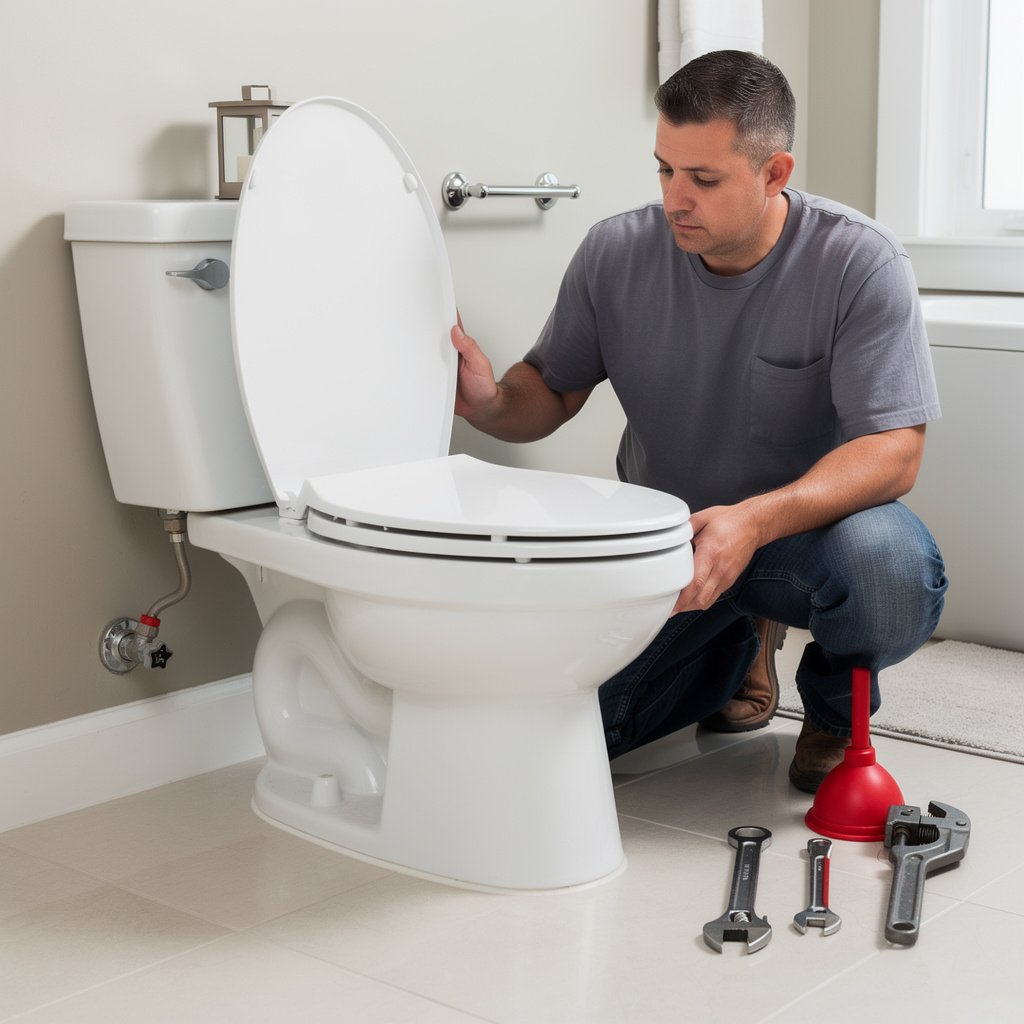
Running Toilet Repair Cost and Water Bill Impact
A running toilet isn't just an annoying sound-it’s money literally going down the drain. This guide is here to help you understand the repair costs, decide if you should do it yourself, and know exactly who to contact. We’ll break down everything from a simple flapper replacement to hiring a professional plumber, and explain how a small leak can lead to a surprisingly high water bill.
A running toilet can significantly raise your water bill due to constant water waste. The repair cost itself is often low, especially if you can replace a worn flapper yourself for $10-$40. If you need a professional, expect to pay a typical range of $75-$250 for a service visit. Your first step should always be to perform a simple food coloring test in the tank to confirm the leak.
This article will help you navigate the process of fixing a running toilet. We cover:
- The immediate costs and potential water bill impact
- A comparison of DIY versus professional service
- Who to contact for help, including brand and retailer support
- Steps for warranty claims and refunds
- Important state and local verification checks
- Key questions to ask and red flags to avoid
- Step-by-step guidance before you hire or DIY
| Item | Detail |
|---|---|
| Typical Cost | $10-$250+ depending on part and labor. |
| DIY Cost | $10-$40 for a flapper or fill valve part. |
| Pro Service Cost | $75-$250 for a typical flapper or fill valve visit. |
| Best First Contact | A licensed plumber for an urgent leak; the toilet manufacturer for model-specific parts. |
| Main Safety Warning | Always call 811 before any excavation for sewer or water lines. |
| Warranty Proof Needed | Keep your receipt, model number, and photos of the defective part. |
| When to Call a Pro | If a DIY fix fails, or for valve leaks, wax ring/base leaks, or pressure issues. |
Who to call first: For an urgent leak, shut off the wa
- Who to call first: For an urgent leak, shut off the water and call a licensed plumber.
- What it will cost: A simple flapper part is cheap ($10-$40); a professional visit is typically $75-$250.
- Warranty proof: You need the model number, purchase receipt, and often photos of the part.
- State/local office to check: Verify a plumber's license with your state's contractor board or local building department.
- Warning signs: A contractor who won't provide a license number, a written quote, or warranty details in writing.
- Avoid DIY when: The leak is at the base of the toilet, involves the supply valve, or you are unsure about the fix.
| Question | What to Do | Details / Contact |
|---|---|---|
| How to check for a leak? | Perform a food coloring test in the tank. If color appears in the bowl without flushing, you have a leak. | Common causes: old flapper, fill valve, chain, or flush valve. |
| Whom to contact first? | A licensed plumber for an urgent leak; the toilet manufacturer for parts. | Manufacturer contacts are listed in the official contacts section. |
| DIY flapper cost? | $10-$40 for the part. | Price varies for universal vs. model-specific parts. |
| Professional service cost? | $75-$250 typical for a flapper or fill valve visit. | Includes service minimum and part choice. |
| Wax ring/base leak cost? | $50-$200+ | Involves toilet removal and reseating. |
| Can I get a rebate? | Check for WaterSense fixture rebates. | Use the local utility or the EPA WaterSense Rebate Finder. |
| Water bill impact? | Can be substantial for a continuous leak. | Impact depends on local water rates and leak duration. |
| Replace the whole toilet? | $350-$800 installed typical. | Consider if toilet is cracked, inefficient, or repairs are near replacement cost. |
The cost to fix a running toilet can range from a few dollars to several hundred, depending entirely on the problem and who does the work.
The most common and least expensive fix is replacing the flapper inside the tank. A universal or model-specific flapper typically costs $10 to $40. If the fill valve needs replacement, the part cost is similar. This is a repair many homeowners can do themselves with basic tools.
Hiring a licensed plumber introduces labor and service fees. For a standard visit to replace a flapper or fill valve, expect to pay $75 to $250. This range accounts for the plumber's service minimum, the cost of the part they supply, and the time for diagnosis and repair.
More complex issues cost more. Resealing a toilet with a new wax ring due to a leak at the base typically costs $50 to $200 or more. This is because the toilet must be removed and reset. If the toilet itself is old, inefficient, or cracked, a full WaterSense-certified replacement with professional installation typically ranges from $350 to $800.
Average Cost: The typical range for a professional to fix a running toilet is $75 to $250.
Deciding between DIY and calling a professional comes down to the problem, your comfort level, and the potential for water damage.
A DIY repair is often safe and cost-effective if the issue is a worn flapper, an adjustable chain, or a faulty fill valve. These repairs usually require only a wrench, sponge, and bucket. The key is correctly identifying the toilet model to buy the right replacement part. Avoid using tank cleaning tablets, as they can damage rubber components.
Call a Pro If: You have a leak at the toilet's base (wax ring), a leaking supply valve, ongoing pressure issues, or if a simple DIY fix does not stop the running water.
Call a licensed professional when the leak is not inside the tank, when you've attempted a fix that didn't work, or if you're uncomfortable with the repair. A pro can correctly diagnose issues with the flush valve, supply line, or water pressure. Using a professional also often comes with a labor warranty on the work performed.
Your first contact depends on the urgency and nature of the problem.
- For an urgent leak: Immediately shut off the water supply valve located behind the toilet. Protect the flooring with towels. Then, call a licensed plumber or an emergency plumbing service like Roto-Rooter or Mr. Rooter.
- For a non-urgent repair or parts: Identify your toilet's brand and model number (stamped inside the tank or on the underside of the lid). Contact the manufacturer directly for warranty support or to order model-specific parts.
- For fixtures just purchased from a retailer: If parts are damaged or missing, contact the retailer (e.g., Home Depot, Lowe's) with your receipt. For parts that fail after installation, use the manufacturer's warranty.
- For suspected leaks outside the home: If you suspect a break in the underground water line between your house and the street meter, contact your local water utility or public works department.
Having the right contact information can save time. Here are the official support channels from the source.
Toilet and Faucet Brands:
- Delta Faucet: 1-800-345-DELTA (1-800-345-3358). Have your model number, photos, receipt, and finish color ready.
- Moen: Use the official Moen support contact form. A common support line is 1-800-BUY-MOEN (1-800-289-6636). Register your product for support.
- Kohler: Use the official Kohler support/contact page. Use model number lookup before buying parts.
- American Standard: U.S. consumer phone/SMS: 855-815-0004. Have your model information ready.
Other Appliances:
- InSinkErator (garbage disposals): Text support: 262-233-2231. The serial number is on a tag near the bottom of the unit.
- Whirlpool/KitchenAid: Whirlpool: 1-866-698-2538; KitchenAid: 1-800-422-1230. Have model/serial number and purchase date.
Major Retailers:
- Home Depot Customer Service: 1-800-HOME-DEPOT (1-800-466-3337). For product orders, installation complaints, and returns.
- Lowe's Customer Service: 1-800-445-6937. For orders, returns, and damage claims.
- Lowe's Installation Scheduling: 1-877-GO-LOWES (1-877-465-6937). For jobs booked through their installation services.
Emergency Plumbing Services:
- Roto-Rooter: 1-800-GET-ROTO (1-800-438-7686). For urgent drain, sewer, leak, and water cleanup.
- Mr. Rooter Corporate: (855) 982-2028. Note that service is provided by local franchises.
To make a warranty or refund claim go smoothly, follow these steps:
- Identify your product. Find the brand and model number from the stamp inside the toilet tank or under the tank lid.
- Gather your proof. Locate your original sales receipt or invoice. Take clear photos of the defective part.
- Contact the correct party. For defective parts on a new toilet, contact the manufacturer's support. For missing or damaged parts from a recent retail purchase, contact the retailer first.
- Document the repair. Keep all receipts for any parts you buy or professional services you hire.
- Address water bill spikes. If your water bill spiked due to the leak, ask your utility company if leak adjustment credits are available after you provide proof of repair. Keep before and after water meter readings.
Warranty Documents Needed: You will need the model number, purchase receipt, and photos of the defective part.
State-Specific or Local Checks
Before hiring any contractor, it is crucial to verify their license and standing. Rules vary by state.
- California: Verify the contractor's license at the CSLB (Contractors State License Board). For plumbing, ask for an active C-36 plumbing contractor license, workers' compensation status, bond information, and complaint history.
- Texas: Verify plumbers with the Texas State Board of Plumbing Examiners. For excavation or sewer work, confirm city permits and 811 locate requirements.
- Florida: Verify contractor or plumbing licenses through DBPR/MyFloridaLicense. Local permit rules vary by county and city.
- New York / NYC: In NYC, check for licensed plumbers through the Department of Buildings. Elsewhere in New York, check state or local license directories and your local building department.
- Any State: Always call or click 811 before any digging to have underground utility lines marked. For work on public water or sewer laterals, contact your local water utility or public works department.
Getting clear answers to these questions protects you and ensures a fair job.
- Is the estimate itemized for parts, labor, permits, disposal, and any trip or emergency fees?
- Are you licensed for this exact trade in my city/state, and can I verify the license number online?
- Will you pull the required permit, schedule the inspection, and provide proof of final approval?
- Does the quote include cleanup, haul-away, and repair to drywall, flooring, or landscaping?
- What is specifically excluded from the quote, and what conditions would trigger a change order?
Be cautious if you encounter any of these warning signs.
- A contractor refuses to provide their license number, a written scope of work, proof of insurance, or itemized pricing.
- The quote is unusually low but excludes major cost items like excavation, disposal, permits, or restoration.
- The salesperson pressures you to sign immediately or claims permits are never needed without checking your local rules.
- Warranty details are given verbally only. Always ask for the manufacturer warranty, labor warranty, and claim process in writing.
- For any job involving digging, anyone who starts before an 811 locate is completed is creating a serious safety and financial risk.
Practical Step-by-Step Guidance
Follow this sequence to address a running toilet efficiently and safely.
- Confirm the leak. Drop food coloring into the toilet tank. Wait 10-15 minutes without flushing. If color appears in the bowl, you have a leak.
- Try a simple DIY fix. If the flapper looks worn or the chain is tangled, turn off the water, flush to drain the tank, and replace the flapper (cost: $10-$40).
- Call a pro if needed. If the DIY fix doesn't work, or the leak is from the base or supply valve, contact a licensed plumber.
- Verify the professional. Before hiring, check their license with your state's board and get a written, itemized quote.
- Secure your warranty. For manufacturer claims, have your model number and receipt ready. For a high water bill, ask your utility about a leak adjustment credit after repair.
Do Not Ignore: A continuous leak can waste a huge volume of water. A simple, inexpensive flapper replacement can prevent a very costly utility bill.
Frequently Asked Questions
Can a running toilet raise my water bill? Yes, significantly. A continuous leak can waste large volumes of water depending on its severity and your local water rates. This silent waste can lead to a surprisingly high bill.
How often should a toilet flapper be replaced? The EPA WaterSense program notes that old or worn flappers are a common leak source. There's no set schedule, but a periodic inspection and replacement every few years can prevent unexpected leaks and water waste.
Should I replace the whole toilet instead of repairing it? Consider replacement if the toilet is cracked, is an old, inefficient model (using more than 1.6 gallons per flush), fails frequently, or if the cost of repairs is approaching the cost of a new, water-efficient model.
What should I do first for an urgent toilet leak? Immediately turn off the water supply valve located behind the toilet. Then, protect the floor with towels and call a licensed plumber for emergency service.
Who is responsible for a leak in the water line to my house? The homeowner is typically responsible for the water line from the house to the street meter (the "lateral"). If you suspect a break there, contact a plumber. The utility is usually responsible for the main line and the meter itself.
The information in this article was compiled from the following sources. We encourage you to use them for verification.
- EPA WaterSense Toilets: epa.gov
- EPA Fix a Leak Week: epa.gov
- EPA WaterSense Rebate Finder: lookforwatersense.epa.gov
- Angi Toilet Repair Cost: angi.com
- HomeGuide Toilet Installation Cost: homeguide.com
Important: Always verify local pricing, permit requirements, warranty terms, and official contact details with licensed professionals, the brand's official support, retailers, state licensing boards, and your local building department before making decisions or authorizing work.
This article provides informational guidance to help you make informed decisions. Plumbing repairs can involve unexpected complications. For final authority, diagnosis, and work involving permits or major repairs, always consult and verify with a licensed plumbing professional, official brand support, and your local building department. Costs, contact information, and regulations can change, so re-check details relevant to your specific situation before proceeding.

About the TDL Expert Panel
TDL Expert Panel · TheDigitalLife Editorial Team
TDL Expert Panel is the editorial team behind TheDigitalLife. The team researches, reviews, and creates practical guides to help everyday readers make better decisions about home repair costs, refunds, AI tools, digital safety, productivity, and useful online resources. Each guide is written to be clear, useful, and easy to understand.