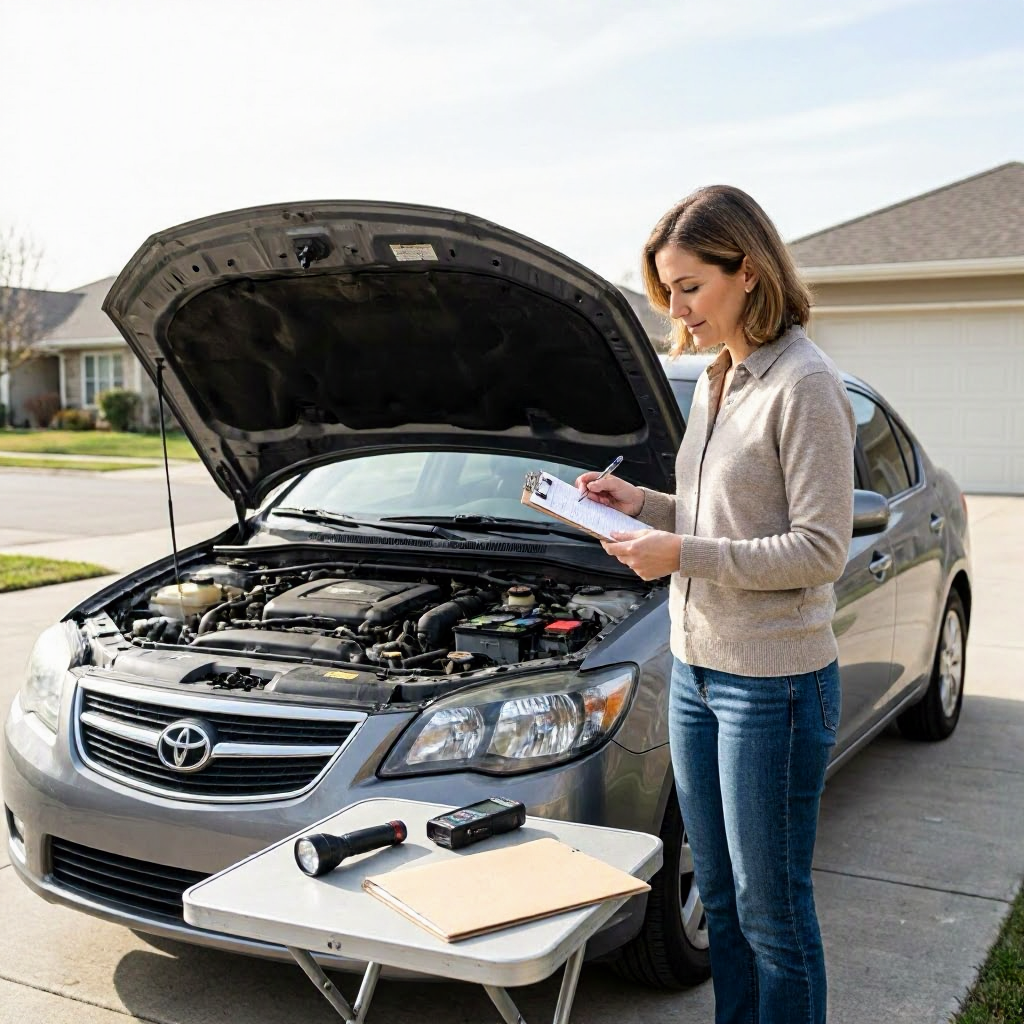
Private party car sale checklist for buyers in the USA
---
Why Use a Checklist for Private Party Car Sales?
Buying a used car from a private seller in the USA can save you money compared to a dealership, but it comes with risks like hidden problems, title issues, or scams. Without a dealer warranty, you're responsible for the car's condition after purchase. A step-by-step checklist helps you verify the vehicle, protect your money, and handle paperwork correctly.
This guide focuses on private party sales, where you buy directly from an individual owner, not a dealer. Rules vary by state, so always check your state DMV website for specifics on titles, taxes, and transfers. Follow these steps in order to avoid common pitfalls.
Step 1: Research Before Contacting the Seller
Start online to narrow options and spot red flags. Private sellers often list on Craigslist, Facebook Marketplace, or Autotrader.
- Get the VIN early: Ask for the Vehicle Identification Number (VIN) before meeting. Use it to run a free or paid vehicle history report from services like Carfax or the National Motor Vehicle Title Information System (NMVTIS) at vehiclehistory.bja.ojp.gov.
- Check for liens and title issues: NMVTIS shows if the car has a lien (loan owed), salvage title, or flood damage. A clean title means no major issues.
- Verify recalls: Enter the VIN at nhtsa.gov/recalls to see open safety recalls. Make the seller fix them before buying.
- Research market value: Use Kelley Blue Book (kbb.com) or Edmunds to estimate fair price based on year, make, model, mileage, and condition. Factor in your location, as values differ by region.
- Ask key questions upfront: Inquire about reason for selling, service history, accidents, and recent repairs. Request maintenance records.
Pro tip: Walk away if the seller dodges VIN requests or history details. For more on used car buying, see the FTC's guide at consumer.ftc.gov/articles/buying-used-car-dealer, which applies to private sales too.
Step 2: Meet the Seller Safely
Safety first, especially for in-person meetings.
- Choose a public spot: Meet in a well-lit public place like a coffee shop or police station parking lot during daylight. Bring a friend.
- Verify seller identity: Ask for a driver's license matching the car's registration. Confirm they own the vehicle.
- Inspect documents on site: Review registration, title, and insurance proof. The title should be in the seller's name with no liens noted.
Never meet at the seller's home alone or send money first. Scams like fake escrow or shipping for "out-of-state" cars are common.
Step 3: Visual Inspection Checklist
Park in good light and spend 30-60 minutes checking the car yourself. Look for signs of neglect or damage.
Exterior Checks
- Body and panels: Check for rust, dents, mismatched paint, or uneven gaps indicating repairs. Inspect under wheel wells for rust.
- Tires: Ensure even tread wear (use penny test: Lincoln's head down means replace). Match sizes and check for cracks.
- Lights and glass: Test headlights, taillights, brake lights, turn signals. Look for cracks in windshield or chips.
- Fluid leaks: Check under the car for oil, coolant, or transmission fluid spots after parking.
Interior Checks
- Seats and upholstery: Test adjustments, look for tears, stains, or strong odors (smoke or mold).
- Dashboard and gauges: Note warning lights. Test all functions like AC, heat, radio, windows.
- Odometer: Record mileage and compare to listing and history report. Watch for odometer rollback fraud.
- Safety features: Check seatbelts, airbags (no deployment signs), and horn.
Take photos of everything, including the VIN on the dashboard and door jamb.
Step 4: Test Drive Essentials
Always test drive on varied roads: highway, city, hills. Drive at least 20-30 minutes.
- Start cold: Let the engine warm up and listen for knocks or rattles.
- Brakes and steering: Test firm braking without pulling. Check steering for play or vibrations.
- Transmission: Shift through gears smoothly, no slipping or hesitation.
- Suspension: Feel for bumps over potholes; no excessive bouncing.
- Acceleration and speed: Ensure even power, no hesitation. Test at highway speeds if safe.
Bring a trusted friend who knows cars. Note any smells (burning oil), smoke from exhaust, or unusual noises. If anything feels off, stop and reconsider.
Step 5: Get a Pre-Purchase Inspection (PPI)
This is non-negotiable for private sales. Hire an independent mechanic for a full check.
- Choose a trusted shop: Use ASE-certified mechanics via ase.com. Avoid seller recommendations.
- Cost and scope: Expect $100-$200; it covers engine, transmission, brakes, suspension, electronics, and compression test.
- What to ask: Request a written report with photos, mileage at inspection, and priority issues (safety vs. minor).
- Red flags: Frame damage, major leaks, or worn timing belt could mean walking away.
If the seller refuses a PPI or pressures you, end the deal. A healthy PPI protects against $1,000+ surprises post-purchase.
Step 6: Review Title and Paperwork
Private sales require clear title transfer. Errors lead to legal headaches.
Key Documents to Verify
| Document | What to Check | Why It Matters |
|---|---|---|
| Title | Seller's name, no liens, matches VIN, signed over to you | Proves ownership; liens block registration |
| Registration | Current, matches seller's info | Confirms legal operation |
| Bill of Sale | Details price, date, VIN, both signatures, "as-is" clause | Required in most states for tax/transfer |
| Odometer Disclosure | Federal form stating true mileage | Prevents fraud; seller must sign |
| Smog/Emissions Certificate | If your state requires (e.g., CA, NY) | Needed for registration |
| Service Records | Receipts for major work | Shows maintenance history |
Download a bill of sale template from your state DMV site. Note "sold as-is" to avoid warranty claims, but understand it means no returns.
Check for salvage, rebuilt, or flood brands on the title. These lower value and may raise insurance rates.
Step 7: Handle Payment Securely
Cash is common for private sales, but protect yourself.
- Never wire money or use apps sight unseen: Stick to cash, cashier's check, or bank transfer in person.
- Pay after title handoff: Inspect title for alterations before paying.
- Get receipt: Bill of sale serves as proof.
For high-value cars ($10,000+), use an escrow service like Escrow.com, but verify legitimacy.
Step 8: Calculate Taxes and Fees
Private party sales trigger use tax in most states, based on purchase price.
- Sales tax: Paid at DMV during registration; rates 4-10% depending on state (e.g., no sales tax in NH, MT).
- Registration and title fees: Vary; check dmv.org or state site.
- Emissions/safety inspection: Required in 15+ states.
Budget 7-12% of purchase price extra. Keep bill of sale for tax proof.
Step 9: Complete Title Transfer and Registration
Time-sensitive: Most states give 10-30 days post-sale.
- Steps:
- 1. Seller signs title over to you.
- 2. Complete odometer statement.
- 3. Visit DMV or county office with bill of sale, title, ID, proof of insurance.
- 4. Pay fees and get plates/temp tags.
- Insurance first: Get coverage before driving off; notify your insurer of the new vehicle.
Use your state's DMV online portal if available (e.g., California's DMV.ca.gov). Delays can mean fines.
Step 10: Post-Purchase Checklist
Protect yourself after driving home.
- Update insurance: Add the car and remove seller if needed.
- Service immediately: Change oil, rotate tires if due.
- Keep records: File title, bill of sale, PPI report, history report for resale.
- Monitor for issues: Note any problems; "as-is" means your cost, but check warranty if certified pre-owned (rare in private sales).
If problems arise soon after, review records for misrepresentation (e.g., lied about accidents).
Common Private Party Scams and How to Avoid Them
Private sales attract fraudsters. Stay vigilant.
- Odometer tampering: Cross-check mileage across sources.
- Title washing: Clean title from another state hides salvage status; NMVTIS catches this.
- Curbstoning: Seller acts private but is a shady dealer; check if they sell multiple cars.
- Flood cars: Look for waterlines, musty smell; history report flags.
- Fake checks: Seller "overpays" via bad check, you ship car.
Verify everything in writing. Report scams to FTC at reportfraud.ftc.gov or your state attorney general.
Sample Bill of Sale Template
Customize this for your state:
Bill of Sale for Vehicle
- Seller: [Name, Address, Phone]
- Buyer: [Name, Address, Phone]
- Vehicle: [Year, Make, Model, VIN, Mileage]
- Sale Price: $[Amount] USD
- Date: [MM/DD/YYYY]
- Sold AS-IS, no warranties.
Signatures: __________________ (Seller) __________________ (Buyer)
Witness:
Print two copies.
When to Walk Away
Trust your gut. Walk if:
- Seller rushes you or won't allow PPI.
- History report shows discrepancies.
- Title has issues or liens.
- Test drive reveals safety problems like pulling brakes or stalling.
- Price seems too good (e.g., low miles, luxury car cheap).
Better deals exist. For dealer protections, consider certified pre-owned, but private can work with diligence.
State Variations Quick Reference
Rules aren't uniform. Use this to start:
| State Example | Key Requirement |
|---|---|
| California | Smog check, functional title transfer within 10 days |
| Texas | Safety inspection in most counties, 30-day temp tag |
| Florida | No safety inspection, but VIN verification |
| New York | Annual inspection, enhanced emissions in NYC |
Always confirm at your DMV site (search "[state] DMV vehicle transfer").
Final Thoughts on Smart Buying
A thorough checklist minimizes risks in private party sales. You'll likely save thousands versus dealers, but invest time upfront. For general used car tips, review the FTC's buying and owning a car guide.
Keep this checklist handy—print it or save digitally. Happy, safe driving!
(Word count: 2856) ---

About the TDL Expert Panel
TDL Expert Panel · TheDigitalLife Editorial Team
TDL Expert Panel is the editorial team behind TheDigitalLife. The team researches, reviews, and creates practical guides to help everyday readers make better decisions about home repair costs, refunds, AI tools, digital safety, productivity, and useful online resources. Each guide is written to be clear, useful, and easy to understand.