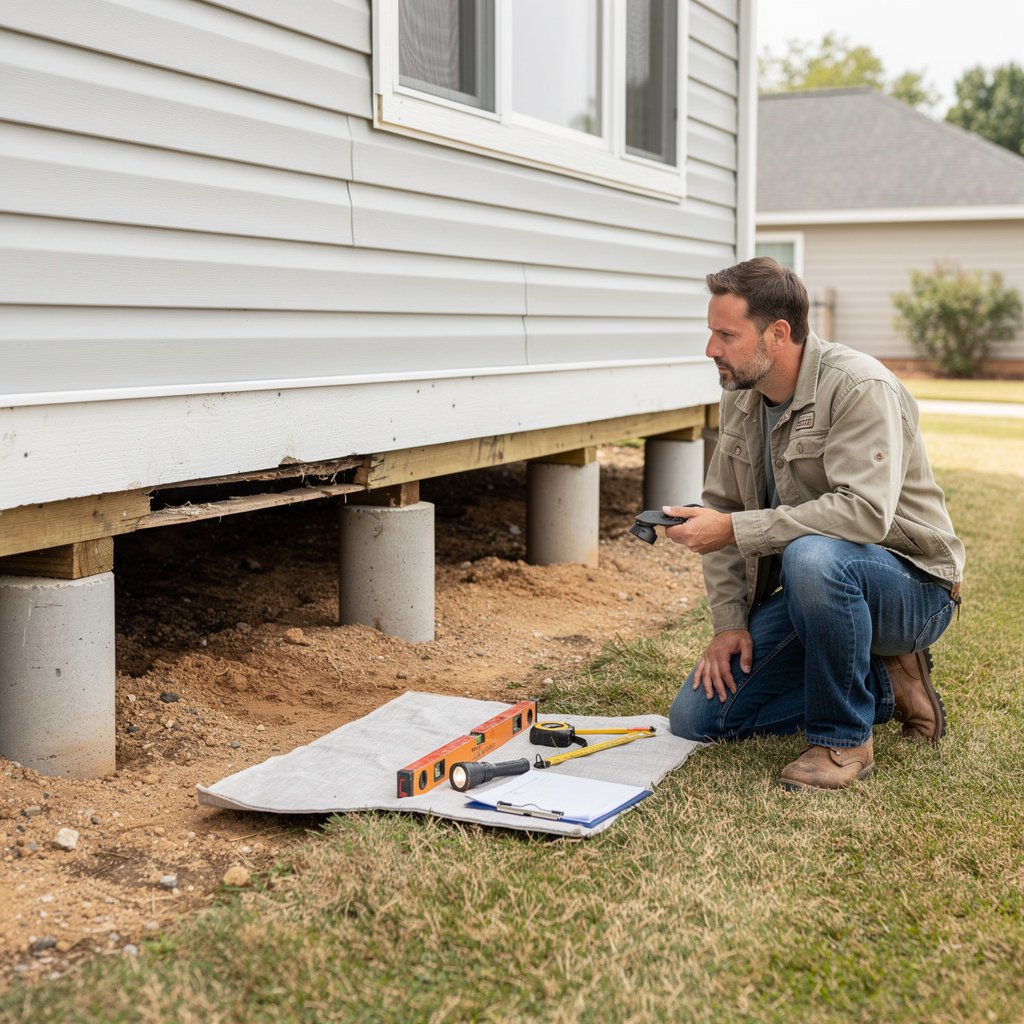
Pier and Beam Foundation Repair Cost
Dealing with a sagging floor or uneven doors in your pier and beam home can be stressful. The first question on any homeowner’s mind is likely, “How much is this going to cost?” This guide is here to help you understand the realistic price range, who you should call, and the important steps to take before hiring anyone. We will walk you through costs, contacts, and the smart checks you should make to protect your home and your wallet.
For planning purposes, a typical pier and beam foundation repair project costs between $2,500 and $15,000. Localized shimming may be lower, while extensive beam, joist, or pier replacement can exceed $20,000. The final quote depends heavily on location, access, damage severity, and whether hidden problems are discovered. For any structural concerns, your best first call is often a licensed structural engineer.
Quick Summary of Costs and Contacts - Quick Help Topics -
- Quick Summary of Costs and Contacts
- Quick Help Topics
- Detailed Cost Breakdown and What Affects Price
- DIY vs. Professional Service
- Who to Contact First
- Official Brand and Agency Contacts
- Steps for Warranty or Insurance Claims
- State and Local Checks Before Hiring
- Questions to Ask Before Paying
- Red Flags to Watch For
- Step-by-Step Hiring Guidance
- Frequently Asked Questions
Additional reference details:
- Item: Typical cost , Detail: $2,500 - $15,000 planning range
- Item: Best first contact , Detail: Licensed structural engineer
- Item: Main safety warning , Detail: Do not delay for active leaks, electrical hazards, or major structural movement.
- Item: Warranty proof needed , Detail: Invoices, warranty docs, installation contract, permits, and photos.
- Item: When to call a pro , Detail: For structural work, foundation repair, beam replacement, or load-bearing wall changes.
Who to call first
- Who to call first? A licensed structural engineer for bowing walls, sagging beams, or major cracks.
- What will it cost? Budget between $2,500 and $15,000; get detailed, written quotes.
- What proof is needed? Date-stamped photos/video, all invoices, warranty documents, and permits.
- Which office to check? Your city/county building department and state contractor licensing board.
- Warning signs? A contractor recommending expensive piers without addressing drainage or soil issues.
- Avoid DIY when? The work involves structural repair, foundation support, or load-bearing elements.
| Field | Detail |
|---|---|
| Main customer question | Homeowner wants price, labor, contacts, warranty steps, and state/local checks. |
| Best first contact | Licensed structural engineer. |
| Estimated cost range | $2,500-$15,000 typical range; can exceed $20,000. |
| Labor charges | Foundation contractor, carpenter, structural engineer, crawl-space crew. |
| Official brand contacts | Ram Jack: (888) 330-2597; Groundworks: 1-855-976-0804; Basement Systems: 1-800-638-7048; Foundation Supportworks: 1-800-281-8545. |
| Warranty claim docs | Invoices, product receipts, warranty documents, installation contract, permits, photos. |
| State/local agency | City/county building department and state license board (e.g., CA CSLB, FL DBPR). |
| Safety warning | Do not wait to call a pro for active leaks, electrical/fire hazards, or major structural movement. |
The total cost of pier and beam repair is not a single flat fee. It is a sum of parts, labor, and other necessary services. Use the following breakdown as a reference when reviewing quotes from contractors.
A typical planning range is $2,500 to $15,000, but the final price is influenced by your location, the ease of access to the crawl space, material costs, the severity of damage, and emergency timing. Permits, disposal fees, and allowances for hidden damage also affect the bottom line.
Here is a closer look at common line items and their costs:
Additional reference details:
- Line Item: Shim/adjust limited area , Typical Planning Range / Note: $1,000 - $3,000
- Line Item: Replace wood beams/joists , Typical Planning Range / Note: $2,500 - $10,000+
- Line Item: Add/replace piers , Typical Planning Range / Note: $3,000 - $15,000+
- Line Item: Moisture/pest remediation , Typical Planning Range / Note: $500 - $8,000+
- Line Item: Full crawl space repair , Typical Planning Range / Note: $10,000 - $25,000+
Labor involves a team of specialists. You may need a foundation contractor, a carpenter, a structural engineer for assessment and plans, and a crawl-space crew for the physical work.
Average Cost: The typical planning range for pier and beam repair is $2,500 to $15,000, but extensive work can cost much more.
It’s important to understand what might make a quote unusually high or low. A low quote might be missing crucial items like permits, disposal, warranty registration, or an allowance for hidden damage. A high quote can be reasonable if access is difficult, the home is multi-story, premium materials are used, or it includes structural engineering and comprehensive warranty handling.
For a homeowner, it’s crucial to know where the line is between a maintenance task and a job for a professional.
When might DIY be possible? Cosmetic maintenance, like improving crawl space ventilation or sealing minor gaps, may be within a skilled homeowner's ability. However, this does not include any work that supports the weight of your home.
When must you call a licensed professional? All structural work should be handled by qualified pros. This includes any foundation repair, beam or joist replacement, adding or replacing piers, and work on load-bearing walls. The risks of getting it wrong-catastrophic structural failure, voided insurance, or major safety hazards-are far too high.
DIY Is Usually Safe Only If: The work is purely cosmetic maintenance that does not affect the home's structural support or involve load-bearing elements.
Attempting DIY structural repair almost always voids any potential manufacturer or workmanship warranties. Professionals carry insurance and workers' compensation, protecting you from liability if an accident occurs.
Knowing who to call first can save you time, money, and stress. Your first contact should match the specific problem you are seeing.
- Licensed Structural Engineer: This is your best first call when you see widening cracks, a bowing wall, a sagging beam, doors or windows that suddenly stick, or if a load-bearing wall is involved. An engineer provides an unbiased diagnosis and a repair plan.
- Foundation Repair Contractor: Once you have an engineer's report (or for less severe issues), contact a licensed contractor. Ask for a written plan, clarification on engineer involvement, the number of piers or supports proposed, and detailed warranty terms.
- City/County Building Department: Before any work begins, check if permits are required. Permits are often needed for piers, structural wall work, beam replacement, underpinning, or drainage excavation.
For general repairs, search for local professionals by their trade and license type, not just by company name. Always ask for proof of license, insurance, workers' compensation, and recent local references.
If you are considering a national brand or need to verify a contractor, here are key contacts from our source.
- Ram Jack: Contact: (888) 330-2597. Their residential foundation page also lists (888) 793-1488.
- Groundworks: Contact: 1-855-976-0804.
- Basement Systems: Free estimate/local dealer: 1-800-638-7048.
- Foundation Supportworks: General contact: 1-800-281-8545.
Important: Warranties for foundation work are often dealer-specific. Always review the local branch or installer's warranty terms and transfer rules before signing a contract.
For licensing and permits, use these official resources:
- California CSLB License Check: Verify contractor licenses online.
- Florida DBPR License Search: Check building and general contractor licenses.
- NYC Department of Buildings: For DOB permits and DOB NOW filing information.
- Call 811: Always call 811 before any digging to locate underground utilities.
If you need to make a claim, being prepared with the right documentation is essential. Follow these steps.
- Document Everything Immediately: Take clear, date-stamped photos and video of the damaged area before anything is disturbed. Get both wide shots and close-ups.
- Gather All Paperwork: Collect every relevant document: invoices, product receipts, warranty documents, the installation contract, permits, inspection records, and prior maintenance records.
- Contact the Correct Party:
- * For product defects, contact the manufacturer or retailer named on your paperwork. Ask for their claim form and required proof.
- * For workmanship problems, notify the installing contractor in writing. Request a written plan to fix the issue.
- * For sudden, covered damage (like a fallen tree or burst pipe), call your homeowner's insurance carrier before authorizing permanent repairs, if it is safe to wait.
- Escalate if Necessary: For unsafe work, permit problems, or suspected unlicensed contracting, contact your local building department and state contractor board.
State-Specific or Local Checks
Rules vary significantly by location. Use this as a starting checklist, but always verify with your local authorities before signing a contract.
| State / Area | What the Homeowner Should Check |
|---|---|
| California | Verify the contractor's license through the CSLB. Foundation, structural, and seismic work often require permits and engineered plans. |
| Florida | Use the DBPR to verify contractor licenses. Coastal, flood-zone, and wind-load issues can affect permit and repair requirements. |
| Texas | Foundation repair licensing is mostly local. Always ask for engineer involvement, city permits, and details on transferable warranties. |
| New York / NYC | Structural changes commonly need DOB filing and permits. A Professional Engineer or Registered Architect may need to submit plans. |
| Expansive-Clay States | In TX, CO, OK, KS, and parts of the Midwest, ask how the repair plan addresses soil moisture, drainage, and tree roots. |
State Action: Always check your state license lookup and city/county building department before signing any contract for structural work.
Before you hire a contractor or make a payment, get clear answers to these questions.
- Did a licensed structural engineer review the scope of work? Can I get a copy of the engineering letter or stamped drawing?
- Is a permit required for this job? Who will pull it and who is responsible for the final inspection?
- Can you provide a detailed written quote that separates labor, materials, permits, disposal, and warranty registration?
- How are change orders priced if hidden damage is found?
- What are the specific terms of the warranty? Is it transferable? Are there annual service fees? What is excluded?
- What is the payment schedule? (Avoid contractors who demand full payment upfront).
Be cautious if you encounter any of these warning signs during the hiring process.
- The "One-Call Miracle": A contractor recommends an expensive pier system without explaining the cause (drainage, soil) or sharing measurement data.
- No Permit Discussion: The contractor avoids or dismisses the need for permits for structural or excavation work.
- Vague or Restrictive Warranty: The warranty sounds like "lifetime" but is not transferable, has high service fees, or excludes movement caused by drainage or soil issues.
- Incomplete Quote: The written quote lacks specifics like pier count, beam size, material brands, or engineering assumptions.
- Discouraging an Engineer: The contractor tries to talk you out of getting an independent structural engineer's opinion.
- Full Payment Upfront: The contractor insists on full payment before work begins.
Practical Step-by-Step Guidance
Follow this actionable plan to navigate your repair project confidently.
- Assess and Document: Note all symptoms (sticking doors, floor slopes, cracks). Take date-stamped photos and videos.
- Determine Urgency: If there's an active leak, electrical hazard, or major structural movement, call a pro immediately. For non-emergencies, proceed with planning.
- Get an Engineer's Opinion: For structural concerns, hire a licensed structural engineer for an assessment and repair plan.
- Get Multiple Quotes: For any non-emergency job over $1,000, get at least 2-3 detailed written quotes from licensed contractors based on the same scope of work.
- Verify and Check: Verify each contractor's license and insurance. Check with your local building department about permit requirements.
- Review the Contract: Ensure the contract includes scope, materials, timeline, payment schedule, warranty terms, and a process for hidden damage.
- Pay Traceably: Use a traceable payment method. Pay a reasonable deposit, but do not make final payment until work is complete, cleaned up, inspected, and all warranty documents are in your hand.
Frequently Asked Questions
Should I get more than one quote? Yes. For any non-emergency work, get at least two or three written quotes. Ensure they are based on the same scope, materials, permit assumptions, and warranty terms for a fair comparison.
Can insurance cover this repair? Insurance is most relevant for sudden and accidental damage, like that from a storm, falling tree, or burst pipe. Normal wear, poor maintenance, and gradual seepage are typically excluded. Always call your insurer before non-emergency repairs if you think you have a claim.
What should be in the written quote? A proper quote should include: scope of work, materials (type and quantity), labor, permit responsibilities, disposal, warranty details, timeline, exclusions, how hidden-damage changes will be priced, payment schedule, and cleanup.
Do I need a structural engineer? For bowing walls, noticeable settlement, beam work, load-bearing wall changes, or major cracks, an engineer is strongly recommended and may be required by your local building department to obtain a permit.
Can a home warranty cover this? Maybe, but home warranty contracts have many exclusions and strict pre-approval rules. Call your warranty company before authorizing any non-emergency work to understand their process and coverage limits.
Can I DIY pier and beam repair? Cosmetic maintenance may be possible for a skilled homeowner. However, any structural work, foundation repair, beam replacement, or adjustments to load-bearing supports should always be handled by qualified, licensed professionals.
This guide was compiled using information from the following sources for factual reference on costs and contacts:
- HomeAdvisor foundation repair cost guide
- Angi foundation repair cost guide and article on bowing walls
- Ram Jack contact and residential foundation pages
- Groundworks contact and warranty pages
- Basement Systems contact page
- Foundation Supportworks contact page
- California Contractors State License Board (CSLB)
- Florida Department of Business & Professional Regulation (DBPR)
- New York City Department of Buildings (DOB) permits and DOB NOW
- Call 811 website for dig-safe information
Final Reminder: This guide is for general planning and informational purposes only. Prices, phone numbers, warranty rules, and local building codes change. You must verify all costs, contractor licenses, permit requirements, and warranty terms with licensed local professionals, official brand support, and your local building department before making any decisions or signing contracts.

About the TDL Expert Panel
TDL Expert Panel · TheDigitalLife Editorial Team
TDL Expert Panel is the editorial team behind TheDigitalLife. The team researches, reviews, and creates practical guides to help everyday readers make better decisions about home repair costs, refunds, AI tools, digital safety, productivity, and useful online resources. Each guide is written to be clear, useful, and easy to understand.