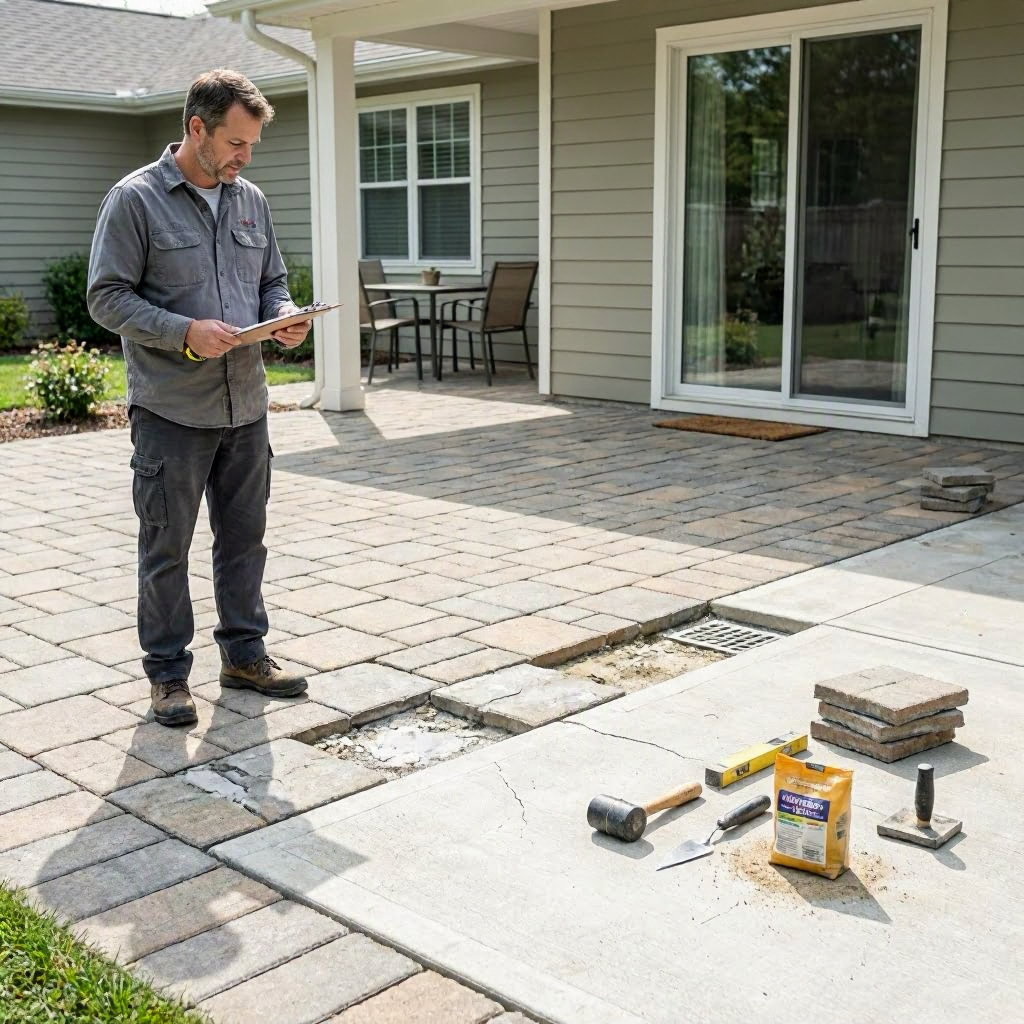
Patio repair cost: pavers, concrete, drainage, and settling
Common Patio Repair Issues and Why They Happen
Patios provide essential outdoor living space for many US homeowners, but wear from weather, soil shifts, and heavy use can lead to problems like settling, poor drainage, shifting pavers, or cracking concrete. Settling occurs when the ground beneath shifts due to poor compaction, erosion, or tree roots, causing uneven surfaces and tripping hazards. Drainage issues arise from clogged gutters, improper sloping, or saturated soil, leading to standing water that damages materials over time.
Paver patios often see individual stones shift or sink because of sand erosion under joints or freeze-thaw cycles in colder climates. Concrete patios crack from temperature changes, ground movement, or water infiltration that expands when frozen. These repairs vary widely in scope, from simple resets to full replacements, and costs depend on your location, patio size, and damage extent.
Homeowners in areas like the Midwest face more settling from expansive clay soils, while coastal regions deal with drainage from heavy rains. Recognizing the issue early helps control costs, as small fixes prevent larger structural problems.
Key Factors Influencing Patio Repair Costs
Patio repair expenses hinge on several variables that US homeowners should evaluate before committing to work. Location plays a major role, with higher labor rates in urban areas like California or New York compared to rural Midwest spots. A 200-square-foot patio might cost more to access in a sloped backyard than on level ground.
Material choices affect pricing: basic concrete pours run cheaper than premium pavers or permeable options for better drainage. Labor typically dominates, as excavation, leveling, and reinstallation demand skilled workers. Size of the patio directly scales costs, with larger areas requiring more time and equipment.
Access challenges, like tight gates or stairs, increase trip charges and manual labor needs. Urgency matters too, emergency fixes after storms command premiums. Local soil conditions, such as sandy versus clay-heavy ground, influence foundation work for settling repairs.
Permits add fees in many municipalities for structural changes, especially if drainage alters runoff onto neighboring properties. Disposal of old materials, like broken concrete, incurs hauling costs. Contractor availability fluctuates seasonally, spiking in spring and summer.
Here's a breakdown of common cost drivers:
| Factor | Why It Matters | Example Impact |
|---|---|---|
| Patio Size | Larger areas need more materials and time | Doubling size can increase total by 80-100% |
| Material Type | Premium options cost more upfront | Pavers vs. stamped concrete varies significantly |
| Labor Location | Urban rates exceed rural | West Coast often 20-50% higher than South |
| Site Access | Tight spaces raise manual effort | Narrow paths add equipment rental fees |
| Drainage Needs | Poor slope requires grading | Adds excavation depth and backfill |
| Settling Severity | Minor vs. full base rebuild | Surface lift cheaper than new foundation |
Always get site-specific quotes, as these factors interact uniquely for each home.
Repairing Paver Patios: Costs and Considerations
Paver patios offer modular repairs, making them less disruptive than solid concrete slabs. Common issues include sinking stones from washed-out sand bedding or weeds lifting joints. Surface-level fixes involve lifting pavers, refilling joints with polymeric sand, and compacting the base, which suits minor shifts.
For widespread sinking, contractors excavate, add gravel base, and relay pavers. Costs rise with paver type: clay bricks hold up better in freeze zones but cost more than concrete ones. Homeowners in Florida might focus on hurricane-resistant interlocking designs.
Labor for a typical 300-square-foot patio reset involves 2-4 workers over a few days. Material costs include sand, gravel, and edge restraints. DIY works for small areas under 100 square feet if you have basic tools like a plate compactor, but pros handle base stabilization to prevent recurrence.
Watch for upsells like unnecessary full replacements when spot fixes suffice. Ask contractors to demonstrate moisture tests under lifted pavers. In HOA communities, verify paver specs match community standards to avoid fines.
Concrete Patio Repair Options and Pricing Drivers
Concrete patios demand precise repairs to avoid cracks spreading. Surface cracks from shrinkage or minor settling can use epoxy fillers or resurfacing overlays for a fresh look. Deeper structural cracks signal settling, requiring slab jacking or mudjacking to lift with injected grout.
Full replacement involves demolition, rebar reinforcement, and pouring new concrete, ideal for heavily damaged slabs. Costs escalate with decorative finishes like stamping or coloring, popular in suburban backyards. Thickness matters: 4-inch slabs for light use versus 6-inch for heavy furniture or vehicles.
Labor includes forming, pouring, and curing time, often spanning a week for curing alone. In seismic zones like California, added rebar or fiber mesh raises material needs. Permits are common for replacements over certain sizes, checked via your local building department.
DIY crack sealing is feasible with store-bought kits, but lifting slabs needs hydraulic equipment rented from home centers. Pros ensure proper sloping for drainage, preventing water pooling that worsens future cracks.
Drainage Problems: Identifying and Repairing Cost-Effectively
Poor drainage turns patios into puddles, accelerating material breakdown. Symptoms include standing water after rain or soggy edges. Causes range from flat slabs lacking 1/4-inch-per-foot slope to clogged French drains or downspout issues.
Basic fixes regrade soil around edges or add gravel trenches to direct water away. For patios integrated with home gutters, extend downspouts or install catch basins. Permeable pavers allow water infiltration, reducing runoff but requiring clean base layers.
Extensive work might involve excavating under the patio for French drain pipes wrapped in fabric, backfilled with gravel. Costs climb with depth and length of trenches, plus pipe and fabric materials. In flood-prone areas like the Southeast, elevated patios or sump pumps add complexity.
Labor for drainage retrofits disrupts yards, often needing temporary relocation of landscaping. Test drainage first by hosing the patio and timing runoff; if water lingers over 30 minutes, repairs are needed. Renters should notify landlords, as exterior drainage falls under property maintenance.
Settling Patios: From Minor Shifts to Major Stabilization
Settling creates uneven, hazardous surfaces across paver or concrete patios. Shallow settling from erosion responds to piering or helical piers driven deep into stable soil for support. Slab jacking pumps slurry under slabs to raise them precisely.
Tree roots or poor original compaction demand base rebuilds, excavating 6-12 inches, adding geotextile fabric, gravel, and compacting layers. Costs vary by soil type: expansive soils in Texas need deeper piers. Severity dictates scope—a 1-inch dip might cost less than progressive sinking over years.
Diagnosis starts with visual checks for cracks radiating from low spots or doors sticking nearby, indicating broader foundation issues. Pros use levels and probes to assess. In older homes, settling ties to overall foundation health, warranting structural engineer input.
DIY leveling with sand suits pavers only; concrete needs pros for injection accuracy. Document changes with photos for insurance if storm-related.
DIY vs. Professional Repairs: Making the Right Choice
Deciding between DIY and hiring pros balances skill, tools, safety, and long-term results. DIY suits minor tasks like resealing paver joints or patching small concrete cracks, saving on labor if you rent compactors or buy sealers from big-box stores.
| Repair Type | DIY Feasibility | Pro Recommendation |
|---|---|---|
| Paver Joint Sanding | High (tools available) | Low damage extent |
| Minor Concrete Cracks | Medium (kits work) | Under 1/4-inch wide |
| Drainage Trenching | Low (heavy digging) | Slopes over 10 feet |
| Slab Jacking/Settling | Very Low (specialized) | Any lift over 1 inch |
| Full Base Rebuild | None (equipment needed) | All cases |
Pros excel at diagnostics, ensuring code-compliant fixes like proper drainage slopes. For patios over 200 square feet or with utilities nearby, hire licensed landscapers or concrete specialists to avoid liability. Safety risks include heavy lifting or unstable excavation walls.
How to Get Reliable Estimates and Avoid Overpaying
Shop multiple written estimates from 3-5 local contractors vetted via state licensing boards or BBB reviews. Specify scope upfront: patio dimensions, photos of damage, desired materials, and timeline. Ask if quotes include labor, materials, disposal, permits, and cleanup.
Key questions:
- Are you licensed and insured for my state/county?
- What's the warranty on labor and materials?
- Will subcontractors perform work?
- How do you handle soil testing for settling?
- What's the payment schedule—no more than 30% upfront?
Compare line items: excavation hours, cubic yards of gravel, paver quantities. Reject vague "materials and labor" totals. Watch for red flags like pressure for immediate full payment or skipping site visits. For non-urgent jobs, bid in off-season for savings.
Renters: Review lease for landlord responsibilities on patios; send documented requests with photos.
Permits, Inspections, and When They Apply
Patio repairs rarely need permits for surface work, but replacements or drainage changes often do, especially if altering grading affects neighbors or stormwater. Check your city or county building department—urban areas like Chicago enforce stricter rules than rural ones.
Inspections verify setbacks from property lines and slope compliance. Homeowners insurance covers sudden events like storm washouts but excludes neglect. Home warranties might handle concrete settling if structural.
HOA members confirm exterior changes in covenants. Keep records for claims.
Maintenance Tips to Extend Patio Life and Cut Future Costs
Prevent repairs with annual checks: reseal concrete every 2-3 years, refresh paver sand seasonally, clear gutters directing onto patios. Ensure 2% slope away from house; trim roots encroaching bases.
Sweep debris, avoid heavy loads on edges, and hose-test drainage yearly. In snowy regions, use de-icers safe for materials. These steps can delay major work by years.
Financing Patio Repairs for Homeowners
For larger projects, explore HUD's home improvement loans like Title I for repairs up to $25,000 or 203(k) for rehabs bundling purchase and fixes (details at hud.gov/helping-americans/home-improvements and hud.gov/hud-partners/single-family-203k). FHA-insured options suit modest-income owners.
Home equity lines or contractor financing offer flexibility, but compare rates. Patching small issues now prevents borrowing later for full overhauls.
Repair Checklist Before Hiring or DIY
Gather these details for better decisions:
- Measure patio size and note dimensions.
- Photograph damage from multiple angles, wet and dry.
- Note nearby trees, downspouts, slopes.
- Test water flow with hose.
- Check lease/HOA rules if applicable.
- List material preferences and budget range.
This prep yields accurate quotes and spots hidden issues like utility lines—call 811 before digging. With thorough planning, US homeowners manage patio repairs effectively without surprises.

About the TDL Expert Panel
TDL Expert Panel · TheDigitalLife Editorial Team
TDL Expert Panel is the editorial team behind TheDigitalLife. The team researches, reviews, and creates practical guides to help everyday readers make better decisions about home repair costs, refunds, AI tools, digital safety, productivity, and useful online resources. Each guide is written to be clear, useful, and easy to understand.