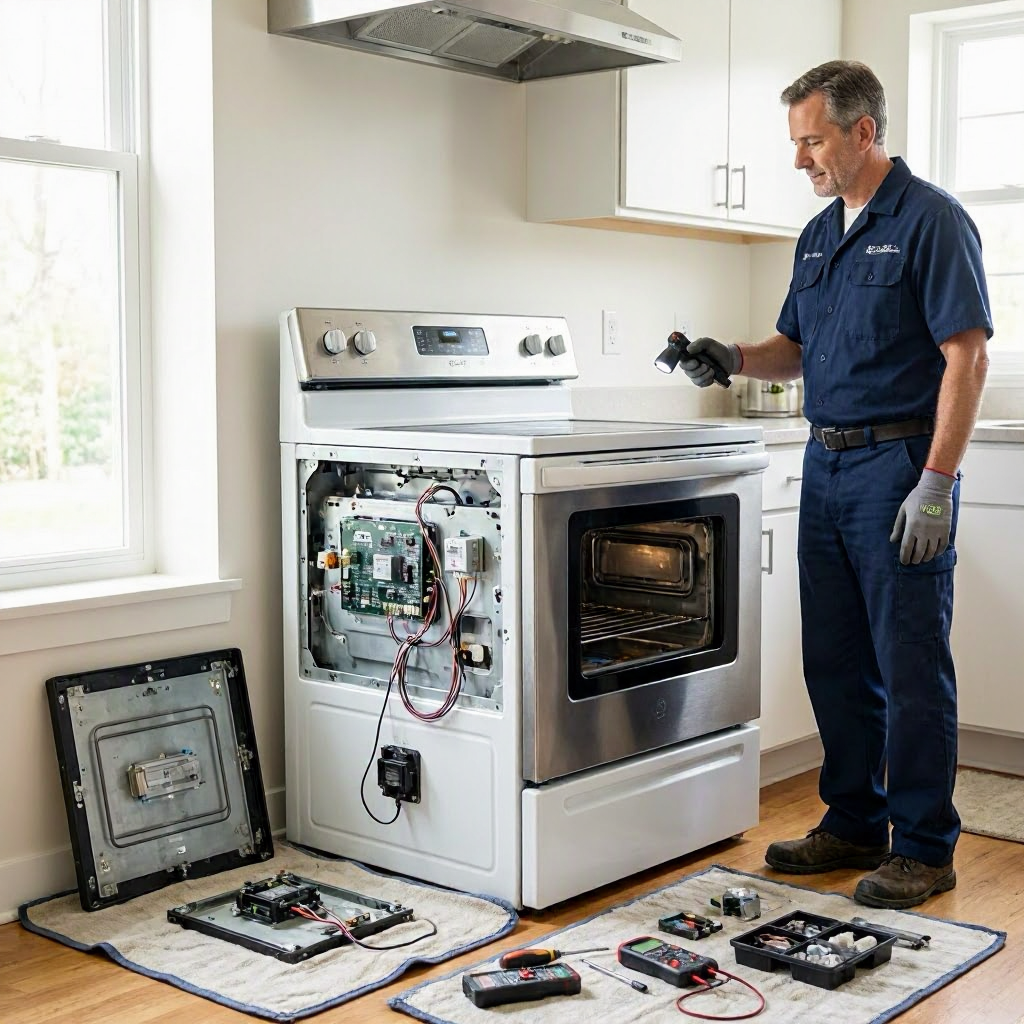
Oven and range repair cost: igniter, element, thermostat, and control board
Common Oven and Range Repair Issues
Oven and range problems can disrupt meal prep in any US home, apartment, condo, or rental. When the oven won't heat properly or the burners fail to light, the culprits are often the igniter, heating element, thermostat, or control board. These parts wear out over time due to heavy use, heat cycles, or age.
Repairing these components varies in complexity and cost. Factors like your location, appliance brand, model age, and whether it's gas or electric influence the final bill. Homeowners might tackle simple fixes, but renters should check leases first, as landlords often cover major appliance repairs.
This guide breaks down symptoms, repair steps, cost drivers, and decision points for each part. It helps you spot issues early, decide on DIY versus professional service, compare estimates, and avoid unnecessary charges.
Oven Igniter: Function and Failure Signs
The igniter is key in gas ovens and ranges. It glows to open the gas valve and ignite the burner. A faulty igniter fails to glow brightly, clicks endlessly without lighting, or causes weak flames.
Common symptoms include:
- Oven takes too long to preheat or won't heat above 300°F.
- Gas smell without ignition.
- Broil function fails.
These signs point to a worn igniter, common after 5-10 years. Test by watching the igniter during preheat: it should glow orange within 90 seconds and stay lit.
Diagnosis involves checking voltage with a multimeter, a task for those comfortable with basic electricity. Gas issues demand caution due to leak risks.
Repairing the Oven Igniter
Replacing an igniter requires shutting off gas and power. Access the igniter through the oven's bottom panel, disconnect wires, unscrew, and install the new one.
Parts typically cost $20 to $80, depending on brand like Whirlpool or GE. Labor adds $100 to $250, as technicians handle gas safely.
Total repair might range from $150 to $350 in most US areas, higher in cities like New York or San Francisco due to labor rates of $75 to $150 per hour. Rural spots or off-peak times could lower it.
Urgency matters: a non-working igniter isn't immediately dangerous if no gas leaks, but fix soon to avoid food safety issues.
Heating Element: Types and Problems
Heating elements provide heat in electric ovens and broilers, or surface burners on ranges. Bake elements are at the bottom, broil at the top. Coil elements sit on stovetops.
Failure signs:
- No heat or uneven heating.
- Visible blisters, cracks, or burn marks.
- Oven preheat timer exceeds 20 minutes.
Elements fail from thermal fatigue after 5-8 years. Inspect for damage and test continuity with a multimeter.
Gas ranges have glow bar igniters for burners, but elements refer mainly to electric models.
Fixing the Heating Element
Electric element replacement is straightforward DIY for handy homeowners. Unplug power, remove screws, pull off terminals, and swap.
New elements run $20 to $100, with screw-in types cheaper than hidden bake elements.
Professional service adds $75 to $200 labor, totaling $100 to $300. Costs rise if access requires cabinet removal in built-in ranges.
In tight kitchens common in condos or apartments, pros charge extra for maneuvering.
Thermostat: Role in Temperature Control
The thermostat (or temperature sensor/probe) monitors and regulates oven heat. Modern ovens use electronic sensors; older have capillary tubes.
Symptoms of failure:
- Oven runs too hot or cold by 25-50°F.
- Frequent cycling on/off.
- Inaccurate display readings.
A bad thermostat misreads temperatures, stressing other parts. Calibrate first by testing with an oven thermometer.
Thermostat Repair Process
Sensor replacement involves disconnecting power, removing the probe from the oven rear, and clipping in the new one.
Parts cost $15 to $75. Labor: $100 to $250, as diagnosis checks wiring and calibration.
Expect $150 to $350 total. Older capillary thermostats are pricier to source and install, pushing costs up.
Control Board: The Brain of the Appliance
The electronic control board manages timers, sensors, igniters, and elements. It's behind the control panel.
Warning signs:
- Unresponsive buttons or erratic displays.
- Error codes like F1 or 4 beeps.
- Random shutdowns or failures across functions.
Boards fail from power surges, heat, or moisture. Diagnosis scans codes via the panel.
Replacing the Control Board
This requires full disassembly: remove panels, transfer wires carefully.
Boards are expensive at $100 to $400, varying by model complexity.
Labor: $150 to $400 due to precision work, totaling $300 to $800. Surge protectors help prevent repeats.
Factors Influencing Oven and Range Repair Costs
Costs aren't fixed nationwide. Labor rates range from $60 to $150 hourly in the US, higher in urban areas.
Key drivers:
| Cost Factor | Why It Matters | Example Impact |
|---|---|---|
| Location | Urban techs charge more; travel fees in rural areas | +20-50% in coastal cities |
| Appliance Type | Gas needs certified techs; electric simpler | Gas labor 1.5x electric |
| Brand/Model | OEM parts for GE/Whirlpool costlier than generics | $50+ premium |
| Home Access | Built-ins or islands add disassembly time | +$100-200 |
| Urgency | After-hours or weekends | +25-50% premium |
| Diagnosis Fee | Often $75-125, credited to repair | Waived if proceeding |
Parts availability affects wait times and prices; discontinued models hike costs.
DIY vs Hiring a Professional
DIY suits simple electric repairs like elements if you have basic tools (screwdriver, multimeter, gloves).
Steps for safe DIY: 1. Unplug or shut off breakers/gas. 2. Take photos of wiring. 3. Buy model-matched parts from appliance parts stores. 4. Test post-install.
Skip DIY for:
- Gas igniters (explosion risk).
- Control boards (complex electronics).
- Any gas smell or error codes.
Pros carry insurance, warranties, and tools. Unqualified work voids manufacturer coverage.
Renters: Review lease; landlords handle appliances in most states.
Getting Multiple Estimates
Call 3 licensed techs via sites like Angi or local directories. Provide model number, symptoms, photos.
Estimate must include:
- Diagnostic fee (if not free).
- Parts markup (20-50% typical).
- Labor hours.
- Warranty (90 days labor common).
- Total with taxes.
Compare line-by-line; reject vague "flat rates."
Questions to Ask Before Approving Work
Prepare this list:
- Are you licensed, insured, gas-certified (for gas appliances)?
- What's included: parts, labor, trip charge, cleanup?
- OEM or compatible parts? Warranty length?
- Timeline and payment terms (no full upfront)?
- What if more issues found?
Note responses; good techs explain patiently.
Signs Your Repair Needs Are Bigger
Weak performance might signal multiple failures. If igniter and element both fail, check control board first.
Budget for inspection: Pays off by avoiding piecemeal fixes.
Replacement makes sense if repair exceeds 50% appliance value ($400-800 for new basic range).
Insurance, Warranties, and Permits
Homeowners insurance rarely covers wear-and-tear appliances; check for sudden failures.
Home warranties (like Choice or Select) often cap appliance repairs at $500-1500 annually.
Manufacturer warranties (1-5 years) require proof; retain manuals.
Permits rarely needed for in-home appliance swaps, but verify with local building department for gas work.
Renters' Guide to Appliance Repairs
US leases typically make landlords responsible for appliances provided at move-in. Document issues via email/text with photos.
Sample message to landlord: "Hi, the oven igniter won't glow on my GE model [number]. Here's a photo/video. Can you send a repair person?"
If minor and lease allows, DIY electric elements, but bill landlord with receipts.
HOA/condo: Unit appliances usually owner/renter responsibility, unless common.
Maintenance to Extend Appliance Life
Prevent repairs with habits:
- Clean spills promptly to avoid sensor corrosion.
- Avoid foil on elements.
- Level range to prevent uneven wear.
- Use bakeware matching oven size.
- Annual pro check for gas models.
Self-clean cycles stress igniters; limit use.
Avoiding Scams and Overcharges
Dishonest techs push unnecessary boards or full replacements. Get second opinions on $500+ quotes.
FTC warns of door-to-door "deals" or upfront demands. See FTC home improvement scams and home repair scams.
Verify licenses via state boards (e.g., CSLB in California).
Cost Comparison: Repair vs Replacement
| Scenario | Repair Estimate Range | New Appliance Range | When to Replace |
|---|---|---|---|
| Single Igniter | $150-350 | $500-1200 | Oven >10 years old |
| Element Only | $100-300 | $800-1500 | Multiple failures |
| Thermostat | $150-350 | $600-1400 | Frequent issues |
| Control Board | $300-800 | $700-1600 | High repair ratio |
New ranges qualify for rebates; shop sales at Home Depot or Lowe's.
Documenting Your Repair
Keep records:
- Before/after photos.
- Invoices with serial numbers.
- Tech contact info.
Useful for warranties, insurance, or resale.
In summary, understanding these repairs empowers better decisions. Start with diagnosis, get quotes, prioritize safety, and maintain regularly to minimize future costs.

About the TDL Expert Panel
TDL Expert Panel · TheDigitalLife Editorial Team
TDL Expert Panel is the editorial team behind TheDigitalLife. The team researches, reviews, and creates practical guides to help everyday readers make better decisions about home repair costs, refunds, AI tools, digital safety, productivity, and useful online resources. Each guide is written to be clear, useful, and easy to understand.