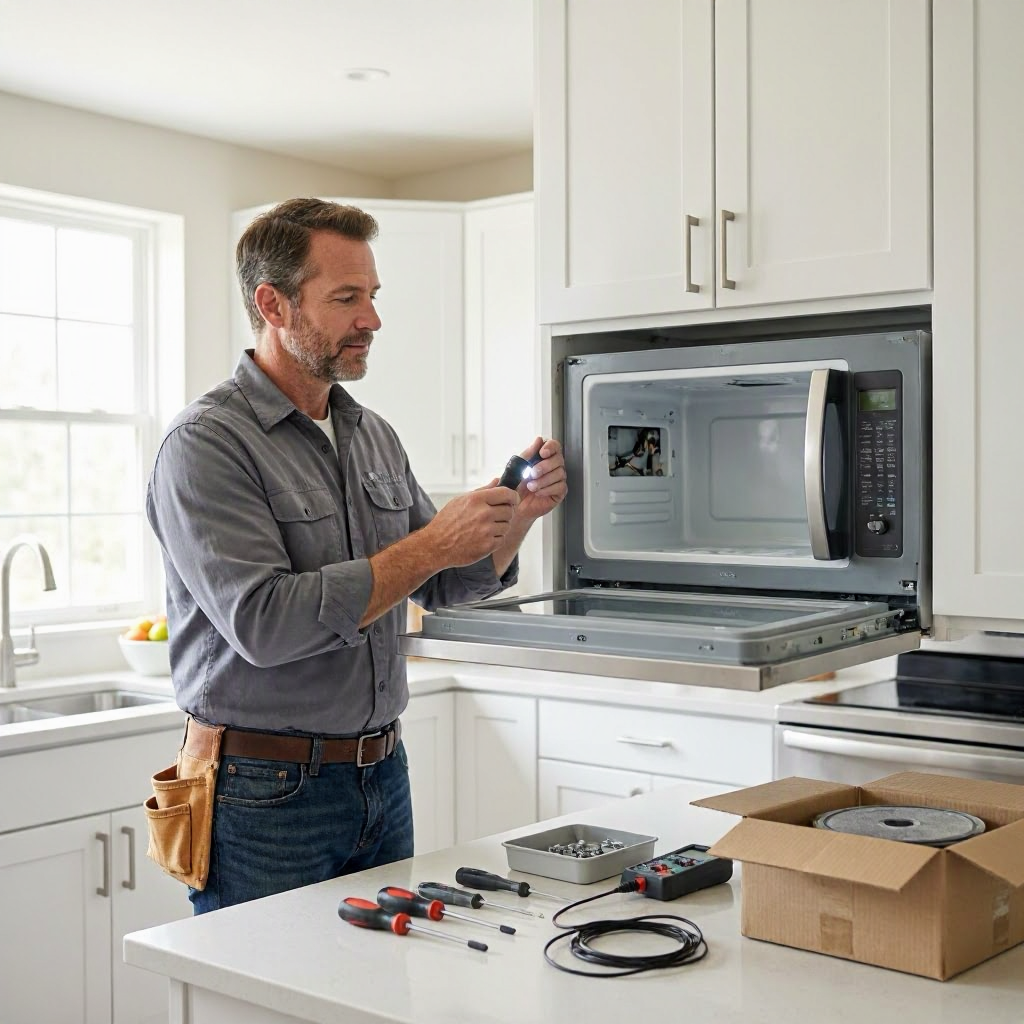
Microwave repair cost vs replacement cost
---
Understanding Microwave Breakdowns
Your microwave stops heating, makes strange noises, or won't turn on. Now you're facing a common homeowner dilemma: spend money on repairs or buy a new one? This decision hinges on the problem's severity, your microwave's age and value, local repair costs, and new model prices. Understanding the cost comparison helps you avoid unnecessary expenses while ensuring safe kitchen operation.
In the US, microwaves average 10 years of use before major issues arise. Repairs might save money short-term, but replacement often makes sense for older units due to part scarcity and labor. We'll break down costs, factors, and steps to decide wisely, tailored for homeowners, renters, and condo owners.
Signs Your Microwave Needs Attention
Not every glitch requires action. Spot early warnings to assess urgency:
- No heat but turns on: Often a faulty magnetron or diode, common after 7-10 years.
- Sparking or arcing: Could indicate damaged waveguide cover or turntable issues.
- Door won't latch or open: Safety switch or handle problem; microwaves won't run if sensors detect an open door.
- Strange odors or noises: Burning smell suggests failing components; loud humming points to transformer trouble.
- Uneven or no heating: Door seal wear or stirrer motor failure.
Document symptoms with photos and videos before unplugging. Note the model number (inside door or back) for parts lookup. If it's sparking or smoking, unplug immediately and don't use it,fire risk is real.
For renters, check your lease: appliances are typically landlord responsibility unless damage is tenant-caused. Contact your property manager before DIY attempts.
Common Microwave Problems and Their Repair Implications
Microwaves fail from wear, misuse (metal inside), or power surges. Here's a breakdown of frequent issues:
Heating Failures
The magnetron generates microwaves; replacement involves disassembly. Labor-intensive due to high-voltage capacitors, which store lethal charge even unplugged.
Door and Safety Mechanisms
Interlock switches ensure safe operation. Faulty ones halt use, but codes require proper function.
Turntable and Interior Damage
Cracked glass plates or rollers are cheap fixes. Warped interiors from spills may need panel replacement.
Control Panel Glitches
Touchpads fail from moisture or age. Programming boards cost more if proprietary.
Each problem affects repair feasibility. Simple fixes like fuses suit DIY; high-voltage work demands pros to avoid shocks or code violations.
Factors Influencing Repair Costs
Repair prices vary widely by location (urban areas like New York or San Francisco charge 20-50% more than rural spots), home age (older wiring complicates access), repair complexity (built-in vs countertop), parts availability (out-of-warranty discontinued models hike costs), urgency (weekend/emergency adds 50-100%), and contractor rates (independent techs vs chains).
Labor typically runs $75-150 per hour, 1-3 hours for microwaves. Parts: fuses under $20, magnetrons $100-250. Diagnostic fees: $50-100, often credited toward repair.
Built-ins require cabinetry work, adding $100-300. Disposal of old unit: $25-50 if not DIY.
Get multiple written estimates detailing labor, parts, diagnostics, and warranties. Ask if prices include taxes, permits (rare for microwaves but possible in condos), and cleanup.
Typical Microwave Repair Cost Ranges
Costs aren't fixed nationally, but expect:
- Minor fixes (fuse, light bulb, door switch): $100-250 total.
- Moderate (turntable motor, thermostat): $150-350.
- Major (magnetron, transformer, control board): $200-500+.
Total rarely exceeds $400-600, even complex. If quote tops $300 for a 10+ year unit, replacement often pencils out cheaper.
Variations stem from OEM vs generic parts (OEM 20-50% pricier but reliable) and travel fees ($50-100 outside 20 miles).
New Microwave Costs and Options
Replacement sidesteps repair risks. Prices depend on type, features, size, and retailer:
- Countertop basics (0.7-1.0 cu ft, 700-1000W): $80-200 at Walmart, Home Depot.
- Mid-range countertops (1.1-1.5 cu ft, sensor cooking): $150-350.
- Over-the-range (combo vent/microwave): $200-600.
- Built-in or drawer models: $400-1200+.
- Smart/ convection: $300-800.
Shop sales at Best Buy, Lowe's, or Amazon; Black Friday drops 20-40%. Factor installation: countertop plug-and-play ($0), over-range $100-250 labor, built-in $200-500.
Used or refurbished: $50-150 via Facebook Marketplace, but check for recalls via CPSC.gov. Energy Star models save $10-20/year electricity.
Repair vs. Replacement: Breaking Down the Math
Compare total ownership:
| Scenario | Repair Cost Estimate | New Microwave Cost | Long-Term Savings Notes |
|---|---|---|---|
| Minor issue, unit <5 years old | $100-250 | $200-400 | Repair wins; preserves warranty. |
| Major issue, unit 5-8 years | $250-400 | $150-350 | Toss-up; new has 1-5 year warranty. |
| Any issue, unit 10+ years | $200-500 | $100-300 | Replace; parts scarce, efficiency low. |
| Built-in model | $300-600 | $500-1000 | Replace if under warranty; else pro install new. |
This table assumes average US costs; get local quotes. Add $50-100 for delivery/disposal on new units. Over 5-7 years, new model's efficiency offsets upfront cost.
Rule of thumb: If repair >50% of new equivalent price, replace. For $200 repair on $150 basic model? Buy new.
When Repair Makes Sense
Opt for repair if:
- Unit under 5-7 years with warranty remaining.
- Problem minor (door, fuse).
- High-end model ($500+ original).
- Sentimental value or matches kitchen.
- Multiple bids under $250 total.
Urgent? Temporary fix like new fuse buys time.
When to Replace Instead
Replace for:
- Age 10+ years: Cumulative failures loom.
- Frequent breakdowns: Indicates systemic wear.
- Obsolete parts: Techs can't source.
- Safety concerns: Persistent sparking.
- Efficiency loss: Older units guzzle power.
New models offer inverter tech for even cooking, easier cleaning, child locks.
Safe DIY Microwave Repairs
DIY suits simple, low-voltage tasks only. Unplug first; discharge capacitors per model manual (YouTube guides for specifics). High-voltage risks electrocution, even off.
Safe DIY:
- Replace fuse or bulb: Unscrew access panel, swap (under $10).
- Clean door seals/turntable: Mild soap; fixes uneven heat.
- Check outlet/ cord: Test with multimeter or extension.
- Door switch: If comfortable with schematics.
Tools: Screwdriver set, multimeter ($20). Parts from RepairClinic.com or AppliancePartsPros.com using model number.
Never DIY: Magnetron, high-voltage diode, capacitor. These require certification; improper handling voids insurance.
If unsure, stop. Faulty repairs cause fires; US fire departments report 10,000+ annual appliance blazes.
Hiring a Professional Appliance Repair Service
For anything beyond basics, call licensed techs. Search Angi, Yelp, or manufacturer referrals (GE, Whirlpool sites).
Steps:
- Gather info: Model/serial, symptoms, photos.
- Get 3 written estimates: Detail parts/labor/warranty.
- Vet pros: Licensed/insured? BBB ratings? Reviews post-2020.
Questions to ask:
- Is diagnostic fee applied to repair?
- OEM or compatible parts? Warranty length?
- Total cost including tax/travel?
- Timeline? Subcontractors?
- Disposal of old unit?
Expect 1-2 hour jobs. Pay 50% deposit max; balance post-test.
Watch FTC scams: Door-to-door "techs," upfront full payment, vague estimates. Verify via consumer.ftc.gov.
Warranties, Insurance, and Coverage
Manufacturer warranties: 1-year parts/labor standard; magnetron 5-10 years. Check sticker/manual; register online.
Home warranties (Choice, Select): $100-200 annual cover appliances; $60-100 service call fee. File claim pre-repair.
Homeowners insurance: Covers fire/lightning damage, not wear/tear. Sudden surge? Deductible $500+ typical.
HOA/condo: Built-ins may need approval. Renters: Landlord covers unless negligent.
Keep receipts, serial numbers for claims.
Renters' Guide to Microwave Issues
Review lease: "Appliances maintained by landlord." Message manager: "Microwave model [X] not heating; photos attached. Request repair/replacement."
If minor and lease allows, DIY cheap fixes, but document. Withhold rent only as last resort per state law (e.g., California's implied warranty habitability).
Maintenance to Prevent Costly Failures
Extend life 2-5 years:
- Weekly: Wipe interior/door with vinegar; no abrasives.
- Monthly: Clean turntable, vents for heat escape.
- Cover food: Reduces splatters.
- No metal/foil: Prevents arcing.
- Surge protector: Guards against outages.
- Ventilation: 1-2 inches clearance.
Annual pro check for built-ins: $75-150.
Cost-Saving Strategies
- Shop sales: New units drop post-holidays.
- Bundle repairs: Fix fridge too if same tech.
- Energy rebates: Check EnergyStar.gov.
- Compare chains: Sears, Mr. Appliance vs independents.
- Negotiate: Mention competitor bids.
Decision Checklist: Repair or Replace?
Use this before committing:
- Age and value: Under 7 years and >$200 original? Repair.
- Repair quote: Under $250 and simple? Go ahead.
- Warranty active? Use it.
- Usage frequency: Heavy daily? Prioritize reliability.
- Kitchen fit: Matches over-range? Factor install.
- Budget/timeline: Can wait? Price shop new.
| Factor | Repair Favors | Replacement Favors |
|---|---|---|
| Cost | <$250 total | >$300 or repeated |
| Age | <7 years | 10+ years |
| Problem | Mechanical/simple | Electrical/major |
| Warranty | Remaining | None/expired |
Photograph before/after; save invoices for taxes/insurance.
Final Thoughts on Smart Choices
Weighing microwave repair vs. replacement empowers budget control. Prioritize safety, get quotes, leverage warranties. Most opt replace for 8+ year units, saving hassle. Local factors dominate, so consult pros.
For scam avoidance, review FTC at consumer.ftc.gov. Your kitchen appliance decision impacts daily life,monthly bills. Act informed.
(Word count: 2487) ---

About the TDL Expert Panel
TDL Expert Panel · TheDigitalLife Editorial Team
TDL Expert Panel is the editorial team behind TheDigitalLife. The team researches, reviews, and creates practical guides to help everyday readers make better decisions about home repair costs, refunds, AI tools, digital safety, productivity, and useful online resources. Each guide is written to be clear, useful, and easy to understand.