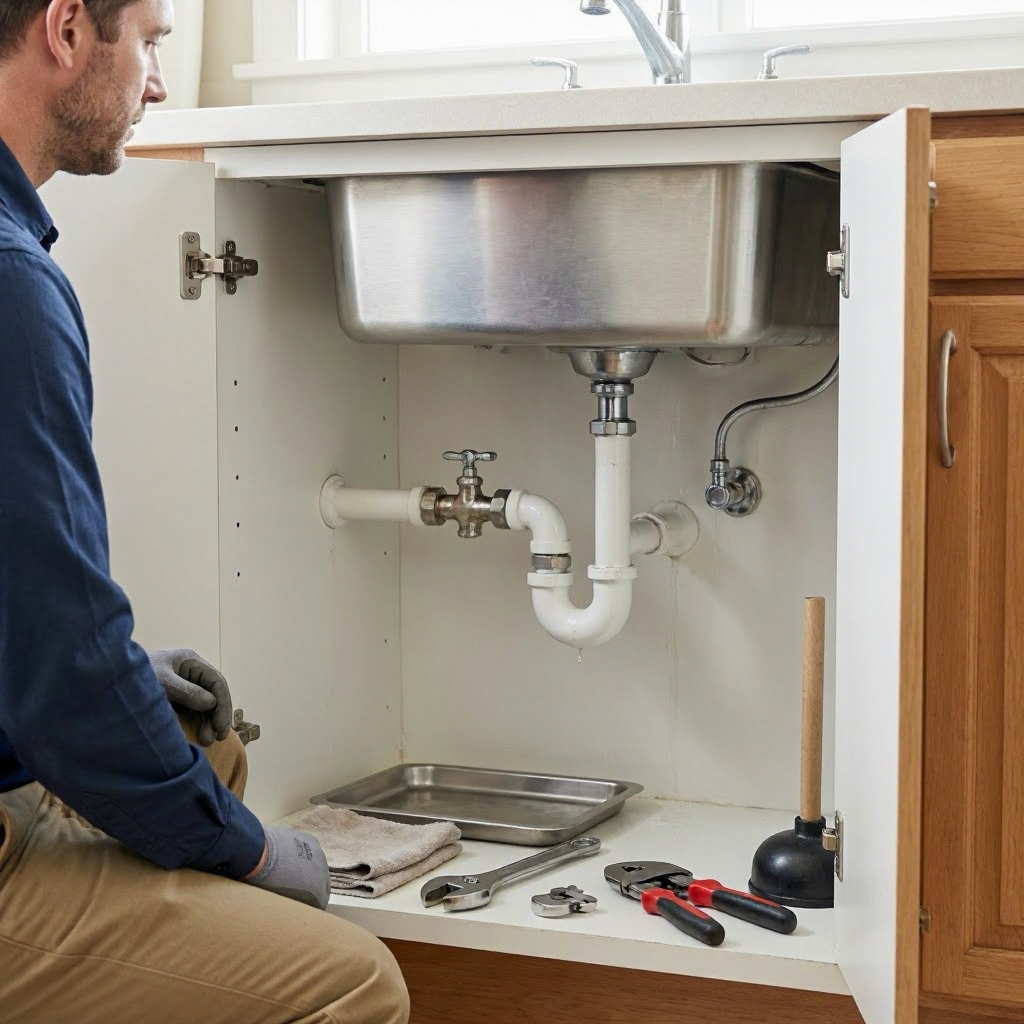
Main Water Line Leak Repair Cost
A leak in the pipe that carries water from the street to your house is different from a leaking faucet or toilet. It is buried, usually invisible and expensive to reach. It may also be partly your responsibility and partly your water utility's. This guide shows how to confirm a main line leak, who pays for which part of the pipe, what repair methods exist and how to compare quotes.
Signs of a leak in the service line
The EPA's Fix a Leak Week page notes that the average household loses more than 9,300 gallons a year to leaks. A buried line can lose far more without any visible sign. Watch for:
- A water bill that jumps with no change in how you use water. The EPA says a family of four using over 12,000 gallons in a cold month such as January or February may have serious leaks.
- A wet or unusually green patch of lawn, soft ground or pooled water between the meter and the house.
- Low water pressure throughout the house.
- The sound of running water when everything is off.
- A water meter that keeps moving when all fixtures are off.
- Cracks or damp spots in a foundation or slab near where the line enters.
Confirm it with a meter test
The EPA says that if your meter moves during a two-hour period with no water use, you likely have a leak. Use that test in a more careful way:
- Turn off every tap, appliance and ice maker. Make sure no irrigation is scheduled.
- Locate the meter and note the reading and the small leak indicator, if there is one. Take a photo.
- Wait two hours without using water, then check again.
- If the meter moved, close the main shutoff valve in your house and check again. If the meter stops, the leak is inside the house plumbing. If the meter keeps moving, the leak is between the meter and your shutoff, which is your service line.
Rule out toilet leaks first with the dye test. Our guide to toilet leak repair explains how.
Who owns which section of the pipe?
Ownership varies by location. The Iowa Department of Natural Resources states that service line ownership varies from system to system and that it is common in Iowa for all or part of the line to belong to the property owner. In Fort Worth, Texas, the city's service line inventory page says the utility owns the portion from the main to the meter, and the property owner is responsible for the portion from the meter to the building inlet. Other places draw the line at a curb stop or the property line.
Before you hire anyone, call your water utility and ask:
- Where does the utility's responsibility end?
- Who owns the meter and the shutoff valve?
- If the leak is on the utility side, will it repair it and will it adjust your bill?
- Does it have a leak-adjustment policy for bill credits?
- Is a permit required for work in the public right of way?
Do not dig in the street or near utilities without confirming locations. Your state's one-call service, usually reached by dialing 811, arranges free marking of buried utilities before digging.
Repair methods
Spot repair. If the leak is a single failure in an otherwise sound pipe, a plumber can excavate, cut out the bad section and install a coupling or new section. This is the cheapest option but works best when the surrounding pipe is in good shape.
Open-trench replacement. The plumber digs along the old line and installs a new pipe. This is a common approach when the pipe is old, corroded or damaged in several places. It disturbs lawn, driveways and landscaping, which adds restoration cost.
Trenchless replacement. Methods such as pipe bursting or directional drilling reduce surface digging. They are not suitable for every site and require access pits at each end.
Rerouting. If the old route is blocked by a structure or tree roots, the pipe may be installed on a new path.
If your line is old, ask what material it is made of. The EPA is pushing utilities to find and replace lead service lines. Because lead lines are a health issue and replacement rules are changing, ask your utility whether your line is on its inventory and whether any program assists with replacement. EPA's lead service line funding playbook cautions against replacement approaches that amount to a partial lead line replacement, so if you have a lead line, discuss full replacement with your utility. For the larger project, see our guide to main water line replacement.
What drives the cost of main water line leak repair
- Length and depth of the line. Longer, deeper lines mean more excavation.
- Pipe material and condition. Copper, plastic and galvanized steel are priced differently, and corroded lines may be replaced rather than patched.
- Surface restoration. Driveways, sidewalks, landscaping and irrigation add costs.
- Access and obstacles. Trees, rock, utilities and a house foundation increase labor.
- Method. Open-trench and trenchless approaches are priced differently, and which is cheaper depends on the site.
- Permits and inspection. Work often needs a plumbing permit. See home repair permit costs.
- Emergency timing. A line that has failed completely may justify urgency but also premium rates.
- Locating the leak. Leak detection with acoustic equipment can save time if the location is unclear.
An illustrative main water line leak repair estimate
These numbers are illustrations only. A plumber estimates 40 feet of line to be replaced at a cost of $55 per foot for pipe, labor and trenching ($2,200), plus $400 for lawn and walkway restoration, $150 for a permit and $300 for leak detection and locating. The total is $3,050. A spot repair of a single 3-foot section, if it were possible, might be $900 for excavation, parts and labor. The difference is the price of replacing a line that may leak again. Ask the plumber to explain why one approach is better for your pipe.
Questions to ask about main water line leak repair
- Is the leak confirmed by a meter test or leak detection?
- Which section is mine and which is the utility's?
- Is the proposed work a spot repair, a partial replacement or a full replacement, and why?
- Who handles permits, 811 marking and inspection?
- How will the lawn, driveway and landscaping be restored, and is restoration in the price?
- What warranty applies to the pipe and the labor?
Use our contractor estimate checklist to compare at least two written quotes, and read about deposit rules before paying anything up front.
Sources: EPA WaterSense: Fix a Leak Week; City of Fort Worth: Service line inventory; Iowa DNR: Service line ownership; EPA: DWSRF lead service line replacement playbook.

Written by TheDigitalLife Editorial Team
Edited by R. K. Tiwari
Owner & Editor
R. K. Tiwari is the owner and editor of TheDigitalLife. He checks each guide against official U.S. sources before it is published.
About the editor and our editorial standards