Lease buyout cost: taxes, fees, inspection, and financing
Understanding Lease Buyouts
A lease buyout lets you purchase your leased vehicle at the end of the lease term. Instead of returning the car to the lessor, you pay a set buyout price and become the owner. This option appeals to drivers who like their car, have stayed under mileage limits, and want to avoid shopping for a new vehicle.
Buyouts involve more than just the vehicle's residual value. You face taxes, fees, inspection costs, and financing charges that can add thousands to the total. Costs vary by lease agreement, vehicle value, your location, and lender terms. Always review your lease contract for specifics and contact your leasing company for a payoff quote.
In the US, lease buyouts follow federal guidelines from the FTC and state rules on vehicle titles and sales tax. Check the FTC's guide to buying and owning a car for consumer protections during the process.
Finding Your Lease Buyout Price
The buyout price starts with the residual value, the estimated worth of the car at lease end listed in your contract. Add any remaining payments, fees, or excess mileage/wear charges to get the total.
Leasing companies provide an official buyout quote 90 to 180 days before lease end, often including taxes and fees. Request this in writing via your account portal, phone, or email. Compare it against the car's current market value using tools like Kelley Blue Book or Edmunds for similar models, mileage, and condition in your area.
Factors affecting the price include:
- Mileage overages: Most leases allow 10,000 to 15,000 miles per year. Excess miles cost $0.15 to $0.30 each.
- Excess wear: Dings, scratches, or tire wear beyond normal use trigger charges based on the lessor's inspection.
- Outstanding payments: Prorated rent charges if buying early.
If the market value exceeds the buyout price, it's a good deal. For example, popular SUVs or trucks often appreciate, making buyouts attractive. Get multiple valuations to negotiate if fees seem high.
Taxes in a Lease Buyout
Sales or use tax applies to the full buyout amount in most states, just like buying a new or used car. Rates range from 0% (like New Hampshire or Oregon) to over 10% in places like California or Tennessee, depending on local taxes.
The leasing company typically collects tax upfront and remits it to your state. Confirm this in your quote. If you finance, tax might roll into the loan. Some states offer exemptions or credits for leased-to-owned transitions, but these are rare.
Federal taxes rarely apply directly, but track the purchase for potential deductions if used for business. Consult IRS Publication 463 for vehicle expense rules if self-employed. Keep the buyout quote, tax receipt, and title as proof.
State DMV rules vary, so verify tax handling through your state's motor vehicle agency website before paying. For instance, some require paying use tax at registration if the lessor doesn't collect it.
Common Fees in Lease Buyouts
Leasing companies charge several fees that inflate the buyout cost. These must be disclosed in your contract.
Key fees include:
- Purchase-option fee: $200 to $500, a flat charge for exercising the buyout.
- Disposition fee: $300 to $600 if not buying, but often waived on buyouts.
- Acquisition fee refund adjustment: Sometimes credited back.
- Excess mileage or wear fees: As noted earlier, variable based on condition.
- Documentation fee: $100 to $300 for paperwork processing.
Dealerships or third-party lessors might add admin fees. Review your quote line-by-line and ask for waivers, especially if you've been a good lessee. FTC rules require clear fee disclosure, so challenge any surprises.
If fees push the total above market value, consider walking away or negotiating. Document all communications with the lessor.
Pre-Buyout Vehicle Inspection
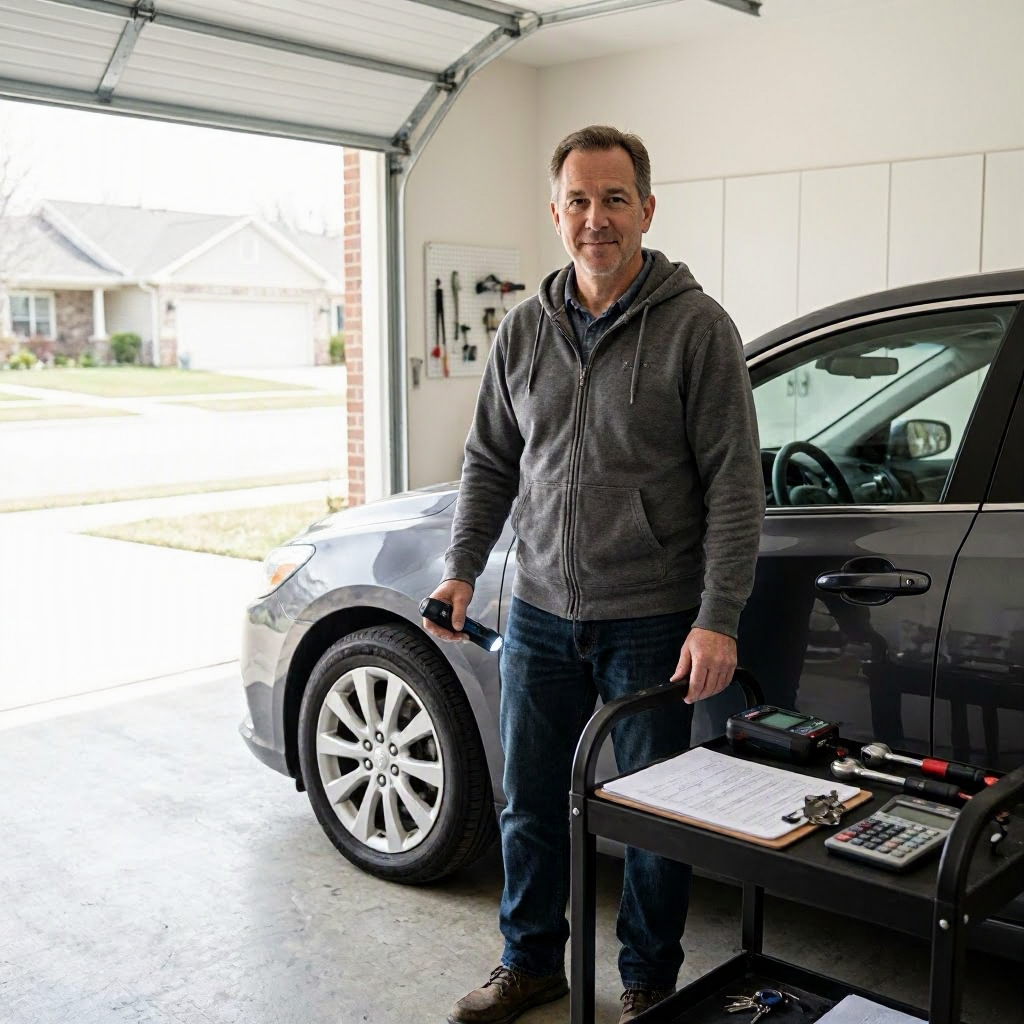
Before committing, inspect the car to avoid buying a lemon. Leases often end with a lessor inspection for wear charges, but get your own pre-purchase inspection (PPI) from an independent mechanic.
A PPI costs $100 to $250 and checks brakes, suspension, engine, transmission, tires, and electronics. Schedule at a trusted shop unaffiliated with the dealer. Bring your lease agreement and note any known issues.
Why inspect? Hidden problems like failing transmissions or rust could cost thousands post-buyout. If issues arise, negotiate repairs or credits with the lessor before finalizing.
Some states require safety or emissions inspections for title transfer. Check your DMV site. Keep the PPI report, photos of the vehicle, and mechanic notes for disputes or resale.
| Inspection Item | What to Check | Why It Matters |
|---|---|---|
| Tires and brakes | Tread depth, pad thickness | Safety risks; replacement costs $500+ |
| Engine and transmission | Leaks, unusual noises | Major repairs exceed $2,000 easily |
| Suspension and steering | Play in components | Handling issues lead to accidents |
| Electrical systems | Battery, lights, warning lights | Stranded risks; cheap fixes if caught early |
Financing Your Lease Buyout
Most buyers finance the buyout to manage cash flow. Options include:
- Leasing company financing: Convenient but rates may be higher (5-8% APR typical).
- Bank or credit union auto loan: Shop rates from 4-7% based on credit; terms up to 72 months.
- Dealer financing: Compare against others; watch for add-ons.
- Personal loan or HELOC: Higher rates, but flexible.
Get pre-approved from multiple lenders before contacting the lessor. Provide the buyout quote for accurate loan amounts. Lenders calculate based on vehicle value, your credit, income, and down payment.
Total financed amount includes buyout price + taxes + fees. Use an auto loan calculator to estimate payments, but factor in insurance hikes for ownership. Ownership often means higher comprehensive/collision premiums.
Compare total interest over the loan term, not just monthly payments. Shorter terms save money but raise payments. Check for prepayment penalties.
Step-by-Step Guide to Completing a Lease Buyout
Follow these steps to minimize errors and costs:
- Review your lease: Note residual value, mileage limits, buyout window (usually 90 days before end).
- Request buyout quote: Get it in writing, including all fees and taxes.
- Value the car: Use KBB, NADA, or Carvana for trade-in/private party values.
- Get a PPI: Uncover issues early.
- Secure financing: Shop lenders; get approval letter.
- Negotiate: Push for fee waivers if car is in good shape.
- Sign paperwork: Lessor handles title transfer; pay via cashier's check or wire.
- Register and insure: Take title to DMV for registration; update insurance to ownership policy.
- Keep records: Buyout agreement, quote, PPI, loan docs, title, registration.
Timing matters: Buyouts are easiest at lease end. Early buyouts incur penalties.
Total Cost Breakdown and Examples
Buyout costs depend on vehicle price, location, and condition. A $30,000 residual on a mid-size sedan might total $33,000-$36,000 with taxes (7% average) and fees ($1,000).
| Cost Component | Typical Range | Variables Affecting It |
|---|---|---|
| Residual value | $15,000-$40,000 | Original MSRP, lease term, mileage |
| Taxes | 5-10% of total | State/city rates; exemptions rare |
| Fees (purchase, doc, etc.) | $500-$1,500 | Lessor policy; negotiable |
| Inspection | $100-$300 | Shop rates, depth of check |
| Financing interest (60 months) | $2,000-$5,000 | Credit score, APR, loan amount |
These are illustrative; actuals vary. Add ongoing ownership costs like maintenance (no more lease coverage) and potential repairs.
Pros and Cons of a Lease Buyout
Pros:
- Keep a familiar car.
- No sales tax on trade-in value if buying new instead.
- Avoid mileage penalties by owning outright.
- Equity buildup for future trade or sale.
Cons:
- Higher total cost if residual exceeds market value.
- End of warranty or maintenance perks.
- Ownership shifts all repair risks to you.
- Financing extends debt.
Weigh against returning the car and leasing/buying new. If equity is positive, buyout often wins.
Ways to Lower Buyout Costs
Shop smart to reduce expenses:
- Negotiate fees: Good payment history strengthens your case.
- Pay cash: Avoid interest; use savings or sell assets.
- Refinance later: Start with lessor financing, then refi at better rates.
- Time it right: Buy when residuals undervalue cars (e.g., post-pandemic shortages).
- Minimize add-ons: Skip gap insurance or extended warranties unless needed.
- Check incentives: Some manufacturers offer buyout rebates.
Compare against lease-end trade-in values from dealers. Get written offers.
State-Specific Considerations
Rules differ by state. For example:
- California and New York have strict emissions inspections post-buyout.
- Texas uses sales tax on full amount.
- Florida waives some title fees for leases.
Visit your state DMV or motor vehicle division website for title transfer, registration fees, and tax rules. Some require smog checks or VIN verification.
Handling Issues or Disputes
If the lessor inflates fees or ignores negotiations, document everything. Contact the FTC or your state attorney general for lease disputes. For financing issues, review Truth in Lending disclosures.
Post-buyout, if title delays occur, follow up with DMV. Keep insurance proof during transition to avoid lapses.
Long-Term Ownership Costs After Buyout
Owning means budgeting for:
- Maintenance: Oil changes, tires ($400-$800/year).
- Repairs: Average $500-$1,000 annually after warranty.
- Insurance: Often 10-20% higher without lease protections.
- Registration: Annual fees plus property taxes in some states.
Track expenses in a spreadsheet. Use apps like Fuelly for total cost of ownership.
When to Avoid a Lease Buyout
Skip if:
- Buyout exceeds market value by 10%+.
- High mileage or poor condition racks up fees.
- You prefer new tech/safety features.
- Financing rates exceed 7% with your credit.
Consider selling the lease via swap sites if allowed, or trade-in for credit toward a new lease/purchase.
Documents to Keep After Buyout
Safeguard these for taxes, resale, or loans:
- Lease agreement and buyout quote.
- PPI report and lessor inspection.
- Title and registration.
- Loan/ financing contract.
- Tax receipts and fee breakdowns.
- Insurance policy updates.
Scan and store digitally. These prove ownership history.
Lease buyouts can save money and hassle if done right. Start with your quote, inspect thoroughly, and shop financing. Verify all details with your lessor, DMV, and lenders to own your car confidently. For dealer buyouts, see the FTC's used car guide.

About the TDL Expert Panel
TDL Expert Panel · TheDigitalLife Editorial Team
TDL Expert Panel is the editorial team behind TheDigitalLife. The team researches, reviews, and creates practical guides to help everyday readers make better decisions about home repair costs, refunds, AI tools, digital safety, productivity, and useful online resources. Each guide is written to be clear, useful, and easy to understand.