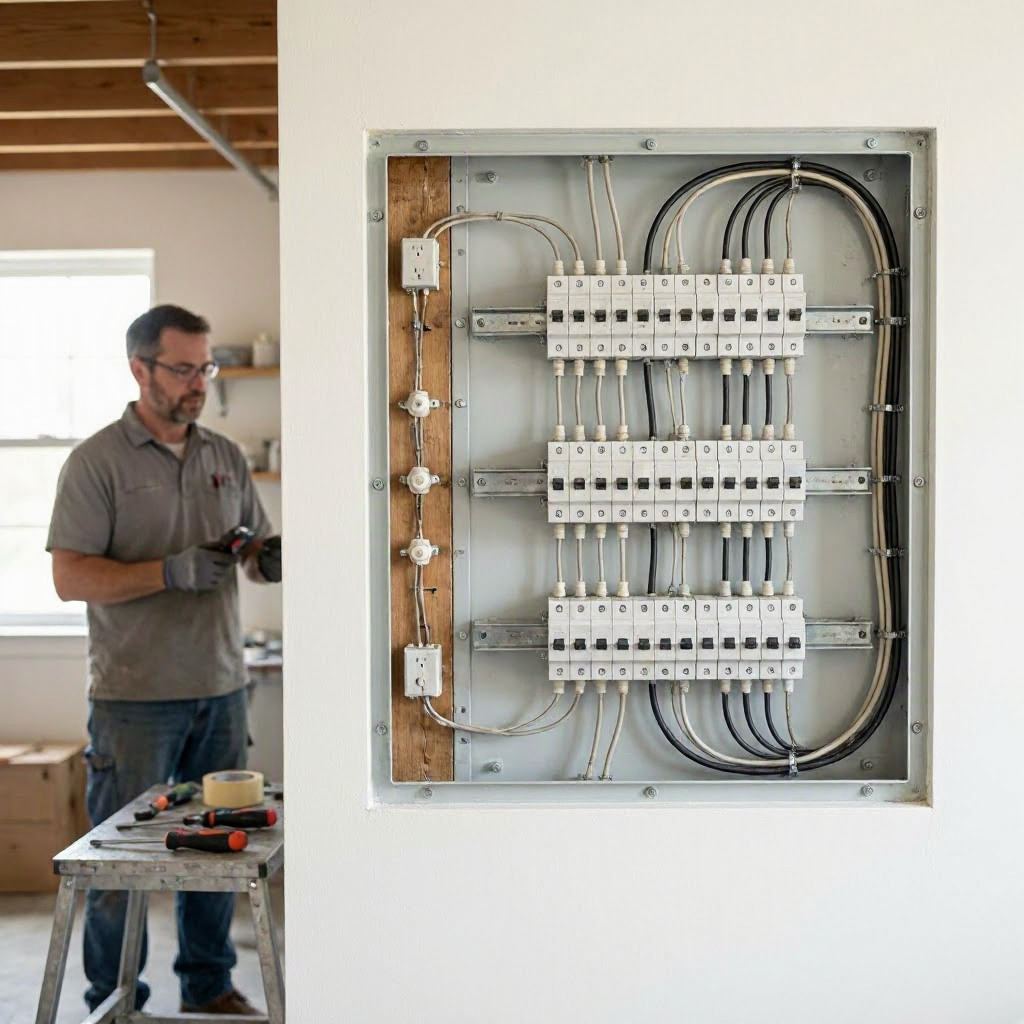
Knob and Tube Wiring Replacement Cost
If you’ve discovered knob and tube wiring in your home, you’re likely facing a significant repair. This is a common scenario for owners of older homes, often triggered by a home inspection, insurance requirement, or a nagging electrical issue. Replacing this outdated system is a major project that requires careful planning and a qualified professional. This guide will walk you through the practical costs, the hiring process, and the important safety steps you need to take.
The goal is to give you a clear picture of what to expect, from the first phone call to the final inspection, so you can budget confidently and hire wisely.
Replacing knob and tube wiring is a major home repair. The typical cost range for a full replacement is between $12,000 and $36,600, often calculated at $10 to $20 per square foot. You should contact a licensed electrician first for a thorough inspection and quote. The total price varies greatly depending on your home’s size, accessibility, local labor rates, and any required permits or repairs.
Additional reference details:
- Item: Typical cost range , Detail: $12,000–$36,600
- Item: Labor intensity , Detail: High; requires accessing walls, attics, and basements
- Item: Best first contact , Detail: Licensed electrician and local building department
- Item: Main safety warning , Detail: Call 911 for smoke, fire, sparks, or burning smell
- Item: Warranty proof needed , Detail: Receipt, invoice, model number, photos, written diagnosis
- Item: Call a licensed pro when , Detail: Dealing with old wiring, grounding issues, or burning smells
Who should I call first
- Who should I call first? A licensed electrician for diagnosis and the local building department for permit information.
- What will it cost? Expect a range of $12,000 to $36,600; get detailed, written quotes.
- What proof is needed for warranty? Keep your receipt, invoice, model numbers, and photos of the issue.
- Which state or local office should I check? Contact your city/county building department and your state's licensing board for electricians.
- What are the warning signs? Warm outlets, burning smells, sparks, repeated breaker trips, or visible damage are urgent.
- When should I avoid DIY? Always hire a licensed electrician for safety-critical wiring, grounding, and troubleshooting hidden problems.
Additional reference details:
- Main customer question: Best first contact for repair , Who to contact for help: Licensed electrician
- Main customer question: Estimated cost range , Who to contact for help: $12,000–$36,600
- Main customer question: Labor charges , Who to contact for help: Included in per-square-foot cost; high due to access needs
- Main customer question: Official brand contacts , Who to contact for help: Square D: 888-778-2733; Eaton: 877-386-2273; Leviton: 800-824-3005
- Main customer question: Retailer contacts , Who to contact for help: Home Depot: 800-466-3337; Lowe's: 800-445-6937
- Main customer question: Warranty claim documents , Who to contact for help: Photos, invoice, model/brand info, contractor diagnosis
- Main customer question: State or local agency to check , Who to contact for help: Local building department + state license lookup
- Main customer question: Safety warning , Who to contact for help: Call 911 for fire, smoke, sparks, or active electrical hazard
- Main customer question: Important URLs , Who to contact for help: See "Sources and Verification Notes" for official links
Average Cost: The national range for full replacement is $12,000–$36,600, but your final price depends on many local factors.
Replacing knob and tube wiring is a significant investment. The total cost is not just for new wires; it includes professional labor, materials, and often repairs to your home's structure. Prices are highly local, so use these figures as planning estimates, not fixed quotes.
Here is a breakdown of common line items to review with any contractor's quote:
Additional reference details:
- Line Item: Electrical inspection and quote , Typical Planning Range / Note: $150–$500
- Line Item: Knob-and-tube replacement , Typical Planning Range / Note: $10–$20 per square foot; often totals $12,000–$36,600
- Line Item: Panel upgrade if needed , Typical Planning Range / Note: $1,500–$4,000+
- Line Item: Drywall/plaster opening and repair , Typical Planning Range / Note: $1,000–$10,000+ depending on access needed
- Line Item: Permit and inspection fees , Typical Planning Range / Note: $100–$1,000+ depending on your locality
The final price can change based on several key factors:
- Local labor rates: These vary widely by region.
- Access difficulty: Fishing wires through finished walls and ceilings adds time and cost.
- Permit requirements: Your local building department will mandate permits and inspections.
- Hidden damage: Once walls are opened, other issues like deteriorated insulation may be found.
- Emergency timing: If the work is urgent, it may cost more.
- Material grade: The quality of new wiring, outlets, and the electrical panel affects the price.
Call a Pro If: You notice warm outlets, a burning smell, sparks, or repeated breaker trips. These are urgent safety warning signs.
For nearly all knob and tube replacement work, you must hire a licensed professional. This is not a DIY project for a homeowner.
When to call a licensed professional:
- Diagnosing hidden wiring and grounding issues.
- Any work on the knob and tube system itself.
- Installing new circuits or upgrading the electrical panel.
- Whenever you smell burning, see sparks, or have repeated electrical problems.
The risks of using an unqualified person:
- Safety risks: Improper wiring can cause fires, shock hazards, and damage to your home.
- Code violations: Work that doesn't meet local electrical code can fail inspection and may need to be redone.
- Warranty voids: Many manufacturers' warranties require professional installation.
- Insurance issues: Your homeowners insurance may not cover damage from unpermitted, unlicensed work.
- Legal issues: Many states and cities prohibit unlicensed individuals from performing electrical work.
The only safe DIY electrical task for a homeowner might be replacing a standard light switch or outlet on a known, modern circuit. For anything related to old wiring, troubleshooting, or safety concerns, a licensed electrician is essential.
Knowing who to call saves time and ensures safety. The right contact depends on your specific situation.
Additional reference details:
- Contact: Emergency Services , Use When: Smoke, fire, sparks, panel arcing, or active burning smell , Phone / Action: 911
- Contact: Local Electric Utility , Use When: Issues with the service drop, meter, or utility-owned wire; outages , Phone / Action: Use the number on your utility bill
- Contact: Licensed Electrician , Use When: Grounding issues, aluminum wiring, knob and tube, burning smells, troubleshooting , Phone / Action: Find and verify a local licensed professional
For all other non-emergency needs, such as product support or questions about an installation, refer to the official contacts below.
If your repair involves specific products or you need support from a retailer, use these official channels.
| Company | Contact For | Phone | Official Website / Source |
|---|---|---|---|
| Square D / Schneider Electric | Square D breakers, panels, load centers, technical support | 888-SQUARED (888-778-2733) | se.com/us/en/brands/squared/ |
| Eaton / EatonCare | BR/CH breakers, load centers, residential electrical support | +1-877-386-2273 (ETN-CARE) | eaton.com residential support |
| Leviton | Outlets, GFCI/AFCI devices, switches, smart devices | 1-800-824-3005 | leviton.com support |
| Home Depot | Installation order, receipt, product return, service complaint | 1-800-HOME-DEPOT (1-800-466-3337) | Home Depot contact |
| Lowe’s | Installation support, product return, receipt, service complaint | 1-800-44LOWES (1-800-445-6937) | Lowe's contact |
If you encounter a problem with a product or installation, follow these steps in order.
- Gather your proof. Find the receipt, invoice, model number, part number, and take clear photos of the issue. Get a written diagnosis from your electrician.
- Contact the correct party first. If you suspect a product defect, contact the device or panel manufacturer (like Square D or Leviton). If the work was part of a store installation order, contact the retailer's installation support with your order number.
- Handle installation issues. If the problem was caused by faulty installation, ask the original contractor for a written warranty response. Do not let a new contractor destroy evidence before you take photos.
- Involve insurance for damage. If there is smoke, fire, or property damage, notify your homeowners insurance carrier before proceeding with non-emergency repairs, if possible.
- File a formal complaint if needed. For unsafe work or a contractor's refusal to fix code defects, file a complaint with your state or local licensing board. Attach all your photos, permits, invoices, and written quotes.
Warranty Documents Needed: Always keep your receipt, invoice, model numbers, and photos. These are required for any claim.
State-Specific or Local Checks
Rules vary by location. Before hiring anyone, complete these verification steps.
| State / Area | What to Do Before Work Starts | Where to Check |
|---|---|---|
| All U.S. States | Verify the electrician's state/local license and ask if a permit is required. | Local building department + state license lookup |
| California | Check CSLB license; permits are common for rewiring and panel work. | CSLB License Check |
| Texas | Check TDLR for electrician/contractor status. Local permits may also apply. | TDLR Electricians |
| Florida | Use DBPR license search and check local permit rules. | Florida DBPR Search |
| New York / NYC | Licensing is highly local. In NYC, verify with the Department of Buildings. | NYC Buildings |
| New Jersey | Verify contractor registration with NJ Consumer Affairs and check local permits. | NJ Consumer Affairs |
| Washington | Verify contractor registration/electrical license through WA L&I. | WA L&I Verify |
| Arizona | Check the Arizona Registrar of Contractors for licensing and complaints. | AZ ROC |
A reputable contractor will answer these questions clearly. Get the answers in writing.
- "What is your license number?" (Then verify it independently.)
- "Does this work require a permit and final inspection?" (Get the permit number if yes.)
- "Can you provide a written diagnosis before approving major work?" (Vague answers like "wiring problem" are not enough.)
- "Will you take before-and-after photos of work hidden behind walls or in the panel?"
- "What is included and excluded in this quote?" (Labor, materials, permits, disposal, warranty?)
- "What happens if you find hidden damage after work begins?"
- "What are your warranty terms, and do I need to register it?"
Watch for these warning signs during the hiring process. They often indicate an unprofessional or unreliable contractor.
- The contractor says permits are unnecessary for major wiring or panel work without checking local rules.
- They request cash-only payment with no invoice, no license number provided, or no written warranty terms.
- They ask for full payment upfront before any work begins.
- They provide a quote that seems unusually low compared to others. This can mean they are skipping permits, proper disposal, code upgrades, or haven't accounted for hidden damage.
- They cannot or will not provide a detailed, written scope of work.
Practical Step-by-Step Guidance
Follow these steps to navigate a knob and tube wiring replacement project safely and effectively.
- Assess Urgency: If you have immediate safety signs (burning smell, sparks), shut off power to the affected area if safe to do so, or leave and call 911.
- Get a Professional Diagnosis: Contact a licensed electrician for a thorough inspection. Expect to pay $150–$500 for this service and a detailed quote.
- Verify and Hire: Get at least two or three written quotes. Verify each electrician's license with your state board. Check with your local building department about permit requirements.
- Review the Contract: Ensure the written quote separates labor, materials, permit fees, and disposal. Understand the process for handling unexpected hidden damage.
- Manage the Project: Once work begins, ensure permits are pulled and inspections are scheduled. Request before-and-after photos of inaccessible work.
- Finalize and Document: After the final inspection passes, get all completion documents, warranty information, and a detailed invoice for your records.
Do Not Ignore: A low quote can be missing critical items like permits, disposal, or allowances for hidden damage. Always compare the full scope of work.
Frequently Asked Questions
Should I get more than one quote? Yes. For non-emergency work, get at least two or three written quotes. Make sure they are for the same scope of work, materials, permit assumptions, and warranty terms so you can compare them fairly.
Should I pay the full amount upfront? No. A reasonable deposit may be normal, but paying the full amount before work starts is risky. Check your state’s rules on contractor deposits and always use a traceable payment method like a check or credit card.
Can I use my home warranty? Maybe. Home warranty coverage depends entirely on your specific contract, your home's maintenance history, and policy exclusions. Call your warranty company before authorizing any non-emergency work if you hope for reimbursement.
Can a handyman do this electrical repair? For safety-critical work like replacing old wiring, fixing grounding issues, or troubleshooting burning smells, you must use a licensed electrician. Many states and cities explicitly prohibit unlicensed individuals from performing electrical work.
Should I shut off the power? If it is safe and you know the correct circuit breaker, shut off power to the affected area. However, if there is smoke, fire, arcing, or any danger at the electrical panel, leave immediately and call emergency services.
Will homeowners insurance pay for the replacement? Insurance is designed for sudden, accidental damage. It may cover a fire caused by faulty wiring, but it usually does not pay to upgrade old wiring simply because it is outdated. Always check your specific policy for details.
This article was built using information from the following sources for accuracy and verification:
- Angi Knob and Tube Replacement Cost: angi.com
- NFPA Electrical Safety in the Home: nfpa.org
- Texas Department of Licensing and Regulation (TDLR): tdlr.texas.gov
- California Contractors State License Board (CSLB): cslb.ca.gov
- Manufacturer and retailer support websites listed in the Official Contacts section.
Local codes, permit rules, warranty terms, and contact information can change. We recommend you confirm all details with licensed professionals, official brand support, and your local building department before starting any project.
Replacing knob and tube wiring is a substantial but important investment in your home's safety and functionality. The costs are significant, but so are the risks of leaving an outdated system in place. Always prioritize safety, verify licenses, secure permits, and keep thorough records. For final decisions, consult with a licensed electrician and your local building authorities to ensure the work is done correctly and safely.

About the TDL Expert Panel
TDL Expert Panel · TheDigitalLife Editorial Team
TDL Expert Panel is the editorial team behind TheDigitalLife. The team researches, reviews, and creates practical guides to help everyday readers make better decisions about home repair costs, refunds, AI tools, digital safety, productivity, and useful online resources. Each guide is written to be clear, useful, and easy to understand.