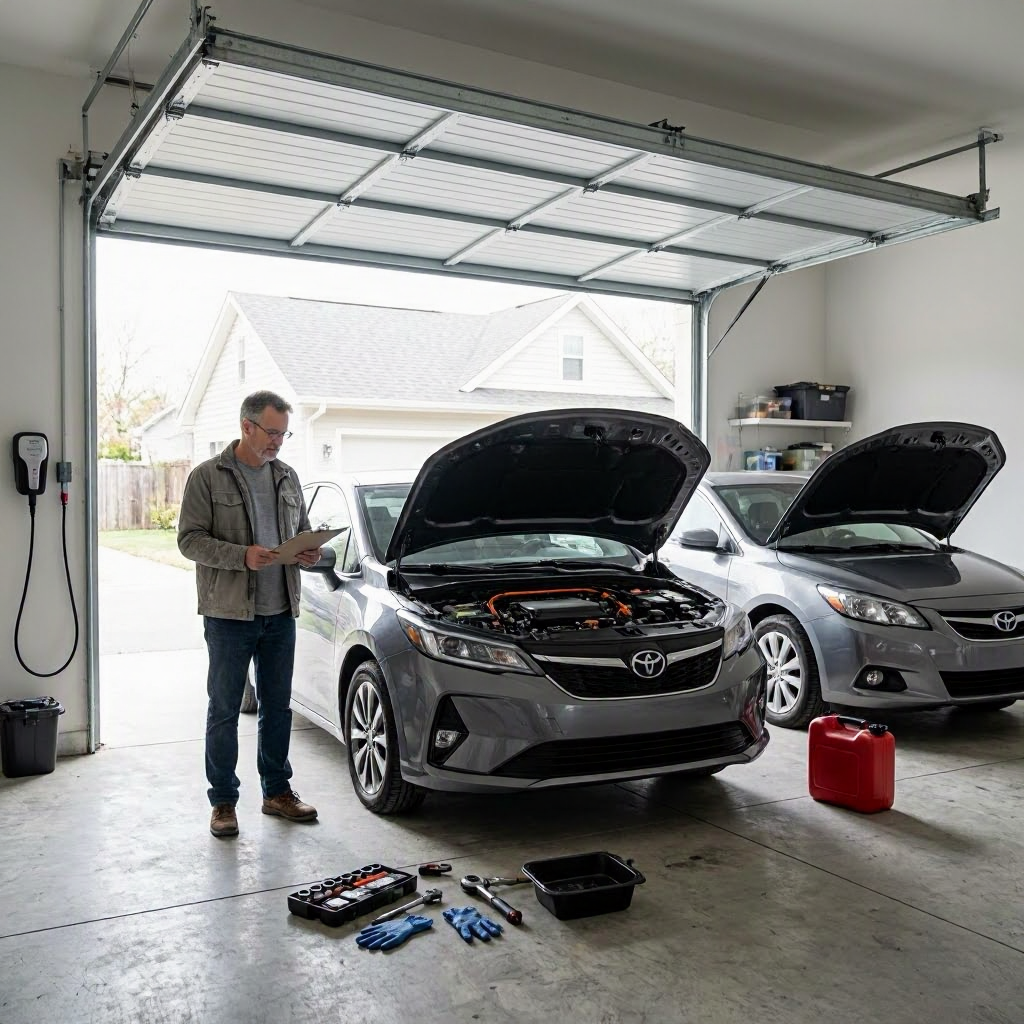
Hybrid vs gas car ownership cost: fuel, maintenance, and battery risk
Why Compare Hybrid and Gas Car Ownership Costs?
When deciding between a hybrid and a traditional gas-powered car, many United States drivers focus on the upfront price or fuel savings. But true ownership costs include fuel, maintenance, and for hybrids, battery risks. These factors can add up over five or ten years, affecting commuters in California traffic, families road-tripping across Texas, or gig workers in New York City.
Fuel costs often favor hybrids due to better miles per gallon (MPG), but maintenance and potential battery replacements can shift the balance. Costs vary by make, model, year, mileage, your driving habits, gas prices in your state, and local shop rates. Use tools like the EPA's FuelEconomy.gov to get vehicle-specific data before buying.
This guide breaks down fuel, maintenance, and battery risks with practical steps to estimate your costs. You'll learn what drives expenses, how to lower them, and when a hybrid makes sense for your budget.
Fuel Costs: Hybrids vs. Gas Cars
Fuel is often the biggest variable in car ownership. Hybrids combine a gas engine with an electric motor, boosting efficiency, especially in stop-and-go driving common in US cities like Chicago or Atlanta.
MPG Ratings and Real-World Efficiency
The EPA rates hybrids at 40-60 MPG combined, while gas cars average 20-35 MPG. A Toyota Prius might hit 52 MPG, versus 28 MPG for a Honda Civic gas model. Check exact ratings on FuelEconomy.gov's compare cars tool.
Real-world MPG drops with aggressive acceleration, cold weather in Midwest winters, or highway loads. Track your MPG by resetting your trip computer after fill-ups and dividing miles driven by gallons used.
Annual Fuel Expenses
Assume 12,000 miles per year at $3.50 per gallon (a common US average; verify local prices via GasBuddy). A 25 MPG gas car costs about $1,680 yearly. A 50 MPG hybrid drops that to $840, saving $840 annually.
For a family van: Gas version at 20 MPG = $2,100/year. Hybrid at 35 MPG = $1,200/year. Savings grow with higher mileage, like 15,000 miles for delivery drivers.
Short trips under 10 miles hurt hybrids less due to electric assist, but extreme cold reduces battery efficiency by 20-30%.
How to Calculate Your Fuel Costs
- Log your annual miles from odometer or apps like Fuelly.
- Find your vehicle's MPG on FuelEconomy.gov or the window sticker.
- Multiply miles by your area's average gas price (check AAA or GasBuddy), then divide by MPG.
- Factor in premium fuel needs for some models, adding 20-50 cents per gallon.
Compare quotes from local stations before budgeting. Use FuelEconomy.gov's fuel cost calculator for side-by-side estimates.
| Vehicle Type Example | MPG (Combined) | 12,000 Miles/Year Cost at $3.50/Gallon |
|---|---|---|
| Compact Gas Sedan | 30 | $1,400 |
| Midsize Hybrid SUV | 35 | $1,200 |
| Full-Size Gas Truck | 18 | $2,333 |
| Hybrid Truck | 25 | $1,680 |
This table uses EPA estimates; actual costs depend on your driving.
Tips to Lower Fuel Bills
- Maintain tire pressure monthly (underinflation cuts MPG 3-5%).
- Avoid idling; hybrids shut off automatically.
- Plan routes with Google Maps to cut miles.
- For gas cars, use regular fuel unless specified.
Switching to a hybrid saves most for urban drivers averaging under 30 MPG in their current gas car.
Maintenance Costs: Routine and Unexpected
Maintenance includes oil changes, brakes, tires, and fluids. Hybrids and gas cars have similar schedules, but differences emerge in components.
Scheduled Maintenance Breakdown
Both need oil changes every 5,000-10,000 miles, tire rotations every 5,000 miles, and air filters yearly. Hybrids often use synthetic oil with longer intervals, costing $80-150 per service versus $50-100 for gas cars.
Brake costs favor hybrids: Regenerative braking extends pad life to 100,000+ miles ($300-600 replacement) versus 40,000-60,000 miles ($400-800) on gas cars. Ask shops for regenerative system checks during services.
Transmission fluid: Gas cars every 60,000 miles ($200-400); hybrids' CVTs or eCVTs last longer, often 100,000+ miles.
Common Repairs and Shop Visits
Spark plugs: Gas cars every 30,000-100,000 miles ($200-500); hybrids fewer due to electric assist.
Tires wear faster on heavier hybrids (add $100-200 per set). Expect four tire sets over 100,000 miles at $600-1,200 each.
Diagnostics: Hybrids' complex electronics mean $100-200 fees; gas simpler at $50-150. Always request written estimates including labor (typically $100-200/hour), parts, taxes, and shop fees.
| Maintenance Item | Gas Car Interval/Cost Range | Hybrid Interval/Cost Range |
|---|---|---|
| Oil Change | 5,000-7,500 mi / $50-100 | 10,000 mi / $80-150 |
| Brake Pads | 40,000-60,000 mi / $400-800 | 100,000+ mi / $300-600 |
| Tires (Set of 4) | Every 40,000-60,000 mi / $600-1,200 | Every 40,000 mi / $700-1,400 |
| Transmission Fluid | 60,000 mi / $200-400 | 100,000+ mi / $300-500 |
Ranges vary by vehicle, location, and shop; get local quotes.
Warranty and Service Records
Manufacturer warranties cover 3 years/36,000 miles basic, 5-10 years for hybrid components. Keep records for resale value. Certified Pre-Owned (CPO) hybrids extend coverage.
Visit dealer for warranty work; independents for routine. Ask: "Are parts OEM? What's the labor warranty?" Second opinions save on non-urgent repairs over $500.
Hybrids average similar or slightly higher maintenance over 10 years due to tires and electronics, but fuel savings offset this for many.
Hybrid Battery Risks: Replacement and Longevity
The hybrid battery powers electric assist and stores energy. Fears of $5,000+ replacements are common, but realities differ.
Battery Lifespan and Failure Signs
Most last 100,000-200,000 miles or 10-15 years. Toyota claims 150,000+ miles average. Heat in Southern states shortens life; cold less so.
Warning signs: Reduced MPG, dashboard lights, sluggish acceleration. Do not ignore; scan for codes ($100-200 at shops).
Safety note: Battery issues rarely cause fires but stop driving if overheating or burning smells occur. Tow to a dealer.
Replacement Costs and Coverage
Out-of-warranty: $2,000-8,000 including labor, depending on model (smaller sedans cheaper). Some remanufactured options cut costs 30-50%.
Warranties: 8-10 years/100,000-150,000 miles federally required for hybrids. California mandates 10 years/150,000. Verify via VIN on manufacturer sites.
Leasing often covers batteries. Extended warranties ($1,000-3,000) may include them; read terms.
Mitigating Battery Risks
- Park in shade to avoid heat.
- Use Level 2 chargers if plug-in hybrid.
- Check coolant levels yearly.
- Sell before warranty ends if high miles.
For used hybrids, get a battery health scan ($150-300). Low risk for well-maintained vehicles under 100,000 miles.
Total Ownership Cost Comparison Over Time
Combine fuel, maintenance, and battery for a fuller picture. Tools like Edmunds or Kelley Blue Book calculators factor these.
5-Year Example for Commuters (12,000 Miles/Year)
Gas compact sedan: Fuel $8,400; maintenance $3,000; total ~$11,400 (excl. battery).
Hybrid equivalent: Fuel $4,200; maintenance $3,500; battery low risk = ~$7,700. Savings: $3,700.
High-mileage (20,000 miles): Hybrid saves $1,000+ yearly.
Other Factors in Ownership
Insurance: Hybrids 10-20% higher due to repair costs; shop quotes via Progressive or Geico apps.
Depreciation: Hybrids hold value better if batteries warrantied.
Registration/Fees: Vary by state; hybrids may qualify for HOV lane perks in CA, CO. Check your DMV site.
Taxes on purchase higher for pricier hybrids, but federal credits up to $7,500 for new plug-ins (verify IRS eligibility).
What Affects Your Specific Costs?
- Driving: City = hybrid win; highway = gas competitive.
- Location: Gas $4+/gallon in CA/NY favors hybrids; cheap Midwest gas evens it.
- Vehicle Choice: Mainstream like Toyota/Honda hybrids reliable; luxury higher maintenance.
- Habits: Idling, speeding raise costs universally.
Review your last year's gas receipts and service bills for baselines.
Steps to Compare Hybrids and Gas for Your Budget
- List your annual miles, routes, and current MPG.
- Pick 2-3 models on FuelEconomy.gov; print comparisons.
- Calculate 5-year fuel using local gas prices.
- Get maintenance schedules from owners' manuals or dealer sites.
- For used hybrids, pay for pre-purchase inspection focusing on battery health.
- Run numbers in a spreadsheet: (Miles / MPG) x Gas Price + Avg. Annual Maintenance.
- Test drive both; note real MPG.
- Check insurance quotes pre-purchase.
- Verify state incentives via DMV or Energy.gov.
Keep a ownership log: Fuel logs, service receipts, warranty docs for tax/resale.
When Hybrids Win, and When Gas Does
Hybrids best for: City commuters, families with 12,000+ miles, states with high gas taxes (CA, NY).
Gas better for: Rural highway drivers, budget buyers avoiding battery worry, short ownership (under 5 years).
Neither is free; focus on total costs over monthly payments.
Used hybrids under warranty offer low-risk entry. Always verify vehicle history via Carfax and NHTSA recalls.
By tracking your costs and using official tools, you avoid surprises and choose what fits your US driving life.

About the TDL Expert Panel
TDL Expert Panel · TheDigitalLife Editorial Team
TDL Expert Panel is the editorial team behind TheDigitalLife. The team researches, reviews, and creates practical guides to help everyday readers make better decisions about home repair costs, refunds, AI tools, digital safety, productivity, and useful online resources. Each guide is written to be clear, useful, and easy to understand.