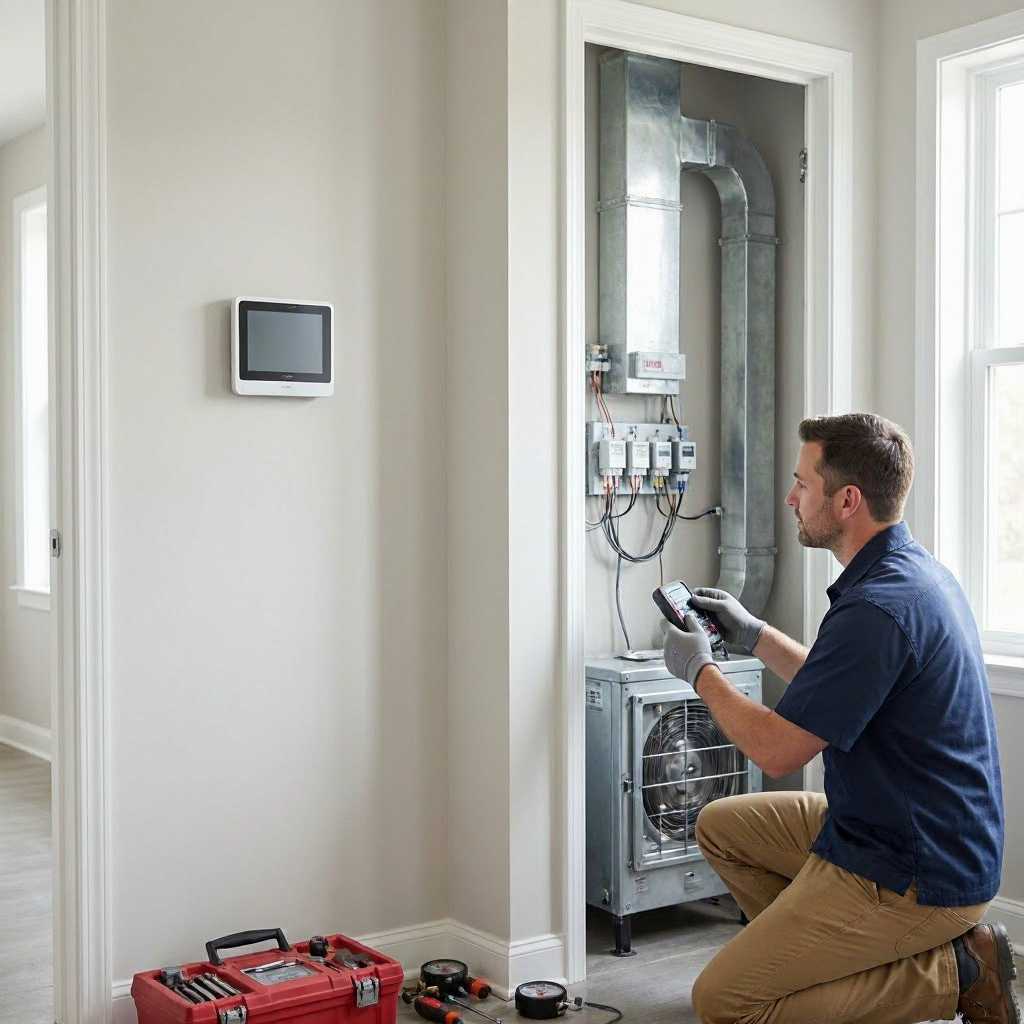
HVAC Zoning System Cost
Considering a zoning system for your HVAC? You're not alone. Many homeowners want better control over the temperature in different parts of their home, whether it's for comfort, energy savings, or balancing the climate in a multi-story house.
This guide provides the practical details you need before you call a contractor. It will walk you through realistic cost ranges, who to hire, how to handle warranties, and the critical state-level checks you should make to avoid bad hires.
Our goal is to give you a clear picture of the process, from the initial quote to the final inspection, so you can make an informed decision for your home.
Installing a new HVAC zoning system typically costs between $1,500 and $8,500. The final price depends heavily on how many zones you want, the need for ductwork modifications, and your local labor rates. The best first contact is a local licensed HVAC contractor who can properly calculate your home's airflow and static pressure. An improperly designed system can damage your equipment.
Additional reference details:
- Item: Typical cost , Detail: $1,500–$8,500
- Item: Pro service cost , Detail: Labor, parts, and ductwork included in the range above.
- Item: Best first contact , Detail: Licensed HVAC Contractor
- Item: Main safety warning , Detail: Poor zoning design can increase static pressure and damage HVAC equipment.
- Item: Warranty proof needed , Detail: Model/serial number, install date, installer name, and registration proof.
- Item: When to call a pro , Detail: For all design, ductwork, electrical, and installation work.
Who to call first: A local licensed HVAC contractor fo
- Who to call first: A local licensed HVAC contractor for diagnostics and design.
- What it will cost: $1,500–$8,500, with $350–$500+ per extra zone after the first.
- Warranty proof needed: Keep the model number, serial number, and proof of registration.
- State/local office to check: Your state’s contractor licensing board or local building department.
- Warning signs: Verbal-only quotes, refusal to provide license details, or annual "top offs" of refrigerant.
- When to avoid DIY: For any work involving refrigerant, electrical wiring, gas lines, or major duct modifications.
Additional reference details:
- Main Question: Best first contact , What to Know: Licensed HVAC Contractor for system design and installation.
- Main Question: Estimated cost range , What to Know: $1,500–$8,500 for a full system.
- Main Question: Labor charges , What to Know: Included in the overall estimate; varies by job complexity.
- Main Question: Official brand contacts , What to Know: Carrier, Trane, Lennox, Goodman, Bryant, YORK. See full list below.
- Main Question: Retailer contacts , What to Know: Home Depot and Lowe's if you used their installation service.
- Main Question: Warranty documents , What to Know: Invoice, model/serial number, photos, written warranty statement.
- Main Question: State agency to check , What to Know: Your state's contractor licensing board (e.g., CSLB for CA, TDLR for TX).
- Main Question: Safety warning , What to Know: For gas smell or CO suspicion, call your utility or 911 first.
- Main Question: Important URLs , What to Know: See the "Sources and Verification Notes" section for all links.
- Main Question: Contact numbers , What to Know: Provided in the "Official Contacts" section below.
The cost of an HVAC zoning system isn't just for extra thermostats. It's a full system that requires a control panel, motorized dampers, new thermostats, and often, significant ductwork changes. Here is the typical cost breakdown for major components.
Additional reference details:
- Item: Zone Control Panel , Estimated U.S. Cost Range: $300–$1,000+
- Item: Motorized Dampers (each, installed) , Estimated U.S. Cost Range: $200–$700+
- Item: Zone Thermostats/Sensors (each) , Estimated U.S. Cost Range: $100–$500+
- Item: Duct Modifications , Estimated U.S. Cost Range: $500–$4,000+
- Item: Full Zoning System , Estimated U.S. Cost Range: $1,500–$8,500+
Adding a second zone to an existing system often costs $1,700 to $2,800+. Each additional zone beyond that typically adds $350 to $500+, plus the cost of controls and labor.
Average Cost: A full zoning system installation ranges from $1,500 to $8,500 nationally.
These are national planning ranges, not guaranteed quotes. Your actual price can be higher in several common situations:
- If you live in a dense, high-cost metropolitan area.
- If the work is in a difficult-to-access attic or crawlspace.
- During extreme weather heat waves or for after-hours emergency calls.
- In older homes where existing ductwork needs major alterations.
- If the job requires permits, local code upgrades, or hard-to-source parts.
HVAC zoning is a complex integration of electrical controls, mechanical dampers, and ductwork design. It is not a do-it-yourself project for the average homeowner.
What a Homeowner Can Safely Do:
- Change air filters regularly.
- Replace thermostat batteries.
- Check and reset circuit breakers.
- Keep the area around the outdoor condenser unit clear of debris.
When You Must Call a Licensed Professional:
- All design, installation, and ductwork modification.
- Any work involving refrigerant handling or sealed system repairs.
- Electrical wiring for new thermostats and control panels.
- Any work on a gas furnace, including combustion safety checks.
Attempting a DIY zoning install can void your equipment's warranty, lead to improper system operation, and even create safety hazards or damage your HVAC unit through incorrect static pressure.
Choosing the right professional is crucial for a successful zoning installation. Here is a clear guide on who to call based on your situation.
- Local Licensed HVAC Contractor: Your best first call for diagnostics, system design, ductwork modifications, and installation. They are qualified to handle refrigerant, furnace safety checks, and the critical calculations for proper zoning.
- Brand-Authorized Dealer: Best when your HVAC unit is under an active manufacturer's warranty, or if a major OEM part like a proprietary control board is involved. Start with them for newer systems.
- Retailer / Installer (Home Depot or Lowe’s): Only contact if the original equipment or installation was purchased through their installed-services program. Use their dedicated support lines.
- Utility Company or 911: Call immediately for a gas smell, suspected carbon monoxide, smoke, fire, or electrical hazard before calling any repair company.
- State/Local Licensing Board: Always check a contractor's license status and complaint history before hiring, especially for large jobs.
Always use official websites and phone numbers for support. Avoid numbers from search ads or unverified directories.
| Company / Agency | Purpose | Official Phone | Official Website |
|---|---|---|---|
| Carrier Residential | Warranty lookup / dealer support | 1-800-CARRIER (1-800-227-7437) | carrier.com |
| Trane Residential | Consumer relations | 1-800-945-5884 | shop.trane.com |
| Trane Warranty | Warranty specialists | 1-855-260-2975 | trane.com |
| Lennox Residential | Consumer support | 1-800-953-6669 | lennox.com |
| Goodman / Daikin | Homeowner / warranty support | 1-877-254-4729 | goodmanmfg.com |
| Bryant | Customer relations | 1-800-428-4326 | bryant.com |
| YORK / Johnson Controls | Residential warranty / product support | 877-874-7378 | york.com |
| Home Depot | Customer service | 1-800-HOME-DEPOT (1-800-466-3337) | corporate.homedepot.com |
| Home Depot HVAC Repair | HVAC repair service line | (855) 583-0553 | homedepot.com/services |
| Lowe’s | Customer care | 1-800-44LOWES (1-800-445-6937) | corporate.lowes.com |
| Lowe’s Installation Support | Installation support | 1-888-516-1010 | lowes.com/l/help |
| ecobee | Smart thermostat support | 1-877-932-6233 | ecobee.com |
If a part of your zoning system fails, follow these steps to navigate the warranty process smoothly.
- Gather Equipment Information: Find the data plate on your HVAC equipment. Write down the model number, serial number, installation date, and the original installer's name.
- Check Registration Status: Verify if the equipment was registered within the manufacturer's warranty window. Many warranties are void or shortened if not registered.
- Ask Your Contractor: Have the servicing contractor confirm in writing if the failed part is covered by the manufacturer's parts warranty.
- Understand Exclusions: Ask explicitly what is not covered. Labor, refrigerant, shipping, diagnostic fees, and after-hours surcharges are often not covered, even if the part is.
- Contact the Retailer (if applicable): If the system was installed through Home Depot, Lowe’s, or another retailer's program, contact their installation support line with your order number and paperwork.
Warranty Documents Needed: Keep photos, the original invoice, the diagnostic sheet, and all related emails or texts.
- Get a Second Opinion: If a contractor refuses to provide written documentation for a major repair or warranty claim, seek a second opinion from another licensed professional.
State-Specific or Local Checks
HVAC licensing and permit rules vary widely. Before approving any major work, verify your contractor's license and ask if permits are required. Here are starting points for several states.
| State / Area | What to Check | Official Place to Start |
|---|---|---|
| California | Check CSLB contractor license for HVAC, electrical, or ductwork. | CSLB License Check |
| Texas | Verify ACR license status with the TDLR. | TDLR ACR Search |
| Florida | Use DBPR search; contractors are certified or registered by class. | Florida License Search |
| New Jersey | Verify HVACR contractor license with the state board. | NJ HVACR Board |
| New York | Licensing is often local; check NYC DOB or your city/county building department. | NYC Buildings |
| Illinois / Chicago | Check local building departments; permits and licensing are often municipal. | Chicago Buildings |
| Arizona | Check the Registrar of Contractors before hiring. | AZ ROC |
| Washington | Check L&I contractor registration and local permit rules. | WA L&I Verify |
A reputable contractor will answer these questions clearly. Get the answers in writing before you approve the work.
- What exact part failed, and what test proves it failed?
- Is the replacement part OEM, aftermarket, or rebuilt? What warranty applies to the part and the labor?
- Is refrigerant involved? If yes, what type and how many pounds are needed?
- Are there any additional problems that could cause the new part to fail again?
- Is this repair reasonable for the age and overall condition of my HVAC system?
- Does this quote include haul-away, disposal, permits, inspection, taxes, trip fees, or emergency surcharges?
- Can you provide your license number, proof of insurance, and a written scope of work?
Be cautious if you encounter any of the following warning signs. They may indicate overcharging, incompetence, or unsafe practices.
- A technician recommends adding refrigerant without explaining where the leak is or if a leak search was performed.
- The quote is verbal only, with no written model number, part name, warranty details, or labor description.
- The company pressures you to replace the entire system before showing you the failed component or a clear safety reason.
- A duct cleaning company claims to be “EPA certified” for duct cleaning. The EPA does not certify duct-cleaning companies.
- A contractor requests full payment up front for major work or refuses to provide license and insurance details.
- A technician offers to “top off” your refrigerant annually without finding and fixing the leak.
Call a Pro If: You suspect any refrigerant leak, gas smell, or electrical issue. These require licensed, certified technicians.
Practical Step-by-Step Guidance
Follow this sequence to plan, hire, and manage your HVAC zoning project confidently.
- Define Your Needs: Identify which areas of your home you want to control independently (e.g., upstairs vs. downstairs, master suite).
- Research and Verify: Use the state resources above to create a shortlist of licensed, insured HVAC contractors in your area.
- Get Multiple Quotes: Schedule diagnostics with at least two or three contractors. Ensure their quotes separate diagnostic fees, parts, labor, permits, and any surcharges.
- Ask the Key Questions: Use the checklist above during each consultation. Ensure they discuss static pressure and system design, not just adding thermostats.
- Verify and Hire: Check the finalist's license status one more time. Review the written scope of work and warranty terms before signing.
- Document Everything: Keep all paperwork, including the final invoice, model numbers of installed parts, and contractor details.
- Schedule Follow-Up: Ensure the job is finalized with any required local inspections and that you understand how to operate your new system.
Frequently Asked Questions
Should I call a brand dealer or any local HVAC company? For routine diagnostics and installation, a licensed local HVAC company is often fine. For warranty work, major OEM parts, or newer systems under warranty, start with a brand-authorized dealer or the original installer.
Should I approve the repair immediately? For small repairs under $800, yes, if the diagnosis is clear and urgent. For repairs above $800 to $1,000, get the warranty status and consider a second quote unless it is a genuine emergency affecting safety or comfort.
Can I install a zoning system myself? No. Filter changes, thermostat batteries, and clearing debris are homeowner-friendly. The design, refrigerant handling, electrical work, and duct modifications for a zoning system must be done by licensed professionals to ensure safety, efficiency, and warranty compliance.
What documents should I keep after installation? Keep the final invoice, part numbers, model and serial numbers of all equipment, photos of the installation, the written warranty statement, the contractor's license number, and your payment receipt.
How do I avoid future problems with my new zoning system? Change air filters regularly, keep indoor and outdoor coils clean, schedule annual professional tune-ups, and address any airflow or refrigerant leak issues immediately instead of temporary fixes.
This article was compiled using the following sources for cost estimates, contact information, and regulatory details. Always re-check with official sources before making final decisions.
- Angi HVAC Zoning Cost: angi.com/articles/hvac-zoning-cost.htm
- HomeAdvisor HVAC Cost: homeadvisor.com/cost/heating-and-cooling/
- EPA Section 608 Certification: epa.gov/section608
- ENERGY STAR Maintenance Checklist: energystar.gov/saveathome/heating-cooling/maintenance-checklist
- Brand Contact URLs: Listed in the "Official Contacts" table above.
- State Licensing URLs: Provided in the "State-Specific Checks" table above.
This guide provides general information for U.S. homeowners. Prices, licensing rules, and warranty terms can change. Always verify costs with local contractors, confirm license status with your state board, and consult official brand websites for the latest warranty information.
Do Not Ignore: For a gas smell, suspected carbon monoxide, smoke, fire, or electrical hazard, contact your utility company or call 911 immediately before calling any repair service.

About the TDL Expert Panel
TDL Expert Panel · TheDigitalLife Editorial Team
TDL Expert Panel is the editorial team behind TheDigitalLife. The team researches, reviews, and creates practical guides to help everyday readers make better decisions about home repair costs, refunds, AI tools, digital safety, productivity, and useful online resources. Each guide is written to be clear, useful, and easy to understand.