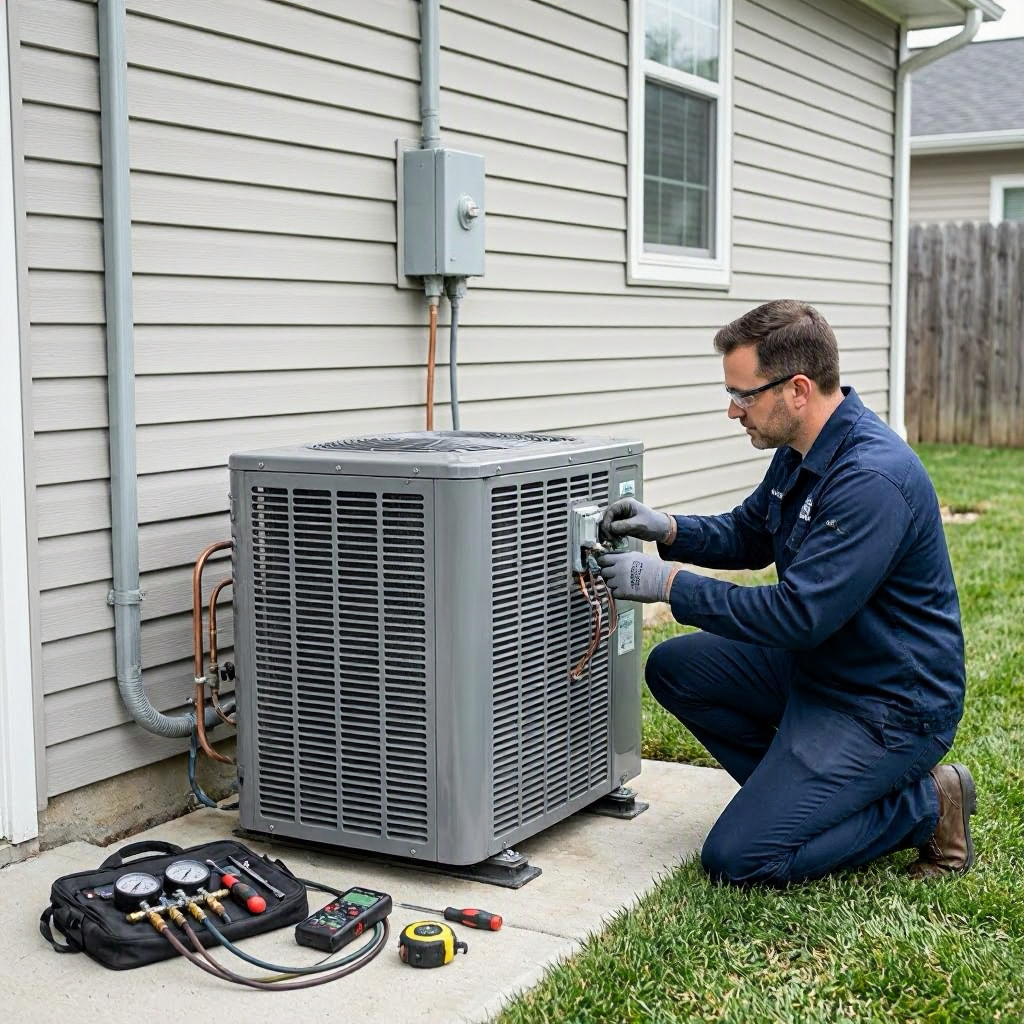
HVAC Replacement Cost in the USA: Full System Price Guide
Replacing your home's heating and air conditioning system is a major investment. Understanding what to expect can help you make a confident decision and avoid costly surprises. This guide breaks down the full process, from average costs and who to hire, to warranty details and common warning signs. We’ll provide the practical steps and official contacts you need to manage your project.
The typical cost to replace a full HVAC system in the United States is between $5,000 and $12,500. However, complex jobs with new ductwork or multi-zone systems can range from $12,500 to over $22,000. The final price depends on your home's size, the system's efficiency, labor rates, and whether your ductwork needs modifications. Your best first step is to get at least two or three quotes from licensed contractors who perform a Manual J load calculation.
Cost Snapshot and Price Factors - Professional Contacts an
- Cost Snapshot and Price Factors
- Professional Contacts and Official Agencies
- Warranty and Claim Steps
- State-Specific Licensing Checks
- Important Questions to Ask
- Common Warning Signs
- Frequently Asked Questions
Additional reference details:
- Item: Typical cost , Detail: $5,000 - $12,500
- Item: Pro service cost , Detail: Included in total quote (labor, parts, permit)
- Item: Best first contact , Detail: Licensed HVAC contractor
- Item: Main safety warning , Detail: Verify contractor license and EPA 608 certification
- Item: Warranty proof needed , Detail: Model/serial numbers, registration, invoice, permit
- Item: When to call a pro , Detail: For all full system replacements
Who to call first: Contact 2-3 licensed HVAC contracto
- Who to call first: Contact 2-3 licensed HVAC contractors and a manufacturer-authorized dealer for warranty claims.
- Cost factors: System size, efficiency, ductwork condition, labor, and local permits all affect the final price.
- Warranty proof: Keep your model/serial numbers, registration confirmation, invoice, permit, and inspection sheet.
- State checks: Verify your contractor's license with state agencies like CA CSLB, TX TDLR, or FL DBPR.
- Warning signs: Avoid contractors who refuse to provide license numbers, give only verbal quotes, or pressure you to sign immediately.
- Avoid DIY: Full system replacement requires licensing for refrigerant and electrical work, and DIY will void manufacturer warranties.
| Main Customer Question | Practical Answer |
|---|---|
| Estimated cost range | $5,000 - $12,500 (common); $12,500 - $22,000+ (complex) |
| Labor charges | Included in total system replacement quote; varies by job complexity |
| Best first contact | Licensed HVAC contractor; authorized dealer for warranty service |
| Official brand contacts | Carrier: 1-800-CARRIER; Trane Consumer Relations: 1-800-945-5884; Lennox: 1-800-953-6669; Goodman: 1-877-254-4729 |
| Retailer contacts | Home Depot: 1-800-HOME-DEPOT; Lowe's: 1-800-445-6937 |
| Warranty documents needed | Model/serial numbers, registration proof, permit, invoice, startup sheet |
| State agency to check | CA: CSLB; TX: TDLR; FL: DBPR; Any state: local building department |
| Safety warning | For refrigerant work, confirm technician has EPA Section 608 certification |
| Important URL | EPA Certification: epa.gov |
A full HVAC replacement quote typically includes the equipment, labor, permits, refrigerant recovery, a thermostat, electrical adjustments, and condensate drainage. Ductwork modification is often an additional cost. According to industry sources like HomeAdvisor, most homeowners pay between $5,000 and $12,500 for a standard replacement.
The price can vary widely based on several key factors. Your home's size and climate zone determine the system capacity needed. Higher efficiency units (like those with a higher SEER rating) cost more upfront but save on energy bills. The condition of your existing ductwork is a major variable-if it's leaky or undersized, repairing or replacing it can add significantly to the project cost.
Average Cost: A straightforward HVAC system replacement typically falls between $5,000 and $12,500.
Here is a breakdown of common cost components:
| Line Item | Typical Range | What Can Change the Price |
|---|---|---|
| Full HVAC System Replacement | $5,000 - $12,500 (common) | System type, size, efficiency, ducts, labor rates |
| High-End/Complex Replacement | $12,500 - $22,000+ | Zoning systems, full ductwork replacement, major electrical upgrades |
| Permit/Inspection | $50 - $500+ | Your specific city or county requirements |
| Ductwork Repairs/Replacement | $500 - $5,000+ | Extent of leaks, asbestos/old insulation, needing resizing |
| Thermostat/Electrical Add-ons | $150 - $1,000+ | Smart thermostats, new electrical disconnects, wiring updates |
Labor charges are usually bundled into the total system price rather than listed as a separate hourly rate. The labor cost reflects the complexity of the installation, including removing the old unit, handling refrigerant, making electrical connections, and ensuring the system is properly calibrated.
A full HVAC system replacement is not a DIY project. It requires specialized skills, tools, and, most importantly, proper licensing for handling refrigerants and electrical work. Attempting it yourself can be dangerous and will almost certainly void any manufacturer warranty.
Professionals bring essential expertise. They perform critical load calculations to size your system correctly, ensuring efficiency and comfort. They handle permits and inspections, which are often legally required. They also have the EPA Section 608 certification needed to legally recover and charge refrigerant. Most importantly, a professional installation is required to activate the manufacturer's equipment warranty.
Call a Pro If: Your project involves refrigerant handling, electrical disconnects, gas piping, or requires a local permit.
There are limited aspects a homeowner might safely handle, such as simple thermostat replacement or clearing debris from around the outdoor unit. However, for the core replacement of the furnace, air handler, condenser, or refrigerant lines, hiring a licensed professional is non-negotiable for safety, legality, and warranty protection.
For a replacement, your first calls should be to two or three licensed HVAC contractors. It’s crucial to get multiple quotes to compare pricing, scope, and recommendations. If your existing equipment is still under warranty, you should also contact at least one manufacturer-authorized dealer for that brand to discuss your options.
Always verify the contractor's credentials. For any work involving refrigerant, ask for proof of EPA Section 608 certification. If the job includes a gas furnace, confirm the contractor is familiar with local gas piping and combustion inspection rules. Your local building department can clarify what specific licenses and permits are required in your area.
Having the right contact information can resolve warranty issues, schedule service, or verify licensing.
Major HVAC Brands:
- Carrier: For warranty and support, call 1-800-CARRIER (1-800-227-7437). Use their online warranty lookup and find a local authorized dealer.
- Trane: For consumer relations, call 1-800-945-5884. For warranty specialists, call 1-855-260-2975. Ask about registered limited warranty transfer rules.
- Lennox: Contact customer support at 1-800-953-6669. Have your indoor and outdoor unit model and serial numbers ready.
- Goodman / Daikin: For homeowner support, call 1-877-254-4729. Use their website for product registration and warranty lookup.
Major Retailers (for product/installation issues):
- Home Depot Customer Service: 1-800-HOME-DEPOT (1-800-466-3337). Use for product orders, installation complaints, receipts, and return disputes.
- Lowe's Customer Service: 1-800-445-6937. Use for orders, returns, missing parts, and damage claims.
- Lowe's Installation Services: 1-877-GO-LOWES (1-877-465-6937). Use if your job was booked through Lowe's installation services.
Protecting your investment starts the day your system is installed. Follow these steps to ensure your warranty is valid and claims can be processed smoothly.
- Get the details: Ask your installer to provide the model and serial numbers for both the indoor and outdoor units on your invoice.
- Register immediately: Register your new equipment with the manufacturer within their required period (often 60-90 days from installation). This is often mandatory for the full warranty term.
- Keep all documents: File and keep hard copies or digital scans of the permit, final inspection certificate, itemized invoice, and the system startup or commissioning sheet.
- Understand labor coverage: Ask how long the installer's labor warranty lasts (often one year) and if annual maintenance is required to keep it valid.
- Contact the right party: For equipment issues, contact the manufacturer or an authorized dealer. For installation problems, contact the installing contractor directly. For issues with a big-box store installation, use their dedicated installation service line.
Warranty Documents Needed: Keep your equipment registration, final invoice, permit, and system startup sheet in a safe place.
State-Specific or Local Checks
HVAC licensing is regulated at the state level, and permit rules vary by city or county. Always verify a contractor's license before hiring them.
- California: Verify contractors through the Contractors State License Board (CSLB). HVAC work generally falls under the C-20 Warm-Air Heating, Ventilating and Air-Conditioning classification.
- Texas: Contractors must have a TDLR Air Conditioning and Refrigeration license from the Texas Department of Licensing and Regulation.
- Florida: Verify air-conditioning contractor licensing through the Department of Business and Professional Regulation (DBPR) MyFloridaLicense site.
- New York / NYC: Check both state and city license requirements. NYC work often requires specific permits and qualified tradespeople.
- Any State: Always check with your local building department to see if permits are required for equipment replacement, electrical work, or duct modifications.
Asking the right questions prevents misunderstandings and ensures you're comparing quotes fairly.
- Is the estimate fully itemized for parts, labor, permits, disposal, and any potential trip fees?
- Are you licensed for this exact trade in my city/state, and can I see your license number to verify it online?
- Will you pull the required permit and schedule the inspection, providing proof of final approval?
- Does the quote include cleanup, haul-away of the old unit, and repair of any drywall, flooring, or landscaping disturbed during work?
- What is specifically excluded, and what conditions would trigger a change order with extra costs?
- What Manual J load calculation did you use to determine the new system size?
- Are ductwork modifications, electrical upgrades, a new thermostat, or condensate drain changes included?
- What are the efficiency ratings, refrigerant type, and the deadline for warranty registration?
Be cautious of contractors who exhibit any of these warning signs.
- They refuse to provide their license number, proof of insurance, or a written, itemized scope of work.
- The quote seems unusually low but excludes major items like permit fees, disposal, electrical work, or restoration.
- The salesperson pressures you to sign immediately or claims permits are "never needed" without checking your local rules.
- Warranty details are discussed only verbally, not provided in writing.
- For jobs involving digging, the contractor starts before an 811 utility locate or city clearance has been completed.
- They propose sizing the new equipment only by matching the old unit's size without considering current home conditions.
- A bid is labeled "complete replacement" but excludes the permit, electrical disconnect, refrigerant recovery, or disposal.
Practical Step-by-Step Guidance
Follow this action plan to navigate your HVAC replacement project.
- Research: Understand basic cost ranges and the importance of proper system sizing.
- Get Quotes: Contact 2-3 licensed HVAC contractors. Ensure each plans to perform a Manual J load calculation.
- Verify: Check each contractor's license with your state agency and local building department. Confirm EPA 608 certification.
- Compare: Review itemized quotes side-by-side. Ask clarifying questions about anything unclear.
- Select & Schedule: Choose a contractor, sign a detailed contract, and agree on a start date.
- Document: Upon completion, get all model/serial numbers, register the equipment, and file all paperwork (invoice, permit, inspection sheet).
- Maintain: Follow the recommended maintenance schedule to keep your system and its warranties in good standing.
Do Not Ignore: Never approve a "same-size" replacement without a proper load calculation. Your home's needs may have changed.
Frequently Asked Questions
How long does HVAC replacement take? A straightforward replacement of a single system often takes one day. Jobs involving new ductwork, electrical upgrades, or multi-zone systems can take several days.
Should I replace my AC and furnace together? It can be wise for compatibility and efficiency, especially if one unit is old. However, the decision should factor in the age and warranty status of each unit and your current budget.
Why are HVAC quotes so different? Quotes vary due to differences in system sizing methods, equipment efficiency and brand, the proposed scope of ductwork or electrical work, labor rates, and whether permit costs are included.
What is a Manual J calculation? It's a standard method used to determine the exact heating and cooling capacity needed for your home based on its size, insulation, windows, and local climate. It's essential for proper sizing.
Is a permit really necessary? In most jurisdictions, yes. Permits ensure the work is inspected for safety and compliance with building codes. A contractor who avoids pulling permits may be cutting corners.
HomeAdvisor HVAC Replacement Cost Guide: www
- HomeAdvisor HVAC Replacement Cost Guide: homeadvisor.com
- EPA Section 608 Technician Certification: epa.gov
- Carrier Warranty Lookup: carrier.com
- Trane Contact: trane.com
- Lennox Contact: lennox.com
- Goodman Contact: goodmanmfg.com
- Texas TDLR HVAC Licensing: tdlr.texas.gov
- California CSLB License Check: cslb.ca.gov
- Florida DBPR License Search: myfloridalicense.com
Prices, warranty terms, and licensing rules change. Always verify current information with your chosen contractor, the equipment manufacturer, and your local building department before proceeding.
This guide provides a framework for planning your HVAC replacement. Your specific costs and requirements will depend on your home, local codes, and the equipment you choose. For final decisions, always rely on verified information from licensed HVAC professionals, official brand support channels, and your state or local licensing boards and building departments. Taking these steps will help ensure your home comfort investment is sound, safe, and protected.

About the TDL Expert Panel
TDL Expert Panel · TheDigitalLife Editorial Team
TDL Expert Panel is the editorial team behind TheDigitalLife. The team researches, reviews, and creates practical guides to help everyday readers make better decisions about home repair costs, refunds, AI tools, digital safety, productivity, and useful online resources. Each guide is written to be clear, useful, and easy to understand.