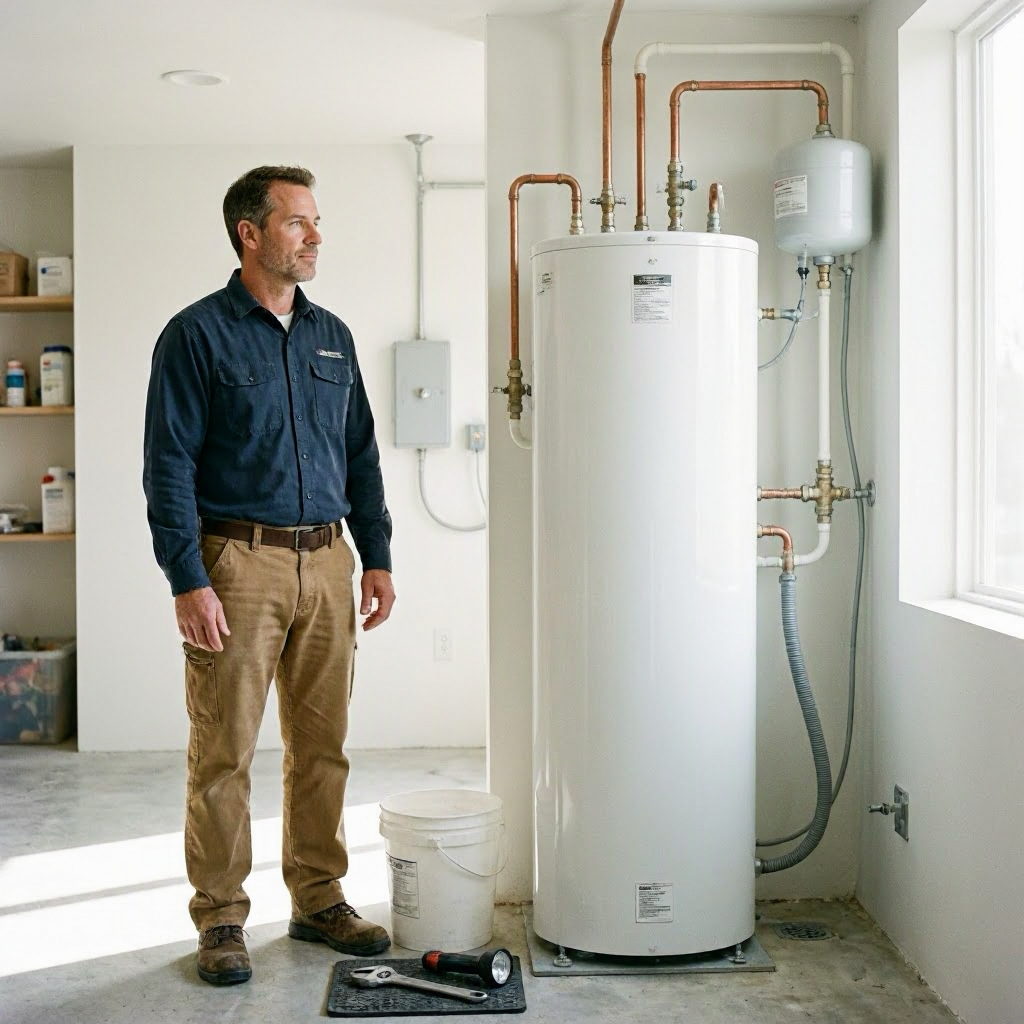
Heat pump water heater installation cost and available incentives
Understanding Heat Pump Water Heaters
Heat pump water heaters extract heat from the surrounding air to warm water, making them far more energy-efficient than traditional electric or gas models. They can cut water heating costs by up to 60% in many homes, according to the U.S. Department of Energy. For U.S. homeowners looking to upgrade, these units qualify for significant incentives under recent federal laws, which can offset installation expenses.
These appliances work best in warmer climates but perform well nationwide with proper sizing and placement. They require space for air circulation, often in a garage, basement, or utility room. Installation involves plumbing, electrical work, and sometimes structural adjustments, which influences total costs.
Homeowners replacing an old water heater or building new often consider this upgrade for long-term savings. Renters should check their lease and discuss with landlords, as major appliance changes typically require owner approval.
Typical Installation Cost Ranges
Heat pump water heater installations generally range from $2,500 to $6,000 total, including the unit and labor, though prices vary widely by region and home specifics. In milder climates like the Southeast or Southwest, costs trend lower due to simpler setups. In colder areas like the Northeast or Midwest, expect higher figures if electrical upgrades or insulation are needed.
These ranges account for a standard 50-gallon unit suitable for a family of four. Smaller 40-gallon models might start around $2,000 installed, while larger 80-gallon or commercial-grade options can exceed $7,000. Always get site-specific quotes, as local labor rates, supply chain issues, and home conditions drive the final number.
National averages from industry reports hover around $3,500 to $5,000, but urban areas like California or New York often see 20-50% premiums due to higher wages and regulations. Rural spots might dip below $3,000 with basic installs.
Key Factors Influencing Installation Costs
Several variables determine your bill. Understanding them helps you budget accurately and spot padded estimates.
Unit Size and Efficiency Rating
Larger tanks cost more upfront. A 50-gallon unit typically runs $1,500 to $3,000 for the appliance alone, while 80-gallon models add $500 to $1,500. Higher Uniform Energy Factor (UEF) ratings, like those on ENERGY STAR-certified models, boost efficiency but raise the price by 10-20%.
Choose based on household needs: 40-50 gallons for 2-3 people, 65-80 for larger families. Oversizing wastes money; undersizing leads to frequent recovery times.
Home Location and Accessibility
Installation in a hard-to-reach spot can add $500 to $1,500. Basements with tight stairwells or upper-floor closets require cranes, extra manpower, or disassembly. Garage installs are simpler and cheaper.
Climate matters too. In cold regions, hybrid models with backup electric elements cost more but perform reliably.
Electrical and Plumbing Upgrades
Most homes need a 240-volt, 30-amp dedicated circuit, costing $300 to $1,200 if absent. Older wiring might require panel upgrades, pushing electrical work to $2,000+. Plumbing rerouting for drain lines or condensate pumps adds $200 to $800.
Gas-to-heat-pump swaps involve capping lines, adding $400 to $1,000.
Removal of Old Unit and Disposal
Hauling away an old 50-gallon tank runs $100 to $400, more for tanks with sediment or contamination. Pros handle hazardous waste fees per local rules.
| Cost Factor | Potential Added Cost | Why It Matters |
|---|---|---|
| Unit Capacity (50 vs. 80 gallons) | $500–$1,500 | Matches household hot water demand without excess energy use |
| Accessibility (basement vs. attic) | $300–$1,500 | Affects labor hours and equipment needs |
| Electrical Upgrades (new circuit/panel) | $300–$2,000 | Ensures safe operation; code-required |
| Old Unit Removal | $100–$400 | Includes disposal fees for water, sediment |
| Plumbing Modifications | $200–$800 | Needed for drainage, venting, or rerouting |
Breaking Down Labor Costs
Labor typically accounts for 40-60% of the total, or $1,000 to $3,000. Rates vary: $75 to $150 per hour in the South, $125 to $250 in high-cost cities. A standard install takes 4-8 hours for one pro, longer with complications.
Experienced HVAC or plumbing specialists charge more but finish faster. Subcontractors might lower bids but check credentials. Off-peak scheduling (fall/winter) can shave 10-20% off labor.
Urgency bumps rates: emergency replacements add 20-50%. Non-union crews in rural areas offer savings, but verify licensing.
Materials and Equipment Breakdown
Beyond the unit:
- Piping, fittings, valves: $200-$600. Copper or PEX for durability.
- Electrical components (wire, breaker, conduit): $150-$500.
- Condensate pump/drain kit: $100-$300 if no floor drain.
- Insulation/ducting for efficiency: $100-$400.
Buy from wholesalers or online for potential savings, but pros often bundle at markup. ENERGY STAR models qualify for rebates, reducing effective material costs.
Permits, Inspections, and Code Compliance
Permits cost $50 to $300, depending on your city or county. Many locales require them for water heater swaps due to energy codes and electrical work. Check your local building department website.
Inspections ensure proper venting, seismic strapping (in earthquake zones), and efficiency standards. Skipping them risks insurance voids or resale issues. Pros handle paperwork, adding $100-$200 to their fee.
In HOA communities or condos, get association approval first—shared plumbing might involve fees.
Available Federal Incentives
The Inflation Reduction Act offers strong support. Qualified heat pump water heaters earn a tax credit of up to $2,000 via the Energy Efficient Home Improvement Credit (Section 25C). This covers 30% of costs, capped at $2,000 annually, through 2032.
Details at the IRS website. Must be ENERGY STAR Most Efficient certified. Claim on Form 5695 with your tax return.
The Department of Energy's Home Upgrades page lists eligible models and calculators.
State, Utility, and Local Rebates
Many states amplify federal aid:
- California, New York, Massachusetts offer $500-$2,000 rebates via programs like TECH Clean California.
- Utilities like PG&E, Duke Energy, or Xcel provide $300-$1,200 per unit.
Search your utility's site or DSIRE database (dsireusa.org) for current offers. Low-income programs like LIHEAP may cover more.
Combine incentives: federal credit plus utility rebate could slash net costs by 50%+. Apply post-install; keep receipts, model numbers, and efficiency ratings.
| Incentive Type | Potential Savings | Eligibility Notes |
|---|---|---|
| Federal Tax Credit (IRA 25C) | Up to $2,000 | ENERGY STAR certified, 30% of cost |
| State Rebates (e.g., CA, NY) | $500–$2,000 | Varies by program; income limits possible |
| Utility Rebates | $300–$1,200 | Account holder; pre-approval often required |
| Low-Income Programs | Up to full cost | Household income thresholds apply |
Strategies to Minimize Your Total Bill
- Shop multiple quotes: Get 3-5 written estimates. Compare line items, not totals.
- Maximize incentives: Pre-verify eligibility with IRS/DOE tools and your utility.
- Buy the unit separately: Purchase online (Home Depot, Lowe's) and hire installers. Saves 10-20% on markup.
- Bundle with other upgrades: Pair with insulation or HVAC for bigger rebates.
- Off-season timing: Avoid summer peaks.
- Energy audit first: Free via utilities; identifies upgrades qualifying for more savings.
Net cost after incentives: often $1,000-$3,000 for qualifying installs.
Should You Attempt DIY Installation?
DIY is not recommended for heat pump water heaters. Electrical (high voltage), refrigerant handling (EPA certification needed), and plumbing demand pro skills. Mistakes risk floods, shocks, fires, or voided warranties.
Even swapping a standard electric unit risks code violations. Pros carry insurance; you likely don't for this scope.
Renters: Never DIY—notify landlord immediately.
Hiring a Qualified Installer
Look for licensed plumbers, HVAC techs, or hybrid specialists with NATE certification. Check state licensing boards (e.g., CSLB in CA). Verify insurance via certificate request.
Angi's List, HomeAdvisor, or EnergySage connect you to vetted pros.
Essential Questions to Ask
- Is the unit ENERGY STAR certified for incentives?
- What electrical/plumbing upgrades are needed, and why?
- Does your quote include permits, disposal, and testing?
- What's the labor warranty (typically 1-5 years)?
- Will you pull permits and schedule inspections?
- Are subcontractors involved? Can I see licenses?
- What's the payment schedule—no full upfront for jobs over $1,000.
- How do you handle complications like undersized panels?
Request itemized bids specifying hours, rates, parts.
Comparing Quotes Effectively
Line up estimates side-by-side:
- Unit model and UEF rating.
- Labor hours and rate.
- Add-ons (upgrades, disposal).
- Total with/without incentives.
Reject vague "lump sum" bids without breakdowns. Walk if pressured for upfront cash or no license.
For non-urgent swaps (old unit still works), wait a week for bids.
Post-Installation Considerations
Warranties
Units carry 6-12 year tank warranties, 5-10 on compressors. Labor: 1-2 years standard. Register immediately; keep manual.
Maintenance for Longevity
Annual checks: clean air filter, flush tank, inspect drain pan. Costs $100-$200/year. Prevents efficiency loss, extending life to 10-15 years.
Energy Savings Payback
With incentives, payback hits 2-5 years via 50%+ lower bills. Track via utility apps.
Insurance and Documentation
New installs rarely claim insurance unless damaged in transit. Keep photos, receipts, serial numbers for warranties/taxes. Home warranties (Choice, Select) may cover future repairs.
When Renters or Condo Owners Should Act
Renters: Document issues (no hot water) and notify landlord/property manager in writing. Leases often make owners responsible for water heaters. If they delay, check local tenant laws (e.g., habitability standards).
Condo/HOA: Review bylaws—common areas or shared stacks need board approval. Assessments might split costs.
Real Homeowner Scenarios
- Family in Texas: $3,200 install, $1,500 Austin Energy rebate + $2,000 credit = $0 net. Savings: $400/year.
- Retiree in Minnesota: $5,800 with panel upgrade; Xcel $1,000 rebate nets $2,800. Cold-climate model essential.
- Urban renter in Chicago: Landlord covers after photos prove failure; tenant avoids cost.
These examples show planning pays off.
Final Steps Before Committing
Gather home details: tank location, voltage, household size. Use DOE's sizing tool. Contact utilities for rebates. Secure quotes, verify incentives, then proceed confidently.
Upgrading to a heat pump water heater positions you for efficiency and savings amid rising energy costs. Local pros provide the tailored numbers you need.

About the TDL Expert Panel
TDL Expert Panel · TheDigitalLife Editorial Team
TDL Expert Panel is the editorial team behind TheDigitalLife. The team researches, reviews, and creates practical guides to help everyday readers make better decisions about home repair costs, refunds, AI tools, digital safety, productivity, and useful online resources. Each guide is written to be clear, useful, and easy to understand.