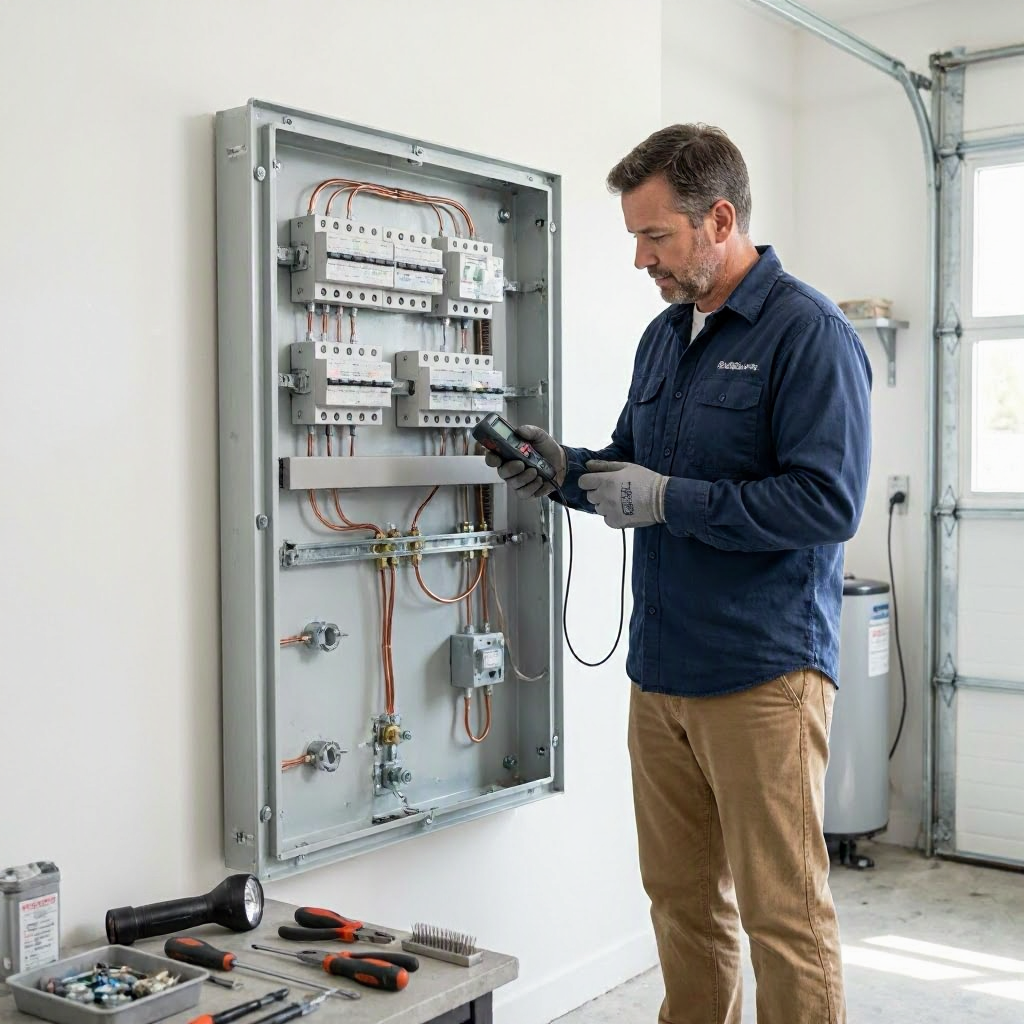
Ground Wire Repair Cost
Fixing a ground wire is a repair you can't ignore. It keeps your family safe by preventing shocks and electrical fires. This article gives you the cost estimates, the safest first steps, and the checklists you need to handle this essential home repair with confidence.
We'll break down national price ranges, explain who to call first, and guide you through getting the right help. Whether your outlet tester shows an "open ground" or you notice more serious warning signs, this guide provides the practical information to make an informed, safe decision.
The cost to repair a ground wire can range from $130 to $350 for a single outlet to $500 to $4,000+ for whole-home grounding upgrades. Labor typically costs $75 to $150+ per hour. Always call a licensed electrician first to diagnose the issue, unless the problem involves the utility service drop or meter.
Additional reference details:
- Item: Typical cost , Detail: $130–$350 for outlet repair; $500–$4,000+ for whole-home upgrades
- Item: Pro service cost , Detail: $75–$150+ per hour, plus service call fee
- Item: Best first contact , Detail: Licensed electrician
- Item: Main safety warning , Detail: Warm outlets, buzzing, sparks, or burning smells are urgent warning signs.
- Item: Warranty proof needed , Detail: Receipt, invoice, model number, photos, and electrician's written diagnosis.
- Item: When to call a pro , Detail: For grounding, old wiring, troubleshooting, or any safety-related electrical work.
Who should I call first
- Who should I call first? A licensed electrician. For issues with the service drop or meter, contact your local electric utility.
- What will it cost? Expect a $130–$350 range for a single outlet, but be prepared for higher costs if the issue is more widespread.
- What proof is needed for a warranty? Keep the receipt, invoice, device model number, and photos of the issue and the electrician's written diagnosis.
- Which office should I check? Verify an electrician's license with your state licensing board and check permit rules with your local building department.
- What are the warning signs? Hot outlets, burning smells, sparks, or a breaker that will not reset. These require immediate attention.
- When should I avoid DIY? For safety-critical wiring, grounding issues, aluminum or old wiring, troubleshooting, or burning smells.
| Data Point | Useful Information |
|---|---|
| Main customer question | Cost and safety of fixing "open ground" or unsafe outlets. |
| Best first contact | Licensed electrician. |
| Estimated cost range | $130–$4,000+, depending on scope. |
| Labor charges | $75–$150+ per hour. Service call/diagnostic: $75–$200. |
| Official brand contacts | Square D (888-778-2733), Eaton (877-386-2273), Leviton (800-824-3005). |
| Retailer contacts | Home Depot (800-466-3337); Lowe's (800-445-6937). |
| Warranty claim documents | Photos, invoice, model/brand, contractor diagnosis, warranty docs. |
| State/local agency | State license lookup and local building department. |
| Safety warning | Call 911 for fire, smoke, or active electrical arcing. |
| Important URLs | State license verification sites and manufacturer support pages. |
Repair costs vary widely based on the problem's scope, local labor rates, and your home's wiring age. Use this breakdown as a reference when reviewing quotes. Always ask for a written estimate that separates labor, materials, permit fees, and warranty terms.
Additional reference details:
- Line Item: Grounding a single outlet or replacing device , Typical Planning Range / Note: $130–$350
- Line Item: Adding GFCI protection where grounding is absent , Typical Planning Range / Note: $125–$350 per location
- Line Item: New grounded circuit or branch-circuit repair , Typical Planning Range / Note: $300–$1,200+
- Line Item: Whole-home grounding/bonding correction , Typical Planning Range / Note: $500–$4,000+
- Line Item: Service call / diagnostic fee , Typical Planning Range / Note: $75–$200
Average Cost: Plan for $130 to $350 for a single outlet, but hidden issues can raise the final price significantly.
Prices change based on several factors. A low quote might be missing necessary permits, disposal fees, or allowances for hidden damage. A high quote can be reasonable if your home has difficult access, requires emergency service, uses premium materials, or has older wiring systems. Always ask what is included, what is excluded, and what happens if hidden damage is found after work begins.
For a simple cosmetic swap of a working outlet, a knowledgeable DIYer with the right tools can manage. However, grounding repairs are almost never in this category.
A licensed electrician is required for safety-critical work. This includes diagnosing an "open ground," repairing damaged grounding wires, handling aluminum or knob-and-tube wiring, and any troubleshooting related to burning smells or warm outlets. Using a handyman for these tasks can void warranties, violate local codes, and most importantly, leave your home unsafe.
Call a Pro If: You have any doubts, see warning signs, or are dealing with old wiring. The risk is too high.
The core skill needed is the ability to safely identify and trace the equipment grounding conductor within your home's wiring system. This requires specialized knowledge and testers that most homeowners do not possess. An electrician will ensure the repair meets the National Electrical Code and passes any required inspections.
Your first contact depends entirely on the situation. Follow this guide to get the right help quickly.
- For immediate danger: If you see smoke, fire, sparks, panel arcing, or smell active burning, leave the area and call 911.
- For utility-side issues: If the problem seems related to the service drop, meter, or is storm-related, contact your local electric utility. Use the phone number on your bill.
- For all other grounding and wiring issues: Contact a licensed electrician. They are trained to diagnose hidden problems, perform safe repairs, and navigate local permit requirements.
If your issue involves a specific product or a store installation, use these official contacts for support.
- Square D / Schneider Electric: For Square D breakers, panels, and load centers. Call 888-SQUARED (888-778-2733) or visit se.com/us/en/brands/squared/.
- Eaton / EatonCare: For BR/CH breakers and load centers. Call +1-877-386-2273 or visit eaton.com.
- Leviton: For outlets, GFCI/AFCI devices, and switches. Call 1-800-824-3005 or visit leviton.com/support.
- Home Depot: For installation orders, returns, or service complaints. Call 1-800-HOME-DEPOT (1-800-466-3337).
- Lowe’s: For installation support, returns, or service complaints. Call 1-800-44LOWES (1-800-445-6937).
Follow these steps to navigate a warranty or damage claim efficiently. Having your documents ready is key.
- Gather all evidence. Find the receipt, invoice, model number, and part number. Take clear photos of the issue.
- Get a written diagnosis. Have the electrician provide a written explanation of the problem.
- Contact the correct party first.
- - For a suspected product defect, contact the device or panel manufacturer (e.g., Square D, Eaton, Leviton).
- - If the work was part of a store installation order, contact the retailer's installation support with your order number.
- - For faulty installation, request a written warranty response from the original contractor. Do not let a new contractor destroy evidence before photos are taken.
- Involve insurance if needed. For smoke, fire, or property damage, notify your homeowners insurance carrier before proceeding with non-emergency repairs.
- File a formal complaint if necessary. For unsafe work or a refusal to fix code defects, file a complaint with your state or local licensing board. Attach all photos, permits, invoices, and written quotes.
Warranty Documents Needed: Keep your receipt, invoice, model number, and the electrician's written diagnosis in a safe place.
State-Specific or Local Checks
Electrical licensing and permit rules are managed at the state and local level. Before hiring anyone, take these verification steps.
| State / Area | What to Do Before Work Starts | Where to Check |
|---|---|---|
| All U.S. States | Verify electrician's license and ask if a permit/inspection is required. | Local building department + state license lookup. |
| California | Check CSLB license; permits are common for safety repairs. | cslb.ca.gov |
| Texas | Check TDLR electrician/contractor status. | tdlr.texas.gov/electricians/ |
| Florida | Use DBPR license search and check local permit rules. | myfloridalicense.com |
| New York / NYC | Licensing is highly local. In NYC, verify with DOB. | nyc.gov/site/buildings/ |
| New Jersey | Verify contractor registration with NJ Consumer Affairs. | njconsumeraffairs.gov |
| Washington | Verify through WA L&I. | lni.wa.gov/verify/ |
| Arizona | Check Arizona Registrar of Contractors. | roc.az.gov |
Asking the right questions protects your investment and your safety. Get answers to these before you approve any work.
- "What is your license number?" (Then verify it independently with the state.)
- "Does this work require a permit and final inspection?" (Get the permit number if required.)
- "Can you provide a written diagnosis before we proceed?" ("Wiring problem" is not enough detail.)
- "Will you take before-and-after photos of work hidden in walls or the panel?"
- "What is included in this quote? Are permits, disposal, and potential hidden damage factored in?"
- "What are your payment terms?" (A reasonable deposit may be normal, but paying in full upfront is risky.)
Be cautious if you encounter any of these warning signs. They often indicate an unprofessional or unsafe contractor.
- The contractor says permits are unnecessary for major wiring or panel work without checking local rules.
- They request cash-only payment with no invoice, no license number, and no written warranty terms.
- They provide a vague diagnosis like "it's a wiring problem" without specific details.
- They pressure you to pay the full amount before any work begins.
- They are unwilling to put their quote, scope of work, and warranty terms in writing.
Practical Step-by-Step Guidance
Follow this sequence for a safe and effective repair process.
- Assess Safety: If you notice urgent warning signs (heat, smell, sparks), shut off power at the breaker if it's safe to do so. Otherwise, leave and call for help.
- Gather Information: Note which outlets are affected and what your outlet tester says. This helps the electrician.
- Find a Pro: Search for licensed electricians in your area. Get at least 2-3 written quotes for non-emergency work.
- Verify and Check: Verify each electrician's license with your state board. Contact your local building department to ask about permit requirements for the proposed work.
- Review the Quote: Ensure the written quote separates costs and includes a clear scope, materials, permit fees, and warranty.
- Document the Job: Take photos before work starts. Keep all invoices and the electrician's final diagnosis on file.
- Final Inspection: If a permit was pulled, ensure you receive documentation of the passed final inspection from the electrician or building department.
Frequently Asked Questions
Should I get more than one quote? Yes. For non-emergency work, get at least two or three written quotes. Make sure they cover the same scope, materials, permit assumptions, and warranty terms for a fair comparison.
Should I pay the full amount upfront? No. A reasonable deposit may be normal, but paying the full amount before work starts is risky. Check your state’s deposit rules and use a traceable payment method like a check or credit card.
Can I use my home warranty? Maybe. Home warranty coverage depends on your specific contract, maintenance history, and exclusions. Call your warranty company before authorizing any non-emergency work if you hope for reimbursement.
Can a handyman do this electrical repair? For safety-critical wiring like grounding, old wiring, or troubleshooting, you must use a licensed electrician. Many states and cities prohibit unlicensed individuals from performing this type of electrical work.
Will homeowners insurance pay for this? Insurance may cover sudden damage from a fire or electrical event, but it typically does not pay to upgrade old wiring simply because it's outdated. Always check your specific policy details.
This article was fact-checked using the following official sources and guides. Rules and contacts can change, so we recommend verifying information locally before you act.
- NFPA Electrical Safety: nfpa.org/education
- Texas Department of Licensing and Regulation (TDLR): tdlr.texas.gov/electricians/
- California Contractors State License Board (CSLB): cslb.ca.gov
- Florida Department of Business & Professional Regulation (DBPR): myfloridalicense.com
- Washington State Department of Labor & Industries (L&I): lni.wa.gov/verify/
- Manufacturer Support: Square D, Eaton, Leviton
- Retailer Contacts: Home Depot, Lowe’s
Do Not Ignore: Warm outlets, buzzing, or a burning smell are urgent warnings. Address them immediately.
Electrical grounding is a fundamental safety system in your home. While costs can vary, prioritizing a safe, code-compliant repair is non-negotiable. Always verify a contractor's license with your state board, confirm permit requirements with your local building department, and keep detailed records of all work done. For final guidance on your specific situation, consult a trusted, licensed electrical professional.

About the TDL Expert Panel
TDL Expert Panel · TheDigitalLife Editorial Team
TDL Expert Panel is the editorial team behind TheDigitalLife. The team researches, reviews, and creates practical guides to help everyday readers make better decisions about home repair costs, refunds, AI tools, digital safety, productivity, and useful online resources. Each guide is written to be clear, useful, and easy to understand.