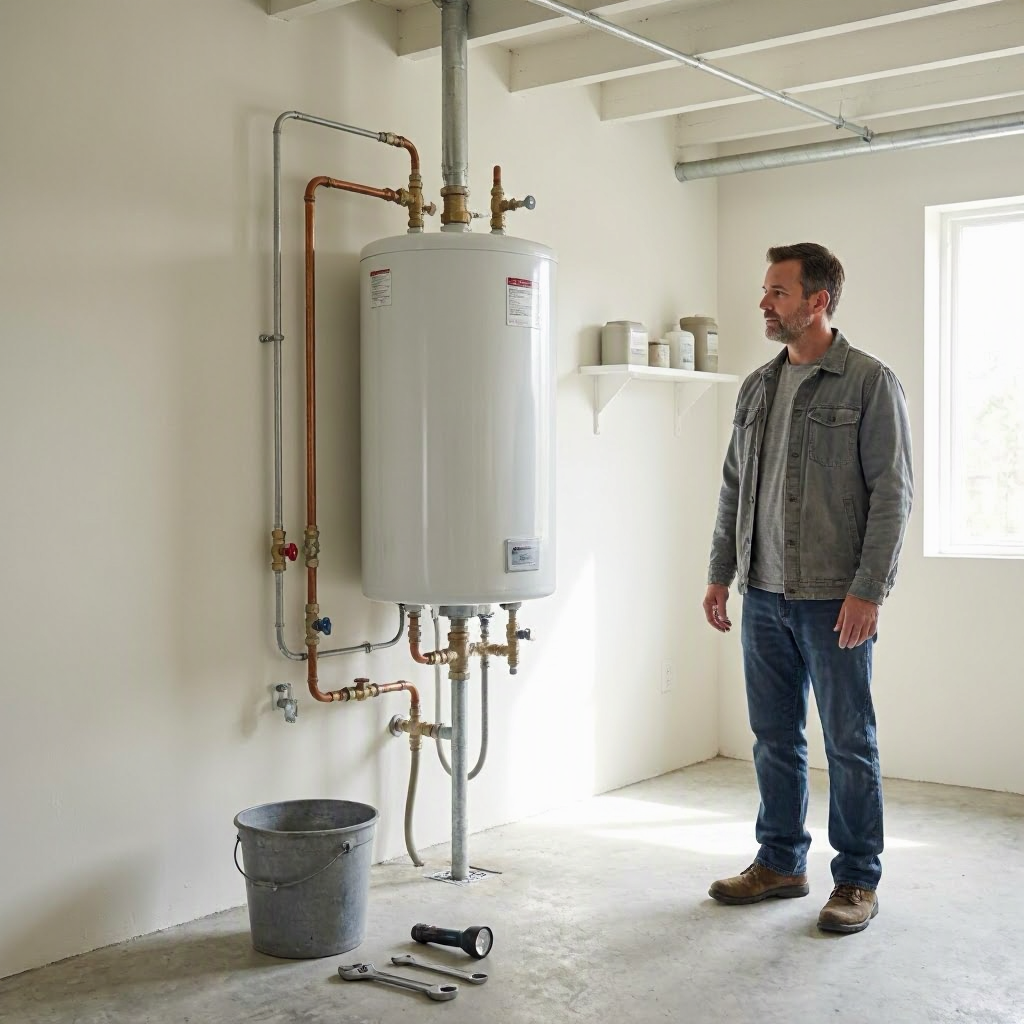
Gas Water Heater vs Electric Water Heater Cost Guide
Choosing a new water heater is a significant home investment. The decision between a gas and electric unit goes beyond the price tag on the tank. This guide helps you understand all the costs, contacts, and considerations involved, from installation and fuel bills to state rules and warranty claims.
The goal is to provide a clear comparison so you can make an informed decision. We’ll cover how to hire the right professional, what documentation you need to protect your warranty, and what to watch out for to avoid overpaying or unsafe work.
The total cost depends heavily on installation requirements, not just the unit price. A gas heater often needs venting and gas line work, while an electric or heat pump unit may require updated electrical circuits and panel capacity. For non-emergency work, getting multiple quotes and verifying contractor licenses with your state board and local permit office is the best way to avoid problems.
Understanding Cost Ranges and What Affects Them - DIY vs
- Understanding Cost Ranges and What Affects Them
- DIY vs. Professional Service
- Who to Contact for Installation and Repair
- Official Contact Information for Brands and Retailers
- The Warranty Claim Process and Required Documents
- State and Local Licensing and Permit Checks
- Key Questions to Ask Before You Pay
- Warning Signs and Red Flags
- Step-by-Step Action Plan
- Frequently Asked Questions
- Sources and Final Reminder
Additional reference details:
- Item: Typical cost , Detail: $1,000-$2,700 for gas tank install; electric often similar; heat pump $3,200-$4,700.
- Item: Pro service cost , Detail: National range for standard tank replacement is $882-$1,816.
- Item: Best first contact , Detail: A licensed local plumber for gas or tank issues.
- Item: Main safety warning , Detail: Stop use and call a licensed pro/emergency service for gas smell, active flooding, electrical burning smell, or hot TPR discharge.
- Item: Warranty proof needed , Detail: Receipt, serial/model number, install date, installer invoice, photos, and permit/inspection record.
- Item: When to call a pro , Detail: For installation, gas work, leaks, complex electrical upgrades, or any active safety hazard.
Who should I call first
- Who should I call first? A licensed plumber for most water heater work.
- What will it cost? Gas installation typically ranges from $1,000 to $2,700; heat pump units are $3,200-$4,700.
- What proof is needed for warranty? Keep your receipt, serial number, installation invoice, and any permit records.
- Which office should I check? Your state licensing board and local city/county building department.
- What are the warning signs? An installer with no license, pressure to pay upfront, or a quote missing key items like permits.
- When to avoid DIY? When dealing with gas lines, complex venting, major electrical upgrades, or if you want to preserve the manufacturer's warranty.
| Item | Details |
|---|---|
| Main customer question | What will this cost, who should I call, and how do I avoid overpaying or losing warranty? |
| Best first contact | Licensed local plumber; brand support if under warranty; retailer for purchase/delivery issues. |
| Estimated cost range | Gas tank installation: $1,000-$2,700. Standard tank replacement: $882-$1,816. Heat pump: $3,200-$4,700. |
| Fitting/installation contact | Licensed plumber for gas/tank; licensed electrician for electrical/heat pump circuits. |
| Official brand contacts | Rheem: 1-800-432-8373; A.O. Smith: 877-552-0010; Bradford White: 800-531-2111 (warranty). |
| Retailer contacts | Home Depot: 1-800-466-3337; Lowe's Installation: 1-877-465-6937; Lowe's Customer Care: 1-800-445-6937. |
| Warranty documents needed | Receipt, serial/model number, install date, installer invoice, photos, permit/inspection record. |
| State/local agency to check | Your state licensing board and local city/county building department. |
| Safety warning | If there is gas smell, active flooding, electrical burning smell, or hot TPR discharge, stop and call a pro. |
| Important URLs | Energy.gov for selection; IRS for tax credits; manufacturer sites for warranty (e.g., rheem.com/warranties). |
Average Cost: A standard water heater replacement typically costs between $882 and $1,816 nationally, but local factors can change this significantly.
The price you pay is shaped by your home’s existing setup and local rules. A simple replacement of a similar unit is usually the most affordable scenario.
- Gas Tank Installation: A common range is $1,000 to $2,700. The price changes based on your existing gas line and vent setup, the type of tank, and how easy it is to access the installation area.
- Standard Tank Replacement: This applies broadly and has a typical national range of $882 to $1,816.
- Electric Tank Replacement: The unit cost is often similar or slightly lower than gas, but the total can change if you need new electrical circuits, a panel upgrade, or other code-related work.
- Heat Pump Water Heater: Installation ranges from $3,200 to $4,700. These units may qualify for federal or state incentives, but they have specific space, electrical, and condensate drainage needs that affect cost.
- Federal Tax Credit: There is a potential 30% tax credit up to $2,000 for qualified heat pump water heaters. You should check the IRS and ENERGY STAR websites and consult a tax professional.
These are national planning ranges. Your local quote will vary based on city, access, code updates, fuel type, permit rules, and even the timing of the job.
A DIY installation might save on labor costs, but it comes with significant risks. For a simple like-for-like electric tank replacement where no new wiring is needed, a skilled homeowner might handle it. You would need basic plumbing and electrical tools and knowledge of local codes.
However, calling a licensed professional is strongly recommended in most cases. This is especially true for gas units, which involve combustion, venting, and carbon monoxide safety. It also applies to any job requiring new gas lines, complex venting, or upgrades to your home’s electrical panel.
Warranty Risk: Warranty claims can be denied or limited if installation did not follow the manufacturer’s manual, local code, or permit rules. Professionals handle this.
Perhaps the biggest risk of DIY is voiding your manufacturer’s warranty. Most manufacturers require professional installation according to code to honor the warranty. For any issue involving gas smell, electrical burning, or active leaks, you must stop and call a licensed professional immediately.
Knowing who to call saves time and ensures the right person handles the job.
- For water leaks, tank replacement, gas connections, and general service: Contact a licensed plumber.
- For issues clearly related to electricity, such as breaker trips, circuit wiring, or heat pump water heater electrical upgrades: Contact a licensed electrician.
- For warranty questions, parts, or model support: Contact the manufacturer's support line after you have your model number, serial number, and a professional diagnosis.
- For utility rebates or state energy incentives: Contact your utility rebate program or state energy office.
- To understand local rules: Contact your local building department for permit and inspection requirements.
| Brand / Route | Phone / Contact | Official Website | Use This For |
|---|---|---|---|
| Home Depot | 1-800-466-3337 | homedepot.com/customer-service | Product return, order issues, store installation, receipts. |
| Lowe's | Installation: 1-877-465-6937; Care: 1-800-445-6937 | lowes.com/l/help | Installation scheduling, delivery, store issues, warranty help. |
| Rheem | 1-800-432-8373 | rheem.com/warranties | Warranty registration, verification, parts, model support. |
| A. O. Smith | 877-552-0010 | hotwater.com/support | Warranty status, manuals, repair service locator. |
| Bradford White | Warranty: 800-531-2111 | bradfordwhite.com/contact | Warranty questions; consumers should start with a licensed plumber. |
| Rinnai | 800-621-9419 | rinnai.us/support/warranty | Tankless product warranty and service. |
A smooth warranty claim depends on having the right documents. Problems often arise from improper installation, so keep good records.
- Gather Your Documents. Collect the purchase receipt, installation invoice, serial number, model number, installation date, and photos of the rating plate and the problem.
- Include Permit Records. If applicable, have your permit and inspection record ready.
- Contact the Right Party. Start with the seller (retailer, installer) for return or delivery problems. Start with the manufacturer for product warranty issues.
- Get a Professional Diagnosis. For functional problems, ask a licensed plumber for a written diagnosis. Many manufacturers require this before approving warranty parts.
- Do Not Tamper. If there is a leak, gas smell, or electrical issue, stop using the heater and call a licensed pro before starting a warranty claim. Do not remove the unit before taking photos and recording the model/serial number.
- If Denied, Ask Why. If a claim is denied, request the reason in writing. Common denials are due to improper installation, lack of maintenance, sediment, or unpermitted work.
Warranty Documents Needed: Keep your receipt, serial number, installation invoice, and permit record in a safe place.
State-Specific or Local Checks
Water heater work is controlled by state and local rules. Always verify licensing and permit requirements before hiring anyone.
- California: Verify the contractor through the CSLB and ask for a C-36 plumbing classification.
- Texas: Verify the plumber through the Texas State Board of Plumbing Examiners (TSBPE).
- Florida: Check licensing through the Florida DBPR and confirm local permit needs.
- New York City: Work usually needs a Licensed Master Plumber to file with the NYC Department of Buildings.
- Illinois: Use IDPH plumbing licensing resources.
- Washington: Verify through Washington L&I.
- Massachusetts: Check the Board of State Examiners of Plumbers and Gas Fitters.
- New Jersey: Verify through NJ Consumer Affairs.
- Georgia: Verify through the Georgia Secretary of State.
- All Other States: Verify the plumber's license with your state licensing board and call your city/county permit office.
Get clear answers to these questions from any contractor before approving a quote or paying a deposit.
- What exact model and capacity are you installing?
- Is this a repair, replacement, warranty job, or code upgrade?
- What labor rate, service fee, permit fee, and disposal fee are included?
- Will the work be done by a licensed plumber or authorized installer?
- What happens if the city inspector requires additional work?
- What parts and labor warranty do you provide in writing?
- Who do I contact if the new heater fails within 30 days?
Certain warning signs should make you stop the hiring process immediately.
- The installer has no license number or business address, or refuses to say who will pull the permit.
- You are pressured to pay the full amount before work starts.
- The quote does not include the model, size, labor, permit, old-unit haul-away, or required code items like an expansion tank.
- The installer says permits are "never needed" without checking your local rules.
- For a warranty issue, you are advised to remove the unit before documenting it.
- For gas units, the installer ignores questions about venting, combustion air, or carbon monoxide safety.
Practical Step-by-Step Guidance
Follow these steps for a smoother, safer water heater project.
- Assess the Situation. Is it an emergency (leak, gas smell)? If so, call a licensed pro immediately. If not, you have time to plan.
- Research and Verify. Determine if you need a plumber or electrician based on the fuel type. Use your state's online license lookup to verify any contractor you consider.
- Contact Local Authorities. Call your city or county building department to ask if a permit and inspection are required for the work you plan.
- Get Multiple Quotes. For non-emergency work, get at least three written quotes. Compare the scope, equipment model, and warranties, not just the price.
- Ask the Key Questions. Use the list above when reviewing quotes with contractors.
- Document Everything. From the first quote to the final invoice, keep all paperwork. Take photos of the new unit's rating plate and the finished installation.
- Ensure Final Inspection. If a permit was pulled, make sure the work passes the municipal inspection. Get a copy of the inspection record for your files.
Safety First: For any gas smell, active flooding, or electrical burning smell, stop using the unit and call a licensed professional or emergency service.
Frequently Asked Questions
Should I call a plumber, electrician, or the brand first? Call a licensed plumber first for most issues like leaks, tank replacement, or gas connections. Call an electrician only for clear electrical issues like breaker problems. Call the brand after you have your model number, serial number, and a plumber's diagnosis.
Can I claim warranty if I installed the heater myself? Maybe, but warranty claims can be denied or limited if the installation did not follow the manufacturer's manual, local code, or permit rules. If you DIY, keep the invoice, serial number photo, installation photos, and any permit record.
Can a big-box store handle the installation? Home Depot and Lowe's may coordinate installation through independent installers. You should still confirm the installer's licensing, who pulls the permit, what is included (like haul-away), and the warranty paperwork before approving the job.
Should I get three quotes? For non-emergency work, yes. This allows you to compare the full scope, licenses, equipment models, and warranties, not just the lowest price.
What if I'm switching from gas to electric or vice versa? This is a major project. Switching fuel types involves new gas lines or electrical circuits, venting changes, and significant code considerations. Warranty problems are common if the installation is not done correctly. Always use a licensed professional for this work.
This article uses publicly available cost guides, retailer support pages, manufacturer warranty pages, and official state/local licensing resources. Key sources include HomeAdvisor and Angi cost guides, Energy.gov for selection advice, the IRS for tax credit details, and all linked manufacturer and state agency websites.
Important: Always re-check brand phone numbers, current warranty terms, local permit rules, and labor charges before making a decision or publishing an updated guide.
This guide provides planning information to help you make informed decisions. Costs, codes, and contacts can change. Always verify specific details with licensed professionals, official brand support, your retailer, your state licensing board, and your local building department before starting any work or making a purchase. Your safety and a successful installation depend on using current, local information.

About the TDL Expert Panel
TDL Expert Panel · TheDigitalLife Editorial Team
TDL Expert Panel is the editorial team behind TheDigitalLife. The team researches, reviews, and creates practical guides to help everyday readers make better decisions about home repair costs, refunds, AI tools, digital safety, productivity, and useful online resources. Each guide is written to be clear, useful, and easy to understand.