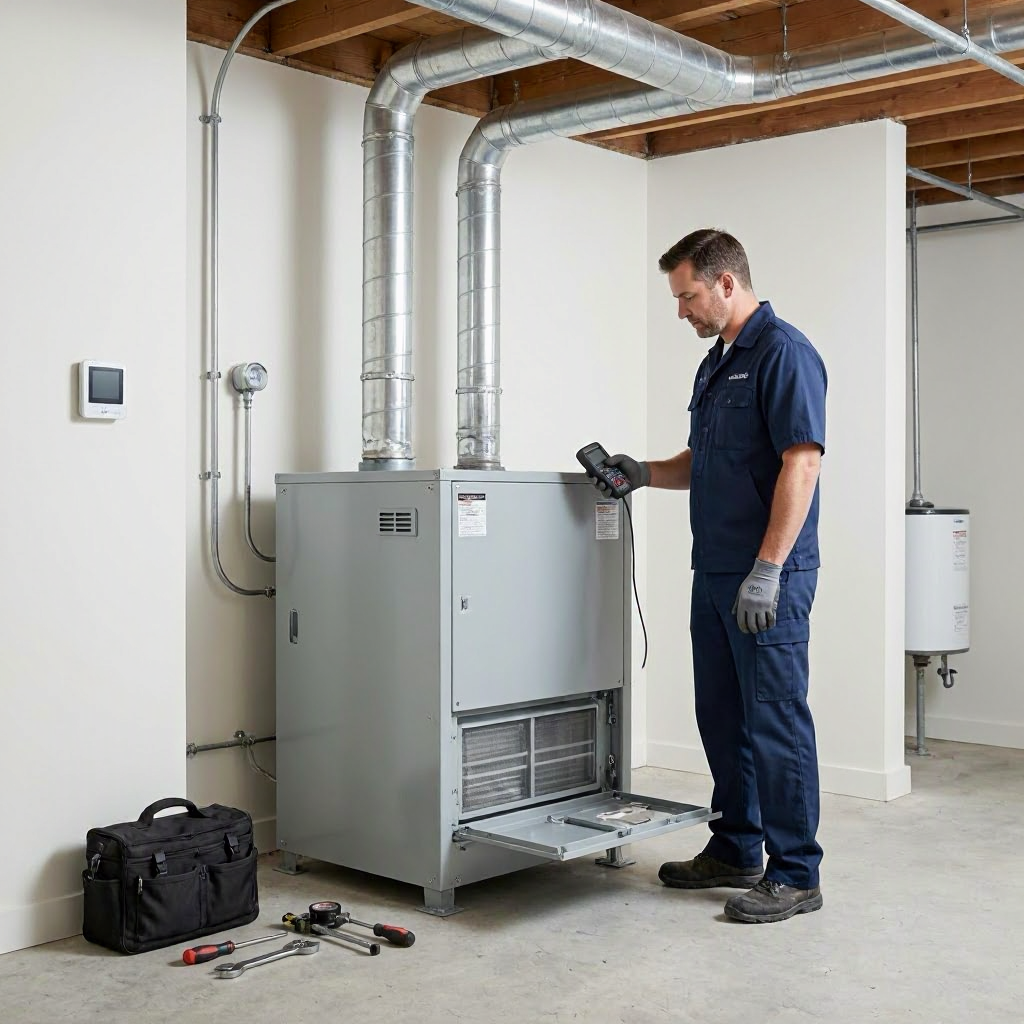
Furnace Replacement Cost: Gas, Electric, and Oil Systems
If you’re facing a furnace replacement, you’re likely navigating a mix of urgent comfort needs, confusing quotes, and concerns about cost and safety. This decision involves more than just picking a new unit; it requires understanding different fuel types, navigating permits, and ensuring your family’s safety. This guide provides clear, practical information to help you compare costs, understand the process, and know who to call for a trustworthy installation.
The cost to replace a furnace varies significantly based on the fuel type and system complexity. A typical gas furnace installation ranges from $3,500 to over $8,500, while an electric unit may cost $2,000 to over $7,000. Oil furnace replacements often fall between $5,000 and $10,000+. Your first step should always be to contact two or three licensed HVAC contractors for detailed estimates.
Cost Snapshot for Different Systems - DIY Considerations v
- Cost Snapshot for Different Systems
- DIY Considerations vs. Professional Service
- Who to Contact for Help
- Official Brand and Retailer Contacts
- Warranty and Refund Claim Steps
- State and Local Verification
- Key Questions to Ask Contractors
- Warning Signs and Red Flags
- Step-by-Step Hiring Guidance
- Frequently Asked Questions
| Item | Detail |
|---|---|
| Typical cost | Gas: $3,500-$8,500+; Electric: $2,000-$7,000+; Oil: $5,000-$10,000+ |
| Pro service cost | Includes labor, permits, disposal, and potential electrical or gas work. |
| Best first contact | Two or three licensed HVAC contractors. |
| Main safety warning | Installation must include combustion safety checks and proper venting. |
| Warranty proof needed | Keep model/serial numbers, registration, combustion test results, and permit records. |
| When to call a pro | For any installation involving gas, refrigerant, electrical work, or permit-required tasks. |
Who to call first: Start with multiple licensed HVAC c
- Who to call first: Start with multiple licensed HVAC contractors.
- What will it cost: Depends heavily on fuel type, efficiency, and needed modifications to your home's systems.
- Warranty proof: You need the model/serial number and must register the new equipment immediately.
- State/local check: Verify your contractor’s license with your state’s licensing board before hiring.
- Warning signs: A contractor who won’t provide a license number, written scope, or itemized quote.
- Avoid DIY: For any work involving gas lines, refrigerant, or major electrical connections.
| Main Customer Question | Best First Contact | Estimated Cost Range | Official Brand Contacts |
|---|---|---|---|
| Gas furnace replacement | Licensed HVAC/gas contractor | $3,500 - $12,000+ | Carrier: 1-800-CARRIER |
| Electric furnace replacement | Licensed HVAC contractor | $2,000 - $7,000+ | Trane Consumer Relations: 1-800-945-5884 |
| Oil furnace replacement | Oil heating specialist | $5,000 - $10,000+ | Lennox: 1-800-953-6669 |
| Warranty registration & claims | Manufacturer's authorized dealer | Varies | Goodman/Daikin: 1-877-254-4729 |
| Retailer product/install issues | Retailer customer service | N/A | Home Depot: 1-800-HOME-DEPOT; Lowe's: 1-800-445-6937 |
Additional reference details:
- Labor Charges: Included in total quote. Get itemized estimate. , Safety Warning: Homes with fuel-burning appliances should have working carbon monoxide alarms. , Warranty Documents Needed: Model/serial numbers, proof of registration, installation receipt, permit inspection record.
- Labor Charges: State or Local Agency to Check , Safety Warning: Important URLs , Warranty Documents Needed: Contact Numbers for Support
- Labor Charges: CA: Contractors State License Board (CSLB). TX: TDLR Air Conditioning license. FL: DBPR/MyFloridaLicense. , Safety Warning: EPA 608 Certification: epa.gov/section608 , Warranty Documents Needed: Lowe's Installation: 1-877-GO-LOWES
The total cost to replace a furnace is not a single number. It depends on the fuel type, the unit's efficiency, and the condition of your home’s existing systems like venting, gas lines, electrical capacity, and ductwork. The price also changes if you are modifying the air conditioning coil or air handler at the same time.
Average Cost: A standard gas furnace replacement commonly ranges from $3,500 to over $8,500. High-efficiency condensing models, which require special PVC venting and a condensate drain, can cost between $5,000 and $12,000 or more.
Here is a breakdown of typical price ranges and what influences them:
- Gas Furnace Installed: $3,500 - $8,500+. The final price is affected by the unit's efficiency rating, brand, labor costs, and the complexity of the venting work required.
- Electric Furnace: $2,000 - $7,000+. The key cost drivers are your home's electrical capacity and local utility rates, as operating costs can be high in some areas.
- Oil Furnace Replacement: $5,000 - $10,000+. This cost often includes assessing or replacing the fuel tank and addressing chimney or venting issues, which are common with oil systems.
Remember, a proper replacement should always include combustion safety checks, correct venting, and any required local permits and inspections. Permit and inspection fees themselves typically add $50 to $500+ to your total cost.
Replacing a furnace is a major home system project. Understanding the line between a DIY task and a job for a licensed professional is crucial for safety, compliance, and protecting your warranty.
When might DIY be considered? DIY is generally only safe for very limited tasks, like simple filter changes or cleaning accessible components. Any work involving electrical connections, refrigerant lines, or gas piping is not a DIY project.
When must you call a licensed professional? You should always hire a pro for the installation itself, any gas line work, modifying electrical disconnects or circuits, handling refrigerant (which requires EPA certification), and when local codes mandate a permit. A professional ensures the system is sized correctly, vented safely, and installed to code.
Call a Pro If: The job involves gas piping, combustion, new electrical circuits, refrigerant, or pulling a permit. Doing it yourself can void warranties and create serious safety hazards.
The risks of an incorrect DIY installation are high. They include carbon monoxide poisoning from improper venting, fire hazards from faulty electrical work, and a voided manufacturer warranty, which often requires professional installation for validation.
Your first step for a replacement should be to contact two or three licensed HVAC contractors for estimates. If your existing equipment is still under warranty, also reach out to at least one manufacturer-authorized dealer.
For specific needs, contact specialists:
- Gas Furnace Work: Use a licensed HVAC contractor who is also qualified for gas work.
- Electric Furnace: An HVAC contractor can assess your electrical panel’s capacity.
- Oil Furnace: Seek out an oil heating specialist.
- Refrigerant Work: Confirm the technician has EPA Section 608 certification.
- Permits: Always check with your local building department to understand rules for gas, electrical, and equipment replacement.
Having the right contact information can streamline warranty support and issue resolution.
Manufacturer Support (For Warranty & Product Questions):
- Carrier: 1-800-CARRIER (1-800-227-7437). Use their online warranty lookup and find a local authorized dealer.
- Trane: Consumer Relations: 1-800-945-5884; Warranty Specialists: 1-855-260-2975. Ask about registered limited warranties and transfer rules.
- Lennox: 1-800-953-6669. Have your model and serial numbers from both indoor and outdoor units ready.
- Goodman / Daikin: 1-877-254-4729. Use their product registration and warranty lookup tools.
Retailer Customer Service (For Orders, Returns, Installation Complaints):
- Home Depot: 1-800-HOME-DEPOT (1-800-466-3337). For product orders, installation complaints, receipts, and return disputes.
- Lowe's: 1-800-445-6937. For orders, returns, missing parts, and damage claims.
- Lowe's Installation Services: 1-877-GO-LOWES (1-877-465-6937). Use this if your job was booked through Lowe’s installation services.
Emergency Service Contacts:
- Roto-Rooter: 1-800-GET-ROTO (1-800-438-7686) for urgent drain, sewer, or water cleanup. Always confirm a local quote.
- Mr. Rooter: (855) 982-2028 for scheduling or corporate customer service. Note that local franchise numbers vary.
Protecting your investment starts the day your new furnace is installed. Follow these steps to ensure your warranty is valid and claims are processed smoothly.
- Check Existing Warranty: Before paying to replace an older furnace, check if it’s still under the manufacturer’s warranty.
- Register Immediately: Register your new equipment with the manufacturer as soon as it’s installed. There is often a deadline.
- Keep Critical Documents: Save all receipts, the itemized installer invoice, model and serial numbers, and the certificate of registration.
- Obtain Installation Records: Keep the combustion safety test results and the final permit inspection record from your local building department.
- Get Compliance Proof: If the installer modifies your venting system, ask for documentation showing it meets local building codes.
Warranty Documents Needed: Keep your product registration proof, itemized installation invoice, and permit inspection record in a safe place.
State-Specific or Local Checks
Licensing requirements for HVAC contractors vary by state. Verifying a contractor’s license is a critical step before signing any agreement.
- California: Verify HVAC contractors through the Contractors State License Board (CSLB). Look for the C-20 classification for warm-air heating, ventilating, and air-conditioning.
- Texas: Contractors must have a TDLR Air Conditioning and Refrigeration license from the Texas Department of Licensing and Regulation.
- Florida: Verify air-conditioning contractor licensing through the DBPR/MyFloridaLicense website before signing a contract.
- New York / NYC: Check state and city license requirements. Work in New York City often requires specific permits and qualified tradespeople.
For any state, always ask if the technician has EPA Section 608 certification for refrigerant work. Also, check with your local building department to see if permits are required for the replacement, electrical disconnects, duct modifications, or gas piping.
An informed homeowner is a protected homeowner. Get clear answers to these questions before approving any work.
- Is the estimate itemized for parts, labor, permits, disposal, and any trip or emergency fees?
- Are you licensed for this exact trade in my city and state? Can I verify your license number online?
- Will you pull the required permit, schedule the inspection, and provide proof of final approval?
- Does the quote include cleanup, haul-away, and repair of any damaged drywall, flooring, or landscaping?
- What is excluded from the quote? What conditions would trigger a change order and extra cost?
- What Manual J or load calculation did you use to properly size the new system?
- Are necessary updates to ductwork, the thermostat, electrical, or condensate drain included?
- What is the efficiency rating, refrigerant type, and warranty registration deadline for the proposed unit?
Be cautious of any contractor who exhibits these warning signs. They are strong indicators of potential problems.
- Refuses to provide a license number, written scope of work, proof of insurance, or an itemized price quote.
- Provides an unusually low quote that excludes major charges like excavation, disposal, permits, or electrical work.
- Pressures you to sign a contract immediately or claims permits are never needed without checking your local jurisdiction.
- Only provides warranty details verbally. Always get the manufacturer warranty, labor warranty, and claim process in writing.
- Starts digging for utility lines or other work before calling 811 for a utility locate, creating a serious safety and liability risk.
- Sizes your new equipment only by matching the old unit’s size without performing a load calculation or checking your home’s insulation, ducts, or windows.
- Submits a bid that calls itself a "complete replacement" but excludes the permit, electrical disconnect, refrigerant recovery, or disposal fees.
Do Not Ignore: A contractor who refuses to provide a written, itemized quote or a verifiable license number.
Practical Step-by-Step Guidance
Follow this sequence to navigate the furnace replacement process confidently and securely.
- Assess and Research: Note your current furnace type, age, and any persistent problems. Research basic efficiency ratings (AFUE for furnaces).
- Get Multiple Quotes: Contact at least two or three licensed HVAC contractors. For warranted equipment, include a manufacturer-authorized dealer.
- Verify Credentials: Check each contractor’s license with your state licensing board and confirm they have proper insurance.
- Review Estimates Thoroughly: Compare the itemized quotes line by line, ensuring they include permits, safety checks, and cleanup.
- Ask Your Key Questions: Use the list above to clarify the scope, exclusions, and contractor responsibilities.
- Check References and Reviews: Look for online reviews and ask for references from recent, similar jobs.
- Secure the Contract: Sign a detailed written contract only after all terms are clear and you are comfortable with the chosen contractor.
- Supervise the Installation: Be present to ask questions. Ensure combustion tests are performed and you receive all documentation.
- Complete Post-Installation Tasks: Register the warranty immediately. Keep all paperwork, including the final permit approval, in a dedicated file.
Frequently Asked Questions
Can I replace a furnace without replacing my air conditioner? Often, yes. However, the compatibility between the new furnace's blower and the existing AC coil and ductwork must be checked by a professional. It’s not always a simple swap.
Is a high-efficiency furnace worth the extra cost? It depends on your local fuel prices, climate, the complexity of the installation, and how long you plan to stay in your home. A higher upfront cost may be offset by lower utility bills over time.
Should I get a carbon monoxide detector? Yes. Homes with any fuel-burning appliances, like gas or oil furnaces, should have working CO alarms installed as recommended or required by local building codes. This is a critical safety measure.
What is the single most important thing to check before hiring a contractor? Verify their state and local license is current and in good standing. This is your primary protection against unqualified work.
Does the installer need a special certification? For any work involving refrigerant, the technician must have EPA Section 608 certification. You should ask to see proof of this.
The information in this article is sourced from industry guidelines and manufacturer resources to provide a reliable starting point. However, rules, prices, and contacts can change.
- HomeAdvisor HVAC Replacement Cost Guide
- EPA Section 608 Technician Certification Program
- Carrier Warranty Lookup
- Trane Contact Information
- Lennox Contact Information
- Goodman Contact Information
- Texas TDLR HVAC Licensing Information
We strongly encourage you to verify all costs, warranty terms, permit requirements, and contractor licenses with local professionals, official brand websites, and your local building department before making any decisions or payments.
A furnace replacement is a significant investment in your home's comfort and safety. The choices you make during this process will impact your energy bills and safety for years to come. Always take the time to verify contractor credentials, understand your warranty, and ensure all work is permitted and inspected as required. When in doubt, consult with a licensed HVAC professional, your local building authority, or the equipment manufacturer directly for the most accurate and current information for your specific situation.

About the TDL Expert Panel
TDL Expert Panel · TheDigitalLife Editorial Team
TDL Expert Panel is the editorial team behind TheDigitalLife. The team researches, reviews, and creates practical guides to help everyday readers make better decisions about home repair costs, refunds, AI tools, digital safety, productivity, and useful online resources. Each guide is written to be clear, useful, and easy to understand.