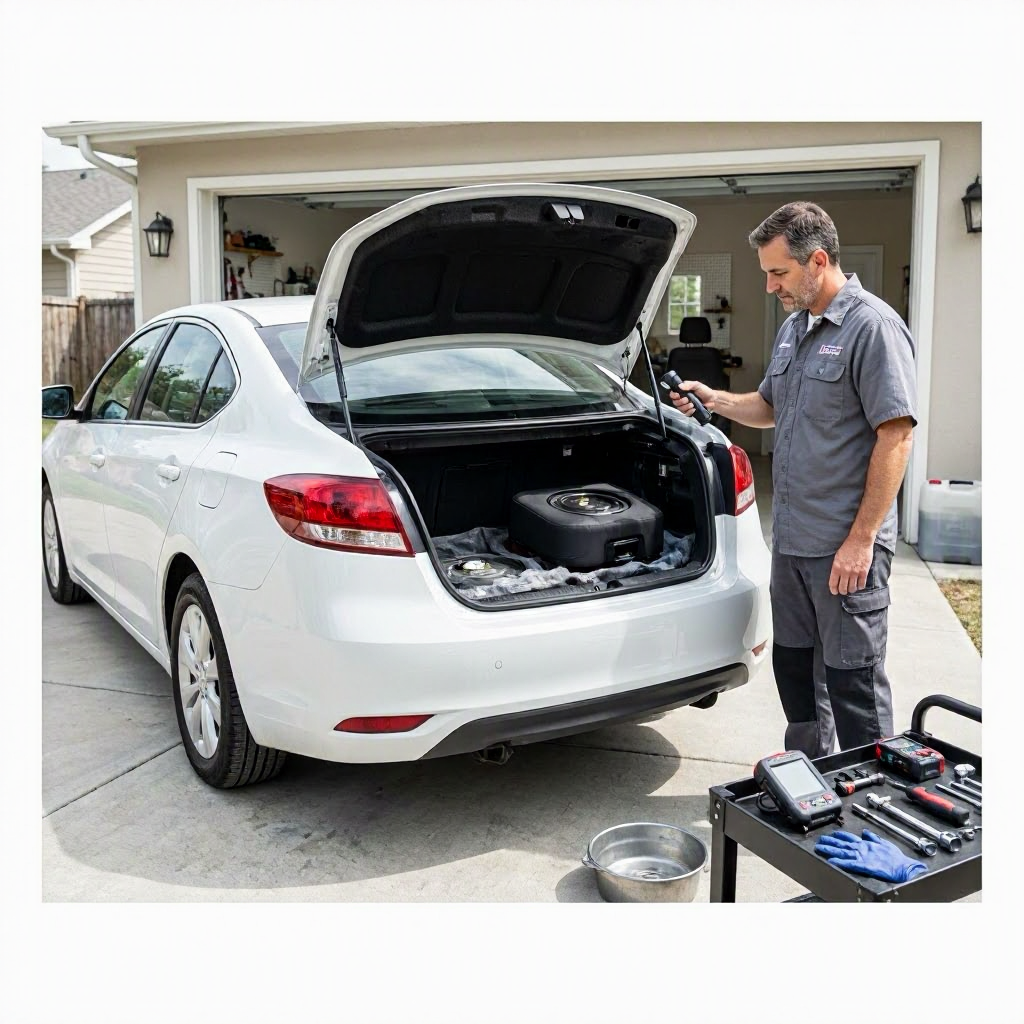
Fuel pump replacement cost and diagnosis checklist
Understanding Fuel Pump Problems in Your Vehicle
Fuel pumps deliver fuel from the tank to the engine at the right pressure and volume. Most modern vehicles use an in-tank electric fuel pump, located inside the fuel tank for quieter operation and better cooling. When it fails, your car may sputter, stall, or refuse to start, leading to towing costs and inconvenience.
Replacing a fuel pump ranks among common but pricey repairs for US drivers. Costs vary widely based on your vehicle's make, model, year, engine type, location, shop rates, and parts choice. This guide covers symptoms, a step-by-step diagnosis checklist, safety tips, cost factors, and ways to handle the repair smartly.
Expect to invest time verifying the issue before approving work. A faulty fuel pump affects drivability, so address it promptly but confirm it's the real problem first.
Common Symptoms of a Failing Fuel Pump
Spotting issues early helps avoid breakdowns. Here are key warning signs US drivers report:
- Engine cranks but won't start: The pump may not prime or build pressure.
- Sputtering or hesitation during acceleration: Especially under load, like highway merging.
- Loss of power at high speeds: The pump can't keep up with fuel demand.
- Whining noise from the fuel tank: Often heard when the key is turned to "on" before starting.
- Stalling, especially after refueling: Vapor lock or pump strain from low fuel levels.
- Check engine light on: Codes like P0087 (low fuel pressure) or P0230 (pump circuit issue).
These symptoms overlap with bad fuel filters, clogged injectors, or electrical problems. Do not ignore them, as they signal potential safety risks on the road.
Fuel Pump Diagnosis Checklist
Use this checklist to assess your vehicle before calling a mechanic. It helps narrow down if the fuel pump is likely at fault. Document findings with photos and notes for repair discussions.
Step-by-Step Diagnosis Process
- Check fuel level: Run the tank very low? Pumps often fail when starved for fuel, as the pump draws in air instead.
- Listen for priming: Turn the key to "on" (don't start). Hear a brief hum from the rear? No hum suggests pump or relay failure.
- Scan for codes: Use an OBD-II scanner (under $50 at auto parts stores). Note codes like P0087, P0231, or fuel system errors.
- Test fuel pressure: Requires a gauge (rentable for free at many chains like AutoZone). Connect at the fuel rail; pressure should match your owner's manual specs (typically 40-60 PSI for many cars).
- Inspect relays and fuses: Swap the fuel pump relay with a similar one (like the starter relay) to test.
- Check for leaks or contamination: Smell gas? Look under the car for wet spots. Bad gas can damage pumps.
- Road test safely: Note when symptoms occur (cold start, hot engine, uphill).
| Symptom or Test | What to Check | Next Action if Positive |
|---|---|---|
| No start, key hum absent | Fuel pump relay, fuse, wiring | Test relay swap; check battery voltage |
| Low fuel pressure (< spec) | Pump output, filter clog | Replace filter first if accessible |
| Whining noise | Pump straining | Avoid low fuel; test pressure |
| Codes P0087/P0230 | Electrical circuit | Inspect wiring harness |
| Hesitation after refuel | Vapor issues or pump | Bleed system; pressure test |
If tests point to the pump, get professional confirmation. DIY pressure tests carry fire risks around fuel systems, so wear safety gear and work in well-ventilated areas.
Safety Risks of Driving with a Suspected Bad Fuel Pump
A failing fuel pump creates stranding risks and potential hazards. Sudden stalling on highways endangers you and others, especially in traffic.
- Stop driving if the engine cuts out repeatedly or won't restart.
- Call roadside assistance via AAA, your insurer, or apps like Urgent.ly.
- Fuel leaks add fire risk; evacuate if you smell gas strongly.
In safety-sensitive cases like these, tow the vehicle. Continuing to drive risks accidents, tickets, or voiding insurance coverage.
Factors That Affect Fuel Pump Replacement Costs
Costs depend on several variables, making national averages misleading. Focus on your situation for realistic quotes.
Key drivers include:
- Vehicle specifics: Sedans like a Honda Civic cost less ($500-$1,200 total) than trucks or luxury cars (up to $2,500+). In-tank pumps in 1990s+ models require tank drops, hiking labor.
- Location: Urban areas (NYC, LA) charge $150-$200/hour labor; rural spots $80-$120. State taxes add 6-10%.
- Shop type: Dealerships premium-price OEM parts; independents use aftermarket for savings.
- Parts quality: OEM $200-$600; aftermarket $100-$400. Remanufactured options cut costs but check warranties.
- Labor hours: 2-6 hours typical. Tank removal (common) doubles time vs. external pumps.
- Additional work: Fuel filter, strainer, or tank cleaning often bundled ($100-$300 extra).
- Diagnostics: $100-$200 fee, sometimes waived if repair proceeds.
| Cost Factor | Why It Varies | How to Minimize |
|---|---|---|
| Vehicle make/model | Luxury/SUVs need pricier pumps | Compare parts online (RockAuto, etc.) |
| Labor rate/shop | Dealership vs. indie | Get 3 local quotes |
| Parts source | OEM vs. aftermarket | Ask for warranty details |
| Extras (filter/tank) | Often needed | Confirm necessity via diagnostics |
| Urgency/towing | Weekend/emergency | Schedule non-emergency |
Total estimates range $800-$2,000 across US shops, per mechanic forums and consumer reports, but verify locally. Older high-mileage vehicles may tip toward "not worth it" if over $1,500.
Breaking Down a Typical Fuel Pump Replacement Estimate
A good estimate itemizes everything. Here's what to expect and question:
- Diagnostics: $100-$200. Ask if credited toward repair.
- Parts: Pump $150-$500; strainer/filter $50-$150; seals/gaskets $20-$50.
- Labor: $100-$200/hour x 3-5 hours = $300-$1,000.
- Shop supplies/tax: 5-10% of total.
- Disposal fees: $20-$50 for old fuel/tank waste.
Sample breakdown for a mid-size sedan:
- Diagnostic fee: $100-$200
- Fuel pump assembly: $200-$500
- Labor (4 hours): $400-$800
- Filter/strainer: $50-$150
- Tax & fees: $50-$150
Total: $800-$1,800
Always get it in writing before approving. Note if it includes a 12-month/12,000-mile warranty.
Steps to Confirm and Get Repair Quotes
- Self-diagnose safely using the checklist.
- Call 3 shops: Independents, chains (Midas, Meineke), dealership. Provide year/make/model/mileage, symptoms, your tests.
- Request written estimates: Itemized, valid 30 days.
- Ask key questions:
- - "Is the tank drop required? Any extras like rust repair?"
- - "OEM or aftermarket parts? What's the warranty?"
- - "Diagnostic fee waived if I proceed?"
- - "Can I supply my own part?" (Some allow, saving 20-30%.)
- Compare apples-to-apples: Same parts/labor scope.
- Second opinion: For quotes over $1,000, visit another shop.
Use apps like RepairPal for local averages by ZIP code. Avoid "free diagnosis" gimmicks that lead to upsells.
Checking Warranties, Recalls, and Insurance Coverage
Before paying:
- Powertrain warranty: Many last 5 years/60,000 miles; covers pumps if defect-related.
- Recalls: Search NHTSA.gov with VIN. Fuel pump recalls hit models like some Ford F-150s or GM trucks.
- Extended warranty/service contract: Review terms for coverage.
- Insurance: Collision/comprehensive may cover if accident-related, minus deductible. Call your agent.
Keep service records; neglected maintenance voids claims. Contact manufacturer via owner's manual if suspect defect.
When Fuel Pump Replacement Makes Sense vs. Other Options
- Replace if: Confirmed failure, vehicle worth > repair cost (e.g., $10k car, $1,200 fix).
- Repair alternatives: External pumps or filters first ($200-$400).
- Scrap/sell?: High-mileage lemons (200k+ miles) may not justify $1,500+.
Calculate total ownership: Add resale value post-repair. Tools like Kelley Blue Book help.
Finding Trustworthy Mechanics and Shops
- Certifications: ASE-certified techs.
- Reviews: Yelp, Google, BBB for patterns.
- Chains vs. locals: Chains offer guarantees; independents cheaper.
- Dealer: Best for warranty work.
FTC advises verifying shops aren't pushing unneeded work (consumer.ftc.gov/articles/buying-used-car-dealer covers dealer tactics, applicable to repairs).
Ways to Lower Your Fuel Pump Replacement Bill
- Shop competitively: Save $300+ via quotes.
- Aftermarket parts: 30-50% less, often 1-year warranty.
- Bundle services: Align with oil changes.
- Fleet discounts: If gig worker (Uber), ask shops.
- DIY partials: Replace accessible filters yourself, but skip full pump swaps—risks injury, codes, leaks.
Post-repair, test drive and monitor pressure.
Preventing Future Fuel Pump Failures
Pumps last 100k-150k miles but fail sooner with:
- Premium fuel only? No, but avoid low-quality gas.
- Keep tank >1/4 full to cool pump.
- Change filter every 30k-50k miles.
- Address electrical issues promptly.
Track maintenance in a log for warranty/resale value.
Documents to Keep After Repair
- Written estimate and invoice.
- Parts receipts (old/new).
- Warranty details.
- OBD codes before/after.
- Photos of work area.
These prove work for insurance, trade-ins, or disputes.
Fuel pump issues frustrate but are fixable with smart steps. Diagnose thoroughly, quote wisely, and drive safely. Your diligence saves hundreds and keeps you mobile.

About the TDL Expert Panel
TDL Expert Panel · TheDigitalLife Editorial Team
TDL Expert Panel is the editorial team behind TheDigitalLife. The team researches, reviews, and creates practical guides to help everyday readers make better decisions about home repair costs, refunds, AI tools, digital safety, productivity, and useful online resources. Each guide is written to be clear, useful, and easy to understand.