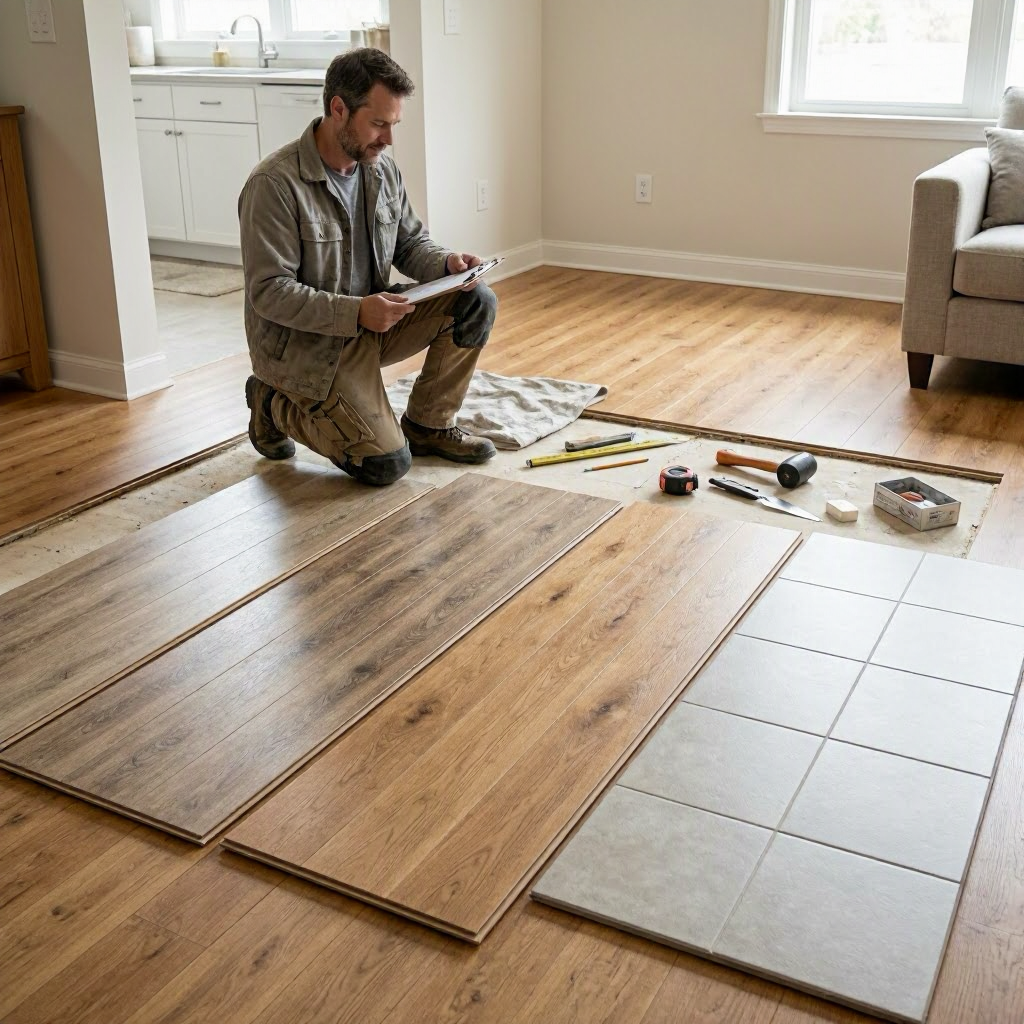
Flooring replacement cost: vinyl plank, laminate, hardwood, and tile
Why Replace Your Flooring and What to Expect Cost-Wise
Replacing flooring in your US home can refresh the look, improve durability, and boost resale value. Common reasons include wear from foot traffic, water damage, outdated styles, or allergies to old materials. The four popular options, vinyl plank, laminate, hardwood, and tile, vary widely in upfront costs, lifespan, and installation needs.
Costs depend on your location, home size, subfloor condition, and material quality. In urban areas like New York or San Francisco, labor rates push totals higher than in rural Midwest spots. Expect to pay per square foot, including materials, removal of old flooring, and installation. Always get multiple written estimates from local pros, as prices fluctuate with supply chains, inflation, and contractor demand.
This guide breaks down costs for each type, key factors, and steps to avoid overpaying. Whether you're a homeowner tackling a kitchen redo or a renter needing landlord approval, focus on measuring your space accurately and understanding quotes before committing.
Vinyl Plank Flooring Replacement Costs
Vinyl plank mimics wood or stone at a fraction of the price, making it ideal for kitchens, bathrooms, and basements prone to moisture. It's waterproof, easy to clean, and available in click-lock systems for floating installs.
Material Costs
Vinyl plank sheets or planks run from budget rigid core to luxury versions with underlayment. Higher-end options include thicker wear layers for pet-heavy homes. Factor in extras like adhesives, transitions, and underlayment if not built-in.
Installation and Total Costs
Removal of old carpet or tile adds to the bill, especially if subfloor repairs are needed. Professional installation often totals $3 to $8 per square foot nationwide, varying by region. In the Southeast, you might see lower ends; coastal cities hit higher due to union labor.
Labor involves demo, leveling the subfloor, and laying planks. For a 200-square-foot room, prep work like sanding uneven concrete can add hundreds. Floating vinyl is quicker and cheaper than glue-down types requiring perfect subfloors.
What Affects the Price
- Subfloor condition: Cracked slabs or bouncy joists require leveling compounds or plywood, bumping costs 20-50%.
- Room layout: Obstacles like cabinets increase cuts and time.
- Thickness and brand: Premium SPC (stone plastic composite) costs more but lasts 20+ years.
Laminate Flooring Replacement Costs
Laminate offers wood-like visuals on a compressed fiberboard core, suitable for living rooms and bedrooms. It's affordable but less water-resistant than vinyl, so avoid damp areas.
Material Costs
Basic laminate starts low, with embossed textures and attached padding available. HDF (high-density fiberboard) cores handle moderate humidity better.
Installation and Total Costs
Click-together floating installs keep labor down. Expect $3 to $10 per square foot installed, with Midwest quotes often undercutting coastal ones. Old flooring removal, especially glued-down vinyl, requires tools like heat guns, adding $1-2 per square foot.
For a 300-square-foot living area, pros handle acclimation (letting planks adjust to humidity) and precise cuts around door jambs. Edge-banding seals vulnerable spots.
What Affects the Price
- Acclimation time: Pros charge for waiting 48-72 hours, delaying jobs.
- Traffic level: Thicker planks (12mm+) for high-use areas cost more.
- Underlayment: Separate foam padding adds if not pre-attached.
Hardwood Flooring Replacement Costs
Solid or engineered hardwood brings timeless appeal and value appreciation, perfect for dining rooms or open plans. Engineered boards handle humidity better than solid planks.
Material Costs
Domestic oak or maple runs higher than imports. Prefinished boards save sanding time; unfinished needs on-site finishing.
Installation and Total Costs
This is labor-intensive, with nail-down for solid or glue/float for engineered. Installed costs typically range $8 to $15+ per square foot, soaring in high-cost states like California. Refinishing existing hardwood might cost less if boards are salvageable, but full replacement includes subfloor checks for rot.
A 400-square-foot install involves moisture testing, joist reinforcement if squeaky, and polyurethane sealing. Dustless systems reduce cleanup fees.
What Affects the Price
- Wood species and grade: Exotic like Brazilian cherry or wide-plank white oak doubles material costs.
- Finishing: Site-finished adds staining and multiple coats.
- Radiant heat compatibility: Extra prep for heated subfloors.
Tile Flooring Replacement Costs
Ceramic, porcelain, or natural stone tile suits bathrooms, entries, and kitchens for its longevity and water resistance. Grout lines demand precise work.
Material Costs
Porcelain is denser and pricier than ceramic; marble or travertine elevates luxury. Add thinset mortar, grout, sealant, and spacers.
Installation and Total Costs
Demo old tile is dusty and back-breaking, often requiring backer board over plywood. Total installed: $5 to $15 per square foot, with luxury installs in metros exceeding $20. Shower surrounds or heated floors complicate jobs.
For 150 square feet, pros use wet saws for cuts, laser levels for straight lines, and 24-hour grout curing before grouting.
What Affects the Price
- Tile size and pattern: Large-format slabs reduce grout but need perfect subsurfaces; mosaics increase cuts.
- Grout type: Epoxy resists stains but costs more.
- Slope or drainage: Bathroom floors need pitch to drains.
Cost Comparison Across Flooring Types
| Flooring Type | Typical Installed Range (per sq ft) | Best For | Lifespan (years) | Water Resistance |
|---|---|---|---|---|
| Vinyl Plank | $3-$8 | Moisture-prone areas | 15-25 | High |
| Laminate | $3-$10 | Dry interiors | 10-20 | Low |
| Hardwood | $8-$15+ | High-value rooms | 25-100+ | Low-Moderate |
| Tile | $5-$15 | Wet zones | 50+ | High |
Note: Ranges are national averages; local quotes vary by 30-50% based on region, home age, and specs. Always verify with 3+ bids.
Key Factors Influencing Overall Replacement Costs
Several elements drive the final bill beyond material choice.
Square Footage and Room Prep
Larger areas spread fixed costs like tool rentals but amplify errors. Measure twice, including closets and niches, to avoid shortages. Subfloor issues, like moisture from leaks, demand fixes first, adding $2-5 per square foot.
Location and Labor Rates
Urban pros charge $4-8 per square foot for labor; rural areas $2-5. Union rules in Northeast cities inflate bids. Seasonal demand peaks in spring, raising rates 10-20%.
Old Flooring Removal and Disposal
Carpet pulls easily ($1-2/sq ft); glued tile needs chisels ($3-5/sq ft). Hazardous materials like asbestos in pre-1980s homes require certified abatement, potentially $10+/sq ft plus permits.
Additional Expenses
- Transitions and trim: $1-3 per linear foot.
- Furniture moving: $100-300 flat fee.
- Disposal fees: Local landfills charge $50-200 per load.
Labor vs. Materials Breakdown
Materials often comprise 40-60% of total costs. Labor dominates for hardwood and tile (50-70%), less for floating vinyl or laminate (30-50%). Pros include warranties, but DIY saves here if skilled.
Get estimates itemizing both. Ask: "Is labor hourly or per square foot? Does it cover demo and cleanup?"
DIY vs. Professional Installation: When to Choose Each
Flooring replacement can be DIY-friendly for handy homeowners, but mistakes like uneven subsurfaces lead to callbacks.
DIY Feasibility
- Vinyl plank and laminate: Easiest with click systems. Rent knee pushers ($20/day); total savings 40-60% on labor.
- Tools needed: Circular saw, tapping block, 1/4" spacers.
- Safe for levels under 500 sq ft without demo hassles.
Tile and hardwood demand pros for cuts, leveling, and finishing. Uneven grout fails quickly; warped wood buckles.
When to Hire a Pro
- Subfloor repairs, patterns, or medallions.
- Multi-room jobs over 800 sq ft.
- Warranty needs: Many manufacturers void if not pro-installed.
DIY risks include voided insurance if damage occurs. Start with a small test area.
| Factor | DIY Recommendation | Pro Recommendation |
|---|---|---|
| Experience Level | Beginner-Intermediate | None |
| Flooring Type | Vinyl/Laminate | Hardwood/Tile |
| Room Size | <300 sq ft | >300 sq ft |
| Subfloor Issues | None | Any leveling/repairs |
Steps to Get Reliable Estimates and Avoid Overpaying
Before calling contractors, measure rooms, note obstacles, and photo subfloors if accessible.
- Gather 3-5 quotes: Use Angi, HomeAdvisor, or local referrals. Specify materials.
- Review bids side-by-side for line items.
- Walk the job with each pro; note their subfloor assessment.
Questions to Ask Contractors
- Is the quote fixed-price or time-and-materials?
- Does it include old flooring removal, subfloor prep, disposal, and trim?
- Are you licensed, insured, bonded? (Check state board like CSLB in CA.)
- Warranty on labor and materials? How long?
- Payment terms? (Never full upfront; 30-50% deposit max.)
- Timeline and crew size?
Watch for upsells: Unneeded underlayment, premium sealants, or "guaranteed" lifetime warranties without proof.
Compare apples-to-apples: Same brand, thickness, finish.
Ways to Lower Your Flooring Replacement Bill
- Shop sales: Big-box stores like Home Depot offer 20-40% off during clearances.
- Reuse transitions; DIY demo if safe.
- Bundle rooms for volume discounts (10-15%).
- Choose mid-grade materials; splurge on high-traffic spots.
- Off-season installs (winter) cut labor 10-20%.
Finance via HUD 203(k) loans for rehabs or home equity lines. Check HUD home improvements for options.
Permits, Inspections, and Regulations
Most interior flooring swaps skip permits unless structural (e.g., raising floors over 1/2 inch) or in rentals/HOAs. Historic districts or condos often require board approval. Verify with local building department; fees $50-300 if needed.
For mobile homes, HUD codes apply to subfloors.
Special Considerations for Renters, Homeowners, and Condo Owners
Renters: Review lease; major replacements are landlord duties unless cosmetic. Document damage photos; message: "Noticed worn flooring in kitchen causing slips. Can we discuss replacement?"
Homeowners: Check insurance for sudden damage (e.g., flood-ruined planks); wear-and-tear excluded.
Condo/HOA: Shared hallways or unit stacks need approval; exteriors often association-funded.
Home warranties may cover installs if failure-related.
Maintenance to Extend Flooring Life and Prevent Costly Replacements
- Sweep daily; mop gently with pH-neutral cleaners.
- Felt pads under furniture; mats at entries.
- Humidity control (40-60%) prevents warping.
- Annual grout sealing for tile; refinishing hardwood every 5-10 years.
Keep receipts, warranties, and install photos for insurance claims or resales.
Replacing flooring transforms your space, but smart planning keeps costs in check. Prioritize durable choices matching your lifestyle, verify quotes thoroughly, and opt for pros when complexity arises. Your local market sets the real price, so start with bids today.

About the TDL Expert Panel
TDL Expert Panel · TheDigitalLife Editorial Team
TDL Expert Panel is the editorial team behind TheDigitalLife. The team researches, reviews, and creates practical guides to help everyday readers make better decisions about home repair costs, refunds, AI tools, digital safety, productivity, and useful online resources. Each guide is written to be clear, useful, and easy to understand.