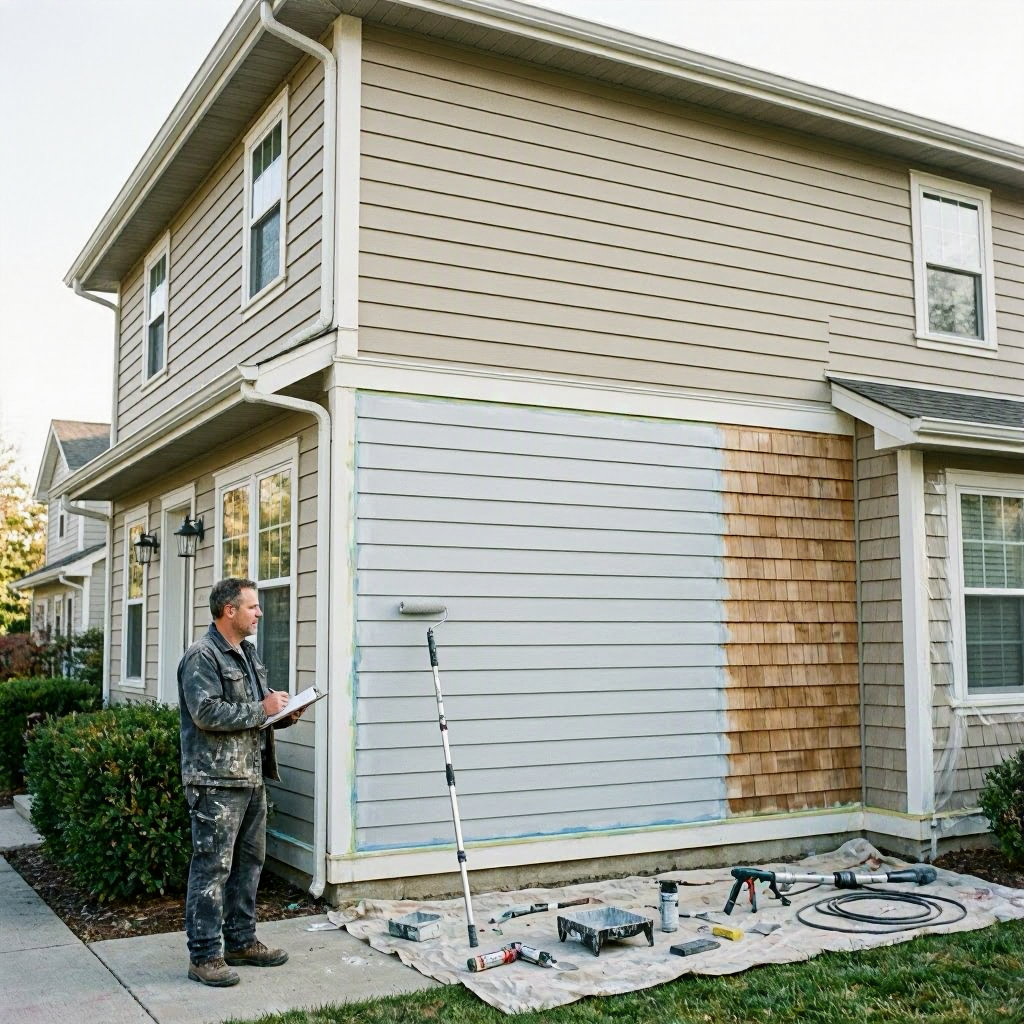
Exterior house painting cost: siding type, prep, and labor
---
Why Exterior House Painting Costs Vary So Much
Exterior house painting protects your home from weather, boosts curb appeal, and can increase resale value. But costs depend heavily on your home's siding type, the amount of preparation needed, and labor demands. These three factors often make up 80-90% of the total bill.
Location plays a big role too. In high-cost areas like California or New York, expect higher rates than in the Midwest or South. Home size, measured in square footage of exterior surface, is the starting point, but complexity quickly drives up prices.
Factors like your home's age, height, and condition add layers. A two-story colonial with wood siding needing extensive scraping will cost more than a single-story ranch with vinyl siding that's mostly clean. Always get multiple local quotes, as national averages mislead.
Siding Types and Their Impact on Painting Costs
Your siding material dictates prep work, paint compatibility, and labor time. Different surfaces hold paint differently and require specific approaches.
Wood Siding (Lap, Board-and-Batten, Shingle)
Wood siding, common on older homes, absorbs moisture and peels easily. Prep often takes 40-60% of the job time due to scraping loose paint, sanding, and repairing rot.
Painting wood needs high-quality exterior primer and two coats of paint for durability. Laborers use brushes and rollers for texture, slowing the process. Costs rise if lead-based paint is present, requiring certified abatement.
Vinyl Siding
Vinyl is low-maintenance and doesn't need painting often, but when faded, a fresh coat revives it. Prep is minimal: just washing off dirt and mildew. No priming required, keeping costs down.
Use 100% acrylic latex paint for flexibility. Spraying works well, speeding labor. However, poor access behind panels or overspray cleanup adds expense.
Brick, Stone, or Stucco
These porous surfaces rarely need full repaints. Instead, focus on sealing or light coating. Prep involves power washing and patching cracks, but paint doesn't adhere well without proper etching.
Labor is moderate, as sprayers cover large areas quickly. Costs jump for textured stucco needing thicker coats or if efflorescence (salt deposits) requires chemical treatment.
Fiber Cement (HardiePlank) and Metal Siding
Fiber cement resists rot but needs caulking around seams. Prep includes washing and priming bare spots. Metal siding, like aluminum, demands rust removal and rust-inhibiting primer.
These materials allow faster spraying, reducing labor hours. But specialty paints for metal prevent future corrosion, adding to material costs.
Other Surfaces (Masonry Block, EIFS)
Engineered systems like EIFS (stucco-like synthetic) require careful prep to avoid trapping moisture. Block needs filling joints. Costs vary widely based on condition.
| Siding Type | Typical Prep Needs | Labor Intensity | Main Cost Driver |
|---|---|---|---|
| Wood | Scraping, sanding, rot repair | High | Extensive surface work |
| Vinyl | Washing only | Low | Minimal changes needed |
| Brick/Stucco | Power washing, crack repair | Medium | Porosity and texture |
| Fiber Cement | Caulking, spot priming | Medium | Seam detailing |
| Metal | Rust removal | High | Corrosion protection |
This table highlights why wood homes often see the highest bills.
Prep Work: The Hidden Cost Multiplier
Prep work ensures paint adheres and lasts 5-10 years. Skipping it leads to peeling and callbacks. Expect prep to account for 30-50% of total costs on average homes.
Power Washing and Cleaning
First step: blast away dirt, mildew, pollen, and chalking paint. Professional washers use 2,000-4,000 PSI units to avoid damaging siding. Cost depends on home size and grime level.
In humid areas like Florida, mildew treatment with bleach solutions adds time. Neglect here means paint fails fast.
Scraping, Sanding, and Paint Removal
Loose or flaking paint must go. Hand scrapers, electric sanders, or chemical strippers handle this. On wood, this phase can take days for a 2,000 sq ft home.
Lead paint on pre-1978 homes requires EPA-certified pros, hiking costs 20-50%.
Repairs and Caulking
Fill cracks, replace rotted boards, and caulk seams. Wood rot from poor drainage needs carpenter work first. Stucco cracks signal water issues.
These fixes prevent future damage but inflate prep bills if extensive.
Priming Bare Spots
Exposed wood or metal gets stain-blocking primer. Oil-based for tough spots, latex for most. Proper priming cuts repainting needs by years.
| Prep Task | Why It Matters | Time Impact on 2,000 sq ft Home |
|---|---|---|
| Power Washing | Removes contaminants for adhesion | 1-2 days |
| Scraping/Sanding | Prevents peeling | 2-5 days |
| Repairs/Caulking | Seals against moisture | 1-3 days |
| Priming | Blocks stains, improves coverage | 1-2 days |
Prep tables like this show why quotes vary: inspect your home first.
Labor Costs: Crew, Access, and Timing
Labor dominates at 60-70% of the total. Pros charge $40-100 per hour per painter, but quotes use per square foot rates.
Crew Size and Painter Skill
Two-person teams handle small jobs; larger crews (4-6) speed big ones. Experienced painters finish 200-400 sq ft per day per person.
Apprentices cut costs, but insist on lead certification for safety.
Access and Height Challenges
Single-story homes are cheapest. Two-stories need scaffolding or lifts, adding $500-2,000. Steep roofs or overhangs slow work.
Urban homes with tight lots require containment for overspray.
Seasonal and Regional Factors
Paint in mild weather (50-85°F, low humidity). Spring/fall in most US areas. Winter in South, summer in North.
Contractor demand peaks post-storm, raising rates 20-30%. Rural areas have fewer pros, increasing travel fees.
Equipment and Disposal
Sprayers, ladders, drop cloths, and waste hauling add up. Eco-friendly disposal for lead paint complies with EPA rules.
Estimating Your Total Exterior Painting Cost
Combine siding, prep, and labor for a full picture. A typical 1,500-2,500 sq ft two-story home might see costs influenced as follows:
- Basic job (vinyl, light prep): Lower end, quicker turnaround.
- Complex job (wood, heavy prep): Double the time and materials.
Per square foot rates often quoted: $2-6 for sides only, $3-7 including trim. Add 20-30% for trim, soffits, doors.
Materials (paint, primer) run $0.50-1.50 per sq ft. Gallons cover 300-400 sq ft per coat. Premium paints with mildew resistance last longer.
Factors pushing costs higher:
- Home over two stories.
- Extensive repairs.
- Custom colors needing extra coats.
- Peak season scheduling.
Get 3-5 written quotes specifying these breakdowns. Vary by ZIP code due to wages and regs.
DIY Exterior Painting: When It Makes Sense
DIY saves 50%+ if you're handy and safe. Suitable for:
- Single-story, small homes (<1,500 sq ft).
- Good condition siding (vinyl or clean wood).
- Basic prep you can handle.
Rent equipment: Pressure washer ($50/day), sprayer ($75/day), scaffolding.
Steps: 1. Clean thoroughly. 2. Scrape/sand loose paint. 3. Prime spots. 4. Apply two coats with brush/roller/sprayer combo.
Buy quality paint from Home Depot or Sherwin-Williams. Safety first: Harness for heights, respirator for fumes.
Avoid DIY if:
- Heights scare you.
- Lead paint suspected.
- Extensive repairs needed.
- Siding is brick/stucco.
Poor work costs more to fix professionally.
Hiring a Pro: Questions and Checklist
Professionals ensure even coverage and warranties (1-5 years typical). Look for licensed, insured painters via Angi or local boards.
Before signing:
- Is prep detailed in the quote?
- What paint brand/quality?
- Crew experience and certifications?
- Timeline and weather contingencies?
- Payment terms (30% down, balance on completion)?
- Warranty covers labor and fading?
- Subcontractors used?
Compare line-item bids:
- Sq ft rate.
- Prep hours.
- Materials list.
- Cleanup/disposal.
Watch for:
- Vague "allowances".
- Full upfront payment.
- No insurance proof.
For financing, check HUD's home improvement loans like Title I or 203(k) rehab mortgages: HUD home improvements or HUD 203(k).
Ways to Trim Your Painting Expenses
- Handle basic prep: Power wash yourself, saving $500-1,000.
- Choose mid-tier paints: Balance quality and cost.
- Off-season scheduling: 10-20% discounts.
- Bundle jobs: Paint plus minor repairs.
- Light colors: Hide imperfections, fewer coats.
Improve access: Trim bushes, clear decks.
For renters: Contact landlord first; exteriors are usually their duty per most leases.
HOA members: Check rules on colors, pros.
Permits, Inspections, and Insurance Notes
Permits rarely needed for repainting unless structural changes or historic districts. Check local building department.
Homeowners insurance covers storm-damaged paint but not wear/tear. Document pre-existing issues with photos.
Home warranties may cover peeling from defects; review policy.
Keep records: Quotes, invoices, before/after photos for claims or resale.
Long-Term Maintenance to Avoid Repaints
Fresh paint lasts 7-15 years with care:
- Annual hose-down.
- Gutter cleaning to divert water.
- Trim vegetation.
- Spot-treat mildew.
Inspect yearly for cracks or peeling. Early fixes save thousands.
Regular upkeep on wood siding extends intervals most.
This guide arms you to budget wisely, spot fair quotes, and protect your investment. Consult local pros for your home's specifics. ---

About the TDL Expert Panel
TDL Expert Panel · TheDigitalLife Editorial Team
TDL Expert Panel is the editorial team behind TheDigitalLife. The team researches, reviews, and creates practical guides to help everyday readers make better decisions about home repair costs, refunds, AI tools, digital safety, productivity, and useful online resources. Each guide is written to be clear, useful, and easy to understand.