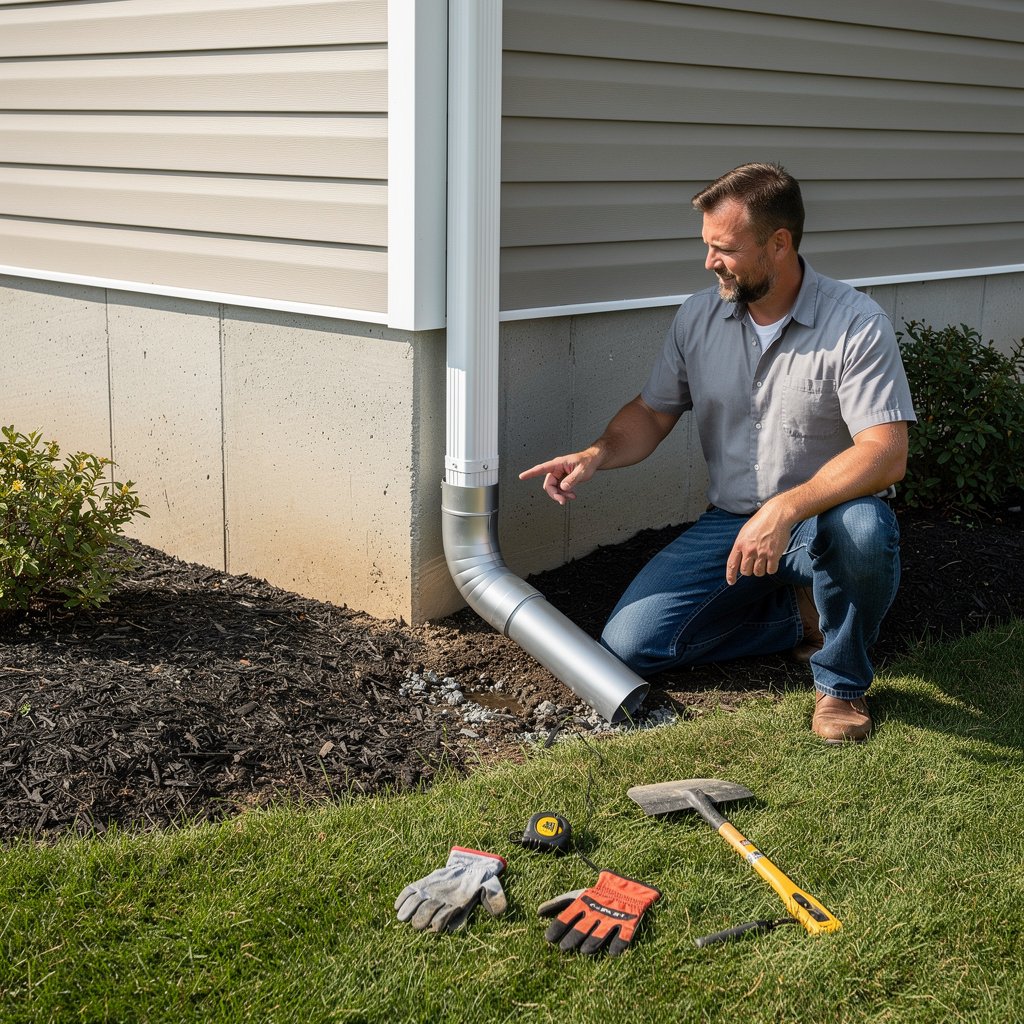
Downspout Extension Cost
A downspout that dumps water too close to your house can lead to serious problems. You might notice pooling water near the foundation, dampness in the basement, or soil being washed away from your landscaping. While it seems like a small issue, addressing it correctly involves understanding costs, choosing the right professional, and ensuring the work is done properly to protect your home.
This guide helps you plan for the expense of extending a downspout. We’ll provide clear price ranges, explain what factors change the cost, and outline the steps for getting a reliable quote. You’ll also learn who to contact first, how to handle warranty or insurance claims, and what state-specific checks to perform before hiring anyone.
Downspout extension costs depend heavily on the solution needed. For a simple above-ground extension, plan for $50 to $300. More complex routing or buried drainage can range from $300 to over $3,000. Labor costs vary widely; a handyman may handle a basic job, but buried pipes and grading require a landscaper or gutter specialist and cost significantly more.
| Item | Detail |
|---|---|
| Typical Cost | $50-$300 for simple extensions; $300-$1,500+ for routing; buried work can exceed $3,000. |
| DIY Cost | $10-$50 for a basic splash block or extension kit. |
| Pro Service Cost | Varies; labor is higher for buried lines and grading. |
| Best First Contact | A licensed local gutter installer or roofer. |
| Main Safety Warning | Call 811 before any digging for buried pipe work. |
| Warranty Proof Needed | Receipts, contracts, warranty documents, and dated photos. |
| Call a Licensed Pro | For active leaks, structural concerns, high-access work, or complex buried drainage. |
Who to Call First: A local, licensed gutter installer
- Who to Call First: A local, licensed gutter installer or roofer is best for an accurate assessment.
- What Will It Cost? A simple fix is $50-$300, but routing water away properly can cost $300 to over $3,000.
- What Proof is Needed for a Warranty? Collect dated photos, receipts, installation contracts, and warranty paperwork.
- Which Office Should I Check? Contact your city/county building department and your state's contractor license board.
- What Are the Warning Signs? Beware of cash-only demands, full payment upfront, or contractors who pressure you to sign quickly after a storm.
- When to Avoid DIY: Avoid DIY for roof-level access, electrical hazards, suspected structural damage, or complex buried systems.
| Field | Detail |
|---|---|
| Main Customer Problem | Water dumping near foundation causing seepage, erosion, or mulch washout. |
| Best First Contact | Local gutter installer / roofer for measurement, slope, and code questions. |
| Estimated Cost Range | $50-$300 for simple above-ground; $300-$1,500+ for routing; buried: $500-$3,000+. |
| Labor Charges | Handyman/gutter pro/landscaper rates vary; buried pipe and grading cost more. |
| Official Brand Contacts | LeafFilter: 1-800-290-6106; LeafGuard: 1-800-LEAFGUARD (532-3482). |
| Retailer Contacts | Home Depot: 1-800-HOME-DEPOT; Lowe's: 1-800-44LOWES. |
| Warranty Documents | Invoices, receipts, warranty docs, contract, permits, and prior maintenance records. |
| State Agency to Check | CSLB in CA; DBPR in FL; city building dept. in TX; DOB in NYC. |
| Safety Warning | Call 811 before digging. Active leaks or structural issues require immediate professional attention. |
The price to extend a downspout isn't fixed. It depends on the method used to solve your water problem. Use the following breakdown to understand what you might pay and why.
Average Cost: Plan for $50-$300 for a simple fix, but complex drainage routing can cost $300-$1,500+. Buried systems often exceed $3,000.
Here is a more detailed look at common line items and their costs:
Additional reference details:
- Line Item: Plastic splash block / basic extension , Typical Planning Range / Note: $10-$50 (DIY material cost)
- Line Item: Professional-added above-ground extension , Typical Planning Range / Note: $75-$300
- Line Item: Buried drain line , Typical Planning Range / Note: $500-$3,000+
- Line Item: Pop-up emitter , Typical Planning Range / Note: $50-$250 plus labor
- Line Item: Grading / drainage correction , Typical Planning Range / Note: $500-$5,000+
The final quote will be affected by your location, the difficulty of access to the downspout, the materials chosen, and whether any hidden damage is found after work begins. Emergency timing, disposal fees, and permit requirements also add to the cost.
Labor is a major variable. A handyman might install a snap-on extension, but buried pipe and grading work cost more and are typically done by gutter professionals or landscapers. Always ask for labor to be separated from material costs in your quote.
Low quotes can be tempting but may be missing critical items like permits, disposal, warranty registration, or allowances for hidden damage. High quotes can be reasonable for multi-story homes, difficult access, premium materials, or when they include comprehensive warranties and permit handling.
Tackling a downspout extension yourself can save money, but it's not always the right or safe choice.
DIY may be safe only if you are comfortable on a ladder, the work is at ground level, and you are simply adding a pre-made extension or splash block. The material cost for this is typically $10 to $50. You'll need basic tools like a hacksaw, drill, screws, and possibly PVC cement.
However, calling a licensed professional is strongly advised in several situations:
- The downspout is on a second story or requires unsafe roof access.
- You suspect the issue is related to clogged gutters, fascia rot, or incorrect slope that needs diagnosis.
- The solution involves digging and burying drainage pipe (always call 811 first).
- There is an active leak causing interior damage or posing an electrical hazard.
- The work might affect your home's warranty or a manufacturer's product warranty.
DIY work on complex systems often voids warranties and can lead to improper installation that worsens drainage problems. For any job involving excavation, structural concerns, or high ladders, the safety risks and potential for costly mistakes make hiring a pro the smarter choice.
Your first call should match the scope of your problem. For most homeowners, the best starting point is a local gutter installer or roofer. They can assess the slope of your gutters, check for hidden rot in the fascia, handle multi-story access safely, and answer local code and permit questions.
If your issue stems from a recently installed product or system, contact the installing contractor, manufacturer, or retailer directly. For general questions about services from large retailers, you can contact their customer service lines.
Having the right contact information can streamline getting help or filing a claim.
- Home Depot: Customer questions: 1-800-HOME-DEPOT (1-800-466-3337). Also lists 1-800-430-3376 and text support 38698.
- Lowe's: Customer service: 1-800-44LOWES (1-800-445-6937). Protection plan/repair: 1-888-775-6937.
- LeafFilter / Leaf Home: Sales/General: 1-800-290-6106. Service: 800-749-4566. Email: support@leaffilter.com for service issues.
- LeafGuard: Free estimate/questions: 1-800-LEAFGUARD (800-532-3482). Service and support: 888-460-6898.
- ABC Supply: Material supplier for contractors: myABCSupply support 1-800-226-1280.
Call a Pro If: You notice an active leak, a bowing wall, major structural movement, or unsafe roof access. These are emergencies.
For local professionals, always search by trade and license type, not just company name. Verify their license, insurance, and get recent local references.
If your downspout problem is due to a product defect or faulty installation, follow these steps to file a claim:
- Document Everything Immediately. Take date-stamped photos and video before anything is disturbed. Get wide shots and close-ups of the damage.
- Gather Your Paperwork. Collect all related documents: original invoices, product receipts, warranty documents, the installation contract, permits, and any prior maintenance records.
- Contact the Correct Party.
- - For product defects, contact the manufacturer or retailer listed on your paperwork.
- - For workmanship problems, notify the installing contractor in writing and request a written plan to fix it.
- - For storm or sudden damage, call your homeowners insurance carrier before making permanent repairs, if it is safe to wait.
- Follow Official Procedures. Ask for the official claim form and understand the required proof, which may include photos, physical samples, or specific proof-of-purchase.
- Escalate if Necessary. For unsafe work, permit issues, or suspected unlicensed contracting, contact your local building department and state contractor board.
For gutter guard brands, ask specifically what their warranty covers-clogs, cleaning labor, reinstallation after roof work, and storm damage. Keep your original contract.
State-Specific or Local Checks
Rules vary significantly by location. Before hiring anyone, use this checklist and verify with your local authorities.
Additional reference details:
- State / Area: California , What the Homeowner Should Check: Use the CSLB to verify a C-39 roofing contractor or appropriate license. Be aware of strict deposit rules.
- State / Area: Florida , What the Homeowner Should Check: Use the DBPR to verify roofing/building contractors. After storms, be cautious with assignment-of-benefits paperwork.
- State / Area: Texas , What the Homeowner Should Check: Licensing varies by city. Confirm permits with your city and verify contractor insurance, especially for storm work.
- State / Area: New York / NYC , What the Homeowner Should Check: Exterior work may require DOB permits. In NYC, use DOB NOW and confirm credentials for scaffold/roof work.
- State / Area: Illinois / Snow States , What the Homeowner Should Check: Ask contractors about ice-dam prevention, ventilation, and local roofing registration rules.
Structural work, drainage excavation, and foundation repair may require permits even if a contractor says they don't. It's your responsibility to check.
Before you approve any work or make a payment, ask the contractor these key questions:
- Can you provide a written, line-item quote that separates labor, materials, permits, and disposal?
- What is your license number, and can I see proof of insurance and workers' compensation?
- Who is responsible for obtaining and paying for permits?
- What is your workmanship warranty, and what does the product warranty cover?
- How will you handle change orders and pricing if hidden damage is found?
- Can you provide photos of any hidden rot or damage before performing additional work?
- What is the payment schedule? (Avoid full payment upfront).
Be alert for these warning signs when dealing with contractors:
- Storm chaser pressure: Being told you must sign a contract immediately or hand over an insurance check.
- Vague scope: A quote that doesn't list linear feet, material brands, removal/disposal methods, or warranty terms.
- Cash-only or full payment upfront before any work has begun.
- No proof of license, insurance, workers' comp, or permit responsibility.
- Refusal to photograph hidden damage before charging for change orders.
Practical Step-by-Step Guidance
Follow this sequence to address your downspout issue effectively and avoid costly mistakes:
- Assess the Problem. Identify where water is pooling and any visible damage. Check if gutters are clogged.
- Research and Contact. Decide if a DIY splash block might suffice or if you need a pro. Contact 2-3 local, licensed gutter installers for quotes.
- Verify and Check. Use your state's online license lookup and call your city/county building department to check permit needs and the contractor's standing.
- Get a Detailed Quote. Request a written, line-item quote from each pro. Compare scopes, warranties, and total costs.
- Prepare for Work. If digging is involved, call 811 at least a few days before the job starts to have utilities marked.
- Manage the Job. Require photos of any hidden damage found. Pay by traceable method (not cash) according to a schedule, withholding final payment until after cleanup and you have all warranty documents.
- Keep Records. File all contracts, receipts, warranties, and before/after photos together for future reference.
Warranty Documents Needed: Always keep your original installation contract, product receipts, and warranty paperwork in a safe place.
Frequently Asked Questions
Should I get more than one quote? Yes. For any non-emergency job over $1,000, or any job involving structural work or an insurance claim, get at least two or three written quotes with the same scope and assumptions.
Can insurance cover this? Insurance is most relevant for sudden and accidental damage like that from a storm, hail, or a falling tree. Normal wear, poor maintenance, and gradual seepage are typically excluded. Always call your insurer before non-emergency repairs if you think a claim might apply.
What should be in the written quote? It must include: scope of work, materials (brand/type), labor, permit responsibility, disposal method, warranty details, timeline, exclusions, how hidden-damage changes will be priced, payment schedule, and cleanup.
Can I DIY this? Small maintenance and adding a basic extension can be DIY for skilled homeowners. However, work involving roofs, high ladders, structural water damage, or buried pipes carries significant safety risks and can void product warranties.
When is it an emergency? Treat it as an emergency if there is active water entering your home, sagging structures, an electrical hazard, unsafe roof access, or rapidly worsening damage. In these cases, contact a qualified professional immediately.
Should I pay the full amount upfront? No. A reasonable deposit may be normal, but paying in full before work starts is a major red flag. Use a traceable payment method and know your state's rules regarding contractor deposits.
This article was prepared using information from the following sources for verification:
- HomeAdvisor Gutter Services & Repair Costs
- Angi Gutter Replacement Cost Guide
- LeafFilter, Leaf Home, and LeafGuard Contact & Warranty Pages
- ABC Supply Gutter Products and Contractor Center
- Home Depot and Lowe's Corporate Contact Pages
- Call 811 Official Website
- California CSLB, Florida DBPR License Verification Sites
Please note: Prices, phone numbers, warranty rules, and local codes change. Always verify costs with local professionals, confirm contact details with official brand websites, and check permit requirements with your local building department before starting any project.
This guide is for general planning and informational purposes only. It does not guarantee prices, insurance coverage, warranty approval, or legal outcomes. For structural, electrical, roofing, insurance, or safety questions, always consult licensed local professionals and official agencies. Your due diligence in hiring qualified help and verifying local rules is the best way to protect your home and your investment.

About the TDL Expert Panel
TDL Expert Panel · TheDigitalLife Editorial Team
TDL Expert Panel is the editorial team behind TheDigitalLife. The team researches, reviews, and creates practical guides to help everyday readers make better decisions about home repair costs, refunds, AI tools, digital safety, productivity, and useful online resources. Each guide is written to be clear, useful, and easy to understand.