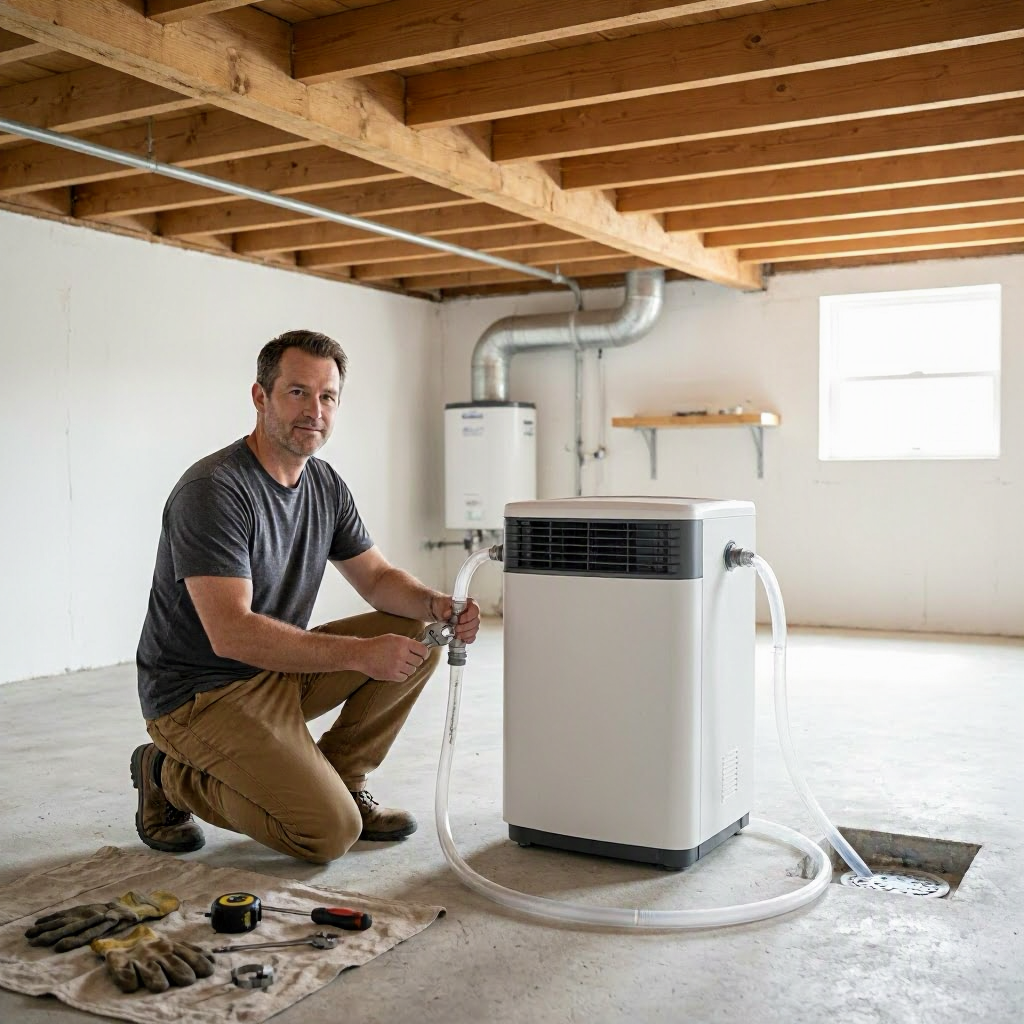
Dehumidifier Installation Cost for Basements
A damp basement is a common headache for homeowners, but tackling it doesn't have to be confusing. Installing a dehumidifier is a smart first step for controlling humidity, but the costs and steps can vary widely. This guide gives you the practical price ranges, who to hire, and what to ask so you can make a confident decision and protect your investment.
Before you call, it’s crucial to know the difference between moisture in the air and actual water intrusion. A dehumidifier removes humidity, but if you have standing water, foundation cracks, or persistent seepage, you likely need a waterproofing contractor first. This article will help you navigate that choice and understand the full scope of a professional dehumidifier installation.
The cost to install a dehumidifier in your basement depends heavily on the type of system. A portable unit you buy and plug in typically costs $150 to $500+ for the device alone. For a professional installation of a ducted whole-house dehumidifier integrated with your HVAC system, expect a national range of $1,300 to $2,800. Major projects involving crawlspace encapsulation or extensive drainage can range from $1,500 to $14,000.
Your final quote will be higher in dense metropolitan areas, for older homes, during extreme weather, or if the job requires electrical work, permits, or code upgrades. Always get a written quote that breaks down diagnostic fees, parts, labor, and any surcharges.
Additional reference details:
- Item: Typical cost , Detail: Portable: $150–$500+. Whole-house installed: $1,300–$2,800.
- Item: DIY cost , Detail: Device cost only for portable units.
- Item: Pro service cost , Detail: Includes unit, labor, electrical/drain work, and potential permits.
- Item: Best first contact , Detail: Local licensed HVAC contractor. Waterproofing contractor for water intrusion.
- Item: Main safety warning , Detail: Call utility or 911 for gas smell, CO, fire, or electrical hazard first.
- Item: Warranty proof needed , Detail: Model & serial numbers, install date, installer name, registration proof, invoices.
- Item: When to call a pro , Detail: For refrigerant, electrical, ductwork, furnace safety, or major installations.
Who to call first: A local licensed HVAC contractor is
- Who to call first: A local licensed HVAC contractor is your best first call for most dehumidifier installations and diagnostics.
- What will it cost: National averages are $1,300–$2,800 for a whole-house system, but your price depends on your home and location.
- What proof for warranty: Keep the equipment's model/serial number, installation paperwork, and all invoices.
- Which office to check: Verify your contractor's license with your state's licensing board (e.g., CSLB in CA, TDLR in TX).
- Warning signs: Verbal-only quotes, pressure to replace the whole system, or a refusal to provide license details.
- When to avoid DIY: Any work involving refrigerant, electrical circuits, furnace gas lines, or complex ductwork.
| Main Question | Best Contact / Detail |
|---|---|
| General diagnostics/installation | Local licensed HVAC contractor. |
| Warranty work or major OEM parts | Brand-authorized dealer or original installer. |
| If purchased via retailer program | Contact Home Depot or Lowe's installation support. |
| Gas smell, CO, fire, electrical hazard | Utility company or 911 before a repair company. |
| Estimated Cost Ranges | |
| Portable basement unit | $150–$500+ (device-only). |
| Ducted whole-house dehumidifier | $1,300–$2,800 (installed). |
| Condensate pump/drain work | $150–$500+. |
| Electrical outlet/circuit | $100–$500+. |
| Crawlspace encapsulation combo | $1,500–$14,000. |
| Official Brand Contacts | |
| Carrier Residential | 1-800-CARRIER (1-800-227-7437). |
| Trane Residential | 1-800-945-5884. |
| Lennox Residential | 1-800-953-6669. |
| Goodman / Daikin | 1-877-254-4729. |
| Retailer Contacts | |
| Home Depot Customer Service | 1-800-HOME-DEPOT (1-800-466-3337). |
| Lowe’s Customer Care | 1-800-44LOWES (1-800-445-6937). |
| Warranty Documents Needed | Model & serial numbers, install date, installer name, registration proof, all invoices. |
| State Agency to Check (Example) | California: CSLB at cslb.ca.gov. |
| Critical Safety Warning | For gas smell, suspected carbon monoxide, smoke, fire, or electrical hazard, call your utility or 911 immediately. |
Understanding the cost breakdown is key to evaluating any quote you receive. These are national planning ranges, not guaranteed prices. The final cost for the same job can be higher in expensive cities, for older homes, during heat waves, for after-hours calls, or when work involves attics, crawlspaces, permits, or code upgrades.
Common Cost Breakdown:
- Portable Unit: $150–$500+. This is typically a device-only cost you can handle yourself.
- Ducted Whole-House Dehumidifier: $1,300–$2,800. This installed cost includes the unit, labor, and integration with your existing HVAC ductwork.
- Condensate Pump or Drain Work: $150–$500+. This is often needed to properly remove the collected water.
- Electrical Outlet or Circuit: $100–$500+. Installing a new dedicated circuit or outlet for the unit adds to the cost.
- Crawlspace Encapsulation Combo: $1,500–$14,000. This wide range covers full moisture control systems that include vapor barriers, drainage, and dehumidification.
Average Cost: A professionally installed whole-house dehumidifier typically costs between $1,300 and $2,800.
A proper quote should separate every charge: diagnostic fee, part cost, labor, refrigerant (if needed), permit fees, and any emergency surcharge. If refrigerant is involved, ask if the technician has EPA Section 608 certification and if the leak source has been located.
Knowing what you can safely handle yourself and when to call a professional protects your home, your wallet, and your safety.
When DIY May Be Safe:
- Purchasing and setting up a portable dehumidifier.
- Changing air filters and checking/cleaning around outdoor HVAC units.
- Replacing thermostat batteries and checking circuit breakers.
- General cleaning to ensure good airflow.
When to Call a Licensed Professional:
- Installing any permanently wired or ducted system.
- Any work involving refrigerant, compressors, or sealed HVAC systems.
- Electrical work for new circuits or outlets.
- Gas furnace safety checks or any combustion-related work.
- Diagnosing complex moisture issues or integrating systems with existing ductwork.
Call a Pro If: The job involves refrigerant, electrical wiring, or gas lines. These require specific licenses and certifications for safety.
Choosing DIY for complex jobs can void manufacturer warranties and create serious safety hazards, including electrical shock or fire risk. For anything beyond basic maintenance, hiring a licensed pro is the wisest choice.
Your first call depends on your specific situation. Making the right contact saves time and gets you to the correct solution faster.
- Local Licensed HVAC Contractor: This is your best first call for most situations. They handle diagnostics, emergency service, refrigerant work, furnace safety checks, ductwork, and dehumidifier installation.
- Brand-Authorized Dealer: If your equipment is under warranty or needs a major OEM part (like a compressor or control board), start with an authorized dealer or the original installer.
- Retailer/Installer Program: If you purchased the equipment or installation through a big-box store program, contact Home Depot or Lowe’s installation support directly with your order number.
- Waterproofing Contractor: If you have actual water intrusion-standing water, seepage, or foundation cracks-contact a waterproofing specialist. A dehumidifier alone won't solve these problems.
- Utility Company or 911: For a gas smell, suspected carbon monoxide, smoke, fire, or electrical hazard, call these services before you call any repair company.
Always use official websites and phone numbers to verify information. Avoid numbers from search ads or random directories until you confirm the company is legitimate.
| Company / Agency | Purpose | Official Phone | Official Website |
|---|---|---|---|
| Carrier Residential | Warranty lookup / dealer support | 1-800-CARRIER (1-800-227-7437) | carrier.com |
| Trane Residential | Consumer relations | 1-800-945-5884 | shop.trane.com |
| Lennox Residential | Consumer support | 1-800-953-6669 | lennox.com |
| Goodman / Daikin | Homeowner / warranty support | 1-877-254-4729 | goodmanmfg.com |
| Home Depot | Customer service | 1-800-HOME-DEPOT | corporate.homedepot.com |
| Lowe’s | Customer care | 1-800-44LOWES | corporate.lowes.com |
Following these steps helps ensure a smooth warranty process and protects your rights as a consumer.
- Gather Your Documents: Locate the equipment's data plate and write down the model number, serial number, installation date, and installer's name. Keep all invoices, diagnostic sheets, photos, and communication.
- Check Registration: Verify if the equipment was registered within the manufacturer's warranty window. Many warranties are contingent on timely registration by the original owner.
- Ask Specific Questions: Ask the contractor, in writing, if the failed part is covered by the manufacturer's parts warranty. Also ask what is not covered-labor, refrigerant, diagnostic fees, and surcharges often are not.
- Contact the Correct Party: For warranty work, contact a brand-authorized dealer. If you used a retailer installation program, contact Home Depot or Lowe’s installation support with your order number.
- Get Everything in Writing: If a contractor refuses to provide written documentation for a major repair, get a second opinion. Never proceed on a verbal agreement alone.
Warranty Documents Needed: Always keep the model number, serial number, proof of installation date, and all invoices.
State-Specific or Local Checks
HVAC licensing and permit rules vary by state and city. Before approving major work, verify your contractor's license and ask if a permit is required.
Additional reference details:
- State / Area: California , What to Check: Check CSLB contractor license for HVAC, electrical, or ductwork. , Official Place to Start: cslb.ca.gov
- State / Area: Texas , What to Check: Verify ACR license status with TDLR. , Official Place to Start: tdlr.texas.gov
- State / Area: Florida , What to Check: Use DBPR license search for HVAC contractors. , Official Place to Start: myfloridalicense.com
- State / Area: New Jersey , What to Check: Verify license with NJ Consumer Affairs HVACR Board. , Official Place to Start: njconsumeraffairs.gov
- State / Area: New York , What to Check: Licensing is often local; check NYC DOB or your city/county building department. , Official Place to Start: nyc.gov
Asking the right questions prevents surprises and ensures you're getting fair, safe service.
- What exact part failed, and what test proves it failed?
- Is the replacement part OEM, aftermarket, or rebuilt? What warranty applies to the part and labor?
- Is refrigerant involved? If yes, what type and how many pounds are needed?
- Are there other problems that could cause the new part to fail again?
- Is this repair reasonable for the age and condition of my system?
- Does the quote include haul-away, disposal, permit, inspection, taxes, and all fees?
- Can you provide your license number, proof of insurance, and a written scope of work?
Be cautious if you encounter any of these warning signs, which may indicate overcharging or unsafe practices.
- A technician recommends adding refrigerant without explaining where the leak is or if a leak search was done.
- The quote is verbal only, with no written model number, part name, warranty details, or labor description.
- The company pressures you to replace the entire system before showing you the failed component or explaining a critical safety issue.
- A contractor requests full payment up front for major work or refuses to provide license and insurance details.
- A technician offers to "top off" your refrigerant annually without finding and fixing the leak.
- A duct cleaner claims to be "EPA certified" for duct cleaning. The EPA does not certify duct-cleaning companies.
Do Not Ignore: A verbal-only quote or pressure to pay in full upfront for major work. Always get details in writing.
Practical Step-by-Step Guidance
Follow this action plan from diagnosis to completed installation or repair.
- Diagnose the Problem: Determine if you have high humidity (a dehumidifier fixes this) or active water intrusion (needs a waterproofing contractor).
- Research and Verify: Decide between a portable or whole-house system. Research licensed HVAC contractors in your area and verify their license with your state board.
- Get Written Quotes: Contact at least two contractors for whole-house installations. Ensure quotes are detailed and in writing, separating parts, labor, and all fees.
- Ask Your List of Questions: Use the "What to Ask" list above during consultations. For expensive quotes, ask for the repair-vs-replacement recommendation in writing.
- Verify and Hire: Check references, confirm insurance, and then hire your chosen contractor. Ensure you understand who will pull any required permits.
- Document Everything: During and after the job, keep all paperwork: contract, invoices, model/serial numbers, and warranty information.
- Follow Up: Schedule any recommended maintenance, like annual tune-ups, to avoid future problems.
Frequently Asked Questions
Should I call a brand dealer or any local HVAC company? For routine diagnostics and service, a licensed local HVAC company is often fine. For warranty work, major OEM parts, or newer systems, start with a brand-authorized dealer or the original installer.
Should I approve the repair immediately? For small, urgent repairs, yes, if the diagnosis is clear. For repairs above $800 to $1,000, check the warranty status and consider a second quote, unless it's a true emergency like no heat in winter.
Can I do this repair myself? Homeowners can safely handle filter changes, thermostat batteries, breaker checks, and cleaning around the outdoor unit. Refrigerant, compressor, furnace gas, and electrical repairs must be handled by licensed professionals.
What documents should I keep? Keep the invoice, part numbers, model/serial number, photos, the written warranty statement, the contractor's license number, and your payment receipt.
How do I avoid repeat repairs? Change filters regularly, keep coils and outdoor units clear of debris, schedule professional tune-ups, correct duct airflow problems, and insist on fixing refrigerant leaks instead of repeatedly adding refrigerant.
The information in this guide was compiled from industry sources and official agency websites for general planning. Prices and regulations change.
- Angi & HomeAdvisor Cost Guides
- EPA Section 608 Technician Certification: epa.gov
- ENERGY STAR HVAC Maintenance Checklist: energystar.gov
- Official brand websites and warranty pages (links provided in tables above).
- State licensing board websites (links provided in tables above).
Always re-check with licensed professionals, official brand support, and your state or local building department for the most current rules, prices, and requirements before starting any project.
This article provides general informational guidance for U.S. homeowners. It is not a substitute for legal, financial, safety, or professional engineering advice. Your specific cost, required permits, and best solution will depend on your home's condition and local codes.
For any situation involving a gas smell, suspected carbon monoxide, fire, electrical hazard, or immediate safety risk, contact your utility company or call 911 before calling a repair service. Always verify contractor licenses, warranty terms, and official contacts directly with the relevant authorities and companies.

About the TDL Expert Panel
TDL Expert Panel · TheDigitalLife Editorial Team
TDL Expert Panel is the editorial team behind TheDigitalLife. The team researches, reviews, and creates practical guides to help everyday readers make better decisions about home repair costs, refunds, AI tools, digital safety, productivity, and useful online resources. Each guide is written to be clear, useful, and easy to understand.