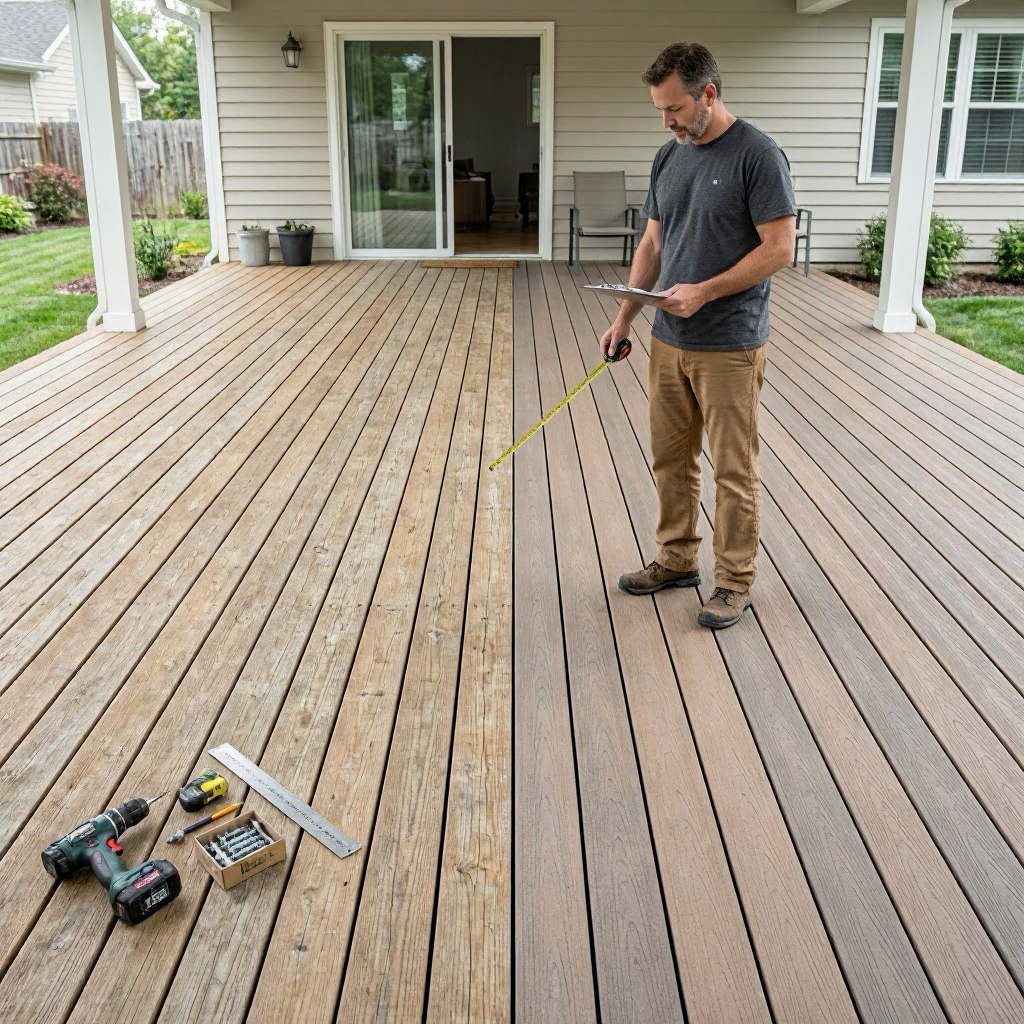
Deck replacement cost: wood vs composite materials
Understanding Deck Replacement Costs
Replacing an old or damaged deck restores your outdoor living space and boosts your home's value. In the United States, decks face heavy wear from weather, UV exposure, insects, and foot traffic. Wood decks often need replacement after 10 to 20 years, while composites last longer but cost more upfront.
Costs vary widely based on your location, deck size, design complexity, materials, labor rates, and local codes. A basic 200-square-foot deck might run $3,000 to $15,000 or more, but expect higher figures in coastal or urban areas like California or New York due to premium labor and regulations. Always get multiple written estimates from local contractors after an on-site inspection.
This guide compares wood and composite options, breaks down price drivers, and offers steps to avoid overpaying. Whether you're a homeowner in the Midwest or a condo owner in Florida, focus on your specific needs like size, height, and attachment to the house.
Signs Your Deck Needs Full Replacement
Not every issue requires a total tear-out. Inspect for these red flags that signal replacement over repairs:
- Widespread rot or decay: Soft, discolored boards over 20% of the surface, especially joists or posts.
- Structural instability: Bouncy or shifting under weight, indicating failed footings or beams.
- Code violations: Missing or rusted railings below 36 inches high (or 42 inches for elevated decks per IRC standards).
- Insect damage: Termite tunnels or carpenter bee holes compromising supports.
- Tripping hazards: Warped, splintered, or loose boards across multiple sections.
For elevated decks over 30 inches, replacement often involves permits and inspections. Homeowners insurance might cover sudden damage like storm impact but rarely wear and tear. Document issues with photos and notes before calling pros.
Renters should notify landlords immediately, as exterior structures typically fall under property maintenance responsibilities.
Key Factors Affecting Deck Replacement Costs
Several elements drive the final bill. Size is the biggest: costs are often quoted per square foot, including materials and labor.
Here's what influences pricing:
| Cost Factor | Why It Matters | Typical Impact |
|---|---|---|
| Deck size and shape | Larger or multi-level decks require more materials and framing. Irregular shapes add labor. | Adds $10-50+ per sq ft for complexity. |
| Location | Urban/coastal areas have higher labor ($50-150/hour) and material transport costs. | 20-50% premium in high-cost states like CA, NY. |
| Height and attachments | Elevated decks need stronger posts, footings, and ledger boards tied to the house. | 30-100% more for decks over 8 feet high. |
| Site prep and demo | Removing old deck, grading soil, or tree removal. | $1,000-5,000 flat fee for average demo. |
| Features | Railings, stairs, lighting, or built-in benches. | $20-100 per linear foot extra. |
| Permits/inspections | Required for structural work in most US jurisdictions. | $100-1,000 depending on locality. |
Labor typically accounts for 40-60% of the total, materials 30-50%. Urgency, like pre-summer installs, can bump rates 10-20%.
Wood Deck Replacement: Costs and Considerations
Pressure-treated wood, cedar, or redwood remains popular for its natural look and lower upfront cost. Southern yellow pine is common for framing, with cedar or redwood for visible surfaces.
Material Costs for Wood Decks
Wood is affordable but requires sealing and ongoing maintenance. Prices fluctuate with lumber markets.
- Pressure-treated lumber: Most budget-friendly, resists rot but needs staining every 1-2 years.
- Cedar or redwood: Naturally rot-resistant, softer underfoot, but pricier and shrinks over time.
- Exotic hardwoods like ipe: Ultra-durable but 3-5x the cost of treated pine.
A 12x16-foot (192 sq ft) ground-level wood deck might use 50-70 boards, plus joists and concrete footings. Factor in hardware like galvanized screws and post anchors.
Labor and Installation for Wood
Contractors handle framing, footing pours, and ledger flashing to prevent water intrusion. Expect 2-5 days for a standard deck.
Labor runs higher for raised designs needing concrete piers dug below frost line (varies by region, e.g., 36-48 inches in northern states).
Total wood deck costs often range from $15 to $35 per square foot installed, lower in rural South, higher in Northeast. This covers basic materials and labor but excludes extras.
Pros: Authentic wood grain, paintable/stainable, DIY-friendly for simple builds. Cons: Prone to splinters, warping, fading; annual maintenance or 10-15 year lifespan.
Composite Deck Replacement: Costs and Considerations
Composite materials blend wood fibers and recycled plastic (e.g., Trex, TimberTech). Capped composites add a protective polymer shell for better fade and stain resistance.
Material Costs for Composites
No live-edge milling needed; boards come pre-cut. Higher density means fewer supports sometimes.
- Standard composite: Wood-plastic mix, solid or hollow core.
- Capped composite: PVC outer layer, premium durability.
- PVC decking: All-plastic, lightest but hottest in sun.
For a 200 sq ft deck, expect 20-30% more material spend than wood due to premium pricing. Hidden fasteners add $2-5 per sq ft but improve appearance.
Labor and Installation for Composites
Easier cutting and lighter weight can shave labor time, but specialized tools may increase rates. Pros ensure proper gapping for expansion (unlike wood).
Composite decks typically cost $25 to $60 per square foot installed, with premiums for multi-width boards or hidden clips. Savings on maintenance offset initial outlay over 25-50 years.
Pros: Low-maintenance, splinter-free, 25+ year warranties, resists mold/insects. Cons: Higher upfront, can feel plastic-y, hotter surface temperatures.
Wood vs Composite: Side-by-Side Cost Comparison
Choosing depends on budget, maintenance tolerance, and aesthetics. Wood suits short-term or rustic vibes; composites excel for busy households.
| Aspect | Wood | Composite |
|---|---|---|
| Installed Cost per Sq Ft | $15-35 | $25-60 |
| Lifespan | 10-20 years | 25-50 years |
| Annual Maintenance | $200-500 (stain/seal) | Minimal ($50-100 cleaning) |
| Resale Value Boost | Moderate | Higher (modern appeal) |
| Eco-Factors | Renewable but chemical-treated | Recycled content, sustainable |
| Weight/Heat | Cooler, heavier | Lighter, retains heat |
Over 25 years, composites often cost less overall despite the premium. A 300 sq ft wood deck at $25/sq ft totals $7,500 plus $10,000 maintenance; composite at $40/sq ft is $12,000 with $2,000 upkeep.
Local climate matters: Composites shine in humid Southeast; wood may warp less in dry Southwest.
Additional Costs Beyond Materials and Labor
Budget 20-30% extra for these:
- Demolition and disposal: Old deck haul-away, $500-3,000. Eco-disposal for treated wood adds fees.
- Permits and inspections: Check your city building department; elevated or large decks (>200 sq ft) often need engineering stamps.
- Site work: Soil testing, grading, or utility relocation, $1,000+.
- Railings and stairs: Metal/glass railings $50-150/linear foot; stairs $25-50/step.
- Finishing touches: Lighting ($100-500), fans, or pergolas.
HOA rules may mandate specific materials or designs, adding review fees. For attached decks, flashing and house wrap upgrades prevent rot.
Getting Reliable Estimates from Contractors
Don't accept verbal quotes. Contact 3-5 licensed, insured deck builders via Angi, HomeAdvisor, or local referrals.
Questions to Ask Before Signing
- Is this a detailed, line-item written estimate including demo, permits, and cleanup?
- Are you licensed/bonded/insured? (Verify via state contractor board, e.g., CSLB in CA.)
- What warranties on labor (1-5 years typical) and materials?
- Will you pull permits and handle inspections?
- Payment schedule? (Never full upfront; 30% deposit max for big jobs.)
- Any subcontractors? Who handles warranties then?
Compare apples-to-apples: Reject vague "materials included" without specs. Note brands, thicknesses (e.g., 5/4x6 boards), and footage.
Red Flags in Estimates
- No site visit.
- Pressure to decide same-day.
- Huge markups on commodity lumber.
- Exclusions for common issues like rot inspection.
Keep all docs: contracts, change orders, receipts. Photos before/after aid insurance claims.
DIY Deck Replacement: When It's Realistic
Simple ground-level wood decks under 100 sq ft suit handy homeowners with tools (saw, drill, level). Composites work too but demand precise spacing.
Skip DIY if: Elevated, attached to house, or needing permits—codes require pro engineering often. Safety risks include falls, improper footings sinking, or ledger failures causing collapse.
Steps for basic DIY: 1. Check local codes/permits. 2. Demo safely (rent dumpster). 3. Dig footings below frost line. 4. Frame with treated lumber. 5. Install decking, seal edges.
Budget doubles for tool rentals/errors. Most opt pro for warranties and speed.
Ways to Lower Your Deck Replacement Bill
- Choose simpler designs: Rectangular over curved.
- Reuse elements: Salvage railings if sound.
- Off-season timing: Winter installs save 10-20%.
- Shop materials: Big-box stores or lumber yards; buy in bulk.
- Partial replacement: Re-deck surface only if framing solid ($10-20/sq ft savings).
- Financing: HUD Title I loans for home improvements (up to $25,000 unsecured) or 203(k) for rehabs. Check hud.gov for eligibility.
Tax credits rarely apply, but energy-efficient features might qualify.
Maintenance to Delay Future Replacements
Prevent costs with yearly checks:
- Sweep debris, hose monthly.
- Inspect/tighten fasteners biannually.
- Seal wood annually; clean composites with mild soap.
- Trim overhanging branches.
- Re-stain/reseal wood every 1-2 years.
For composites, avoid harsh chemicals to preserve warranty. Regular upkeep extends life 5-10 years.
Special Considerations for Renters, Condos, and HOAs
Renters: Lease likely assigns decks to landlords. Send dated photos/email: "Noted loose boards posing trip hazard."
Condo/HOA: Shared structures need board approval. Budget assessments may cover exteriors.
Mobile homes: Verify pier blocks; skirt integration adds complexity.
Insurance: File if sudden damage (e.g., fallen tree). Home warranties sometimes cover deck collapse but exclude wear.
Replacement enhances curb appeal, potentially recouping 50-70% via resale per realtor data. Weigh long-term value against budget for wood or composite.

About the TDL Expert Panel
TDL Expert Panel · TheDigitalLife Editorial Team
TDL Expert Panel is the editorial team behind TheDigitalLife. The team researches, reviews, and creates practical guides to help everyday readers make better decisions about home repair costs, refunds, AI tools, digital safety, productivity, and useful online resources. Each guide is written to be clear, useful, and easy to understand.