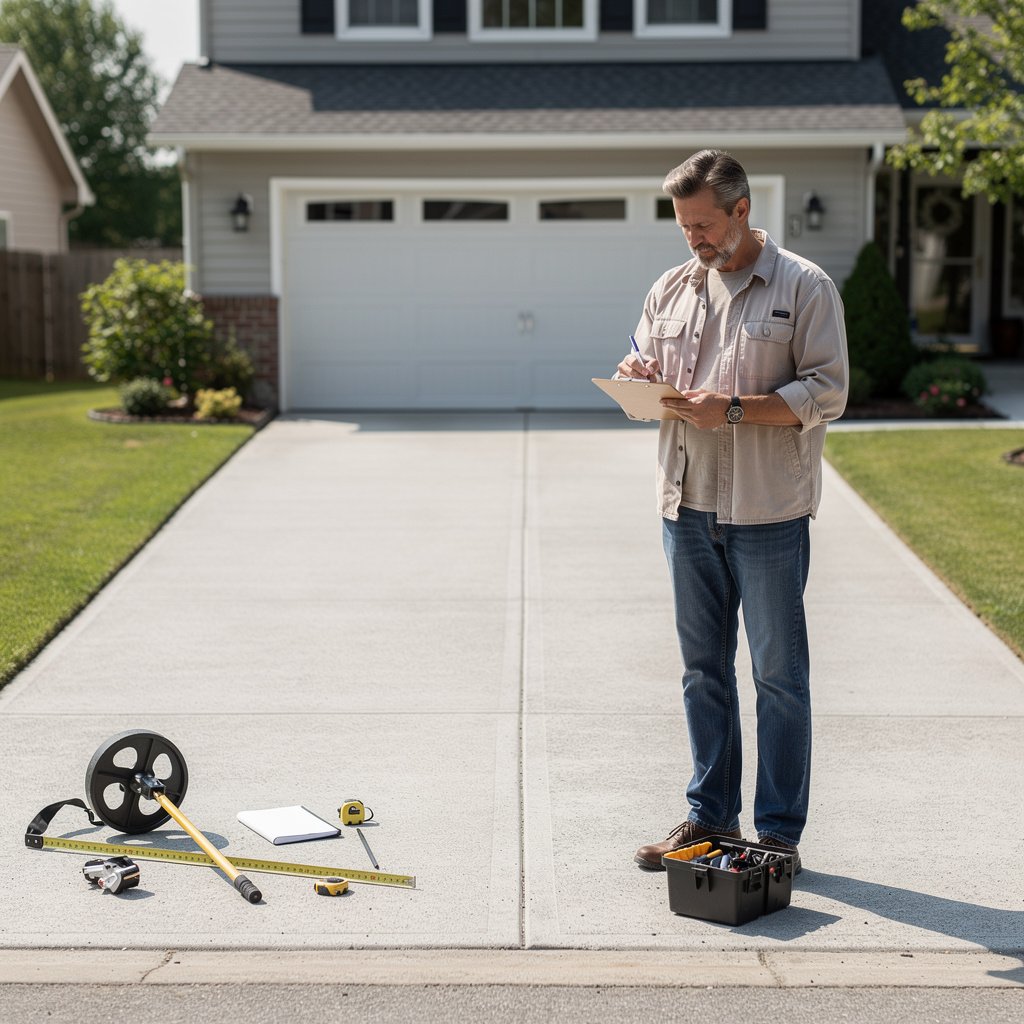
Concrete driveway replacement cost by square foot
Signs Your Concrete Driveway Needs Replacement
Concrete driveways typically last 20 to 40 years with proper care, but wear from vehicles, weather, and soil shifts can lead to cracks, heaving, or sinking. Homeowners often notice vertical cracks wider than 1/4 inch, horizontal cracks spanning the slab, or uneven surfaces that trip pedestrians or damage tires. These issues signal structural failure, where patching fails because water infiltrates cracks, freezes, and expands, worsening damage over freeze-thaw cycles common in northern states.
Replacement becomes necessary when repairs exceed 20-30% of a full replacement cost or when safety risks increase, like standing water creating ice hazards. For example, a Midwest homeowner might see heaving from expansive clay soil after heavy rains, while a coastal resident deals with salt corrosion from ocean air. Inspect your driveway annually: walk its length, note cracks with a tape measure, and take dated photos. If multiple slabs show alligator cracking or sinking more than 1-2 inches, plan for replacement rather than temporary fixes.
Renters should notify landlords immediately, as driveways are usually landlord responsibilities under most US leases. Homeowners in HOAs must check association rules, which often require approval for exterior changes.
Average Cost Per Square Foot for Concrete Driveway Replacement
Nationwide, concrete driveway replacement costs range from $6 to $15 per square foot for standard 4-inch thick slabs, but this varies widely by region, site conditions, and project scope. In urban areas like California or New York, expect the higher end due to labor shortages and disposal fees; rural Midwest or South might lean lower. These figures include demolition of old concrete, new pour, finishing, and basic sealing, but exclude extras like stamping or drainage work.
For a typical 600-square-foot two-car driveway (about 20x30 feet), total costs might fall between $3,600 and $9,000, though local factors push this up or down. Always get multiple written estimates from licensed contractors, as online calculators overlook site-specific issues like poor subgrade soil needing extra excavation. Costs have risen with inflation on cement and fuel, so recent quotes from your area provide the best gauge.
Detailed Cost Breakdown
Materials
Portland cement concrete mix dominates material expenses, at roughly 30-40% of the total. A basic 4,000 PSI mix suitable for residential driveways costs more in bulk deliveries. Reinforcement like rebar or wire mesh adds strength against cracking, especially in seismic zones.
Other materials include gravel base (4-6 inches for stability), sand bedding, expansion joints, and sealant. Thicker slabs (6 inches for heavy trucks) or decorative finishes like exposed aggregate raise material costs by 20-50%. Source gravel locally to cut trucking fees, and confirm mix specs match your soil type, expansive soils need sulfate-resistant cement.
Labor
Labor accounts for 40-60% of costs, involving 3-6 workers for demo, grading, forming, pouring, and curing over 3-7 days. Hourly rates vary: $50-100 per worker in low-cost areas, higher in cities. Demolition requires breaking up old slabs (often with jackhammers or excavators) and hauling debris, which spikes labor if access is tight.
Skilled finishers ensure smooth broom textures or stamping, preventing slippery surfaces. Rush jobs during peak seasons (spring-fall) add premiums. Ask contractors for crew size and timelines in estimates to compare efficiency.
Demolition and Disposal
Removing old concrete costs $2-5 per square foot, depending on thickness and reinforcements. Hauling to landfills incurs dump fees, higher in eco-regulated states like California. Some contractors recycle crushed concrete as base material, saving 10-20% here.
Additional Fees
Site prep like tree removal or grading adds $500-2,000. Permits run $50-500 via local building departments. Engineering reports for poor soil might cost $300-800.
Key Factors Influencing Driveway Replacement Costs
Several variables drive price differences beyond square footage. Here's a breakdown:
| Factor | Impact on Cost | Why It Matters |
|---|---|---|
| Driveway Size | Larger areas lower per sq ft cost due to economies of scale | A 400 sq ft single-car vs. 800 sq ft three-car changes pricing by 10-20% |
| Location | Urban/coastal 20-50% higher than rural | Labor, disposal, and access fees vary by city ordinances |
| Slab Thickness | 6-inch vs 4-inch adds $1-3/sq ft | Needed for RVs/trucks or freeze-thaw climates |
| Soil Conditions | Poor drainage or expansive clay requires $1,000-5,000 extra base work | Prevents future sinking/cracking |
| Design Features | Stamping, coloring, or curves add $2-8/sq ft | Aesthetic upgrades increase labor/materials |
| Accessibility | Sloped lots or gates limit equipment, +10-30% | Manual demo raises labor hours |
| Season/Timing | Winter delays or summer rushes add 10-25% | Weather affects curing; contractor availability fluctuates |
These factors explain why a simple Florida replacement might cost $7/sq ft while a Colorado mountainous one hits $14/sq ft. Measure your driveway (length x width, subtract non-concrete areas) and note obstacles before quoting.
Regional Cost Variations Across the US
Costs cluster by climate and economy. In the Sun Belt (Florida, Texas), milder weather keeps prices $6-10/sq ft, but hurricane-prone areas add reinforcement. Northeast/Midwest sees $8-14/sq ft from frost heaves requiring deeper bases. West Coast urban centers like Los Angeles push $10-18/sq ft with seismic rebar mandates and high disposal.
Mountain states factor in grading steep slopes, while Plains areas deal with expansive soils needing stabilization fabric. Use tools like the RSMeans cost database (via library access) for zip-code estimates, but prioritize local bids.
Permits, Inspections, and Code Requirements
Most municipalities require permits for driveway replacements over certain sizes or involving utilities. Contact your city or county building department, fees cover plan reviews ensuring setbacks from property lines (often 18-24 inches) and slopes under 15%. Inspections verify base compaction, rebar placement, and pour thickness.
In flood zones, elevation certificates might be needed. HOAs often mandate color/material matches. Skipping permits risks fines or forced redo; always confirm with pros who handle paperwork.
DIY Driveway Replacement: Feasibility and Risks
Full DIY replacement suits small repairs, not entire driveways. Renting a jackhammer ($100/day) and mixer is feasible for 200 sq ft slabs, but pouring requires helpers for even distribution. Costs drop to $4-8/sq ft on materials alone, saving labor.
However, DIY is unsafe for most homeowners due to heavy lifting (slabs weigh 400+ lbs/sq yard), precise grading (1/4 inch per 10 ft slope max), and curing (7-28 days no driving). Mistakes lead to cracking or drainage issues costing more later. Pros recommend DIY only for patching cracks under 1/2 inch with concrete caulk.
If attempting partial DIY, rent compaction tools and follow ACI guidelines. Otherwise, hire for liability protection, your homeowners insurance may void coverage for shoddy work.
Hiring a Professional: What to Expect
Licensed concrete contractors (check state boards like CSLB in California) manage the process: site visit, demo, form-setting, pour, and seal within a week. Expect warranties: 1-year on labor, 5-10 years on materials.
Timeline: 1 day demo/grade, 1 day pour/cure start, 3-7 days cure before light use, 28 days full strength.
Getting Accurate Estimates: Step-by-Step Guide
- Measure and document: Sketch layout, photo cracks/settling, note utilities (call 811 first).
- Research contractors: Use Angi, HomeAdvisor, or BBB for licensed locals with 10+ years experience. Get 3-5 bids.
- Site visits: Have pros assess soil, access, drainage.
- Review written estimates: Itemize demo ($/sq ft), materials (PSI mix), labor hours, permits, cleanup. No verbal quotes.
Sample questions:
- Is rebar/wire mesh included?
- What base thickness for my soil?
- Warranty details and who applies sealant?
- Payment terms (e.g., 30% down, balance post-cure)?
- Subcontractors used?
Compare apples-to-apples: reject vague "materials included" lines.
Checklist for Reviewing Driveway Replacement Estimates
Before signing:
- Scope match: Confirms size, thickness, finish.
- Exclusions listed: Drainage, landscaping repair.
- Timeline and weather contingencies.
- Change order process.
- Proof of insurance (general liability, workers comp).
Red flags: Full upfront payment, pressure tactics, no license.
Ways to Lower Replacement Costs
- Phase the project: Replace high-traffic areas first.
- Choose basic finishes: Skip stamping to save $3-5/sq ft.
- Improve drainage yourself: Add gutters/swales pre-demo.
- Recycle demo concrete as base fill.
- Shop seasons: Bid in winter for off-peak discounts.
- Financing options: HUD Title I loans for home improvements (hud.gov/helping-americans/home-improvements) or FHA 203(k) for rehabs (hud.gov/hud-partners/single-family-203k).
Bundle with walkway repairs for volume discounts. Avoid low bids ignoring soil prep, they lead to callbacks.
When Insurance or Warranties Apply
Homeowners insurance covers sudden perils like tree falls cracking slabs, but not gradual wear/cracks. File claims promptly with photos; deductibles often exceed small jobs. Home warranties (e.g., via Choice Home) may cover if driveway deemed "system," but exclusions abound, review policy.
Contractor warranties protect against defects; demand transfers if selling home. Keep receipts for tax deductions on improvements.
Long-Term Maintenance to Extend Driveway Life
Prevent repeats with:
- Annual sealing: Every 2-3 years, $0.20-0.50/sq ft.
- Crack sealing: Fill hairlines promptly.
- Snow/chemical care: Use sand over salt.
- Vehicle limits: No heavy loads on thin slabs.
- Drainage checks: Clear gutters, grade away from house.
These steps add 10-20 years life, costing far less than replacement.
Case Studies: Real Homeowner Scenarios
Scenario 1: Suburban Texas two-car driveway (600 sq ft). Cracks from tree roots; poor base. Quotes: $5,500 basic ($9.15/sq ft) vs. $8,200 stamped. Chose basic with root barrier, saved $2,000+ via off-season bid.
Scenario 2: Colorado foothill home (800 sq ft). Heaving from frost; sloped lot. Extra $3,000 grading/rebar pushed to $12/sq ft. Permit required engineering stamp.
Scenario 3: Florida condo owner. HOA approved plain gray; shared cost with neighbor halved bill.
These highlight pre-planning value.
Final Steps Before Starting
Gather utility locates (811), HOA nods, neighbor notices. Document everything: before photos, contracts, invoices. Post-project, test drainage and monitor settling first year.
By understanding cost drivers and vetting pros, you'll secure fair pricing and a durable driveway boosting curb appeal and safety. For personalized advice, consult local concrete associations or extension services.

About the TDL Expert Panel
TDL Expert Panel · TheDigitalLife Editorial Team
TDL Expert Panel is the editorial team behind TheDigitalLife. The team researches, reviews, and creates practical guides to help everyday readers make better decisions about home repair costs, refunds, AI tools, digital safety, productivity, and useful online resources. Each guide is written to be clear, useful, and easy to understand.