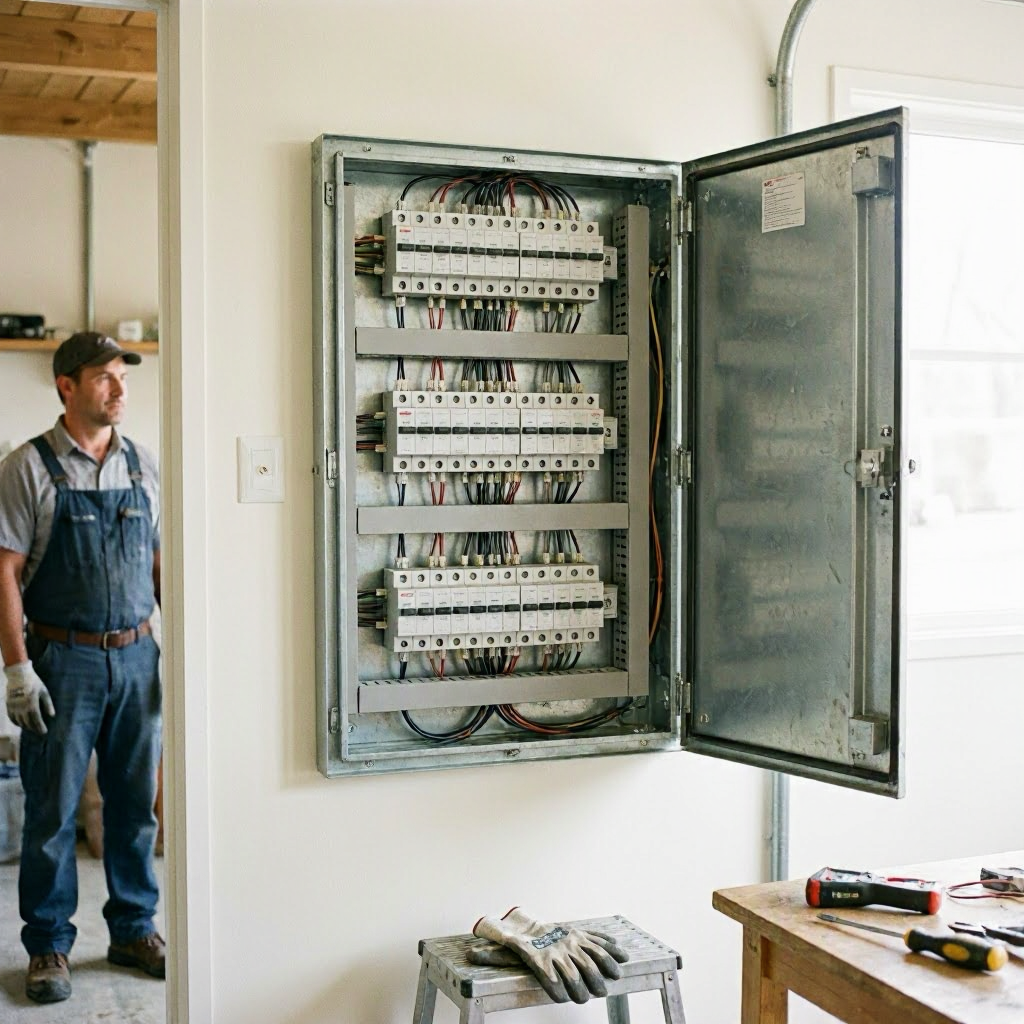
Circuit Breaker Replacement Cost
If you've noticed a breaker tripping repeatedly, smelled an odd burning odor near your electrical panel, or are planning an addition like an EV charger, you might be wondering about the cost to replace a circuit breaker. This article will help you understand the price drivers, from simple switch-outs to complex upgrades, and guide you through getting safe, code-compliant work done. We’ll break down what to expect in a quote, who to contact, and how to protect your investment with proper permits and warranty steps.
The cost to replace a standard circuit breaker typically ranges from $100 to $250 per breaker, including the service call and labor. Specialty breakers, like AFCI or GFCI models, can cost between $120 and $350+ each for the part alone. The final price depends heavily on your location, home's age, permit requirements, and whether the electrician finds hidden issues like outdated wiring.
Estimated Cost and Labor Breakdown - DIY vs
- Estimated Cost and Labor Breakdown
- DIY vs. Hiring a Licensed Electrician
- Who to Contact First
- Official Brand and Retailer Contacts
- Warranty and Refund Claim Steps
- State and Local Permit Checks
- Questions to Ask Before Approving Work
- Red Flags and Warning Signs
- Step-by-Step Hiring Guide
- Frequently Asked Questions
Additional reference details:
- Item: Typical Cost , Detail: $100 – $250 per standard breaker; $120 – $350+ for AFCI/GFCI.
- Item: Best First Contact , Detail: A licensed electrician for diagnosis, quote, and installation.
- Item: Main Safety Warning , Detail: If you smell burning, see sparks, or feel heat, stop using the circuit and call an electrician immediately.
- Item: Warranty Proof Needed , Detail: Invoice, permit, inspection record, product model/serial numbers, and before/after photos.
- Item: Permit Likelihood , Detail: High for panel/wiring changes; medium for basic replacements. Always verify with your local building department.
Who to call first: A licensed electrician is your prim
- Who to call first: A licensed electrician is your primary contact for diagnosis and safe installation.
- What it will cost: Expect a service-call minimum plus hourly labor, with final prices influenced by breaker type, home age, and local permit fees.
- Warranty documentation: Save the electrician’s invoice, the permit number, inspection approval, and all product receipts and serial numbers.
- State/local office to check: Contact your city or county building department for permits and your state’s electrical licensing board to verify a contractor’s license.
- Warning signs: Be wary of contractors who refuse to provide a license number, ask for full payment upfront, or claim permits are never needed.
- Avoid DIY: For safety and code compliance, most breaker replacement work should be handled by a licensed professional.
| Customer Question | Answer / Contact |
|---|---|
| Main Question | How much does circuit breaker replacement cost, and who should do it? |
| Best First Contact | Licensed electrician for diagnosis and installation. |
| Estimated Cost | $100 – $250 per standard breaker; $120 – $350+ for AFCI/GFCI/dual function. |
| Labor Charges | Often a service-call minimum plus hourly rate; larger jobs may be fixed-price. |
| Brand Support Contact | Use the panel label to find the manufacturer and contact their official support. |
| Retailer Contact | Home Depot, Lowe’s, or an electrical supply house for product receipts and returns. |
| Warranty Documents | Invoice, permit number, inspection record, product model/serial numbers, photos. |
| State/Local Agency | City/county building department (for permits); state licensing board (to verify electrician). |
| Safety Warning | Stop use and call an electrician for burning smells, sparks, heat, or repeated trips. |
| Official Brand Contacts | Square D: 888-778-2733; Eaton: 1-800-386-1911; Siemens: 1-800-347-6659; Leviton: 1-800-824-3005 option 4. |
Understanding the cost breakdown is key to evaluating quotes. Electricians typically price jobs based on a service-call fee plus hourly labor, though larger projects may have a fixed price. Always ask what is included.
Average Cost: For a standard breaker replacement, most homeowners pay between $100 and $250. This usually includes the service call, labor, and the breaker itself.
Here are the primary cost factors:
- Standard Breaker Replacement: $100
- $250 per breaker.
- AFCI/GFCI/Dual Function Breaker: $120
- $350+ each. These advanced safety devices have much higher parts costs.
- Troubleshooting Nuisance Trips: $100
- $400+. If the breaker itself isn't the problem, diagnostic time adds to the cost.
- Panel Compatibility Review: Usually included in the diagnostic fee. The breaker brand and type must match the panel's labeling.
Other factors that affect the final price include your local labor rates, permit fees, the ease of access to your electrical panel, and whether the job uncovers older wiring like knob-and-tube or aluminum that needs correction. Many quotes will separate costs for labor, permits, materials, and any required utility coordination.
DIY Is Usually Safe Only If: You are solely resetting a tripped breaker and confirm the circuit is not overloaded. Any physical replacement should be done by a pro.
Why Hire a Licensed Electrician?
- Safety: Working inside an electrical panel carries a high risk of shock, arc flash, or fire.
- Code Compliance: A licensed professional knows local electrical codes and will ensure the work passes inspection.
- Permits: They can legally pull the required permits and coordinate with your utility company if needed.
- Warranty: Professional installation preserves manufacturer warranties and provides a labor warranty for the work.
- Diagnosis: An electrician can correctly identify if a faulty breaker is the real issue or a symptom of a larger problem.
While some states allow homeowners to do limited electrical work on their own property, permits and inspections are often still required. For the safety of your home and family, hiring a licensed electrician for breaker replacement is strongly recommended.
Your first point of contact will vary depending on your specific need. Start with the most relevant party to avoid delays.
- For Diagnosis & Installation: A licensed electrician. They handle the quote, permit, code compliance, and installation. Always ask for their license number and proof of insurance.
- For Permit Questions: Your city or county building department (the Authority Having Jurisdiction, or AHJ). Ask if a permit and inspection are required before work starts.
- For License Verification: Your state’s electrical licensing board. Verify the contractor’s license before paying any deposit.
- For Utility Work: Your electric utility service department. This is required if the work involves the meter, service disconnect, or service entrance lines.
- For Product Support: The panel/breaker manufacturer (e.g., Square D, Eaton). Use the model and serial number from your panel’s label to confirm compatible parts or warranty coverage.
- For Returns/Receipts: The retailer (e.g., Home Depot, Lowe’s, an electrical supply house). They help with product returns and can route you to manufacturer warranty services.
Use only these official contacts for warranty claims, compatibility questions, or technical support.
Additional reference details:
- Brand / Source: Square D / Schneider Electric , Official Website: se.com , Official Contact: 888-SQUARED (888-778-2733) , Use For: Square D panels, QO/Homeline breakers, warranty support, compatibility docs.
- Brand / Source: Eaton / Cutler-Hammer , Official Website: eaton.com , Official Contact: 1-800-386-1911 or 1-877-386-2273 , Use For: BR/CH load centers, breakers, surge devices, warranty and technical support.
- Brand / Source: Siemens , Official Website: siemens.com , Official Contact: 1-800-347-6659 , Use For: Siemens load centers, breakers, meter/main and panel support.
- Brand / Source: Leviton Load Centers , Official Website: leviton.com , Official Contact: 1-800-824-3005 option 4 , Use For: Leviton smart/load center product support and warranty questions.
Keep organized records from the start to streamline any future warranty or complaint process.
- Gather Documentation. Save the electrician’s invoice, permit number, final inspection approval, product manuals, and clear before/after photos of the installation.
- Identify the Issue. Is it a workmanship problem or a defective product? Contact the installer first for labor/workmanship issues.
- Contact the Retailer. If the product was purchased through a store, use your receipt or order number to start a return or warranty claim.
- Contact the Manufacturer. For a defective device, provide the model number, serial number, purchase date, installer’s invoice, and photos to the brand’s official support (see table above).
- Do Not Mix Brands. Installing a breaker not listed for your panel can void warranties and create safety hazards. Always follow the panel label.
Warranty Documents Needed: Always keep the invoice, permit number, inspection record, and product model/serial numbers.
If a dispute arises about workmanship, contact the contractor and your state license board. For defective products, start with the retailer or manufacturer. If insurance is involved, ask your insurer what documentation they require before repairs begin.
State-Specific or Local Checks
Electrical rules are not national; they vary by state, county, and city. The table below provides examples for several states. If your state isn't listed, start with your local building department and state licensing board.
| State / Area | What to Do | Official Link / Lookup |
|---|---|---|
| California | Check CSLB license status; confirm C-10 Electrical Contractor classification. | cslb.ca.gov |
| Texas | Verify electricians through TDLR; check local AHJ requirements. | tdlr.texas.gov |
| Florida | Verify electrical contractors through DBPR / MyFloridaLicense. | myfloridalicense.com |
| New York City | Most work requires a DOB permit and a DOB-licensed electrical contractor. | nyc.gov |
| Washington | Use WA L&I’s Verify a Contractor tool before hiring. | lni.wa.gov |
| Minnesota | Homeowners and contractors should follow MN DLI electrical permit guidance. | dli.mn.gov |
| Other States | Use your city/county building department for permits and your state electrical licensing board for license lookup. |
A clear, written estimate is your best defense against surprises. Ask these questions before approving any work.
- Is a permit required, and will you pull it under your license?
- What exact brand and model will be installed, and is it listed/approved for this panel?
- What is included in the quote? What is excluded (e.g., drywall repair, painting, trenching, utility fees)?
- How long will the power be off, and who coordinates any required utility shutoff?
- Will I receive a final inspection approval certificate after the job?
- Does the quote include any required grounding/bonding updates or AFCI/GFCI breakers?
- Can you provide photos of the existing panel label and confirm breaker compatibility?
Watch for these warning signs when hiring an electrician.
- The contractor refuses to provide a license number, permit plan, or written scope of work.
- The quote is much lower than others but excludes permits, inspections, or required safety devices.
- The installer asks for full payment before materials are delivered or work starts.
- The contractor claims permits are "never needed" without checking your local rules.
- They cannot explain the difference between labor warranty and manufacturer warranty.
- The breaker brand is not clearly compatible with your panel's label.
- The contractor proposes installing used or reconditioned breakers without explaining their listing and warranty status.
Practical Step-by-Step Guidance
Follow this actionable plan to navigate a circuit breaker replacement project.
- Assess Urgency: If you smell burning, see sparks, or feel heat, stop using the circuit and call an electrician immediately.
- Gather Information: Take a clear photo of the label inside your electrical panel. This has the brand, model, and serial number.
- Get Multiple Quotes: Contact at least three licensed electricians. Provide them the panel photo and describe the problem.
- Verify and Compare: Use your state's online license check to verify each electrician. Compare written quotes side-by-side, looking at license, permit inclusion, brand/model, warranty, and exclusions.
- Check for Older Home Issues: Ask each electrician to note any signs of knob-and-tube wiring, aluminum wiring, overloaded circuits, or corrosion. These can change the project scope and cost.
- Review and Approve: Ensure the final written estimate includes all items from the "What to Ask" list above. Only then approve the work.
- Document Everything: Keep all paperwork-invoice, permit, inspection certificate, product info-in one place for future reference or warranty claims.
Call a Pro If: You experience repeated breaker trips, a burning smell, sparks, or heat from an outlet or panel.
Frequently Asked Questions
Can I replace a circuit breaker myself? For safety and code reasons, most work should be done by a licensed electrician. Some states allow homeowners to do limited work on their own property, but permits and inspections are often still required, and the risks are significant.
Why do quotes vary so much? Costs vary by local labor rates, permit fees, your home's age and access, the condition of your panel and wiring, the brand of devices used, and specific inspection requirements in your area.
Should I use a big-box store installation service or a local electrician? Both can be viable. Big-box programs may simplify purchase and installation routing. Local electricians may be faster for custom troubleshooting, complex permits, and older-home work. Carefully compare the written scope of work from each.
What should I save after the job is done? Save the electrician’s final invoice, the permit documentation, the inspection approval certificate, all product manuals, warranty registrations, and model/serial numbers. Take before and after photos.
Can any circuit breaker fit any electrical panel? No. Breakers must be specifically listed and approved for use in your panel. Using the wrong breaker can be a fire hazard and will void warranties. Always use the panel label and manufacturer documentation to confirm compatibility.
What if the new breaker keeps tripping? Contact the installing electrician. Nuisance tripping could indicate a deeper issue with the appliance on that circuit, a wiring fault, or that the breaker itself is not the correct solution. Further diagnostics will be needed.
This guide was compiled using the following sources for cost estimates and official verification pathways. Prices and regulations change, so use these links to check current information.
- HomeAdvisor Electrical Cost Guide: homeadvisor.com
- Angi Electrical Panel Replacement: angi.com
- NFPA Electrical Safety in the Home: nfpa.org
- NECA State Regulations Overview: necanet.org
- Official Brand Contacts: See the "Official Brand, Retailer, or Agency Contacts" section above for direct links and phone numbers.
This article is an informational cost guide, not a substitute for professional advice. Electrical work involves serious safety and legal considerations. Always verify a contractor's license with your state board, confirm permit requirements with your local building department, and use official manufacturer contacts for product support. For any work involving your home's electrical system, the safest choice is to hire a qualified, licensed, and insured electrician.

About the TDL Expert Panel
TDL Expert Panel · TheDigitalLife Editorial Team
TDL Expert Panel is the editorial team behind TheDigitalLife. The team researches, reviews, and creates practical guides to help everyday readers make better decisions about home repair costs, refunds, AI tools, digital safety, productivity, and useful online resources. Each guide is written to be clear, useful, and easy to understand.