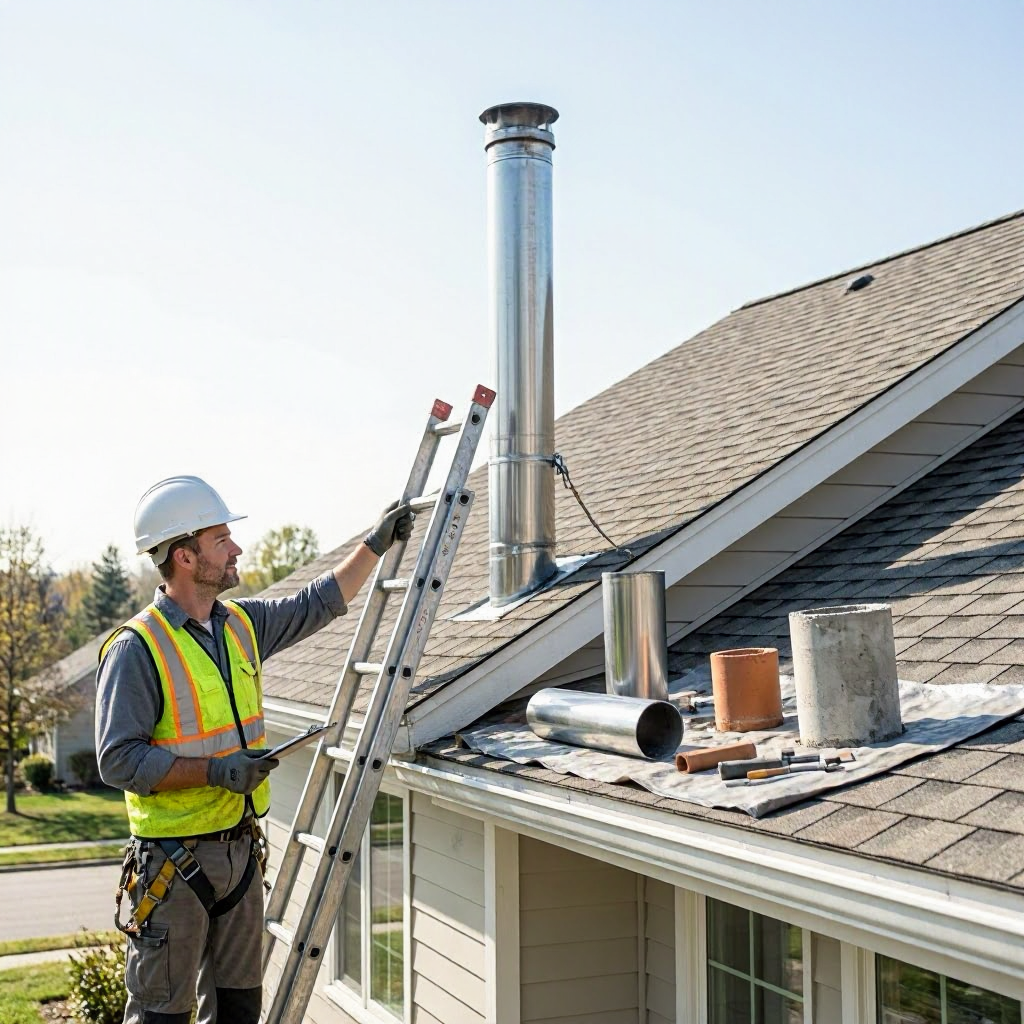
Chimney liner replacement cost: clay, stainless steel, and cast-in-place
Understanding Chimney Liners and Replacement Needs
Chimney liners protect your home's structure from heat, corrosive flue gases, and combustion byproducts. They line the inside of the chimney flue, directing smoke and gases safely outside while preventing damage to masonry. Without a proper liner, risks include chimney fires, carbon monoxide leaks, and deterioration of surrounding materials.
Most homes built before 1995 lack an approved liner, per older building codes. Modern codes, enforced by local building departments, often require liners for safety. Replacement becomes necessary when the existing liner cracks, corrodes, or separates, especially in older clay tile liners common in pre-1960s homes.
Ignoring a failing liner can lead to costly repairs like masonry rebuilds or roof damage. For United States homeowners, addressing this promptly avoids emergencies, but costs vary widely based on liner type, chimney height, and location.
Signs That Indicate Chimney Liner Replacement
Look for these common indicators during annual inspections:
- Creosote buildup: Thick, tar-like deposits signal poor venting, often from a damaged liner.
- White stains or efflorescence: Leaking gases cause mineral deposits on the chimney exterior.
- Rust or corrosion: Metal parts around the chimney show liner failure.
- Shaling: Pieces of clay liner falling into the firebox.
- Smoke backup: Smoke enters the home instead of venting properly.
- Water leaks: Damp spots inside the fireplace or on the roof.
Rusty stains or odors might point to deeper issues like mortar erosion. Homeowners should schedule a Level II chimney inspection by a CSIA-certified sweep, which uses cameras for internal views. This costs $200 to $500 typically and reveals liner condition without demolition.
For renters, document these signs with photos and notify your landlord in writing, as major chimney work usually falls under their responsibility per most leases.
Types of Chimney Liners Compared
Three main liner types suit United States homes: clay, stainless steel, and cast-in-place. Each has unique installation methods, lifespans, and applications. Clay suits retrofits in undamaged flues, stainless steel offers durability for high-heat use, and cast-in-place forms a seamless mold for irregular flues.
| Liner Type | Best For | Lifespan | Installation Method | Common Drawbacks |
|---|---|---|---|---|
| Clay | Older masonry chimneys | 50+ years | Tiles inserted and mortared | Brittle, prone to cracking from thermal shock |
| Stainless Steel | Wood-burning fireplaces | 20-50 years | Pulled through flue as flexible pipe | Higher upfront cost, needs precise sizing |
| Cast-in-Place | Damaged or irregular flues | 50+ years | Poured as cement-like slurry inside flue | Messy install, longer cure time |
Clay liners mimic originals but require intact flues. Stainless steel pulls in like a sock, ideal for retrofits. Cast-in-place fills gaps, making it versatile for multi-flue chimneys.
Clay Chimney Liner Replacement Details
Clay liners, made from fireclay tiles, date back generations. Each 2-foot tile stacks inside the flue, sealed with refractory mortar. They're economical for straight, undamaged masonry chimneys.
Replacement involves removing debris, inspecting the flue, and installing new tiles with a chimney crane for multi-story heights. Pros include heat resistance up to 2,100°F and code approval for oil furnaces. Cons: Tiles crack from wood fire thermal cycling or settling foundations.
Material costs depend on flue size (8-12 inches diameter common) and chimney height. Longer runs need more tiles. Labor adds up for hoisting equipment and mortar work.
This option suits low-use fireplaces in milder climates, but professionals recommend it less for frequent wood burning due to fragility.
Stainless Steel Chimney Liner Replacement
Stainless steel liners, UL-listed like 316Ti or 29-4C alloys, flex during install via pulling from top to bottom. Sizes match flue dimensions precisely (e.g., 6x6 inches for inserts).
They're popular for gas, oil, or wood appliances, resisting acidic condensation and creosote. Thickness (24-28 gauge) affects durability; thicker for wood stoves. Insulation wraps around for efficiency in exterior chimneys.
Installation requires flue cleaning, sizing with sweeps, and top termination with a chase cover or cap. Labor-intensive for tall chimneys, often needing scaffolding.
Benefits: Lightweight, quick install (1-2 days), and warranties up to 30 years. Drawbacks: Oversized liners reduce draft; undersized risks overheating.
Cast-in-Place Chimney Liner Replacement
Cast-in-place liners use a pourable refractory cement mixed on-site, forming a monolithic tube inside the existing flue. No tiles or pipes, it's custom-molded.
Workers insert inflatable bladders, pour the slurry, and cure for 24-48 hours. Ideal for cracked clay flues or non-round shapes, sealing voids permanently.
High material use for tall or wide flues. Labor includes setup, mixing, and curing monitoring. Suited for multi-family homes or historic properties preserving exteriors.
Advantages: Seamless, no joints to leak, rated for 2,100°F+. Disadvantages: Disruptive (dust, access needs), heavier on structure.
Factors Affecting Chimney Liner Replacement Costs
Costs hinge on several variables, preventing a single national average. Expect wide ranges based on inspection findings.
Chimney and Home Characteristics
- Height and runs: 20-50 feet common; each 10 feet adds materials and labor.
- Flue count: Single flue cheaper than triple.
- Access: Roof pitch, attic clearance, or interior demo affects scaffolding.
- Condition: Intact flue lowers prep work; relining deteriorated ones raises costs.
- Appliance type: Wood-burning needs thicker, insulated liners.
Material Choices
Clay uses basic tiles; stainless varies by alloy and insulation. Cast-in-place scales with volume. Premium brands or custom bends increase prices.
Labor and Location
Labor runs higher in urban areas like California or New York due to wages and codes. Rural Midwest might cost less. CSIA-certified pros charge more but ensure code compliance.
Additional Expenses
- Inspections: $150-$600.
- Cleaning: $150-$400.
- Permits: Vary by locality.
- Disposal: Debris haul-away.
- Urgency: Off-season scheduling saves 10-20%.
| Cost Factor | Low-End Example (Simple Job) | High-End Example (Complex Job) | Why It Matters |
|---|---|---|---|
| Chimney Height | 15-25 ft | 40+ ft | More material, rigging needed |
| Liner Type | Clay | Insulated stainless | Durability vs. economy trade-off |
| Location | Rural South | Urban Northeast | Wages, codes, access |
| Prep Work | Basic clean | Full rebuild | Hidden damage revealed |
Typical Cost Ranges for Chimney Liner Replacement
Homeowners report total costs from $1,000 to $10,000, but most fall $2,500-$6,000 for standard single-flue jobs. Always get site-specific quotes.
- Clay: Lower end, $1,500-$4,000. Suits basic retrofits.
- Stainless Steel: $2,000-$7,000. Mid-range for most homes.
- Cast-in-Place: $3,000-$9,000. Higher for custom fits.
These vary by 30-50% regionally. For instance, coastal humidity accelerates corrosion, bumping stainless demand. Factor 10-15% for inflation or supply issues.
DIY Chimney Liner Replacement: Realistic Assessment
DIY is rarely safe or practical for liner replacement. It involves heights over 20 feet, heavy lifting, precise flue measurements, and code knowledge. Dropped tools risk roof damage; improper sizing invites fires.
Clay tile installs tempt handy homeowners, but pulling stainless requires two people and winches. Cast-in-place demands mixing expertise to avoid cracks.
When DIY might work: Minor flue repairs or cleaning, not full replacement. Buy kits only after pro inspection confirms feasibility. Otherwise, hire certified chimney contractors to avoid voiding insurance.
Steps to Get Reliable Estimates
- Inspect first: Hire a CSIA-certified sweep for a video scan. Note flue size, damage, height.
- Gather quotes: Contact 3-5 local pros via CSIA.org directory. Provide inspection report.
- Compare apples-to-apples: Ensure bids include materials, labor, cleanup, warranty.
Key Questions for Contractors
- Is my flue suitable for [clay/stainless/cast-in-place]?
- What liner size and thickness do you recommend, and why?
- Does this bid cover permits, inspections, disposal, and roof flashing?
- Are you licensed, insured, and CSIA-certified? Any subcontractors?
- What's the warranty on materials and labor?
- Payment terms? (Avoid full upfront.)
- Timeline and weather contingencies?
Request detailed written estimates breaking out line items. Reject vague "materials and labor" totals.
Permits, Inspections, and Building Codes
Most U.S. localities require permits for liner replacement, especially altering venting. Check your city or county building department, fees run $50-$300.
Post-install, a smoke test or inspection verifies draft. Codes like International Residential Code (IRC) mandate liners for solid-fuel appliances. Historic districts or HOAs may restrict visible changes.
Condo owners: Review association bylaws; shared chimneys need board approval.
Insurance, Home Warranties, and Financing Options
Homeowners insurance covers sudden damage like fire-related liner failure, but not wear/tear or neglect. File claims with photos and pro estimates; deductibles apply.
Home warranties (e.g., via American Home Shield) sometimes include chimney liners under "heating systems," but exclusions abound, verify your policy.
For affordability, explore HUD Title I loans for home repairs up to $25,000 or FHA 203(k) for rehabs including chimneys (hud.gov details). Credit unions offer low-interest lines.
Keep records: Invoices, photos before/after, warranties. Essential for claims or resale.
Ways to Lower Your Chimney Liner Replacement Bill
- Schedule off-peak: Fall/winter avoids peak heating season.
- Bundle services: Combine with sweep, cap install, or tuckpointing.
- Choose economical liner: Clay if suitable, skipping extras like insulation.
- Improve access: Clear roof/attic beforehand.
- Shop materials: Pros source wholesale, but confirm compatibility.
- Multi-year maintenance: Prevents relining every decade.
Annual sweeps ($150-$300) extend liner life, potentially saving thousands.
Long-Term Maintenance After Replacement
Post-install, maintain with:
- Annual sweeps: Remove creosote per NFPA 211 standards.
- Cap inspection: Ensure spark arrestor and rain screen intact.
- Monitor for leaks: Check roof flashing yearly.
- Burn seasoned wood: Reduces acids if wood-fired.
- Upgrade appliances: High-efficiency inserts lessen stress.
Document everything in a home log. For rentals, request landlord inspections yearly.
This proactive approach maximizes your investment, keeping costs predictable for United States homeowners. Always prioritize safety, faulty chimneys risk lives via CO poisoning or fires. Consult local pros for your setup.

About the TDL Expert Panel
TDL Expert Panel · TheDigitalLife Editorial Team
TDL Expert Panel is the editorial team behind TheDigitalLife. The team researches, reviews, and creates practical guides to help everyday readers make better decisions about home repair costs, refunds, AI tools, digital safety, productivity, and useful online resources. Each guide is written to be clear, useful, and easy to understand.