Check engine light cost: common repairs and how to avoid overpaying
What the Check Engine Light Means for Your Vehicle
The check engine light (CEL), also called the malfunction indicator lamp, signals that your vehicle's onboard computer has detected a problem. This could range from a minor issue like a loose gas cap to a major engine fault. Ignoring it might lead to worse damage, higher repair bills, or safety risks if it affects braking, steering, or emissions.
In the United States, most vehicles from 1996 onward use OBD-II systems, which store diagnostic trouble codes (DTCs) when the light activates. These codes help mechanics pinpoint issues quickly. Always treat the light seriously, especially if it flashes or pairs with symptoms like rough idling, poor acceleration, or exhaust smells.
Do not drive long distances if the light flashes, as this often indicates misfires that could damage the catalytic converter. For steady lights without other symptoms, you have time to diagnose safely. Pull over, check basics like the gas cap, and plan your next steps.
Common Causes of the Check Engine Light and Associated Repairs
Many CEL triggers stem from emissions, fuel, ignition, or sensor problems. Below are frequent culprits, based on typical U.S. driver experiences from sedans, trucks, and SUVs. Costs vary widely by vehicle make, model, year, location, and shop rates, so use these as starting points only.
Loose or Faulty Gas Cap
A common, inexpensive fix: the evaporative emissions (EVAP) system detects vapor leaks from a loose cap. Tighten it, clear the code (often with a scan tool), and the light may reset after a drive cycle.
If damaged, replacement costs depend on your vehicle. Inspect the cap's seal first—twist it three clicks until secure. This avoids a $100+ diagnostic fee for a $20 part.
Oxygen (O2) Sensor Failure
O2 sensors monitor exhaust gases to adjust fuel mixture. A failing upstream or downstream sensor triggers codes like P0130 or P0420, causing poor fuel economy or hesitation.
Replacement involves labor to access the sensor, often near the exhaust manifold. Newer vehicles may have four sensors. Ask if it's OEM or aftermarket, as quality affects longevity.
Catalytic Converter Issues
The converter cleans exhaust fumes. Clogged or failing units set codes like P0420/P0430, often from oil burning or misfires. Symptoms include sluggish acceleration and rotten egg smells.
Repair might mean replacement, a pricey job due to welding and emissions testing in some states. Check for underlying causes first, like bad spark plugs, to prevent repeat failure.
Spark Plugs and Ignition Coils
Worn plugs or coils cause misfires (codes P0300-P030X), leading to rough running. Common in high-mileage engines, especially with cheap gas or ignored maintenance.
Tune-ups replace plugs, wires, and coils. DIY possible for accessible plugs, but pros handle coil-on-plug systems safely. Expect labor for deeper access in V6 or V8 engines.
Mass Airflow (MAF) Sensor
The MAF measures incoming air for fuel mixing. Dirt or failure (code P0101) causes stalling or surging. Cleaning with MAF-specific spray often works before replacement.
Unplug and clean gently if comfortable, but avoid touching wires. Pro diagnosis confirms if it's the sensor or wiring.
Thermostat or Coolant Temperature Sensor
A stuck thermostat or bad sensor prevents proper engine warm-up, triggering codes like P0128. This wastes fuel and risks overheating.
Replacement requires draining coolant, a straightforward job. Monitor your temperature gauge—overheating demands immediate towing.
EVAP System Leaks (Beyond Gas Cap)
P0442 or P0455 codes point to purge valves, hoses, or canisters leaking vapors. Rodents chewing lines is common in parked vehicles.
Diagnosis uses smoke tests. Repair focuses on the leak source to avoid band-aid fixes.
Throttle Body or EGR Valve Problems
Dirty throttle bodies (P0121) or clogged EGR valves reduce power. Cleaning restores function; replacement if damaged.
These affect idle quality. State emissions inspections may fail without fixes.
Factors That Influence Check Engine Light Repair Costs
Repair prices aren't fixed nationwide—they depend on several variables. Labor rates range higher in urban areas like California or New York versus rural Midwest shops. Parts availability spikes costs for imports like Honda or luxury brands like BMW.
Vehicle specifics matter: a 2015 Ford F-150 repair differs from a 2020 Toyota Camry due to engine design and parts sourcing. Urgency adds fees—weekend or after-hours service costs more. Mileage and maintenance history influence if warranties apply.
Diagnostic fees average $100-$150 but should credit toward repairs. Shop supplies, taxes (6-10% in most states), and disposal fees for old parts add 10-20%. Always request itemized estimates breaking out parts, labor, and extras.
Location affects emissions-related work: states like Texas or Pennsylvania require testing post-repair. Dealer vs. independent shop: dealers charge more for specialized tools but offer warranty work.
Typical Cost Ranges for Common Check Engine Light Repairs
Costs below are broad U.S. estimates, varying by factors above. Verify locally.
| Repair | Typical Parts Cost | Typical Labor Hours | Total Range (Parts + Labor) | Notes |
|---|---|---|---|---|
| Gas cap replacement | $10-$50 | 0.1-0.2 | $20-$100 | Often DIY |
| O2 sensor | $50-$250 each | 0.5-1.5 | $150-$500 | Per sensor |
| Catalytic converter | $300-$2,500 | 2-5 | $800-$3,500+ | Aftermarket cheaper |
| Spark plugs/ignition | $20-$100 (set) | 1-3 | $200-$800 | Coils extra |
| MAF sensor | $50-$200 | 0.5-1 | $150-$400 | Cleaning first |
| Thermostat/sensor | $20-$100 | 1-2 | $150-$500 | Coolant flush extra |
| EVAP components | $50-$300 | 1-3 | $200-$800 | Smoke test fee |
| Throttle body/EGR | $100-$400 | 1-2.5 | $250-$800 | Cleaning cheaper |
These exclude taxes/fees. Get multiple written quotes for totals over $500.
Immediate Steps When the Check Engine Light Turns On
- Note symptoms: Jot down when it happened, driving conditions, smells, sounds, or dash messages. Photos help.
- Check basics safely: Park, inspect gas cap, fluid levels, and air filter. Avoid highways if flashing.
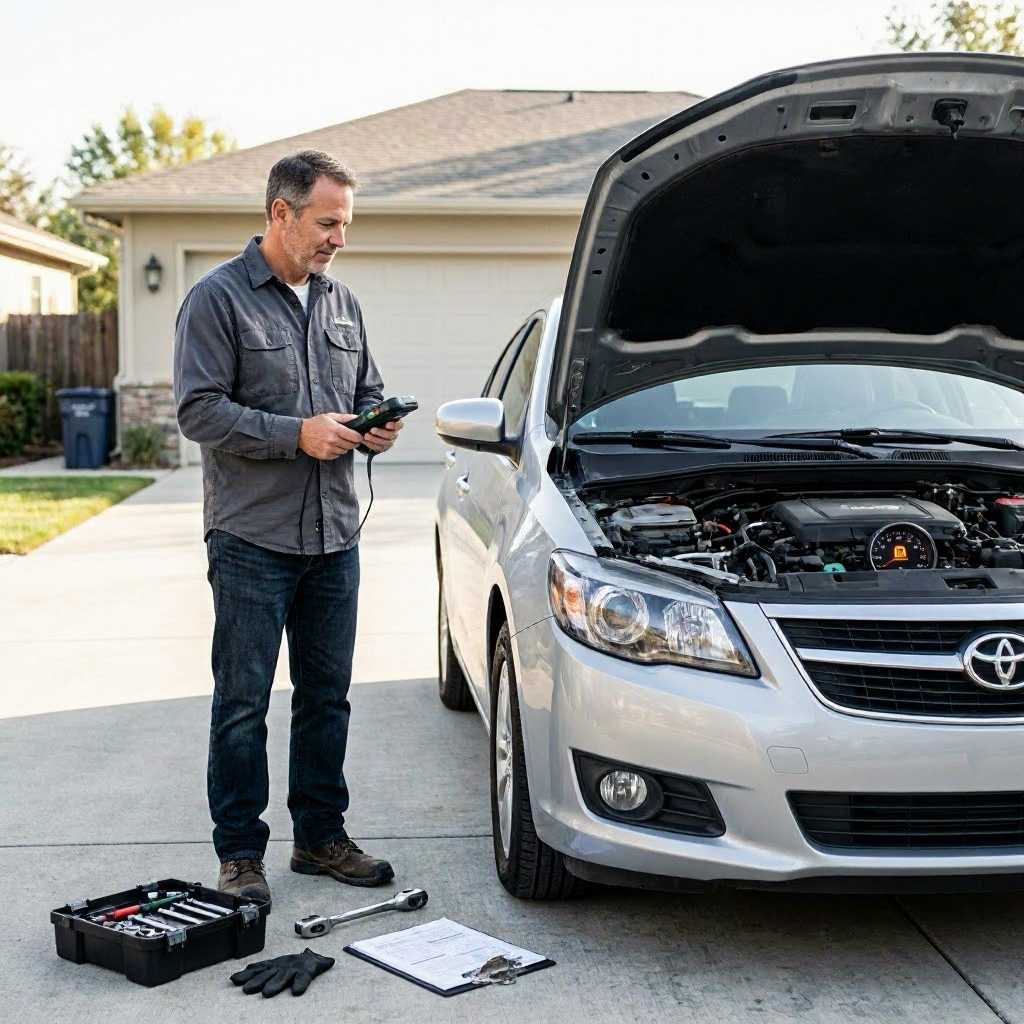
- Scan for codes: Use an affordable OBD-II scanner ($20-$100 at auto parts stores like AutoZone) or free service there. Note codes like P0171 (lean condition).
- Drive cautiously: Steady light? Limit trips. Test drive after resets to see if it returns.
- Tow if needed: Call AAA or insurance roadside if unsafe. Don't risk stalling in traffic.
Reset only after noting codes—clearing hides problems. U.S. drivers save by self-scanning before shops.
How to Diagnose Without Paying for Unnecessary Work
Start with free or low-cost checks. Many auto parts chains (e.g., O'Reilly, Advance Auto) scan codes gratis and suggest fixes. Apps like Torque with Bluetooth adapters ($20) read codes via your phone.
Research codes on reputable sites like the NHTSA or manufacturer forums. Cross-check symptoms: P0420 with no performance loss might not need immediate converter replacement.
Avoid "all-in-one" tune-ups pitched without evidence. Request code printouts pre- and post-repair. If multiple codes, prioritize—fix one, re-scan.
For persistent lights, professional diagnosis uses advanced tools. Independent shops often charge less than dealers.
Key Questions to Ask Before Approving Repairs
Get answers in writing to protect yourself:
- What exact DTCs did you find, and what do they mean for my vehicle?
- Is this safety-related, or can I drive short distances?
- What's included: parts (OEM/aftermarket?), labor, diagnostics, taxes, shop fees?
- Any underlying issues causing this (e.g., bad plugs before converter)?
- Does warranty or recall cover it? (Check NHTSA.gov for your VIN.)
- Can you show me the failed part?
- What's the parts/labor warranty (typically 12 months/12,000 miles)?
- Alternatives like cleaning vs. replacing?
Refuse verbal approvals—insist on written estimates. U.S. FTC rules require this for repairs over $100 in many cases.
Strategies to Avoid Overpaying on Check Engine Light Fixes
Shop smart: Get 2-3 estimates from trusted shops via RepairPal or AAA-approved lists. Independents often beat dealer prices by 30-50% for non-warranty work.
Buy parts yourself if the shop allows, but confirm compatibility. Watch for upselling: "While we're in there" adds unneeded flushes or fluids.
Time repairs: Schedule mid-week for lower rates. Bundle with routine service if due.
Check warranty first: Powertrain warranties (often 5 years/60,000 miles) cover many issues. Extended warranties vary—review your contract.
State lemon laws or Magnuson-Moss Warranty Act protect against shoddy work. Keep records for disputes.
Negotiate fees: Diagnostics often apply to repairs; ask for waivers on simple fixes.
When to Seek a Second Opinion or Scrap the Repair
For bills over $1,000 (e.g., converter), always get another quote. Non-urgent? Drive to a specialist.
Calculate if worth it: High-mileage vehicles (150,000+ miles) might cost more to fix than trade-in value. Use Kelley Blue Book for estimates.
Safety first: Brakes, airbags, or stalling lights demand priority. If CEL pairs with check engine oil pressure or traction control lights, stop driving.
Consider certified pre-owned or newer used cars if repairs recur. Factor insurance hikes from neglected issues.
Checking Recalls, Warranties, and Keeping Records
Enter your VIN at NHTSA.gov to check recalls—many emissions fixes are free. Manufacturer sites (e.g., Ford.com) confirm warranty status.
Save everything: Invoices, code sheets, photos of parts, emails. Essential for insurance claims, resale, or disputes.
Digital folders work: Scan receipts, note mileage/dates. U.S. buyers use Carfax or AutoCheck for history, aiding warranty claims.
For FTC guidance on repairs, see consumer.ftc.gov/articles/buying-used-car-dealer and buying and owning a car.
Repair Estimate Review Checklist
Use this before signing:
- Itemized breakdown: Parts list, labor hours/rate, subtotals.
- Code explanations: Attached printout.
- Warranty details: Duration, what's covered.
- Total with taxes/fees: No surprises.
- Loaner/rental info: If multi-day job.
- Post-repair test: Light off, no new codes.
Sign only what you approve. Walk away from pressure tactics.
By following these steps, U.S. drivers like commuters in Atlanta or families in Seattle cut CEL costs through informed choices. Regular maintenance (oil changes, tune-ups) prevents many triggers, saving thousands long-term.

About the TDL Expert Panel
TDL Expert Panel · TheDigitalLife Editorial Team
TDL Expert Panel is the editorial team behind TheDigitalLife. The team researches, reviews, and creates practical guides to help everyday readers make better decisions about home repair costs, refunds, AI tools, digital safety, productivity, and useful online resources. Each guide is written to be clear, useful, and easy to understand.