Car AC compressor replacement cost: repair or replace
---
Signs Your Car's AC Compressor Is Failing
A failing AC compressor often leaves you sweating during hot drives, especially in summer traffic. You might notice warm air blowing from the vents even when the AC is on full blast, strange noises like grinding or squealing from under the hood, or the compressor clutch not engaging. In some cases, you could see leaks of refrigerant oil around the compressor or dashboard warning lights related to the AC system.
These symptoms usually point to compressor issues, but they can overlap with other AC problems like low refrigerant or a bad blower motor. Ignoring them won't make the heat go away, and in extreme heat, a non-working AC can make long commutes uncomfortable or unsafe if it distracts you from driving.
Start by checking simple things yourself: Turn on the AC and listen for the compressor clicking on near the engine. Feel if the air gets cold after a few minutes. If not, avoid driving far until diagnosed, as low refrigerant from a bad compressor can harm other parts.
What Does the AC Compressor Do?
The AC compressor is the heart of your car's air conditioning system. It pressurizes refrigerant gas, sending it through the condenser, evaporator, and expansion valve to cool cabin air. Located at the front of the engine, it's belt-driven and handles high pressures.
Compressors last 10-15 years on average, but heat, leaks, or poor maintenance shorten their life. In vehicles like a 2010 Ford F-150 or Honda Civic, failure often stems from worn bearings, seized pistons, or clutch problems. Without it, your AC blows hot air, and the system risks further damage from contaminated refrigerant.
Diagnosing AC Compressor Problems
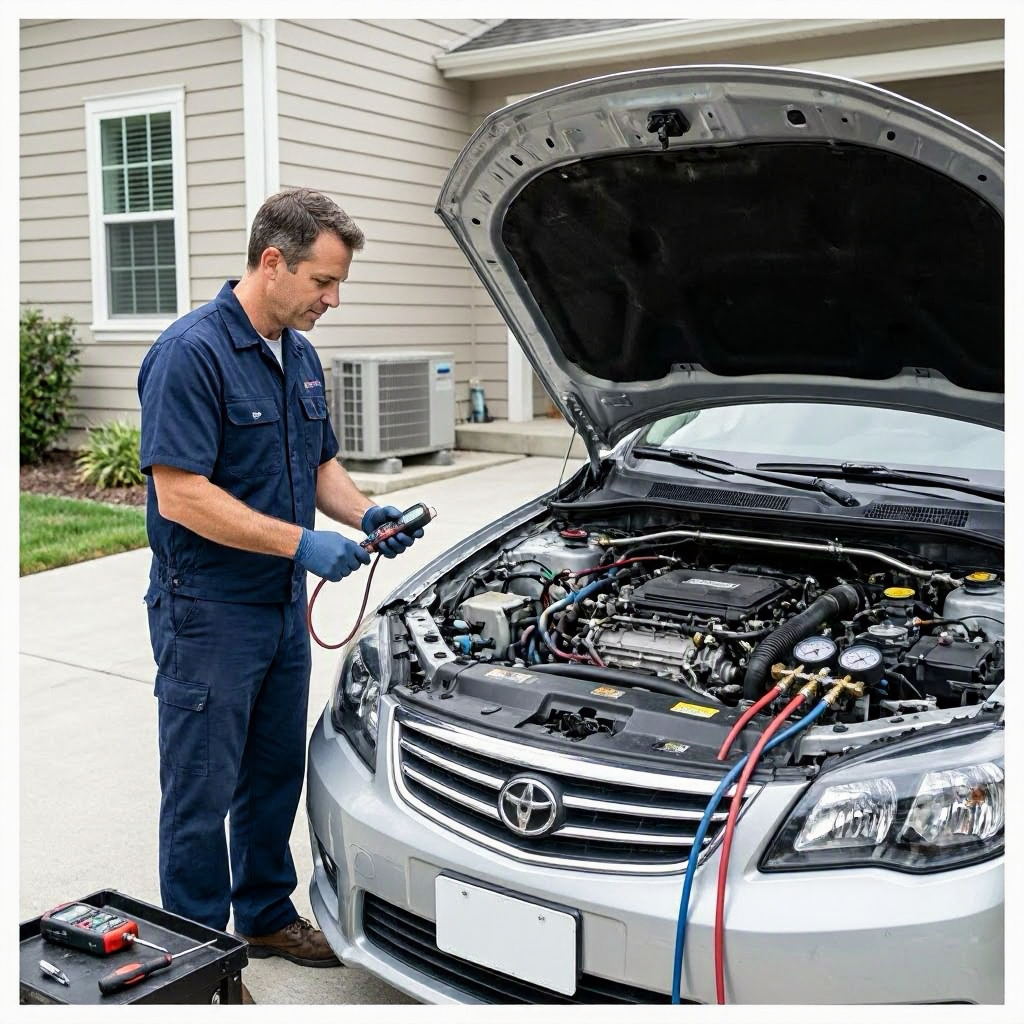
Don't guess, get a professional diagnosis. Mechanics use gauges to check refrigerant pressure, scan tools for error codes, and visual inspections for leaks or damage. Diagnostic fees run $100-$200, often applied toward repairs if you proceed.
What to check first:
- Refrigerant levels (low pressure suggests a leak or failing compressor).
- Compressor clutch engagement (spins freely when AC is off?).
- Belt condition and tension.
- Electrical connections and fuses.
In states like California or Texas with emissions testing, a faulty AC might trigger related codes during inspections. Visit a trusted mechanic or dealership ASAP if symptoms appear, as driving without AC in 90-degree heat reduces comfort and could lead to fogged windows.
Repair vs. Replacement: Making the Right Choice
Repairing a compressor clutch or bearings might cost less than full replacement, but it's often temporary. Clutch repair suits early failures, while a seized compressor usually needs replacing the whole unit. Mechanics recommend replacement because repairing one part risks others failing soon, contaminating the system.
Consider repair if:
- Your car has low mileage (under 100,000).
- Diagnosis shows isolated clutch or electrical issues.
- You're selling soon and want a quick fix.
Opt for replacement if:
- The compressor is scored, leaking, or internally damaged.
- Refrigerant is contaminated (requires full flush anyway).
- Your vehicle is under warranty.
For older cars, weigh the cost against the vehicle's value. A $2,000 repair on a $3,000 beater might not make sense. Always ask for a detailed report showing why repair isn't viable.
Factors Affecting AC Compressor Replacement Costs
Costs vary widely by vehicle specifics and location. Luxury models like BMWs or trucks like Chevy Silverados need pricier parts and more labor due to tight engine bays. Nationwide averages range from $900 to $3,000, but expect higher in coastal cities with premium labor rates.
Key cost drivers:
| Factor | Why It Matters | Cost Impact Example |
|---|---|---|
| Vehicle Make/Model/Year | Parts availability and complexity differ | Domestic sedans cheaper than imports |
| Labor Hours | Evacuate refrigerant, remove/reinstall unit | 2-6 hours at $100-$200/hour |
| Parts Type | OEM vs. aftermarket/remanufactured | OEM 20-50% more |
| Location | Shop rates, taxes, fees vary by state/city | Urban areas 20-30% higher |
| System Flush | Required to remove debris | Adds $200-$500 |
| Refrigerant Recharge | R-134a or R-1234yf types | Newer cars use costlier refrigerant |
Shop rates differ: independents charge $100-$150/hour, dealerships $150-$250. Parts alone can be $300-$1,200. Urgency in peak summer bumps prices 10-20%.
Breaking Down the Repair Bill
A typical quote includes:
- Diagnostics: Pressure tests, leak checks.
- Parts: Compressor ($200-$1,000), receiver/drier ($50-$150), expansion valve/orifice tube ($20-$100), O-rings/seals.
- Labor: Disassembly, evacuation (legal requirement per EPA), reassembly, vacuum test.
- Flush and recharge: Essential to prevent repeat failure.
- Fees: Shop supplies (5-10%), taxes (6-10%), disposal (refrigerant handling).
Sample estimate line items (varies widely):
- Compressor: $450
- Labor: 4 hours @ $140 = $560
- Flush/recharge: $300
- Total before tax: $1,510
Always request an itemized written estimate before approving work. Question vague lines like "shop supplies" over 10%.
Steps to Get Reliable Quotes
- Describe symptoms clearly to 3+ shops: independent, chain (e.g., Pep Boys), dealership.
- Ask for written estimates including parts/labor breakdown, warranty, and what's not covered.
- Verify ASE certification or reviews on BBB.org or Yelp.
- Compare apples-to-apples: Same parts quality, full system service.
Questions to ask mechanics:
- Is the compressor internally damaged, or just the clutch?
- Are you using OEM, remanufactured, or aftermarket parts? Why?
- Does this include system flush, vacuum test, and recharge?
- What's the parts/labor warranty (typically 12 months/12,000 miles)?
- Any core charge (refundable deposit for old part)?
- Can I supply my own part? (Most shops say no.)
Get a second opinion for quotes over $1,500. Use apps like RepairPal for local averages.
Ways to Reduce Your AC Compressor Costs
Check warranty first: Factory powertrain warranties (5 years/60,000 miles on many) or extended coverage might apply. Log into your manufacturer's site or call the dealer with VIN.
Shop smart:
- Off-peak timing (spring/fall) saves 10-20%.
- Independents often beat dealership prices.
- Aftermarket parts cut 30-50% vs. OEM, if quality-checked (e.g., Denso, Four Seasons brands).
- Bundle with other maintenance like belts or thermostat.
Avoid add-ons: Decline unnecessary receiver/drier upgrades unless recommended with proof. Negotiate fees.
For low-income drivers, check state assistance programs via 211.org or local legal aid for repair vouchers.
Insurance and Coverage Considerations
Comprehensive or collision policies rarely cover AC repairs unless from an accident. Review your declarations page for "air conditioning" exclusions. If damaged in a covered event, file a claim but note it could raise premiums 10-40%.
Document everything: Photos of vents, mechanic report, estimates. Contact your insurer's claims line before repairs.
No coverage? Some credit cards offer purchase protection on parts bought with them.
When Replacement Isn't Worth It
If your car is 15+ years old or worth under $5,000 (check Kelley Blue Book), a major AC repair might exceed resale value. Signs to scrap or sell:
- Multiple system failures.
- High mileage (150,000+).
- Repair quote >20% of vehicle value.
Gig workers or families might prioritize reliability over AC in mild climates. Test drive without AC to decide.
Checking for Recalls and Technical Service Bulletins
Use NHTSA.gov with your VIN for free recall checks. Some models have compressor TSBs for premature failure. Enter VIN at the site or call 1-888-327-4236.
Manufacturer sites (e.g., Toyota.com/owners) list TSBs. Covered fixes are free at dealers.
Maintenance to Prevent Compressor Failure
Regular care extends AC life:
- Annual leak checks and recharges ($100-$200).
- Replace cabin filter yearly.
- Run AC weekly, even winter.
- Fix leaks promptly.
Keep records: Invoices prove maintenance history for warranty claims or resale.
Professional vs. DIY: Safety First
DIY compressor swaps risk EPA fines for improper refrigerant handling (requires certification). Leave it to pros unless experienced with manifold gauges and recovery machines. Wrong installation leaks refrigerant, harms the environment, and voids warranties.
Watch YouTube for diagnostics only, not full jobs.
Real Driver Stories from Across the US
In Florida, commuter Sarah faced a $1,800 quote on her 2015 Accord. Second opinion revealed warranty coverage, saving $1,200. Texas truck owner Mike skipped OEM parts, paid $1,100 total vs. $2,200 dealer price.
These show shopping pays off.
Keeping Records After Repair
Save:
- Itemized invoice.
- Parts receipts/warranty card.
- Before/after photos.
- Mechanic notes.
Digital folder helps for insurance, trade-ins, or disputes.
Choosing the Right Shop Long-Term
Build relationships with ASE-certified shops via AAA-approved lists. Loyalty discounts apply.
For the FTC's advice on auto repairs, visit consumer.ftc.gov/articles/buying-used-car-dealer and consumer.ftc.gov/shopping-and-donating/buying-and-owning-car.
A well-maintained AC keeps drives comfortable year-round. Act early on symptoms, get quotes, and verify coverage to control costs.
| Common AC Symptoms | Likely Compressor Issue | Next Step |
|---|---|---|
| No cold air, clutch not engaging | Electrical or seized unit | Diagnostic test |
| Grinding noise on startup | Worn bearings | Visual inspection |
| Refrigerant leak visible | Seals or housing crack | Pressure/leak check |
| Intermittent cooling | Clutch slippage | Clutch test |
(Word count: 2852) ---

About the TDL Expert Panel
TDL Expert Panel · TheDigitalLife Editorial Team
TDL Expert Panel is the editorial team behind TheDigitalLife. The team researches, reviews, and creates practical guides to help everyday readers make better decisions about home repair costs, refunds, AI tools, digital safety, productivity, and useful online resources. Each guide is written to be clear, useful, and easy to understand.