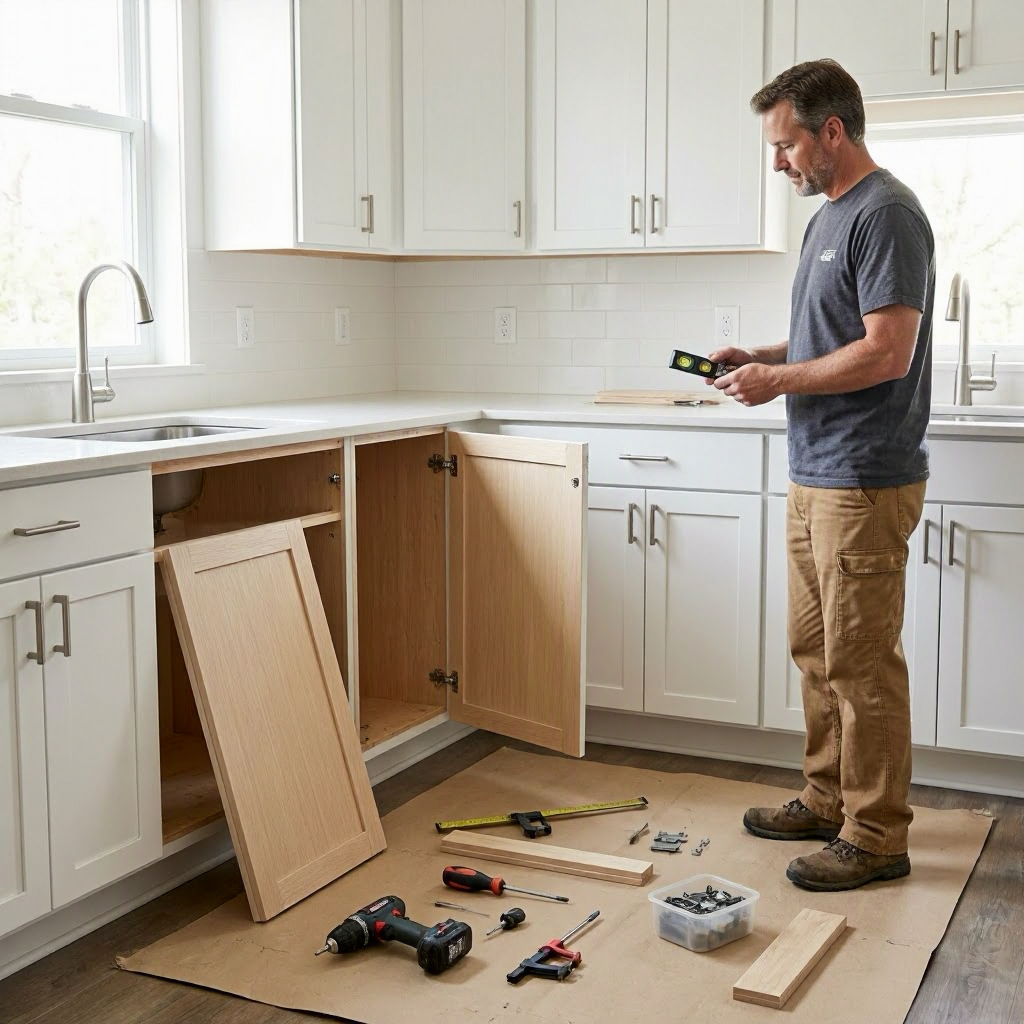
Cabinet refacing cost vs cabinet replacement cost
---
Why Compare Cabinet Refacing and Replacement Costs?
Homeowners often face a big decision when kitchen cabinets look worn: refacing or full replacement. Refacing updates the surface and doors while keeping the existing box frames, offering a budget-friendly refresh. Replacement tears out old cabinets and installs new ones, providing more customization but at higher expense.
This choice impacts your budget, kitchen function, and home value. Costs vary widely by kitchen size, location, materials, and labor rates in your area. Getting multiple written estimates from local pros helps you decide without overpaying.
Factors like home age, cabinet condition, and layout play key roles. For example, in older homes with uneven walls, replacement might require adjustments that add expense. Always inspect for issues like water damage or poor alignment before committing.
What Is Cabinet Refacing?
Cabinet refacing, also called resurfacing, covers existing cabinet boxes with new veneer or laminate. Workers replace doors, drawer fronts, and hardware, then apply matching skins to frames. This transforms the look without demolition.
The process typically takes 3 to 5 days. Pros measure precisely, custom-cut materials on-site or in-shop, and ensure doors fit smoothly. It's ideal for solid wood boxes in good structural shape, without major sagging or damage.
Pros of refacing: Saves 50% or more versus replacement, minimal disruption, keeps layout intact. Cons: Limited style changes, doesn't fix underlying issues like poor organization or outdated dimensions.
Refacing suits minor updates, like preparing for sale or refreshing dated finishes. It works in rentals too, if landlord approves surface-level changes.
What Is Cabinet Replacement?
Cabinet replacement removes old cabinets entirely, including boxes, and installs new base, wall, and tall units. This allows new layouts, better storage, appliances, or island additions. Custom or semi-custom cabinets fit your space perfectly.
Installation spans 1 to 3 weeks, depending on scope. It involves demolition, wall repairs, plumbing or electrical adjustments, and precise leveling. New cabinets often include soft-close features and better ergonomics.
Pros of replacement: Total redesign, higher durability, increased home value (kitchens boost resale by 60-80% ROI per some remodel reports). Cons: Higher cost, dust and mess, potential for surprises like subfloor issues.
Choose replacement for severe wear, inefficient layouts, or major remodels. It's common in flips or when integrating new countertops and flooring.
Cabinet Refacing Cost Breakdown
Refacing costs depend on kitchen square footage, material quality, and local labor. A typical 10x10-foot kitchen might run from $4,000 to $12,000, but larger or complex spaces climb higher. Always factor in your region, like higher rates in coastal cities.
Materials in Refacing
Veneer or laminate skins cost based on type: wood veneer ($200-$500 per cabinet), thermofoil ($100-$300), or paint-grade ($80-$250). Doors and drawer fronts add $150-$400 each for solid wood or plywood. Hardware like hinges and pulls runs $5-$20 per piece.
Premium options like maple or cherry raise prices 20-50%. Shop samples match existing stains or finishes.
Labor for Refacing
Labor accounts for 50-70% of the total. Expect $50-$150 per hour or flat fees per linear foot ($100-$300). A crew of 2-3 finishes a standard job in days, including prep and cleanup.
Pros handle tricky spots like corners or islands, ensuring alignment.
Additional Refacing Expenses
Disposal fees ($100-$300), counter gaps ($200-$500), or minor trim ($100-$400). Rarely, permits if structural changes occur, but refacing usually skips them.
Cabinet Replacement Cost Breakdown
Replacement prices reflect demolition, new materials, and install complexity. For a 10x10 kitchen, totals often hit $10,000 to $35,000, scaling with size and features. High-end custom work exceeds $50,000 easily.
Materials in Replacement
Stock cabinets start at $100-$300 per linear foot; semi-custom $300-$600; full custom $600-$1,200+. Base cabinets cost more due to weight-bearing. Add soft-close upgrades ($50-$100 per drawer) or pull-outs ($200+).
Countertop coordination adds $2,000-$10,000, though sometimes separate.
Labor for Replacement
Demolition and install take $100-$250 per linear foot or $75-$200 hourly. Full jobs need plumbers or electricians for moves ($500-$2,000 extra). Expect 40-80 labor hours for averages.
Wall repairs or leveling add $500-$3,000 if old cabinets hid damage.
Additional Replacement Expenses
Disposal ($300-$800), permits ($100-$500 in permit-heavy areas), inspections if code-required. Delivery ($100-$400) for prefab units.
Side-by-Side Cost Comparison
Here's a practical comparison for a standard 200 linear foot kitchen (10x10 layout). Ranges show typical US variations; get local quotes for accuracy.
| Aspect | Refacing | Replacement |
|---|---|---|
| Total Range | $4,000-$12,000 | $10,000-$35,000 |
| Per Linear Foot | $75-$200 | $200-$500+ |
| Labor Share | 50-70% | 40-60% |
| Timeline | 3-5 days | 1-3 weeks |
| Disruption | Low | High |
This table highlights refacing's savings for budgets under $15,000. Replacement justifies expense for long-term stays.
Key Factors Affecting Costs for Both Options
Several variables drive prices up or down. Understanding them helps you budget and negotiate.
Kitchen Size and Layout
Measure linear footage (base + wall cabinets). Islands or peninsulas add 20-40%. Odd angles or soffits complicate install, hiking labor 10-30%.
Location and Market Rates
Urban areas like New York or San Francisco charge 30-50% more due to labor shortages. Rural spots save but may lack specialists. Check local supply chains for material delays.
Material Choices
Budget laminate vs premium hardwoods swings totals 40%. Eco-friendly or low-VOC options cost 10-20% extra.
Cabinet Condition and Home Age
Refacing fails on warped boxes, adding demo costs to match replacement. Older homes need shimming ($500+).
Urgency and Season
Rush jobs add 20%; off-season (winter) saves 10-15%.
Contractor Experience
Licensed kitchen remodelers charge more but warranty work better.
DIY Refacing vs Hiring a Pro
DIY refacing kits from home centers cost $1,000-$4,000 for materials, saving labor. Kits include skins, doors, and adhesive for straightforward jobs.
When DIY Refacing Makes Sense
Small kitchens under 150 sq ft, minor cosmetic issues, handy homeowners. Steps: remove doors, clean/sand boxes, apply veneer, install new fronts. Tools needed: clamps, rollers, saws.
Safety note: Avoid if cabinets hold plumbing/electrical. Test for lead paint in pre-1978 homes.
Success rate drops for uneven installs; poor adhesion leads to peeling.
DIY Replacement? Rarely Advised
Full tear-out risks structural damage, code violations. Pros handle load-bearing walls, venting. Stick to pros for replacement.
Pro Recommendation Table
| Scenario | DIY Feasible? | Pro Recommended? |
|---|---|---|
| Cosmetic refresh, small kitchen | Yes | Optional |
| Structural issues | No | Yes |
| Layout changes | No | Yes |
| Rental property | Check lease | Yes |
Getting Accurate Estimates: Step-by-Step
Before deciding, gather 3-5 written quotes. Prep by noting measurements, photos of issues, and wish list.
What Your Estimate Should Include
- Breakdown: labor, materials, disposal, timeline.
- Materials specs: type, brand, finish.
- Warranty: 1-5 years on labor/parts.
- Payment terms: 30% down, balance on completion.
- Extras: permits, subs, cleanup.
Visit contractor shops; see samples.
Questions to Ask Before Approving
- Are you licensed/insured? (Check state board.)
- Who installs: you or subs?
- What if hidden damage found?
- Can I supply hardware to save?
- References from similar jobs?
Compare apples-to-apples: same materials, scope.
Signs Your Cabinets Need More Than Refacing
Inspect thoroughly:
- Sagging boxes or loose joints: structural failure.
- Water stains/swelling: rot underneath.
- Misaligned doors post-reface: poor base.
- Tiny kitchen workflow issues: redesign needed.
These push toward replacement to avoid callbacks.
Ways to Lower Your Bill
- Reface selectively: Update visible areas only.
- Buy stock/semi-custom cabinets.
- Reuse appliances, counters.
- Off-season timing.
- Supplier discounts via design centers.
- Energy-efficient upgrades for rebates (check utilities).
Finance via home equity lines or HUD 203(k) loans for rehabs: HUD home improvements, HUD 203(k).
Choosing Refacing or Replacement: Decision Guide
Opt for refacing if:
- Budget under $15,000.
- Selling soon (quick ROI).
- Boxes solid, layout fine.
- Minimal disruption wanted.
Choose replacement if:
- Long-term home.
- Want modern features (pull-outs, lighting).
- Major damage or resize.
- Boost resale significantly.
ROI data: Refacing 70-90%, replacement 50-80% per national averages, varying by market.
Considerations for Renters, Condos, and HOAs
Renters: Review lease; cosmetic refacing may need landlord OK, but don't pay for landlord fixes. Document with photos.
Condo/HOA: Check bylaws for kitchen changes; shared walls may need approval. Common areas off-limits.
Homeowners: Verify insurance excludes wear/tear; warranties cover defects.
Insurance rarely pays for updates, but sudden damage (fire/flood) might.
Maintenance to Avoid Future Costs
- Clean spills promptly.
- Adjust hinges yearly.
- Avoid heavy pots on doors.
- Update hardware for airflow.
Regular care extends life 10+ years.
Final Thoughts on Your Best Path
Weigh costs against needs: refacing for fast, cheap refresh; replacement for transformation. Local quotes reveal true numbers, influenced by your specifics. Document everything for warranties or resale.
This approach saves money and stress. Consult pros early for tailored advice. ---

About the TDL Expert Panel
TDL Expert Panel · TheDigitalLife Editorial Team
TDL Expert Panel is the editorial team behind TheDigitalLife. The team researches, reviews, and creates practical guides to help everyday readers make better decisions about home repair costs, refunds, AI tools, digital safety, productivity, and useful online resources. Each guide is written to be clear, useful, and easy to understand.