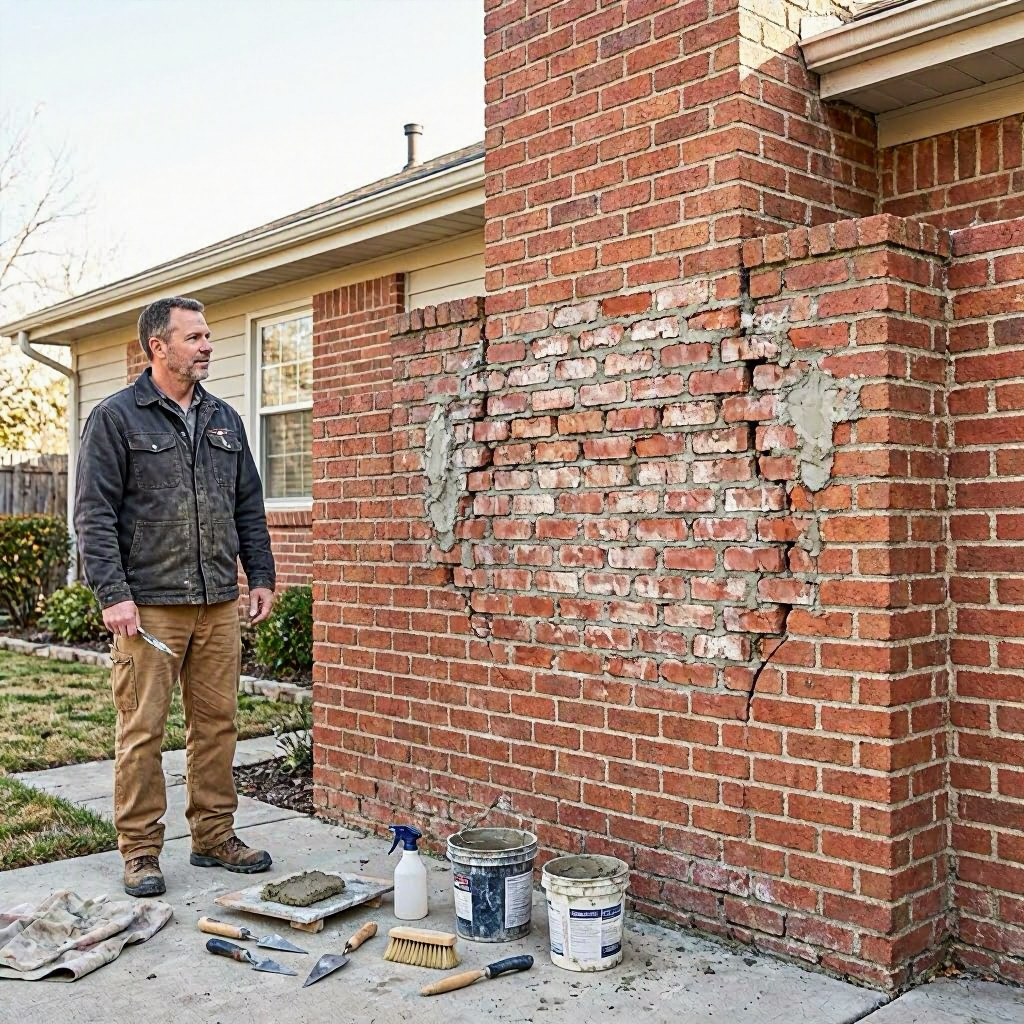
Brick repointing cost and when mortar repair is urgent
What Is Brick Repointing?
Brick repointing involves removing deteriorated mortar from between bricks and replacing it with fresh mortar. Mortar acts as the glue holding bricks together in walls, chimneys, foundations, and other masonry structures. Over time, exposure to weather, freeze-thaw cycles, and poor drainage causes it to crack, crumble, or erode.
Without repointing, water infiltrates the bricks, leading to further damage like spalling (flaking), efflorescence (white stains), or even structural weakening. For US homeowners, addressing this early prevents bigger expenses on brick replacement or foundation repairs. Renters should note their lease terms, as exterior masonry often falls under landlord responsibility.
Why Mortar Deteriorates in US Homes
Mortar in older homes, especially those built before the 1950s, often uses lime-based mixes that last 25-50 years. Portland cement mortars from mid-century homes endure 50-100 years but still fail from environmental stress.
Key causes include:
- Freeze-thaw cycles: Common in northern states like Minnesota or Pennsylvania, where water in cracks expands when frozen.
- Rain and poor drainage: Gutters directing water at walls accelerate erosion, prevalent in rainy areas like the Pacific Northwest.
- Salt exposure: De-icing salts in colder climates or coastal salt air in Florida corrode mortar.
- Tree roots or settling: Foundations shift, stressing joints in homes on expansive clay soils, such as in Texas.
Inspect annually, especially after harsh winters or heavy storms. Take photos of cracks or gaps for records.
Signs Mortar Repair Is Urgent
Not all crumbling mortar demands immediate action, but certain signs signal urgency to avoid water damage or instability. Delaying urgent repairs risks interior mold, rot in wooden framing, or costly brick rebuilding.
Urgent Signs (Act Within Days to Weeks)
These indicate active water intrusion or instability:
| Sign | What It Means | Next Step |
|---|---|---|
| Wide cracks (>1/4 inch) in mortar joints | Water enters easily, risking brick freeze damage or wall bowing. | Call a mason inspector; document with photos. |
| Loose or bulging bricks that wobble when pushed | Structural compromise; could lead to collapse in earthquakes (e.g., California zones). | Evacuate area if severe; hire pro immediately. |
| Water stains or efflorescence inside near the wall | Infiltration reached sheathing or studs; mold risk. | Check insurance; get quotes fast. |
| Chimney leaning or mortar dust falling indoors | Fire hazard plus structural issue. | Shut off fireplace; pro evaluation required. |
Signs That Can Wait (Monitor Monthly)
- Hairline cracks under 1/8 inch.
- Surface crumbling without gaps.
- Minor white efflorescence on exterior only.
For condos or HOAs, report to the association, as shared walls or chimneys may need collective approval.
Assessing Your Home's Repointing Needs
Walk around your home on a dry day with binoculars for higher areas. Note affected areas: single wall, full facade, chimney, or foundation. Measure square footage of mortar joints roughly (wall height x width x 0.38 for joint area percentage).
Before calling pros: 1. Clean loose debris with a stiff brush. 2. Test a small area: Poke mortar with a screwdriver; if it crumbles easily to 3/4 inch deep, repointing is likely needed. 3. Check for underlying issues like clogged gutters or French drains.
Homeowners in flood-prone areas (e.g., Louisiana) or seismic zones should prioritize. Renters: Send landlord photos and a note like, "Noticed crumbling mortar on [location]; lease section [X] covers exteriors?"
Factors Affecting Brick Repointing Costs
Costs vary widely by location, job scope, and conditions. No single national price exists due to regional labor rates, material availability, and home specifics. Urban areas like New York City or San Francisco run 50-100% higher than rural Midwest.
Major cost drivers:
| Factor | How It Impacts Price | Example Variations |
|---|---|---|
| Job size | Larger areas spread fixed costs like scaffolding. | Small patch: lower per sq ft; full house: economies of scale. |
| Access and height | Scaffolding or lifts add $500-$2,000. | Ground-level wall vs. two-story facade. |
| Brick/mortar type | Historic lime mortar costs more to match. | Modern cement vs. soft historic mix. |
| Damage extent | Deep removal or brick replacement ups labor. | Surface repoint vs. full-depth grind-out. |
| Location | High union labor in Northeast; material shipping in remote areas. | CA/NY: premium; TX/OH: moderate. |
| Season/urgency | Winter or emergency work premiums. | Off-season discounts possible. |
Labor typically dominates at 60-80% of total. Materials are 20-40%, including mortar, sand, and tools.
Typical Repointing Cost Ranges
Homeowners and contractor reports show wide ranges based on inspections. A basic ground-level wall patch might start under $2,000, while a two-story chimney or full facade exceeds $10,000. Per square foot of wall surface, figures often fall in the $10-$30 range, but confirm locally.
- Small jobs (e.g., 100 sq ft foundation patch): $1,000-$3,000.
- Medium (one wall, 300-500 sq ft): $3,000-$8,000.
- Large (whole house or chimney): $8,000-$25,000+.
These exclude extras like permits ($100-$500 in many cities) or asbestos testing in pre-1980 homes. Always get 3+ written estimates. For financing larger jobs, check HUD's home improvement resources at hud.gov/helping-americans/home-improvements or FHA 203(k) loans for rehabs.
Labor Costs and What Influences Them
Masons charge hourly ($50-$150) or per sq ft. A two-person crew grinds old mortar (using 4-7 angle grinders), cleans, mixes, and points new mortar. Jobs take 1-5 days for small walls, weeks for houses.
Factors raising labor:
- Historic homes needing soft mortar (slower application).
- Weather delays.
- Subcontractors for scaffolding.
Ask: "Is grinding included? What's your crew size and experience with [brick type]?"
Materials and Their Role in Pricing
Mortar mixes cost $20-$50 per 80-lb bag; a medium job uses 20-50 bags. Add sand, pigments for color-matching, and sealers ($0.50-$2/sq ft).
Pro tip: Insist on Type N or O mortar for older bricks (softer, breathable); Type S for new. Mismatched mortar cracks bricks. Receipts should list exact products.
Permits, Inspections, and Codes
Many cities require permits for repointing over 10% of a wall or structural elements like chimneys. Check your local building department (e.g., via city website). Fines for unpermitted work reach $1,000+.
Inspections ensure code compliance, especially in historic districts (common in Boston or Charleston). Pros handle this; add $200-$600.
DIY Repointing: When It's Feasible and Safe
DIY suits small, low-height patches under 50 sq ft on stable walls. Not for chimneys, multi-story, or urgent cases, fall risks and improper mortar cause failures.
Safe DIY steps (wear safety gear): 1. Prep: Shield plants; wet bricks to control dust. 2. Remove: Use a 4-in-1 tool or grinder with dust shroud; depth 2x joint width. 3. Clean: Wire brush, pressure wash (1,500 PSI max). 4. Mix/point: Hydrated lime mortar; tool smooth. 5. Cure: Mist 3-5 days; seal after.
Tools: $200-$500 investment. Stop if bricks loosen or you hit rebar. Practice on inconspicuous spots. For most, hiring beats risks, insurance may deny claims for poor DIY.
Hiring a Qualified Mason: Steps and Questions
Get 3 bids from licensed, insured masons via Angi, HomeAdvisor, or local masonry associations. Verify licenses at your state contractor board (e.g., CSLB in CA).
Estimate must include:
- Scope, sq footage, mortar type.
- Labor hours/crew, materials list.
- Timeline, payment terms (e.g., 30% deposit, balance on completion).
- Warranty (1-5 years typical).
- Extras: cleanup, disposal, permits.
Key questions:
- "How many similar jobs last year?"
- "Photos of past repoints?"
- "Subcontractors? Bonded/insured?"
- "Cleanup and protection of landscaping?"
- "Warranty details?"
Compare apples-to-apples; reject vague "time and materials" without caps.
Watch for upsells: Unneeded tuckpointing (brick repair) or full rebuilds. If estimate seems high, ask for breakdown.
Insurance, Warranties, and HOA Considerations
Homeowners insurance rarely covers repointing as wear-and-tear; sudden storm damage might qualify, file claims promptly with photos. Home warranties vary; check for masonry add-ons.
Contractor warranties cover labor/materials 1-10 years. HOAs often approve exteriors; condos may fund via assessments.
Renters: Document for landlord; major work is their duty under habitability laws.
Preventing Future Mortar Problems
Annual maintenance checklist:
- Clean gutters; extend downspouts 5 ft from walls.
- Grade soil slopes away (6-inch drop in 10 ft).
- Seal bricks every 5 years (silane/siloxane).
- Trim overhanging trees.
- Install capillary breaks on foundations.
These steps extend mortar life 20-50%. In high-wind areas (e.g., Florida), add wind-resistant caps.
Comparing Quotes: A Sample Checklist
Use this to review estimates:
- Total price and per sq ft.
- Included: grinding depth, surface prep, curing time.
- Exclusions noted.
- References from 3 recent clients.
- Start/end dates firm?.
Negotiate: Bundle with other masonry (e.g., steps). Off-season (fall) saves 10-20%.
For historic homes, consult preservation experts via local historical societies.
In summary, repointing costs hinge on inspection details, get pros out soon for urgent signs. Local quotes ensure you pay fairly while safeguarding your investment. Keep all records for taxes or resale disclosures.

About the TDL Expert Panel
TDL Expert Panel · TheDigitalLife Editorial Team
TDL Expert Panel is the editorial team behind TheDigitalLife. The team researches, reviews, and creates practical guides to help everyday readers make better decisions about home repair costs, refunds, AI tools, digital safety, productivity, and useful online resources. Each guide is written to be clear, useful, and easy to understand.