Asbestos abatement cost: what homeowners should expect
If you're a homeowner dealing with potential asbestos in your house, especially in an older property built before 1980, abatement costs can feel overwhelming. Asbestos abatement involves safely removing or encapsulating asbestos-containing materials (ACMs) to prevent health risks like lung diseases from fiber exposure. This isn't a typical repair, it's a regulated process requiring certified professionals due to federal and state rules.
Understanding what drives these costs helps you prepare, compare quotes, and avoid surprises. Factors like the material type, location, and contamination level play big roles. Always start with professional testing before any work, as disturbing asbestos without expertise can spread fibers and increase dangers, plus raise abatement expenses.
Recognizing Asbestos in Your Home
Asbestos was common in US homes from the 1920s to the 1980s in insulation, siding, floor tiles, roofing, pipe wrap, and textured ceilings or paints. You might suspect it during renovations, like popping off old tiles or drilling into walls. Visible signs include friable (crumbly) materials that release fibers when touched, or intact but damaged sheets.
Disturbing suspected asbestos yourself is never safe or recommended. Even minor handling can aerosolize fibers, posing risks to your family. For intact materials showing no damage, licensed experts can assess if abatement is urgent or if encapsulation (sealing it in place) suffices, often at lower cost.
Renters should notify their landlord immediately, as major habitability issues like friable asbestos fall under landlord responsibility per most state laws. Document everything with photos and note any health symptoms, then review your lease.
Homeowners in condos or HOAs may need association approval, especially for shared walls or exteriors, as abatement could affect neighbors.
Why Test for Asbestos Before Abatement
Testing confirms presence and type, guiding whether abatement is needed. Skip this, and you risk fines, health hazards, or voided insurance. Costs vary by samples taken and lab analysis, but expect to pay for multiple sites if renovating several areas.
Hire an asbestos inspector certified by your state or through EPA-accredited programs. They'll collect samples in protective gear, seal areas, and send to certified labs. Results classify asbestos as chrysotile (common, less friable) or amphibole (more hazardous).
Positive tests trigger abatement planning. Negative results might let you proceed with standard renovations, saving thousands.
Types of Asbestos Abatement and Their Costs
Abatement methods depend on material condition and location. Removal is priciest but eliminates risk; encapsulation seals it for lower upfront cost but requires monitoring.
Here's a breakdown of common scenarios:
| Abatement Type | Description | Typical Applications | Key Cost Drivers |
|---|---|---|---|
| Removal | Full extraction with containment, HEPA vacuuming, and disposal | Friable insulation, damaged tiles, pipe wrap | Size of area, accessibility, waste volume |
| Encapsulation | Applying sealant over intact ACM | Undamaged siding, flooring | Material type, surface prep |
| Enclosure | Building airtight barriers around ACM | Ducts, boilers in basements | Construction materials, engineering |
These methods follow EPA guidelines to minimize fiber release. Full removal suits selling older homes or major remodels, while encapsulation works for stable, undisturbed areas.
What Affects Asbestos Abatement Costs
No two jobs cost the same, as prices hinge on inspection findings, home specifics, and local rules. Get at least three written quotes from certified contractors after testing, specifying scope, methods, and inclusions.
Major factors include:
- Location and Accessibility: Basements or attics add labor for scaffolding or confined space work. Urban areas near East Coast or Midwest cities often run higher due to demand and disposal fees.
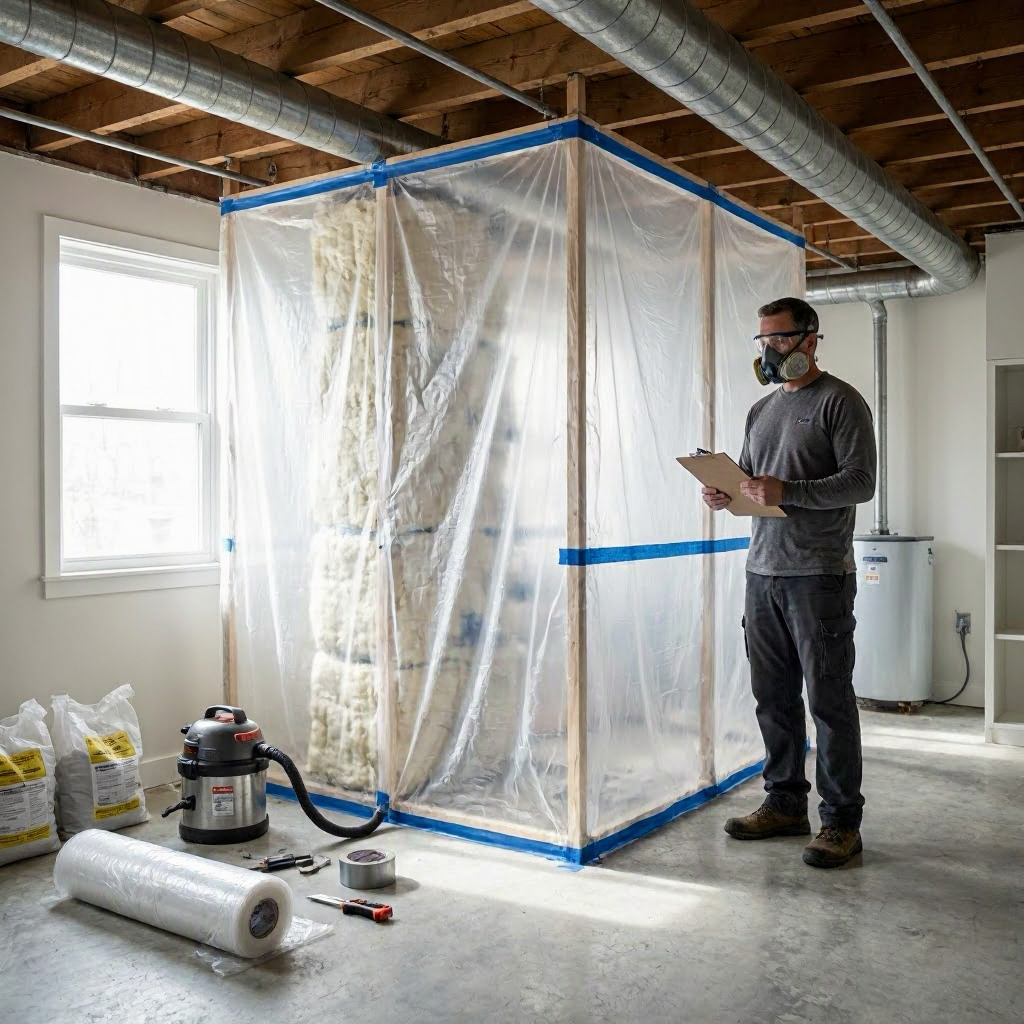
- Material Extent and Type: Small patches (under 100 sq ft) cost less than whole-room jobs. Friable asbestos demands full containment tents, negative air machines, and decontamination units, doubling expenses.
- Contamination Level: If fibers spread to HVAC or porous surfaces, air monitoring and cleanup inflate bills.
- Labor and Equipment: Certified teams use PPE, full-body suits, respirators, and specialized vacuums. Off-hours work for occupied homes adds premiums.
- Disposal and Permits: Hazardous waste hauling to approved landfills varies by state; some charge per cubic yard. Permits from local building departments are standard, with fees based on project scale.
- Home Age and Size: Pre-1970s homes often have widespread ACM, pushing costs up in larger properties.
- Urgency and Season: Emergency jobs (e.g., post-flood damage exposing asbestos) command rush fees. Winter slowdowns might lower bids in some regions.
Contractor availability post-disasters like wildfires can spike prices nationwide.
Post-abatement clearance testing by an independent inspector verifies safety, adding $300 to $1,000 but essential for liability protection.
Typical Cost Ranges Across the US
While exact figures depend on your zip code, home details, and quotes, abatement often runs $10 to $50 per square foot for removal, with whole-house jobs from $5,000 to $50,000+. Small jobs like 100 sq ft of pipe insulation might total $2,000 to $5,000, including testing and disposal.
Encapsulation typically halves those ranges, at $5 to $25 per sq ft. Testing alone: $250 to $1,000 for 1-5 samples.
These are broad US averages influenced by regional labor rates (higher in California, New York) and landfill access. Always verify with local pros, as costs have risen with stricter EPA rules and supply chain issues.
The Step-by-Step Asbestos Abatement Process
Understanding the process demystifies quotes and spots padded line items.
- Inspection and Testing: Certified inspector assesses and samples. Wait 3-7 days for lab results.
- Contractor Bid and Plan: Abatement firm submits a detailed scope, method statement, and worker certifications. Review for EPA/State compliance.
- Permitting: Submit plans to local authority; approval takes 1-4 weeks.
- Preparation: Vacate area or home. Contractors set up containment: plastic sheeting, negative pressure systems, warning signs.
- Abatement Work: Wet methods suppress dust; materials removed in sealed bags. Daily air monitoring.
- Cleanup and Clearance: HEPA vacuum everything; third-party air tests confirm fibers below limits (often 0.01 fibers/cc).
- Final Inspection: Building official or hygienist signs off.
The job takes 1-10 days, longer for large homes. You can't occupy treated areas until cleared.
Hiring a Qualified Asbestos Abatement Contractor
Only use contractors licensed by your state environmental agency and EPA-trained. Check via your state's department of health or labor website. Verify liability insurance covering asbestos work, workers' comp, and bonding.
Get quotes in writing detailing:
- Exact scope (sq footage, materials).
- Method (removal vs. encapsulation).
- Inclusions: testing, permits, disposal, containment, clearance air sampling, warranties.
- Exclusions: unexpected contamination surcharges.
- Timeline and payment terms (e.g., 30% deposit, balance post-clearance).
- Subcontractor details.
Questions to ask:
- Are you AHERA-trained or state-certified for asbestos?
- Provide references from similar jobs and proof of insurance?
- What's your experience with my ACM type?
- How do you handle surprises like hidden spread?
- What warranties on workmanship (typically 1-5 years)?
- Payment milestones?
Compare bids line-by-line; the lowest might skimp on safety. Use sites like Angi or HomeAdvisor for vetted locals, but always cross-check licenses.
Watch for upsells like unnecessary full-home abatement or skipping independent clearance.
Permits, Regulations, and Federal Oversight
Abatement requires permits in most US jurisdictions to ensure public safety. Contact your city or county building department early. The EPA's Asbestos Hazard Emergency Response Act (AHERA) sets school standards but influences residential rules nationwide.
For renovations disturbing over 260 linear or 160 sq ft of ACM, follow EPA's Lead Renovation, Repair, and Painting (RRP) Program principles, though asbestos has separate regs: EPA Lead RRP and EPA Asbestos.
States like California, New York, and Texas have stringent notification rules (e.g., 10-day public notice). Fines for non-compliance start at $10,000+ per violation.
Insurance, Warranties, and Financial Coverage
Homeowners insurance rarely covers abatement unless from a covered peril like fire or sudden leak, not wear, age, or remodels. File claims promptly with photos, test results, and quotes; expect deductibles.
Home warranties typically exclude asbestos. Check your policy or provider directly.
Contractors offer labor warranties (1-10 years); require it in writing. Keep all docs for resale disclosures, asbestos history must be revealed in US home sales.
Tax credits? Historic home rehabs might qualify via federal programs; consult IRS Publication 523.
Renters, Condo Owners, and HOA Considerations
Renters: Per implied warranty of habitability, landlords handle abatement. Send certified mail with test results, photos, and a repair demand timeline. If ignored, contact local housing authority.
Condo/HOA: Exterior or shared ACM (e.g., roof, pipes) often requires board funding. Review bylaws; you may pay reserves.
Landlords: Budget for abatement before renting older units to avoid tenant suits.
Strategies to Manage or Lower Abatement Costs
- Test Selectively: Sample high-risk areas first to scope needs.
- Choose Encapsulation: If ACM is intact, it's cheaper and sufficient.
- Bundle Jobs: Combine with other renovations for shared containment.
- Off-Peak Timing: Schedule in slower seasons.
- Shop Quotes: Three bids minimum; negotiate inclusions.
- Grants for Low-Income: Some states offer aid via health departments.
Avoid cutting corners, cheap work leads to callbacks at triple cost.
Signs Your Abatement Quote Might Be Inflated
- Vague scopes without sq footage or methods.
- No mention of certifications or clearance testing.
- Full upfront payment demands.
- Pressure for immediate starts without permits.
- Quotes far outside local norms (check via state contractor boards).
If contamination exceeds scope, get independent verification before approving change orders.
Post-Abatement Maintenance and Prevention
After clearance, ventilate well and avoid disturbing nearby areas. Annual visual checks catch issues early.
Prevent future costs:
- Inspect attics/basements yearly.
- Use pros for any pre-1980 renos.
- Document abatement certs for records.
Selling? Full disclosure with reports boosts buyer trust.
For older home safety beyond asbestos, test for lead paint via EPA resources, as multi-hazard abatement can consolidate costs.
In summary, asbestos abatement protects your health and home value but demands planning. Prioritize certified testing, detailed quotes, and compliance to control expenses effectively. Contact local experts for your situation, costs reflect protecting what's irreplaceable: your family's safety.

About the TDL Expert Panel
TDL Expert Panel · TheDigitalLife Editorial Team
TDL Expert Panel is the editorial team behind TheDigitalLife. The team researches, reviews, and creates practical guides to help everyday readers make better decisions about home repair costs, refunds, AI tools, digital safety, productivity, and useful online resources. Each guide is written to be clear, useful, and easy to understand.