What to Do If Your Water Bill Is Too High
An unusually high water bill can result from a leak, estimated or incorrect meter read, seasonal use, irrigation, a running toilet, rate or sewer change, vacant-property activity, or account error. Separate consumption from price before disputing the total.
Do not ignore a possible active leak. Water damage and continued usage can cost more than the disputed bill.
Compare several billing periods
Record service dates, billed gallons or units, actual versus estimated reads, meter numbers, rates, sewer charges, fees, and prior-year usage for the same season.
Calculate daily use because billing periods may have different lengths. Check whether a rate increase, catch-up from estimates, or tiered pricing explains part of the change.
Save the bills and online usage graph before data updates.
EPA's WaterSense program gives a benchmark for this comparison: look at a winter month such as January or February, and if a family of four used more than 12,000 gallons, there may be a serious leak. The figures come from EPA's Fix a Leak Week guidance.
Verify the meter read
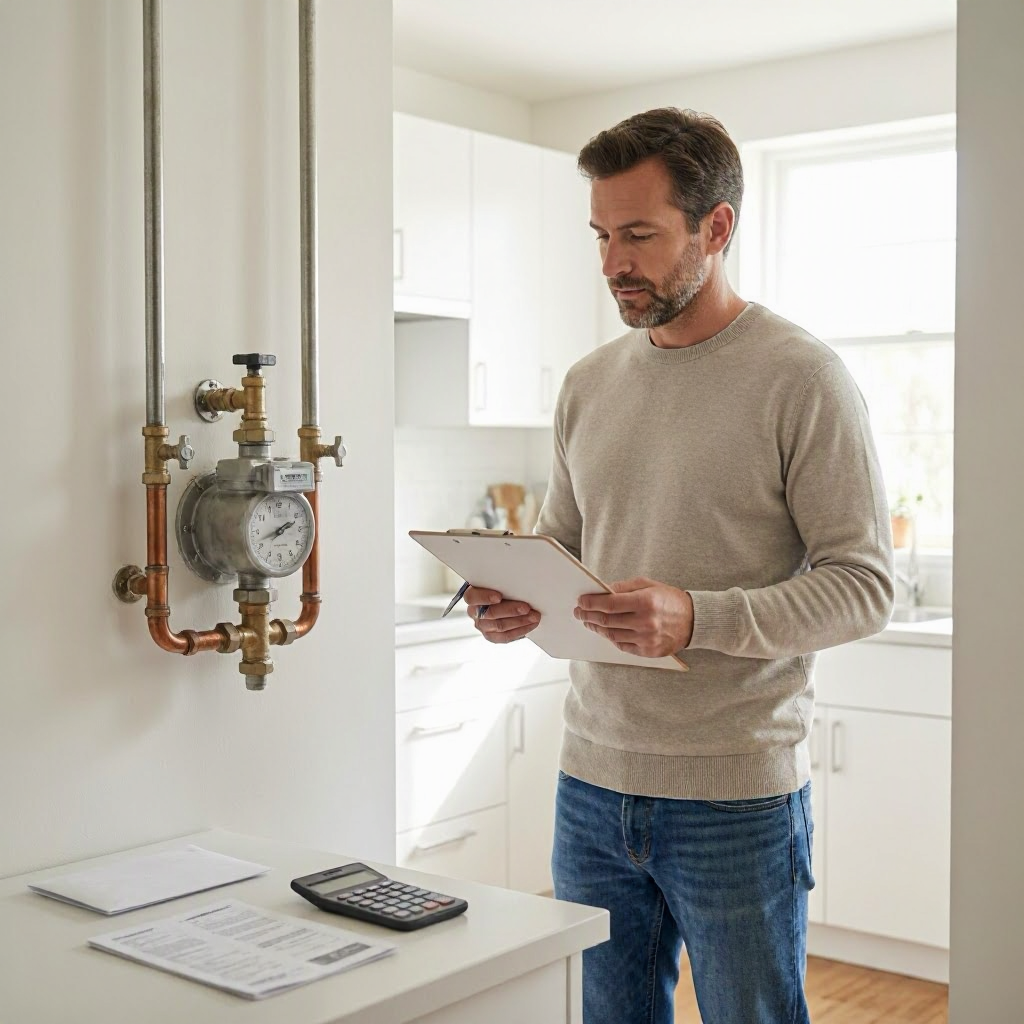
Locate the meter only if safely accessible and compare its number and current reading with the bill. Photograph the display and identifier with a timestamp.
Do not open utility-owned equipment, enter a hazardous pit, or break a seal. Ask the utility for a reread or meter test when the number or consumption appears wrong.
Request the test procedure, fee, and refund rule in writing.
Check for leaks safely
Turn off intentional water use and observe whether the meter's leak indicator or reading continues to move. Inspect toilets, faucets, visible pipes, irrigation, water heaters, outdoor spigots, and damp areas.
Use food coloring or another utility-recommended toilet test without altering plumbing. Call a licensed plumber for hidden leaks, unsafe access, major flow, or property damage.
Renters should notify the landlord in writing and preserve the time and photos.
| EPA check | How to do it | What it shows |
|---|---|---|
| Meter test | Read the meter, use no water for two hours, read it again | Any change points to a leak |
| Toilet dye test | Put a few drops of food coloring in the tank and wait 10 minutes | Color in the bowl means the toilet leaks. Flush afterwards so the tank does not stain |
| Dripping faucet | Count the drips | One drip a second wastes more than 3,000 gallons a year |
| Leaking showerhead | Count the drips | Ten drips a minute wastes more than 500 gallons a year |
EPA estimates that the average home loses more than 9,300 gallons a year to leaks, and that fixing the easy ones can cut a typical water bill by about 10%. Repair costs are covered in running toilet repair cost and water bill impact and main water line leak repair cost.
Use smart-meter and property evidence
Hourly usage can distinguish a steady leak from irrigation or a one-time event. Ask the utility for interval data, read history, service notes, and alerts.
Check household changes, guests, pool filling, landscaping, construction, vacancy, and unauthorized outdoor use. Do not accuse a neighbor without evidence.
For a shared meter, review the lease and allocation method.
Document repairs
Keep photographs, plumber diagnosis, invoices, parts, repair date, meter readings before and after, and proof of payment. Ask the professional to state the leak location and estimated duration without speculating beyond evidence.
Many utilities offer a one-time leak adjustment with deadlines, covered leak types, and repair-document requirements. An adjustment may affect water but not sewer or taxes.
Submit the complete application and retain confirmation.
Dispute billing errors
Write to the utility with the account, bill period, disputed reading or charge, evidence, and requested correction. Pay the undisputed amount if advised and ask whether review pauses late fees or shutoff.
Use the formal hearing or appeal route for a denied adjustment or meter dispute. Municipal, private, and cooperative systems have different oversight.
Do not let an internal review expire a local appeal deadline.
Request affordability help
Ask for a payment arrangement, income-based discount, arrears program, fee waiver, due-date change, or local water assistance. Contact 211 and city or county social services.
State and federal utility programs change, and not every energy program covers water. Verify the current service-specific eligibility.
Avoid high-cost borrowing that turns one bill into repeated automatic withdrawals.
211 can search for local water assistance programs. The utility's own customer service line is the other place to ask whether a hardship program exists.
Prevent another surprise
Set usage alerts, read the meter regularly, repair small leaks, review irrigation schedules, and know where the household shutoff is located. Do not close a main valve you cannot operate safely.
Compare the next bill with post-repair readings and confirm any adjustment. Preserve the corrected account ledger.
Handle landlord and shared-meter disputes
Renters should send the landlord the bill, leak evidence, and repair request through the lease's notice route. Ask who controls plumbing repairs, utility adjustments, and access to the meter. Continue following local rent and utility rules rather than deducting the charge without advice.
For a multifamily property, confirm whether the unit has a dedicated meter, submeters, or an allocation formula based on occupants or square footage. Request the calculation and underlying master bill when the law or contract provides access.
If the account changed owners or tenants during the billing period, give the utility closing and opening reads, move dates, and service records. Do not pay a prior occupant's balance solely to avoid delay without understanding local successor-account rules.
Where unexplained continuous use remains after visible repairs, consider a licensed leak-detection professional. Preserve its test method and findings for both the adjustment and property claim.
Check whether homeowners or renters insurance should be notified about resulting property damage, recognizing that coverage for water damage and the wasted-water bill can differ.
Ask the utility whether sewer charges can be adjusted when leaked water did not enter the sewer system. That decision often uses a separate calculation and application.
USAGov lists help with utility bills, while the CFPB provides rent and utility assistance starting points. The local water utility supplies the controlling meter, adjustment, and appeal rules.
Related guides: how to negotiate a utility payment plan and how to stop a utility shutoff notice.
This is general consumer information. Plumbing condition, meter data, rate design, lease terms, and local policy determine responsibility.
Sources:
- Get help paying utility bills, USAGov
- Get help paying rent and bills, Consumer Financial Protection Bureau
- Fix a Leak Week, EPA WaterSense
- 211, find local help

Written by TheDigitalLife Editorial Team
Edited by R. K. Tiwari
Owner & Editor
R. K. Tiwari is the owner and editor of TheDigitalLife. He checks each guide against official U.S. sources before it is published.
About the editor and our editorial standards