Gas Bill Too High? What to Check Before Paying
A high gas bill is a multiplication problem before it is a mystery: the measured or estimated gas used, the price per unit, fixed charges, adjustments, taxes, and number of billing days. Compare those inputs with prior bills before blaming the market, meter, or furnace.
Do not ignore the due date while investigating. Contact the utility promptly, pay any undisputed amount if its process permits, and ask how a dispute affects late fees or disconnection rules.
Compare days, units, and total usage
Place the current bill beside the same month last year and the immediately prior bill. Compare billing-period length, beginning and ending meter readings, therms or cubic feet used, average use per day, and whether either reading is marked estimated.
A 35-day bill should not be compared directly with a 28-day bill. Divide usage by billing days. Then compare heating degree days or average temperatures if the bill provides them; colder weather can raise space-heating demand sharply even when thermostat settings did not change.
Confirm that the service address, meter number, rate class, and account are yours. A move, meter replacement, supplier change, or correction after months of estimates can create an unusual adjustment.
Read the meter safely
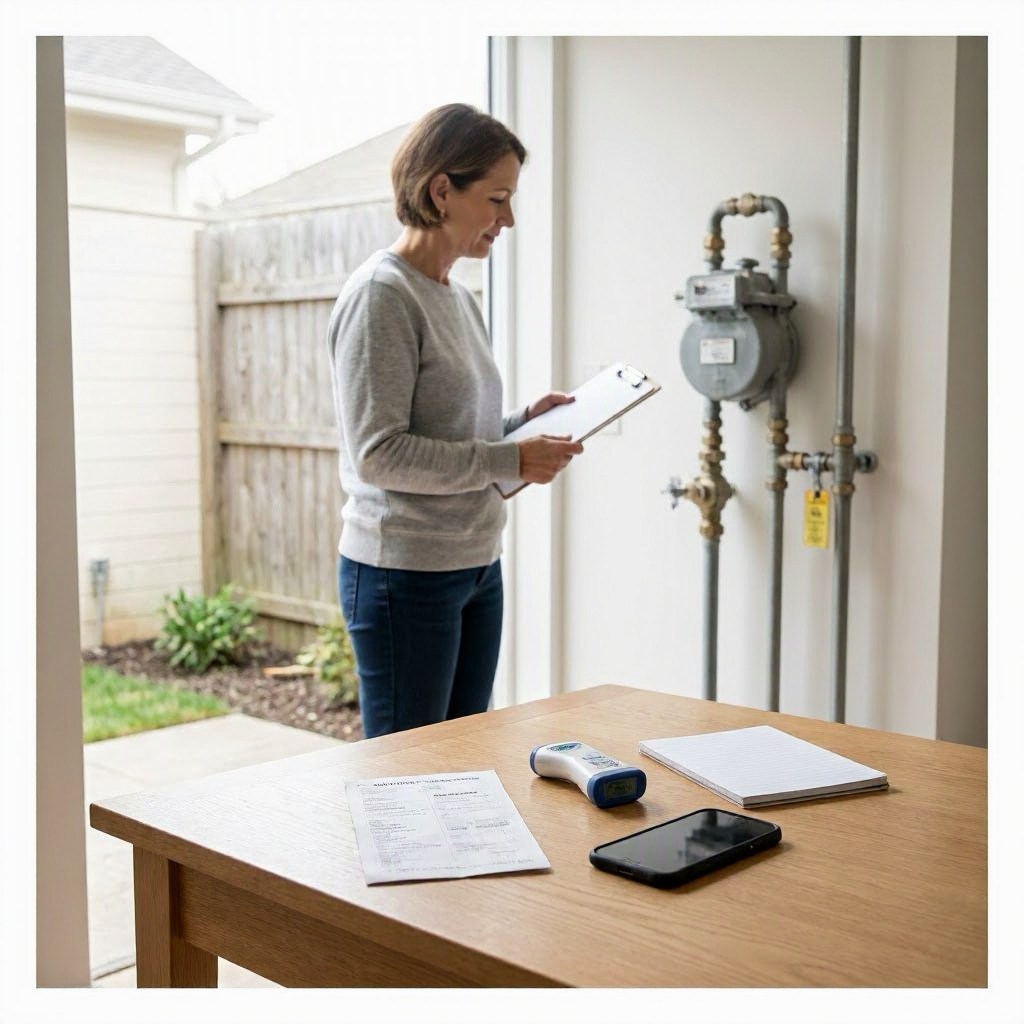
If the meter is accessible without entering a restricted area, smell of gas, ice hazard, or damaged equipment, compare its current display with the bill’s ending reading. Photograph the meter number and reading with the date. Do not open, alter, bypass, or attempt to test the meter yourself.
An actual current reading will normally be later than the bill’s ending reading, so allow for gas used since the bill closed. A large contradiction or the wrong meter number should be reported to the utility.
If you smell gas, hear hissing, or suspect carbon monoxide, leave the area and follow the utility’s emergency instructions from a safe location. Do not operate switches, flames, vehicles, or phones near a suspected leak.
Separate usage changes from rate changes
Calculate the effective variable cost by reviewing supply or commodity, delivery or distribution, riders, and taxes. Fixed customer charges can make the per-unit average look high during low-use months.
Residential gas prices can include the commodity, transmission and distribution costs, taxes, and fees. Location, pipeline capacity, demand, regulation, and supplier choice can also affect the retail price. If the unexplained amount appears to be a billing or service problem, USA.gov’s energy-bill help page points to assistance and complaint routes.
Compare the current tariff or supplier contract with the bill. An introductory rate may have expired, or a third-party supplier may have a variable price. Verify cancellation terms before switching and compare the complete rate, not a marketer’s projected saving.
Look for changes inside the home
List every gas appliance: furnace or boiler, water heater, range, dryer, fireplace, pool heater, generator, or garage heater. Note new occupants, guests, remote work, thermostat schedules, hot-water use, building work, and doors or windows left open.
Check filters and accessible thermostat settings according to manufacturer instructions. Uneven heating, short cycling, a constantly running appliance, soot, unusual flame, or new noise requires qualified service—not DIY combustion adjustment.
Weatherization, insulation, duct or pipe issues, and equipment efficiency can affect consumption. EIA identifies colder weather as a major driver of residential demand and suggests efficient equipment operation, thermostat adjustments, budget plans, and energy audits as possible bill-reduction routes.
Ask the utility to explain specific lines
Call through the number on the bill or official website. Ask which readings were actual, how usage was converted into billing units, whether the meter multiplier is correct, what rate schedule applied, and why each adjustment appears. Request a corrected bill or meter review if the explanation does not reconcile.
Keep the representative’s name or ID, date, case number, promised response, and any payment arrangement. Submit the meter photo and comparison table through the utility’s secure channel.
If the utility does not resolve a billing error, use the complaint process of the state public utility commission or other regulator. Rules, shutoff protections, testing fees, and appeal deadlines vary, so use the regulator for your state and utility type.
While you have the utility on the phone, ask about a payment plan or a temporary discount. 211's page on help paying bills notes that some utilities also work with local nonprofits that can add financial help.
Evaluate a meter test with realistic expectations
Ask whether the utility can perform a reread, remote-data review, leak check on its facilities, or formal accuracy test. Find out whether a test fee applies and when it is refunded. A meter test addresses measurement accuracy; it does not identify inefficient appliances or gas leaks within customer-owned piping.
Do not use an open flame to check for leaks. A licensed gas professional can assess customer equipment and piping, while the utility controls its meter and service infrastructure. Clarify ownership before authorizing work.
Get help before arrears grow
Ask about levelized or budget billing, payment plans, energy audits, weatherization, medical protections, and local assistance. The federal LIHEAP information site describes state-administered energy assistance for eligible households; availability and benefits vary.
Budget billing smooths monthly amounts but does not necessarily reduce total annual cost. Read how true-ups and account closure are handled. Avoid third parties that guarantee a bill reduction for an upfront fee.
| Program | What it covers | Who can get it |
|---|---|---|
| LIHEAP | Heating and cooling bills, unpaid balances and shutoff prevention | Each state sets its limit. Under the federal rules the limit can be no higher than 150% of the poverty guidelines or 60% of state median income, whichever is greater |
| Weatherization Assistance Program | Free work that makes the home use less energy | Low-income households. The Energy Department says participating households save $372 or more a year |
The LIHEAP office for your area can be reached through the National Energy Assistance Referral line, 1-866-674-6327. LIHEAP does not charge a fee to apply.
Create a one-page bill audit
Record billing days, actual or estimated readings, daily use, unit price components, fixed fees, weather comparison, and household changes. This makes the utility conversation specific and creates evidence for a regulator if needed.
Paying without reviewing can conceal an error; withholding the whole bill without using the dispute process can create avoidable penalties. Verify the numbers, document the question, and follow the official procedure.
Related guides: how to negotiate a utility payment plan, LIHEAP utility assistance: how to apply and what you need and how to dispute a wrong electric bill.
This article provides general consumer and energy information, not utility, engineering, legal, safety, or financial advice.
Sources:
- Get help with energy bills, USAGov
- LIHEAP: federal energy bill and home heating assistance, Administration for Children and Families
- I need help paying my bills, 211
- Weatherization Assistance Program, U.S. Department of Energy

Written by TheDigitalLife Editorial Team
Edited by R. K. Tiwari
Owner & Editor
R. K. Tiwari is the owner and editor of TheDigitalLife. He checks each guide against official U.S. sources before it is published.
About the editor and our editorial standards