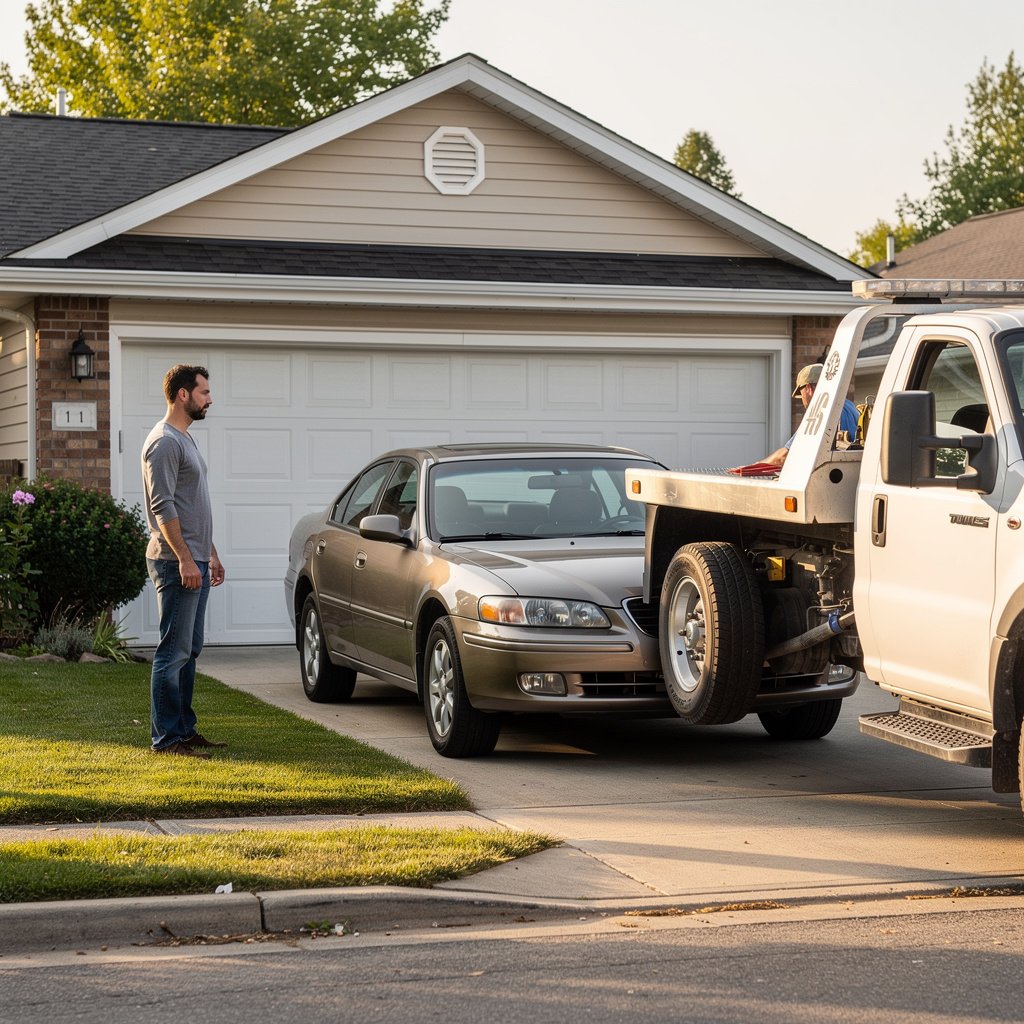
What to Do If Your Car Is About to Be Repossessed
If you are behind on a car loan and fear the car will be taken, the next few days matter. In many states a lender can repossess after a missed payment without going to court and sometimes without warning, so the goal is to find out where you stand, make the best move available and know what rights you keep if the car is taken anyway. This guide covers all three, and the costs that can follow a repossession.
Know how fast it can happen
The FTC says that if you do not make your car payments on time, your lender might have the right to take your car without going to court or telling you first, and that most financing agreements allow repossession any time you are in default. The CFPB adds that in many states a lender can repossess without a warning or court order after a missed payment, while other states require a notice that lists the missed payments and gives you time to make them up. Some contracts also allow a device that stops the car from starting if payments are missed; the FTC says whether using it counts as a repossession depends on your contract and state law.
So treat any missed payment as urgent, and find your state's rules. The FTC suggests checking with your state attorney general, because states have their own rules about how cars can be repossessed and what happens after.
Call the lender today and get specifics
Contact the lender or servicer using the number on your statement, not a number from a text or a stranger. Ask for the past-due amount, any fees, the payoff balance, whether you have a right to cure (catch up) and the deadline, and the current status of the account. The CFPB says that if you can work out an alternative with the lender, you avoid the risk of repossession, and the FTC says many lenders will work with you if they think you can pay soon.
If you can pay the past-due amount, do it and get written confirmation that the repossession order is cancelled. If you cannot, ask for a short-term arrangement and a written agreement. The CFPB's examiners have found servicers that repossessed cars even though customers had made payments or obtained extensions that should have prevented it, so keep every receipt, confirmation number and note. If it happens in error, the CFPB says to contact the lender or servicer immediately, and if you cannot resolve it you can submit a complaint or pursue legal action.
For lease customers, the CFPB says you may have a right to cure within your contract or under state law, usually after a notice and one to two weeks to make up the payment.
Compare your alternatives before the tow truck comes
The FTC says that if you know you cannot keep up, selling the car yourself and paying off the debt may be better, since you avoid repossession costs and a negative credit entry. See what to do if you cannot pay your car payment for more on selling, refinancing and surrendering the car.
A voluntary surrender may reduce your fees, according to the FTC, but you still owe any deficiency and the late payments or repossession may still be reported. Do not take a car title loan to catch up. The FTC says these are short loans secured by your vehicle, with monthly fees as high as 25 percent, about 300 percent APR, and that the lender may repossess even after partial payments. In its example, borrowing $1,000 for 30 days at a 25 percent fee means repaying $1,250, and a rollover would bring it to $1,500 after 60 days. That can turn one repossession risk into another.
Also refuse anyone who asks for an upfront fee to stop a repossession. The FTC says to work directly with your lender.
What you can still do after the car is taken
Repossession is not always the end of your options. The CFPB says some states let you pay to get the car back after repossession, usually by making up overdue payments plus the costs, which is called curing or reinstating the loan. Even without that law, you have the right to be notified before your vehicle is sold or kept as payment for your debt, and you may be able to redeem it by paying the full loan amount plus repossession costs before the sale. For a public sale, the lender must tell you the date, time and place; for a private sale, the date after which the car could be sold.
The FTC says you may also have options to get back personal property left inside the car, so ask the lender how to retrieve it. The CFPB adds that under some state laws a lender cannot repossess in a way that "breaches the peace," which generally means threatening or using physical force, removing a vehicle from a closed garage without permission, or continuing after you have refused.
Understand the deficiency
After a sale, you may owe the difference. The CFPB's example: if you owe $10,000 and the car sells for $7,500, you owe the $2,500 deficiency plus repossession fees. Here is a made-up version with fees: you owe $12,000, repossession and sale costs are $600 and the car sells for $7,000. The deficiency is $12,000 plus $600 minus $7,000, or $5,600. The FTC says that in most states the lender can sue for a deficiency judgment if it followed the rules for repossession and sale. If it sells for more than you owe, the CFPB says you are entitled to the surplus. If a collector later contacts you, see debt collector threatening you.
Credit, insurance and special protections
The CFPB says a repossession can stay on your credit report for up to seven years and can lead to higher insurance rates. If it was in error, you can dispute it with the credit reporting companies. Servicemembers should know that the SCRA generally prohibits repossession without a court order if you bought the vehicle and made a payment before entering active duty; the CFPB suggests contacting your nearest legal assistance (JAG) office. Bankruptcy is another route that the FTC says can stop repossessions, but it has serious consequences, so talk to a nonprofit credit counselor or a lawyer first.
For the rest of your budget, see what bills should you pay first when money is tight and how to find transportation help.
Sources:
- What happens if my car is repossessed? CFPB
- What should I do if I can't make my car payments? CFPB
- Vehicle Repossession, FTC
- What To Know About Payday and Car Title Loans, FTC
- Auto Loan Refinancing Scams, FTC
- How To Get Out of Debt, FTC
- Servicemembers Civil Relief Act and auto repossession, CFPB
- Supervisory Highlights Special Edition: Auto Finance, CFPB

Written by TheDigitalLife Editorial Team
Edited by R. K. Tiwari
Owner & Editor
R. K. Tiwari is the owner and editor of TheDigitalLife. He checks each guide against official U.S. sources before it is published.
About the editor and our editorial standards