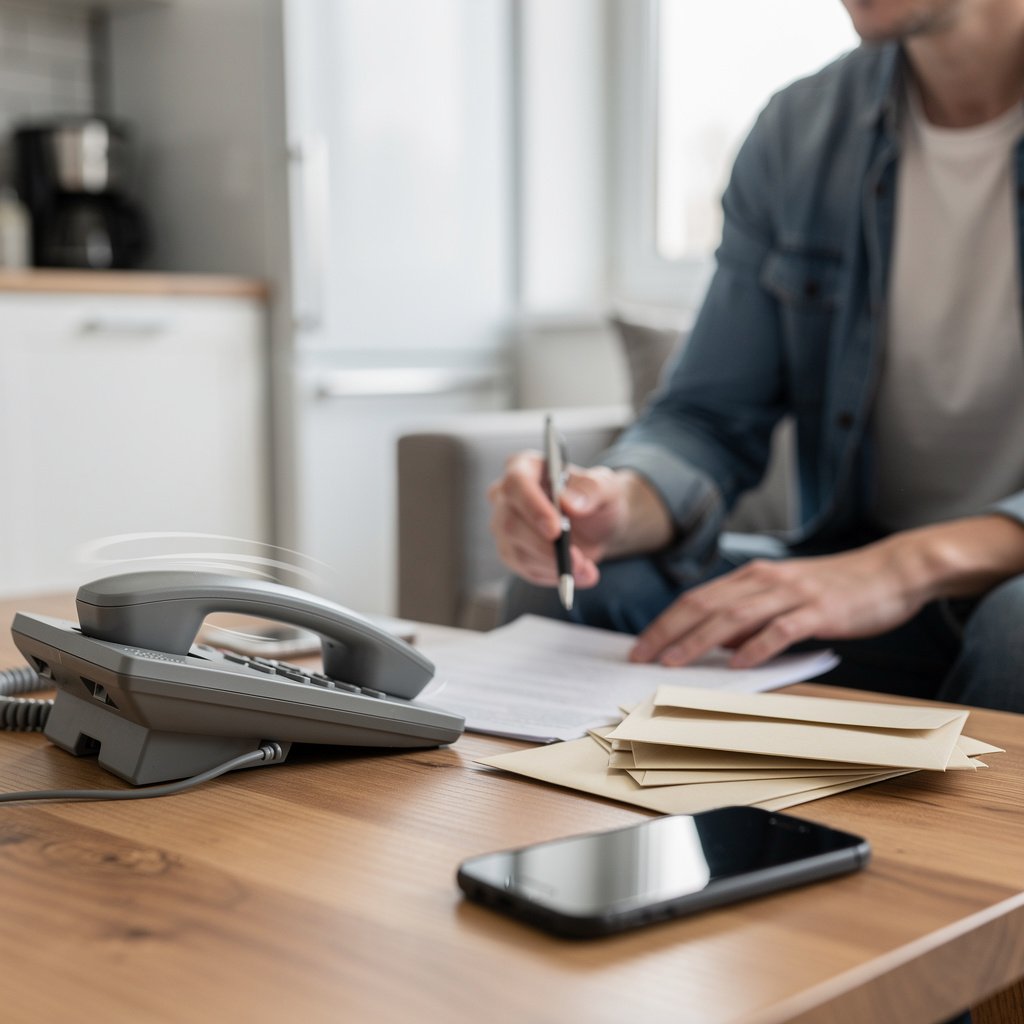
Debt Collector Threatening You: What to Do First
A threatening call from someone who says they collect debts is frightening, and the people who make those calls count on that. Some callers are real collectors who cross a legal line. Others are scammers with no right to collect anything. Either way, the first move is the same: slow down, do not pay or share account details on that call, and make the caller prove the debt in writing. This guide explains which threats are against the law, how to tell a real collector from a fake one, and the written steps that protect you.
Know which threats are against the law
The Fair Debt Collection Practices Act (FDCPA) covers personal debts such as credit cards, car loans, medical bills and student loans. The FTC's debt collection FAQs list what collectors may not do:
- Threaten to hurt you or use obscene language.
- Call you more than seven times in seven days about one debt, or call again within seven days after a phone conversation about it.
- Call before 8 a.m. or after 9 p.m. unless you agree, or call you at work if you have told them you cannot take calls there.
- Pretend to be an attorney or a government official.
- Tell you that you owe a different amount than you really do.
- Say you will be arrested, or threaten legal action they do not intend to take or cannot take.
- Add interest, fees or charges that the original contract or a law does not allow.
The CFPB adds that a collector cannot have you arrested for an unpaid debt, or say that you will be. There is one narrow exception it points out: if a collector sues you, a court orders you to appear or to provide information, and you ignore the order, a judge can issue a warrant. That is a court process, not something a phone caller can arrange.
Decide whether the caller is real
The FTC's page on fake and abusive debt collectors says a caller may be fake if they want repayment of a debt you do not recognize, refuse to give a mailing address or phone number, or pressure you with threats of arrest. Scammers sometimes know personal details, so knowing your name or a relative's name proves nothing.
Do not use the number on caller ID to check. Instead:
- Ask for the collector's name, company, mailing address and phone number.
- Ask who the original creditor is and request the debt details in writing.
- Contact the original creditor yourself, using a number from a statement or the company's website, and ask whether the debt is yours and whether it was sold or placed with a collector.
- Hold off on giving a card number, bank login or Social Security number until the debt is confirmed.
A real collector has to give you validation information, either in the first contact or within five days. The CFPB says that notice includes an itemization of the current amount, the creditor's name, and an end date for your 30-day window to dispute. A caller who refuses to put anything in writing is a warning sign.
Dispute in writing, and do it quickly
If you do not recognize the debt, or the amount looks wrong, send a dispute letter. The CFPB explains that if you dispute in writing within 30 days of getting the validation notice, the collector must stop collecting until it sends you verification of the debt. Verification might be a copy of the original bill. Keep these habits:
- Send the letter by certified mail with a return receipt, and keep a copy.
- Say plainly that you dispute the debt and ask for verification. You do not need to explain your whole financial situation.
- Do not wait. If you miss the 30 days, the collector can treat the debt as valid, and you lose some of the protection the dispute gives you.
Once the collector sends verification, it can start contacting you again unless you take other steps, so the dispute buys time and information, not a permanent end.
Tell them to stop contacting you
You can also send a letter asking the collector to stop contacting you. The FTC says that after the collector receives it, it can only contact you to confirm it will stop or to tell you it plans a specific action, such as filing a lawsuit. If a lawyer represents you, tell the collector, who then has to deal with the lawyer.
Be realistic about what this does. The CFPB notes that asking a collector to stop contacting you does not stop it from suing you or from reporting the debt to a credit reporting company. If the debt is real, a stop-contact letter should be paired with a plan to resolve it. If it is a scam, the letter is unnecessary and the better move is to stop responding and report it.
Keep a record and report it
Write down the date, time, caller's name, company and exactly what was said. Save voicemails, texts, emails and envelopes. These records help if you file a complaint, talk to a lawyer or end up in court.
Report abusive or fake collectors to the CFPB, to the FTC at ReportFraud.ftc.gov, and to your state attorney general. If someone threatens physical harm or says they are coming to your home, treat that as a safety issue and contact local law enforcement.
If the debt turns out to be yours
Being treated badly by a collector does not erase a real debt. Once you have verification, you have choices. Read how to negotiate a payment plan with a collector and whether to settle a debt or make payments. Be careful with companies that charge up front to make debts disappear; see the red flags of debt relief scams. If a court judgment leads to wage garnishment, read what to do if your paycheck is garnished.
If you are ever sued, respond to the court papers by the deadline they state. Ignoring a lawsuit is the way an unpaid debt turns into a court order.
Sources:
- Debt Collection FAQs, FTC Consumer Advice
- Fake and Abusive Debt Collectors, FTC Consumer Advice
- Can I be arrested for an unpaid debt? CFPB
- What is an unfair, deceptive or abusive practice by a debt collector? CFPB
- What information does a debt collector have to give me about a debt? CFPB
- Can a debt collector still collect a debt after I've disputed it? CFPB

Written by TheDigitalLife Editorial Team
Edited by R. K. Tiwari
Owner & Editor
R. K. Tiwari is the owner and editor of TheDigitalLife. He checks each guide against official U.S. sources before it is published.
About the editor and our editorial standards