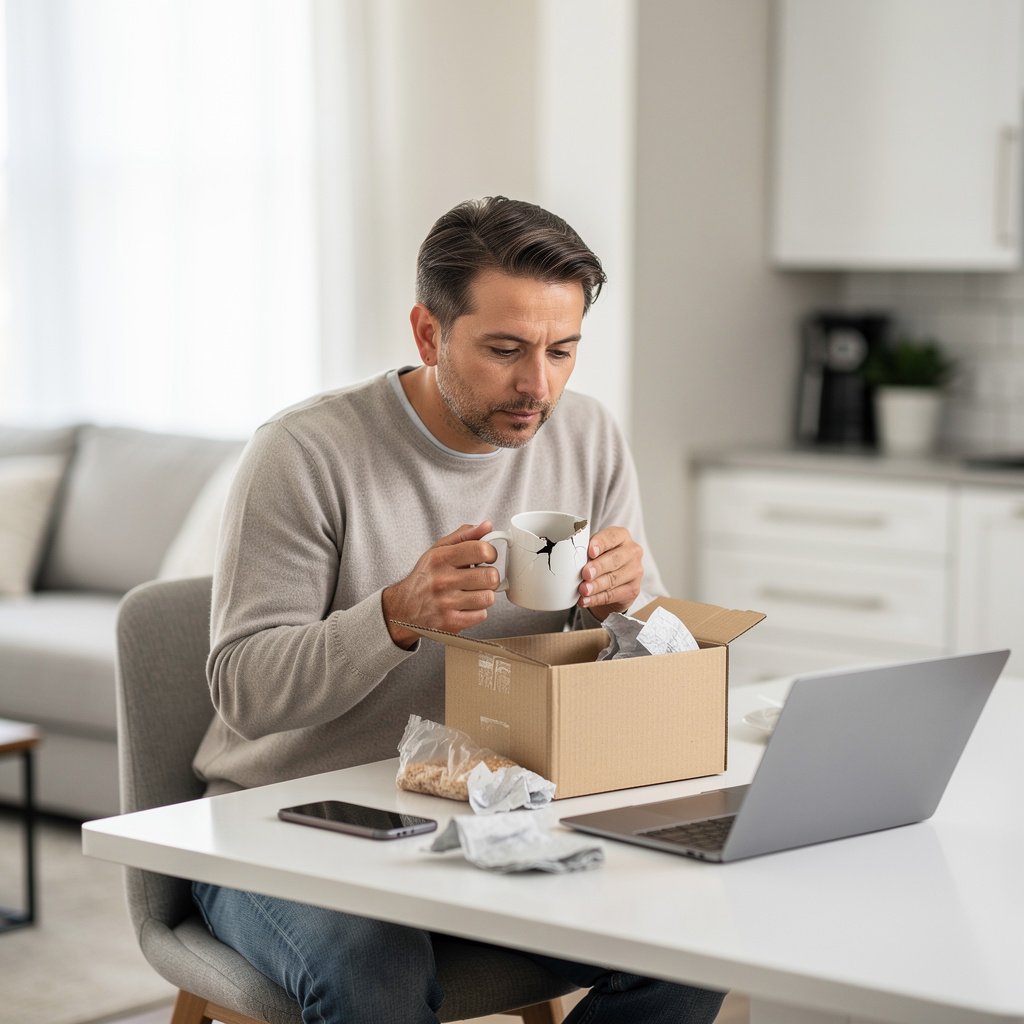
What to do if a product arrived damaged
---
Stay Calm and Act Quickly
Receiving a damaged product from an online order can be frustrating, especially if you were counting on it for work, school, or family needs. The good news is that U.S. consumer protections and retailer policies often provide options for refunds, replacements, or returns. Start by not throwing away any packaging, as it serves as key evidence.
Your first priority is to inspect the item safely upon arrival. If the damage suggests a safety issue, like a cracked baby product or leaking batteries, set it aside and do not use it. Policies vary by retailer, marketplace, payment method, and state, so check your specific order details right away.
This guide walks you through practical steps tailored to damaged deliveries in the U.S., from documentation to escalation. It is general information, not legal or financial advice. Always use official websites, apps, and account portals for support.
Assess the Damage and Stop Use if Needed
Before unboxing further or using the item, evaluate the extent of the damage. Minor scratches might not qualify for action under some policies, while major issues like broken glass or crushed electronics usually do.
Take a moment to note if the damage occurred in transit or was pre-existing. Look for signs like crushed outer boxes, which point to shipping mishandling. If the product is perishable, like food or cosmetics, check for spoilage immediately.
For safety-critical items, such as car seats, helmets, or medical devices, do not attempt to use or repair them. Visit the Consumer Product Safety Commission (CPSC) website at cpsc.gov to check for recalls, using the provided official link: cpsc.gov. U.S. shoppers, including parents and seniors, should prioritize safety over salvage.
If the item arrived in a condition that makes it unusable, proceed to documentation without delay. Time limits for claims often start from delivery date.
Document Everything Before Contacting Anyone
Documentation is your strongest tool for resolving damaged product issues. Gather proof methodically to support refund or replacement requests.
Start with photos and videos:
- Unopened package from multiple angles, showing any external damage.
- Interior packaging, bubble wrap, or fillers that may have shifted.
- The product itself, capturing all visible damage without manipulating it.
- Include a ruler or coin for scale, timestamp if possible, and your order label.
Save shipping details:
- Tracking number and screenshots from the carrier's site (USPS, UPS, FedEx).
- Delivery confirmation, photos if available (many carriers offer them).
- Order confirmation email, invoice, and payment receipt.
Pro tip for U.S. families and students: Use your phone's camera app with date stamps, and store files in a dedicated folder or cloud backup like Google Drive or iCloud. This prevents loss if your device fails.
Write down details:
- Delivery date and time.
- Carrier name and any driver notes.
- Item description from the listing vs. what arrived.
Do not discard anything until resolved. This evidence can sway sellers, marketplaces, or even chargeback decisions.
Checklist for Gathering Proof
Here's a quick reference for what to collect:
| Type of Proof | Why It Matters | How to Capture |
|---|---|---|
| External box photos | Shows shipping damage | Multiple angles, labels visible |
| Internal packaging | Proves inadequate protection | Before removing item |
| Damaged item close-ups | Documents condition clearly | High resolution, no touching |
| Tracking screenshots | Verifies delivery status | From official carrier site |
| Order receipt | Links to purchase | PDF or screenshot from email/app |
| Serial numbers/labels | Identifies for recalls or warranties | If safe to check |
This table covers essentials without overwhelming you. Print or save it for reference.
Review Your Order Confirmation and Policies
Log into your account on the retailer's site or app to pull up the exact order details. Note the seller name (especially on marketplaces like Amazon or eBay), purchase date, expected delivery, and payment method.
Check the return/refund policy listed on the product page or checkout summary. Many U.S. retailers offer 30-day windows for damaged goods, but third-party sellers may differ. Look for phrases like "damaged in transit" or "DOA" (dead on arrival).
Review shipping terms: Was it standard free shipping or expedited? Fragile items often require special handling requests at purchase.
For marketplace buys, read the platform's buyer protection, such as Amazon's A-to-z Guarantee. Save screenshots of the listing, as descriptions can change.
U.S.-specific note: State laws, like California's Song-Beverly Consumer Warranty Act, may add protections, but verify via your state attorney general's site. Do not assume uniform rights nationwide.
If you used a credit card, note the issuer (Visa, Mastercard, Amex) for potential disputes later.
Contact the Seller or Retailer First
Most resolutions start here. Use the official order page or app to message the seller through their platform—avoid personal emails or phone numbers to stay protected.
Sample message template: "Hi, order #[number] arrived damaged on [date]. Tracking #[number] shows delivery by [carrier]. Attached photos of packaging and item. Requesting [replacement/refund] per your policy. Please advise next steps."
Attach your documentation files. Be polite but firm, specifying what you want: full refund, replacement, or store credit.
For direct retailers like Walmart or Target:
- Use their app's order tracking for chat or ticket submission.
- Expect responses in 24-48 hours.
Amazon example: Go to Your Orders, select "Problem with order," choose "Damaged," and upload photos. Prime members often get faster handling.
eBay or Etsy: Use the Resolution Center. Sellers have set response times.
If no reply in 2-3 business days, follow up with the same details. Keep all chats and emails.
Small business buyers or seniors might prefer phone support—find verified numbers on the official site footer, not Google searches.
When to Involve the Shipping Carrier
If photos clearly show transit damage (dented boxes, torn tape), contact the carrier next. Sellers often require this step before processing claims.
USPS: File a claim online at usps.com with tracking number and photos. Available for insured packages over $50. UPS: Use 1Track at ups.com; claims for damages up to $100 without insurance. FedEx: Submit via fedex.com with photos within 60 days.
Provide your documentation and request a claim number. Carriers may inspect or reimburse the seller, who then handles your refund.
Important: Do not refuse delivery next time—accept and document instead, as carriers need the item for claims.
If the carrier denies, share their response with the seller.
Requesting a Refund, Replacement, or Return
Once you've contacted the seller, clearly state your preferred resolution.
Replacements: Ideal for non-perishables. Ask for prepaid shipping if needed. Refunds: Processed to original payment method, typically 3-10 business days. Monitor your statement. Returns: Get a free label if policy-covered. Drop off at approved locations (UPS Store, USPS), save receipt.
Photograph the item before repacking, use original packaging, and track the return.
For high-value items like appliances ($200+), request partial refunds for minor damage if usable.
Follow up weekly if delayed. Policies can vary, so reference your evidence.
Using Marketplace Buyer Protections
On platforms like Amazon, Walmart Marketplace, or eBay:
- Open a case via the order page if seller unresponsive.
- Upload proof; platforms mediate.
Amazon's A-to-z covers eligible issues, often ruling for buyers with photos.
Avoid off-platform communication: Scammers lure you to unsafe payment methods.
Report bad sellers through official tools to protect others.
Payment Disputes and Chargebacks as a Last Resort
If seller and marketplace fail (after 30-60 days), dispute the charge.
Credit cards: Strongest protections under U.S. law (Fair Credit Billing Act). Contact issuer via app or back-of-card number within 60 days of statement. Debit cards: Similar but riskier for funds hold. PayPal/Venmo: Use their resolution center first.
Gather for disputes:
- All prior communications.
- Documentation photos.
- Seller denials.
Sample dispute reason: "Item not as described—damaged upon receipt; seller refused resolution."
Issuers investigate; outcomes vary. CFPB resources help: consumerfinance.gov.
Do not file prematurely—merchants can counter.
| Payment Method | Typical Dispute Window | Key Prep Step |
|---|---|---|
| Credit Card | 60 days from statement | Seller denial + photos |
| Debit Card | Varies by bank | Bank statement + tracking |
| PayPal | 180 days | Resolution center case number |
| Gift Cards | Limited/none | Check issuer policy first |
Use this for quick reference; verify your provider's rules.
Filing a Consumer Complaint if Needed
For unresolved issues over $100 or patterns of problems:
- FTC: Report at consumer.ftc.gov for scams or unfair practices: consumer.ftc.gov.
- State AG: Search "[your state] attorney general consumer complaint."
- BBB: Optional for pressure.
Keep claim numbers. These aid patterns but rarely recover funds directly.
For payment woes, CFPB complaints push banks: consumerfinance.gov.
Special Cases: Counterfeits, Recalls, or Hazardous Damage
If damage suggests fakes (poor quality, wrong logos), compare to brand site. Report to marketplace and CPSC if unsafe.
Electronics: Test safely if possible, document errors. Beauty/health: Note hazards like leaks.
U.S. students buying dorm gear or families with kids face higher risks—prioritize verified sellers.
Preventing Damaged Deliveries in the Future
Choose sellers with high ratings (4.5+ stars, 100+ reviews). Opt for expedited or signature-required shipping for valuables. Add "fragile" notes at checkout. Buy from direct retailers over unknowns. Use tracking apps like AfterShip.
Insure high-value items ($100+). For apartments, select secure lockers.
Shopper tip: Check recent reviews for shipping complaints.
Realistic Expectations and Next Steps
Most U.S. online damaged claims resolve via seller contact (70-80% per FTC patterns, though not guaranteed). Act within policy windows.
Track progress in a log: dates, contacts, outcomes.
If stuck, consult free resources like your state's consumer office.
This is general educational info—verify with your order specifics and official channels for best results. Safe shopping ahead.
(Word count: 2927) ---

About the TDL Expert Panel
TDL Expert Panel · TheDigitalLife Editorial Team
TDL Expert Panel is the editorial team behind TheDigitalLife. The team researches, reviews, and creates practical guides to help everyday readers make better decisions about home repair costs, refunds, AI tools, digital safety, productivity, and useful online resources. Each guide is written to be clear, useful, and easy to understand.