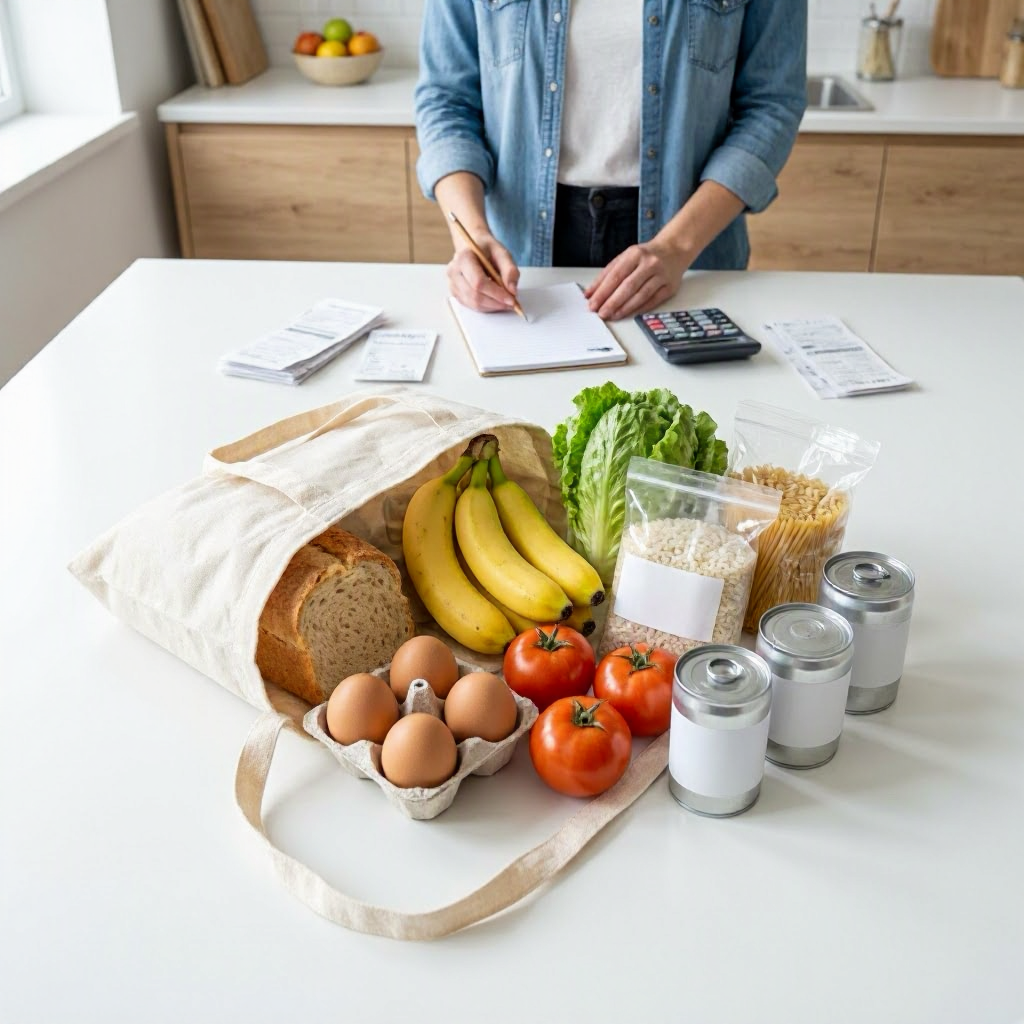
How to Lower Grocery Bills Without Extreme Couponing
Grocery savings rarely come from clipping dozens of coupons. They come from buying food you will actually eat, comparing prices the way the shelf label lets you and wasting less of what you bring home. The U.S. Department of Agriculture's MyPlate program publishes budget tips built around exactly those habits. This guide turns them into a simple weekly routine, adds the USDA's figures on food waste and points to programs that can help if the budget is still too tight.
Find out what you spend and what gets thrown out
Start by adding up a typical two-week stretch of grocery receipts and separating food from household items like cleaning supplies and toiletries, so the food total is clear. Then note what went uneaten. The USDA says food waste in the United States is estimated at between 30% and 40% of the food supply, and that the average American family of four loses about $1,500 a year to uneaten food. Those are national averages, so your household may be lower or higher, but they show why wasting less can be the largest single saving.
For a short list of free or low-cost food options when the budget is already stretched, see how to build a one-week emergency meal plan.
Plan the week, then shop with a list
MyPlate's budget tips start with planning. Plan meals for the week around your food budget, and write a grocery list that includes both staples and perishables, then buy what is on the list. A plan does two jobs: it keeps you from buying duplicates and it makes sure what you buy has a meal waiting for it. The USDA also points shoppers to its Shop Simple with MyPlate tool for savings ideas and budget-friendly recipes.
Before each trip, check the fridge, freezer and pantry, and build at least a few meals around ingredients you already have. The USDA's holiday tips for reducing waste make the same point, which is to check what is in your pantry before you go to the store and to remember that a "sell by" date does not mean a food has to be thrown out. For the USDA's guidance on date labels, check its food product dating fact sheet rather than guessing.
A made-up planning example shows how this works in practice. On Sunday, a household checks what it has, finds rice, a bag of frozen vegetables and two cans of beans, and plans three dinners around them, one night of leftovers and two cheaper breakfasts. The list then includes only what those meals still need, such as an onion, a block of cheese and eggs. This is an illustration of the planning habit, not a recommended menu, and your own plan should fit your household's needs and any dietary restrictions.
Compare prices the way the shelf label allows
MyPlate recommends comparing similar products by finding the unit price, which appears on the shelf sticker near the item's price, and comparing brands and sizes by that number rather than by the sticker price. In practice, a larger package is not always the cheaper one, and comparing the number takes the guesswork out. This is the main step that replaces extreme couponing, because it takes a few seconds per item and works every week.
MyPlate also suggests buying what is on sale, since stores rotate their sales, and doing the same with frozen and canned items, which are often cheaper and last longer. It recommends buying larger quantities of foods that store well, such as whole grains, canned or dried beans and frozen vegetables, but warns not to overbuy foods you will end up throwing away.
Stretch meals without cutting nutrition
MyPlate suggests adding beans and canned or frozen vegetables to bulk up meals, which adds fiber and nutrients and helps you feel full. It also suggests growing herbs such as basil and oregano on a windowsill, which it says costs a fraction of store prices. A made-up example shows the idea: a pot of pasta sauce stretched with a can of beans and a bag of frozen vegetables serves more people for a small added cost than the same sauce on its own. That is an illustration, not a price comparison, because costs vary by store and region.
If the bill is still too high
If you have done the above and the budget is still short, look at assistance rather than cutting meals. See how to apply for SNAP when you need food help, how to find free food pantries near you and, for families with children, school meal assistance: what parents should know. To fold food into a larger plan, see how to create a bare-bones budget in one hour.
Sources:
- Eat healthy on a budget, USDA MyPlate
- Food Loss and Waste, U.S. Department of Agriculture
- Celebrate Holiday Bounty and Give Back: USDA tips to reduce food loss and waste
- United States 2030 Food Loss and Waste Reduction Goal, EPA
- MyPlate Has a Game Plan for Healthy Eating on a Budget, USDA

Written by TheDigitalLife Editorial Team
Edited by R. K. Tiwari
Owner & Editor
R. K. Tiwari is the owner and editor of TheDigitalLife. He checks each guide against official U.S. sources before it is published.
About the editor and our editorial standards