Fake Court Summons Email Scam: How to Check Safely
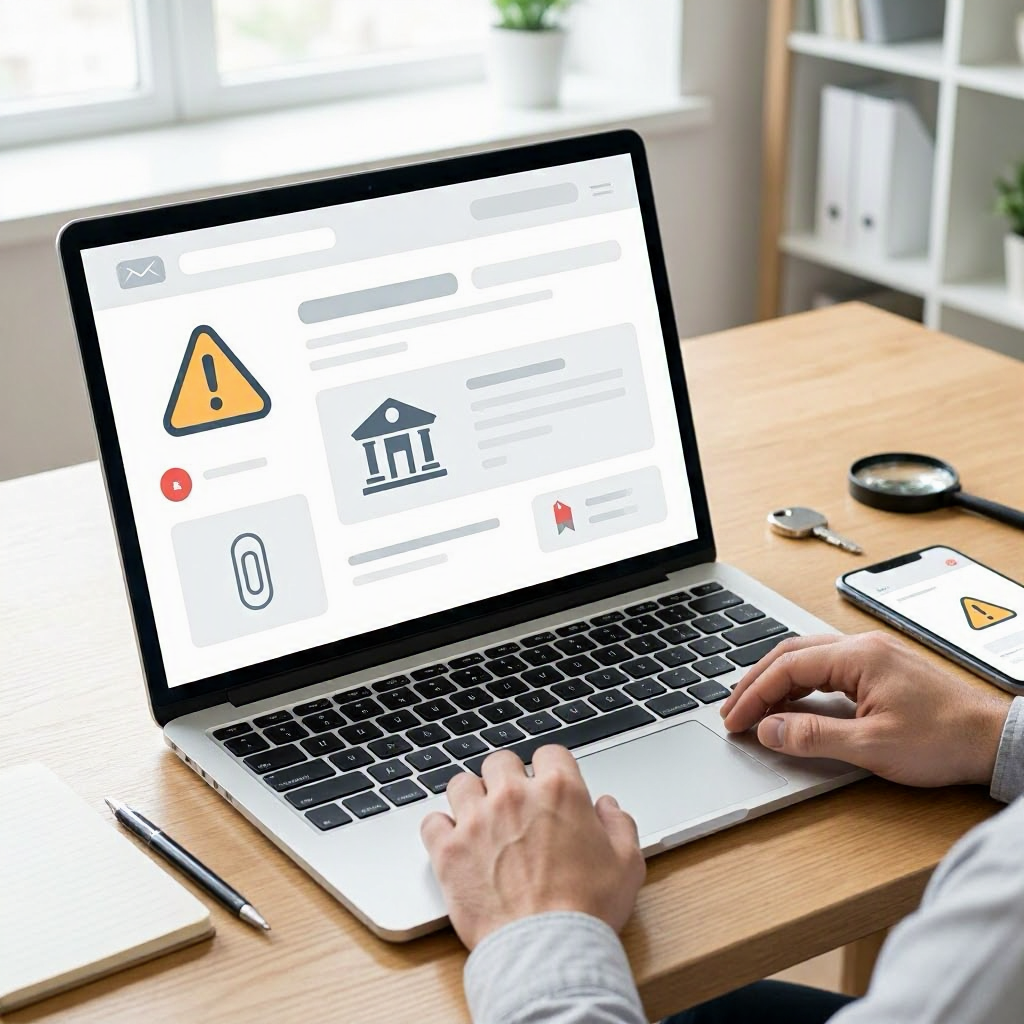
A fake court summons email may claim that you missed jury duty, face a lawsuit, owe a fine, or must open an attachment to view a case. It can include a real judge’s name, courthouse address, seal, case-like number, and personal details copied from public records. Those details do not authenticate the message.
Do not ignore a possible legal deadline, but do not let the email control how you verify it. Use the court’s independently located clerk and official docket resources.
Do not open the legal-looking attachment
Preserve the message without clicking links, scanning QR codes, enabling macros, or opening a ZIP, HTML, Word, PDF, or cloud-document attachment. Record the sender, reply-to address, subject, time, claimed court, case number, parties, and demanded action. A screenshot is useful, but retain the original message and headers when safe.
Threats of immediate arrest, payment by gift card or crypto, a short “confidential” deadline, or a request for banking credentials are strong scam signals. Federal court alerts repeatedly state that courts do not demand payment or sensitive financial data through unsolicited email or text.
Do not call the number embedded in the document; it may lead to the same scammers.
Identify which court would control the claimed matter
Determine whether the email names a federal, state, county, municipal, bankruptcy, traffic, or other court. Navigate to the official government judiciary site by typing its domain or using a verified government directory. Locate the clerk’s office number there and ask whether the case and document exist.
For federal matters, use the relevant court’s official .uscourts.gov site and authorized docket system. State and local electronic-service practices vary, especially for parties and lawyers who consented to electronic filing, so avoid assuming every email is fake solely because it is electronic.
The Northern District of California’s 2026 scam warning says the court will not request payment or bank/card details by text or email and advises preserving and reporting suspicious messages.
That court's warning is concrete. It says the court will never request payment by text, phone or email, never ask for card or bank details by text or email, and never send a text link for paying a ticket or fine. Its instructions for a suspicious message are to take a screenshot, not click or reply, delete it and report it to the FTC.
Compare the alleged case with independent records
Ask the clerk to verify the case number format, parties, filing date, service status, and next deadline without sending the suspicious file. Search official public docket access when available. A fabricated number may resemble a real format, and a real case number can be copied into an unrelated payment scam.
If the court confirms a matter exists, obtain the document and response instructions directly from the court or qualified counsel. Do not reply to the original sender until identity and service are established. Preserve the suspicious email because scammers sometimes exploit a real public case.
If no case exists, ask whether the court has an alert or reporting route for impersonation.
Check the claimed location and authority. A federal district, county court, sheriff, marshal, private process server, and collection company have different roles. A document that mixes those roles, names a courthouse far from any connection, or directs a court payment to an individual deserves scrutiny, but independent clerk verification remains safer than judging layout alone.
| The message says | How to check without using the message |
|---|---|
| A case number in a federal court | Look up the court's website yourself and call the clerk's office |
| A state or local case | Use the court's own case search or phone number |
| Jury duty was missed | Call the jury office listed on the court's website |
| A fine must be paid today by link | Do not pay; the court quoted above says it never sends payment links by text |
If you opened the attachment or link
Close it and note what occurred: download, login page, permission request, macro prompt, browser extension, or software installation. If credentials were entered, change them through the real email, cloud, court, or payment service from a clean device. Revoke sessions and enable multifactor authentication.
For an executed file or installed tool, disconnect sensitive activity, preserve evidence, update trusted security software, and obtain qualified technical help. Inform an employer’s security team if a work device or legal-client data was involved.
Monitor accounts for password resets and financial activity. A fake summons can be a malware delivery mechanism even when it never asks for money.
If you paid or supplied identity information
Contact the card issuer, bank, payment app, wire service, gift-card issuer, or exchange immediately and ask about cancellation or fraud procedures. Courts do not require payment through personal accounts, gift cards, or cryptocurrency to avoid arrest.
Use IdentityTheft.gov if Social Security, driver-license, or account-opening information was exposed. Report the scam at ReportFraud.gov, and report cyber-enabled financial loss at IC3. Provide the original message, payment details, domains, numbers, and fake document.
Do not pay a recovery agent who claims to have a relationship with the judge, marshal, or clerk.
Preserve real deadlines while rejecting the scam
If actual papers arrive by a recognized service method, treat them separately and obtain legal advice promptly. The fact that one email was fraudulent does not prove there is no unrelated court matter. Likewise, a verified court case does not validate payment instructions in an unsolicited message.
The safe sequence is simple: do not open, identify the court independently, verify with its clerk or docket, retrieve authentic documents separately, and respond through the official process.
If the message targeted a business or law firm, alert colleagues because the sender may be using names from real cases to reach multiple employees. Block the domain only after preserving headers and search for similar messages in mail systems without opening their attachments.
Related guides: how to report an online scam in the USA, fake DMV text message scam and FTC ReportFraud.gov: how to file a scam report.
This article provides general U.S. digital-safety information, not legal advice. Service rules vary by court and jurisdiction.
Sources:
- Beware Scam "Summons" Demanding Money, U.S. District Court, Northern District of California
- IdentityTheft.gov, Federal Trade Commission
- ReportFraud.ftc.gov, Federal Trade Commission
- Internet Crime Complaint Center (IC3), Federal Bureau of Investigation

Written by TheDigitalLife Editorial Team
Edited by R. K. Tiwari
Owner & Editor
R. K. Tiwari is the owner and editor of TheDigitalLife. He checks each guide against official U.S. sources before it is published.
About the editor and our editorial standards